Hen and Chicken Fern
Asplenium gracillimum
Last updated:
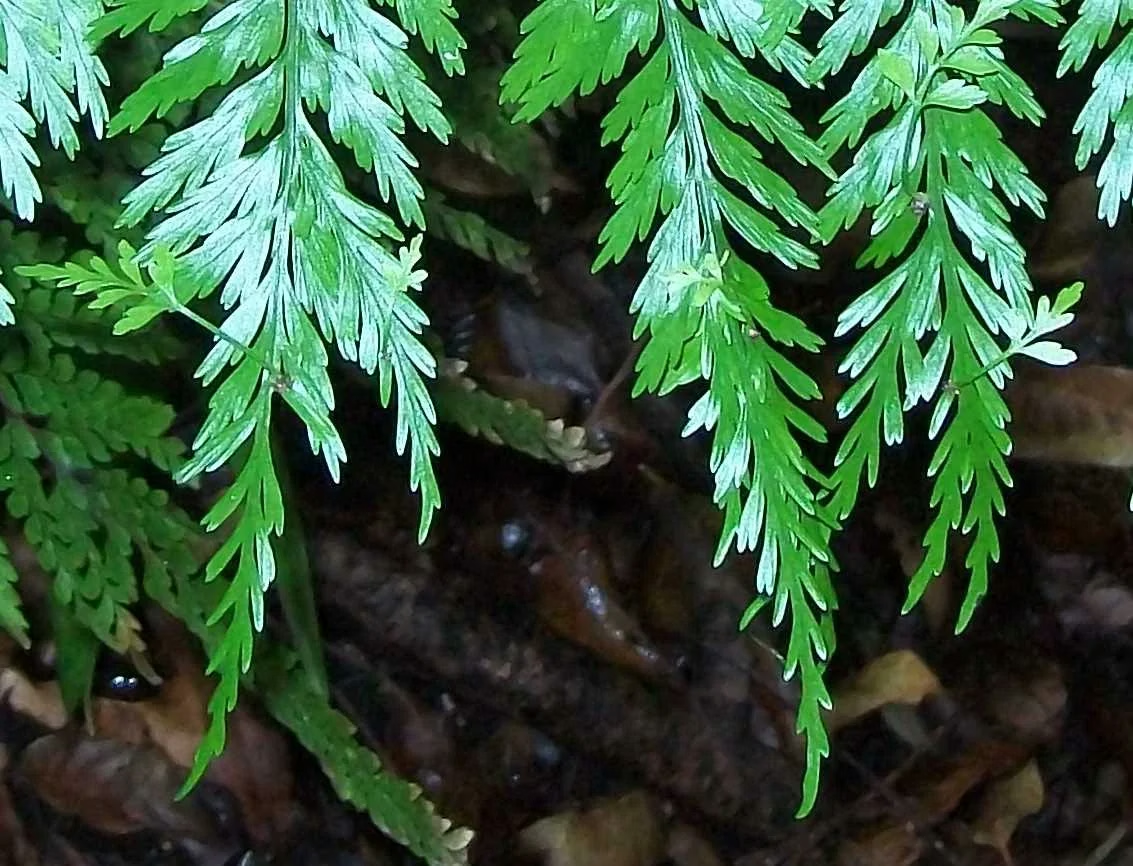
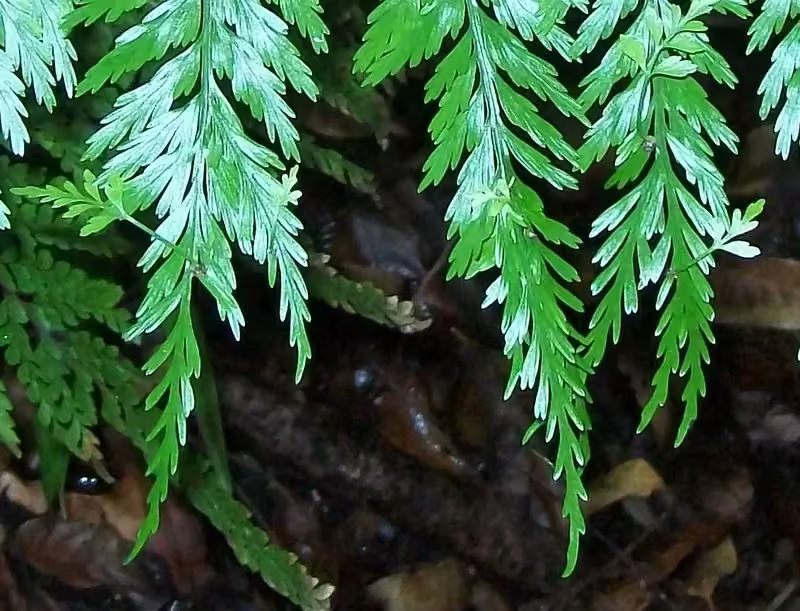
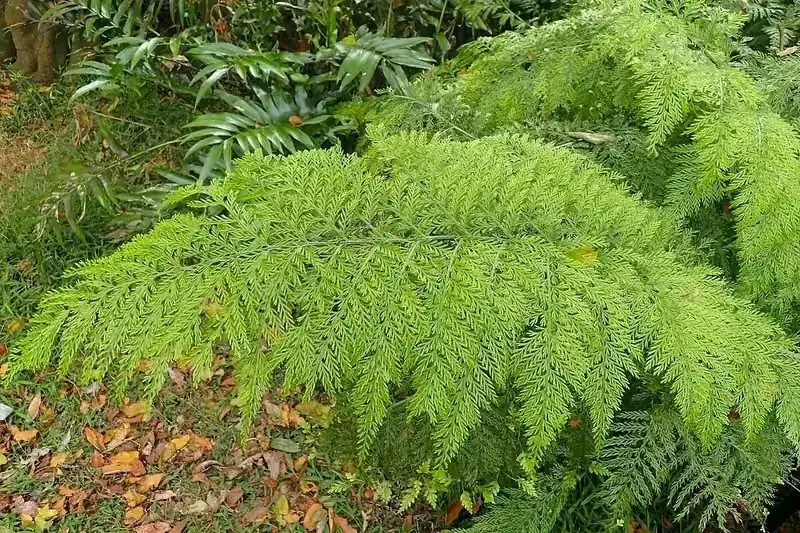
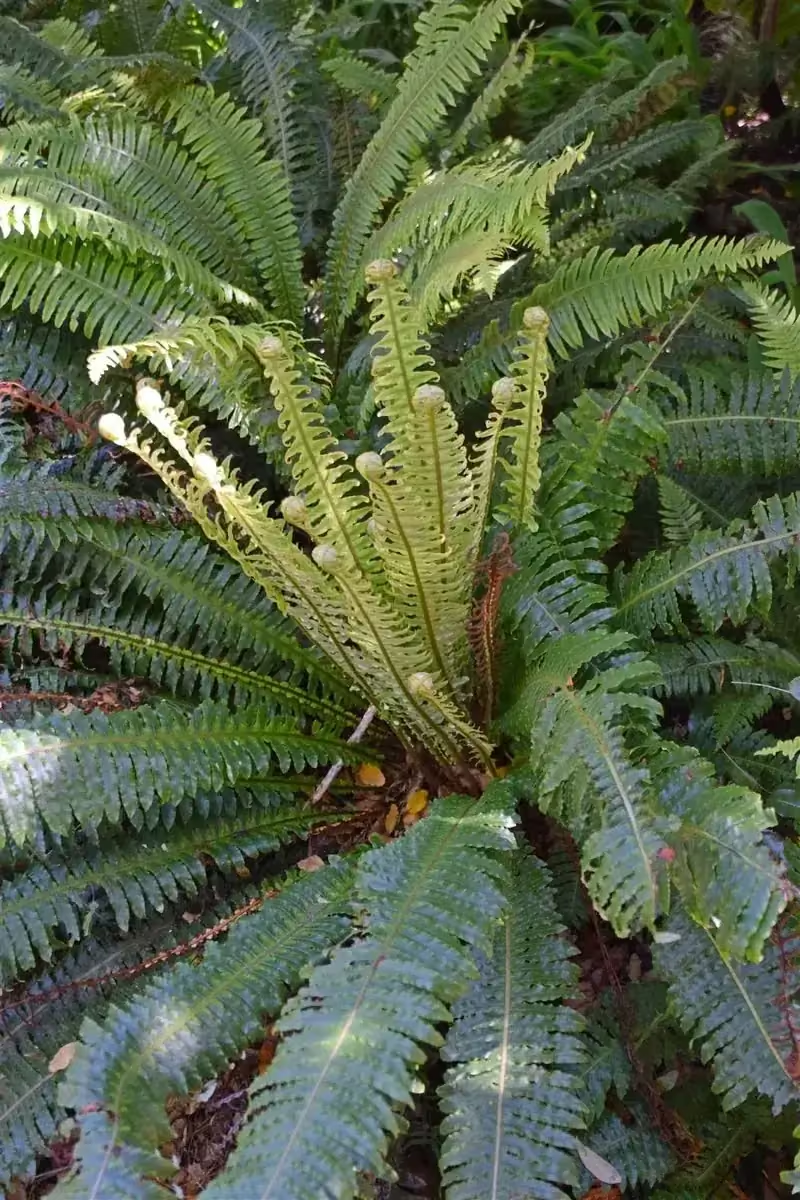
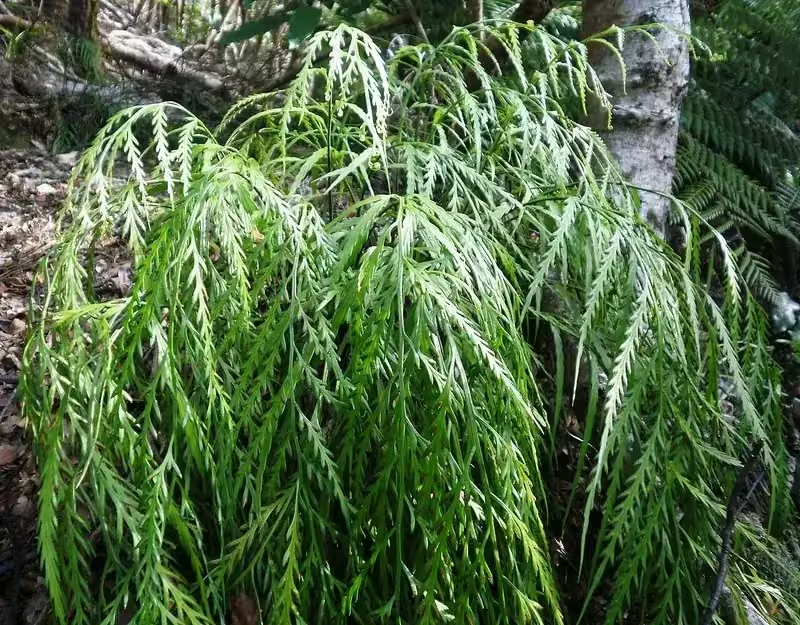
Asplenium gracillimum is a native New Zealand hen and chicken fern that forms small, tufted clumps of finely divided fronds, typically around 20-40 centimetres tall. Like others in this group, it can produce small plantlets on its fronds that root to form new ferns. The fronds are soft green and lacy, rising from a central crown, and the plant favours cool, consistently moist, free-draining sites in part to deep shade. It grows in shaded forest understorey and on shaded banks and rocks, where high humidity and shelter from strong sun and drying winds suit it best. Slow-growing and long-lived, it is an attractive fern for damp, shaded native plantings. Explore more native ferns in our native plant guide.
Plant Description
Identification and Physical Characteristics
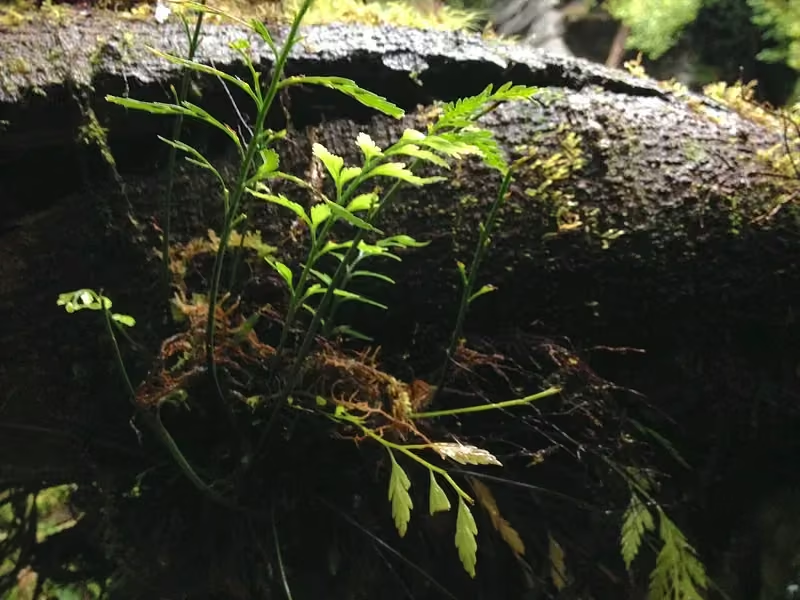
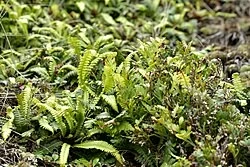
Asplenium lyallii , commonly known as Lyall's Spleenwort, is an attractive endemic New Zealand fern distinguished by its small, tufted growth habit and varied frond appearance. It features a stout, ascending rhizome covered with characteristic brown, subulate to narrowly triangular scales, which can reach up to 25 x 2 mm. The stipes, or stalks, supporting the fronds range from 30-200 mm long, starting pale brown at the base and becoming green higher up, also adorned with smaller scales.
The fronds, or laminae, are lanceolate to elliptic in shape, measuring 40-400 mm in length and 20-200 mm in width. Their colour can vary from a dark, shiny green to a dull grey-green, and they are typically pinnate to bipinnate. The raches, the main stem within the frond, are usually green, grooved, and scaly, sometimes showing brown on the underside. Pinnae (leaflets) occur in 2-16 pairs and are ovate to narrowly oblong, with margins that can be serrate to almost entire. The sori, responsible for spore production, are up to 10 mm long and do not extend to the lamina edge. A key feature of Asplenium lyallii is its environmental variability; individuals in sheltered lowland areas tend to have larger, 2-pinnate fronds with a glossy dark green upper surface, while those in exposed, high-altitude locations develop smaller, 1-pinnate, dull grey-green fronds, showcasing its remarkable adaptability.
Quick Facts
| Scientific Name | Asplenium lyallii |
|---|---|
| Height | 20-40 cm |
| Spread | Up to 40 cm |
| Water Needs | Moderate to High (Consistently moist, free-draining) |
| Light | Part shade to deep shade |
| Frost Tolerance | High (Found in alpine regions up to 1400m) |
| Salt Tolerance | Moderate (Found in coastal areas, prefers sheltered spots) |
| Growth Rate | Slow |
| Lifespan | Perennial (Long-lived) |
Climate Best Suited to
Asplenium lyallii is exceptionally versatile, thriving across a broad range of New Zealand climates, from coastal to alpine environments. Its preference for cool, shaded, and consistently moist conditions makes it well-suited for regions with moderate to high rainfall and protection from intense sun. While highly frost-tolerant due to its alpine distribution, it also adapts to milder coastal zones, provided it receives sufficient shade and moisture. This adaptability makes it a valuable addition to woodland gardens, fern groves, or shaded patios across much of New Zealand, particularly in areas where base-rich or calcareous substrates are present.
Regional Suitability
| City | Climate Suitability |
|---|---|
| Auckland | Suitable (If provided with shade and moisture) |
| Wellington | Suitable (Temperate, good rainfall, shaded spots) |
| Christchurch | Suitable (With protection from dry winds; thrives in cooler, shaded spots) |
| Dunedin | Suitable (Cooler, often humid, good for shaded areas) |
| Queenstown | Suitable (If provided with consistent moisture and shade, given its alpine tolerance) |
Plant Habitat
Natural Occurrence and Ecology
Lyall's Spleenwort is an endemic New Zealand fern found across a wide geographical and altitudinal range, from coastal environments up to 1400 meters in alpine regions. It thrives particularly on base-rich substrates, with a strong preference for calcareous rocks such as limestone and marble, as well as basalt formations. Its habitat includes tall forests, scrublands, and exposed rock surfaces, demonstrating its adaptability to varied light and moisture conditions within its preferred substrate type. Uniquely, it can also be found within cave entrances, where it benefits from consistent humidity and sheltered conditions, highlighting its resilience and specific environmental preferences. It is widespread in the North Island (from Port Waikato south to Wellington), the South Island (predominantly eastern but also North-west Nelson), Stewart Island/Rakiura, and the Chatham Islands.
Growing Requirements
Soil Requirements
Prefers moist, humus-rich, and free-draining soil, particularly on base-rich substrates.
- Humus-rich for fertility and moisture retention
- Free-draining to prevent waterlogging
- Prefers neutral to alkaline pH (base-rich substrates)
Light Requirements
Thrives in part shade to deep shade, requiring a sheltered site away from harsh winds and direct sun.
- Filtered light under tree canopy
- Deep shade preferred in warmer climates
- Avoid direct afternoon sun
Water Requirements
Requires consistently damp soil, especially during establishment. Mulching helps retain moisture.
- Consistently damp, but not waterlogged
- Mulch to retain soil moisture
- Good air circulation important in humid conditions
Planting and Establishing
Establishment Guidance
When planting Asplenium lyallii , choose a site that offers part to deep shade and is sheltered from harsh winds and direct sun, replicating its natural woodland or rock crevice habitats. Ensure the soil is moist, humus-rich, and, crucially, free-draining. If planting in the ground, amend heavy soils with organic matter and grit to improve drainage. Dig a planting hole twice as wide as the root ball and to a similar depth. Position the fern so its crown is level with the surrounding soil. Backfill with amended soil, gently firming around the base, and water thoroughly. For container planting, use a well-draining potting mix suitable for ferns, mixed with some limestone chips or crushed eggshells if your water is soft, to provide the preferred base-rich conditions. Consistent moisture is vital during the establishment phase, and a layer of mulch will help to retain soil moisture and regulate soil temperature.
Ecological Role
Biodiversity and Ecosystem Impact
As an endemic fern, Asplenium lyallii plays a role in the ecological integrity of New Zealand's diverse environments, from coastal to alpine zones. Its presence, particularly on base-rich substrates, contributes to soil stabilization on exposed rock surfaces and within forest understories. It creates microhabitats that support small invertebrates and contributes to the overall biodiversity of the native bush. While not a primary food source for larger fauna, its adaptability and widespread distribution indicate its resilience and importance as a component of the various ecosystems it inhabits.
Uses & Significance
Garden Uses
Lyall's Spleenwort is an attractive and versatile fern for shaded gardens, particularly suitable for rock walls, pots, or as an underplanting in woodland settings. Its variability in frond appearance allows it to fit into different garden designs, from formal fern collections to naturalistic native plantings. Its preference for base-rich substrates makes it a unique choice for gardens with limestone features.
- Shaded rock walls
- Container planting
- Woodland gardens
- Fern groves
- Shaded patios
- Gardens with calcareous rock features
Ecological Value
Contributes to soil stabilization on exposed rocky areas and provides microhabitats for invertebrates across its wide altitudinal range.
- Soil stabilization in diverse habitats
- Supports local invertebrate populations
- Indicator of healthy base-rich environments
- Adds to native forest understory biodiversity
Landscaping Uses
In landscaping, Asplenium lyallii is an excellent choice for adding texture and year-round greenery to shaded, sheltered areas. Its tufted growth habit and varied frond morphology allow for its use in rock gardens, particularly those featuring limestone or basalt, or nestled within the crevices of shaded walls. It is highly effective as an underplanting in native woodland gardens, creating a lush groundcover effect. For smaller spaces or patios, it can be grown in pots, bringing a touch of native forest to container displays. Its adaptability to a wide range of New Zealand conditions makes it a resilient and attractive landscape plant.
Seasonal Care Calendar
Spring
Monitor for new frond emergence. Ensure consistent moisture as growth accelerates. Consider a light application of a balanced, slow-release liquid fertilizer if soil nutrients are low.
- Observe new frond growth
- Maintain consistent soil dampness
- Light fertilization if needed
Summer
Increase watering frequency during dry periods to prevent desiccation, ensuring the soil remains consistently damp but not waterlogged. Provide additional shade if plants are in particularly exposed positions.
- Ensure consistent moisture during dry spells
- Provide extra shade in hot, exposed areas
- Avoid direct, intense sun
Autumn
Reduce watering frequency as temperatures cool. Remove any yellowing or dead fronds to maintain plant health and tidy appearance. Prepare for winter by ensuring good drainage.
- Gradually reduce watering
- Remove old or damaged fronds
- Ensure good winter drainage
Winter
Protect plants from prolonged heavy frosts, especially in exposed alpine or very cold regions. Maintain minimal soil moisture, avoiding waterlogging which can lead to root rot. Cease fertilization.
- Protect from severe frosts
- Keep soil barely moist
- No fertilization
When to Prune and How Much
Pruning for Asplenium lyallii is generally minimal, focused on maintaining plant health and aesthetic appeal. The best time to prune is in late winter or early spring, just before the emergence of new growth. Using clean, sharp shears, carefully remove any fronds that are dead, damaged, diseased, or significantly yellowed by cutting them as close to the rhizome as possible. This practice promotes better air circulation within the plant, which is important for preventing fungal issues, and directs the plant's energy towards producing healthy new fronds. Avoid removing healthy, green fronds excessively, as this can stress the fern and inhibit its natural development.
- Remove dead, damaged, or yellowing fronds
- Prune in late winter or early spring
- Use clean, sharp shears
Regular inspection of the plant during pruning can also help in early detection of any potential pests or diseases. Ensuring a clean environment and good air circulation are key preventative measures to keep Lyall's Spleenwort thriving.
How to Grow Hen and Chicken Fern
Propagating Lyall's Spleenwort ( Asplenium lyallii ) allows enthusiasts to multiply this unique endemic New Zealand fern. While it can be a slow-growing species, successful propagation is achievable through both spore culture and, for established clumps, careful division. Both methods require attention to sterile conditions and appropriate environmental factors to ensure the successful development of new plants.
From Spores
Propagation from spores is the most common natural method for ferns and can be done artificially with patience. Spores are found within sori on the undersides of mature fronds. To collect, place a fertile frond in a paper envelope in a warm, dry place for several days until the spores are released as a fine dust. Prepare a sterile growing medium, ideally a mix of peat and sand or a specialized fern substrate, sterilized to eliminate pathogens and competitive organisms. Lightly sprinkle the collected spores onto the surface of the moist, sterile medium in a covered container to maintain high humidity. Do not bury the spores. Keep the container in indirect light and at a consistent temperature (e.g., 18-24°C). Germination will be slow, first appearing as a green film (prothalli), followed by tiny fern plantlets. Transplant these carefully once they are robust enough to handle, ensuring continuous humidity and indirect light during their sensitive early stages. The process demands a sterile environment to prevent contamination.
- Collect mature spores from fertile fronds.
- Sterilize a moist, fine-textured growing medium.
- Lightly sprinkle spores on the surface; do not cover.
- Place in a covered tray in indirect light to maintain high humidity.
- Wait for germination and the development of prothalli and then plantlets.
- Carefully transplant young plantlets once they are large enough.
The key to successful spore propagation lies in maintaining meticulous sterility throughout the process to prevent fungal or algal contamination, coupled with consistent high humidity and indirect light. Patience is paramount, as the development from spore to a transplantable fern can take many months.
From Cuttings
While true stem cuttings are not applicable to ferns, established tufted ferns like Asplenium lyallii can be effectively propagated through careful division of their rhizomes. This method is generally faster and more straightforward than spore propagation for home gardeners, yielding new plants that are genetically identical to the parent. Division is best performed in spring or early summer when the fern is actively engaged in new growth, which promotes faster recovery and establishment of the separated sections. This also provides an opportunity to rejuvenate older, denser clumps, preventing overcrowding and promoting overall plant health.
- Carefully unpot or gently lift the mature fern from its growing location.
- Examine the rhizome to identify natural divisions or sections that have developed healthy roots and at least a few fronds.
- Gently separate these sections using a clean, sharp knife or by hand, ensuring each new division possesses a viable root system and some frond material.
- Replant each division into its own pot or a prepared garden bed, using a fresh, well-draining, humus-rich potting mix that preferably caters to its preference for base-rich conditions.
- Water thoroughly immediately after replanting and place the newly divided plants in a shaded, humid environment to recover and establish, maintaining consistent moisture.
Additional Methods
Beyond spore culture and rhizome division, other propagation methods are not typically employed or effective for Asplenium lyallii . The species does not produce bulbils on its fronds with the regularity seen in some other Asplenium ferns like A. bulbiferum , nor is it conducive to layering due to its tufted growth habit. Therefore, gardeners should concentrate on the reliable methods of spore propagation for genetic diversity and division for cloning existing specimens. Always ensure strict hygiene by sterilizing tools before use to prevent the spread of diseases, and provide a stable, protected environment for young plants to develop, ensuring consistent moisture and appropriate light conditions during their initial growth phases.
Pests & Diseases
Asplenium lyallii is generally a robust and pest-resistant fern. However, when grown in suboptimal conditions, or when air circulation is poor, it can occasionally become susceptible to common fern pests such as scale insects and mealybugs. Fungal issues, particularly root rot, are a risk if the plant is subjected to consistently waterlogged soil, which can occur with inadequate drainage. To prevent these problems, ensure that the plant has good air circulation around its fronds, maintain consistently damp but free-draining soil, and perform regular inspections for any early signs of pest infestation or disease. Should pests appear, treat them promptly with appropriate horticultural oils or insecticidal soaps. Improving drainage and adjusting watering practices will help mitigate fungal concerns.
Cultural Significance
As an endemic New Zealand fern, Asplenium lyallii holds inherent cultural value within the rich botanical heritage of Aotearoa. While specific historical Māori uses or traditions directly linked to Lyall's Spleenwort may not be widely documented, its presence contributes to the overall biodiversity and health of the native ecosystems, which were and remain fundamental to Māori life. Ferns, in general, feature prominently in Māori culture, symbolizing new beginnings, growth, and peace. Asplenium lyallii plays its part in these ecosystems by stabilizing soil, particularly on rocky substrates, and creating microhabitats, thus subtly contributing to the environment that sustained early Māori communities and continues to inspire today.
Bonus Tip
To truly appreciate the environmental variability of Lyall's Spleenwort, observe how its frond size and colour change depending on its growing conditions. Consider planting specimens from different altitudes or exposures if you have a varied garden microclimate. For a stunning display, nestle it into crevices of limestone or basalt rock features in a shaded area, mimicking its natural preference for base-rich substrates. Ensure the root zone stays cool and moist with a good layer of mulch.
Related Plants
Explore other native plants that share similar characteristics or habitats with Lyall's Spleenwort ( Asplenium lyallii ), offering further insights into New Zealand's diverse flora. These related species provide context and opportunities for complementary planting in your garden.


Plant Conservation
Conservation Status and Threats
Asplenium gracillimum is listed as "Not Threatened" in the New Zealand Threat Classification System. This status indicates a stable and healthy population, reflecting its widespread distribution across various habitats in New Zealand and Australia. While not facing immediate threats, ongoing conservation efforts for native flora, including habitat protection and restoration, benefit this species by maintaining the healthy ecosystems it inhabits. Gardeners can contribute to its continued success by cultivating it in appropriate conditions, sourcing plants from reputable nurseries that promote sustainable practices, and educating others about the importance of native plant biodiversity.
Frequently Asked Questions
How tall does Asplenium gracillimum grow?
It forms tufted clumps around 20-40 cm tall with a spread of up to about 40 cm.
What conditions does Asplenium gracillimum need?
It prefers cool, consistently moist, free-draining soil in part to deep shade with high humidity.
How fast does Asplenium gracillimum grow?
It is a slow-growing but long-lived perennial fern, best suited to sheltered, shaded plantings.
Does Asplenium gracillimum produce plantlets?
Yes, as a hen and chicken fern it can grow small plantlets on its fronds that root to form new plants.
Sources and Further Reading
The botanical, growing, and conservation details for Hen and Chicken Fern (Asplenium gracillimum) on this page draw on authoritative New Zealand plant references and citizen-science observation records. Consult the sources below for full technical records and the latest distribution data.