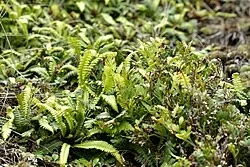
Chatham Spleenwort
Asplenium chathamense
Last updated:
Chatham Spleenwort (Asplenium chathamense) is a fern endemic to the Chatham Islands of New Zealand, growing on rock and in the ground in exposed coastal settings. It has stiff, erect fronds that can reach around 100 centimetres long, dark shiny green above and paler below, leathery in texture and intricately divided into a 2-3-pinnate-pinnatifid form. Short, erect rhizomes are covered with distinctive blackish-brown scales. It grows in rock crevices, coastal scrub and open coastal forest on substrates such as basalt, schist and limestone, and along stream banks. Classed as naturally uncommon, this slow-growing, long-lived fern is well adapted to the islands' moist, moderate, salt-laden coastal climate. Explore more native ferns in our native plant guide.
Plant Description
Identification and Physical Characteristics
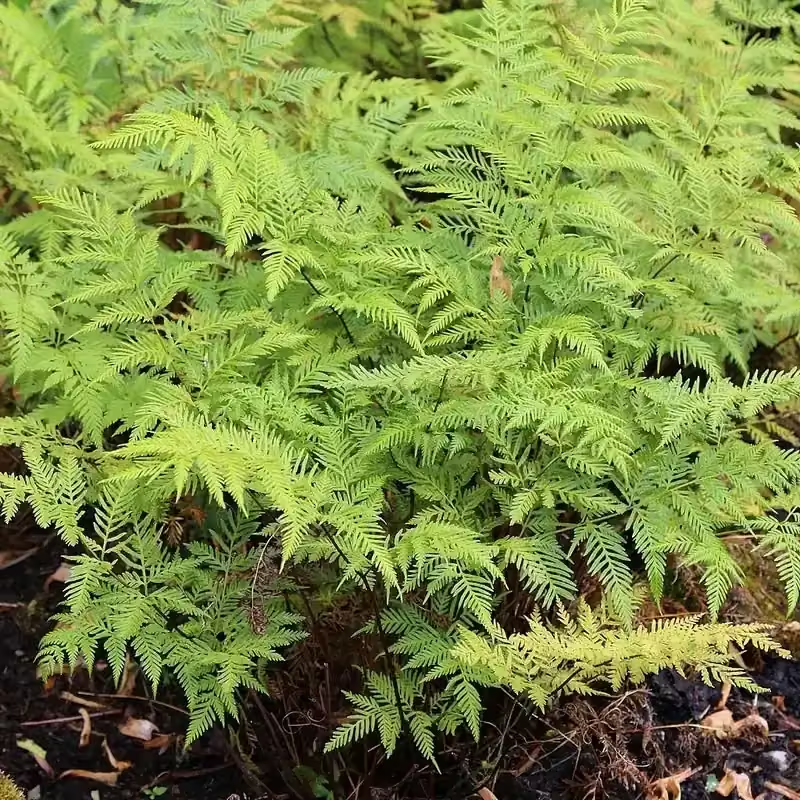
Asplenium chathamense , commonly known as Chatham Island Spleenwort, is a unique terrestrial or rupestral fern endemic to the Chatham Islands of New Zealand. This striking fern is characterized by its stiff, erect fronds that can reach up to 98 cm in length, displaying a dark, shiny green on the upper surface and a lighter green underneath. The fronds are leathery (coriaceous) and intricately divided, typically 2-3-pinnate-pinnatifid. Its rhizomes are short and erect, covered with distinctive blackish-brown scales, measuring 9-25 mm long. The stipes, or stalks, are 45-450 mm long, starting pale brown at the base and often transitioning to green, though they can be red-brown throughout.
The laminae, or blade sections, are ovate or elliptic, ranging from 35-600 mm in length and 20-240 mm in width. On the underside of the fronds, submarginal sori, 2-10 mm long with entire indusia, house the spores. These spores are notable for their prominently winged perispores, measuring 41-50 μm long and 26-32 μm wide. Morphologically, Asplenium chathamense can be distinguished from similar species like A. flaccidum and A. appendiculatum by its upright, firmer fronds and terrestrial habitat, contrasting with the often pendent fronds and epiphytic nature of A. flaccidum . Its genetic makeup as a tetraploid also differentiates it from the octoploid A. appendiculatum , and their spores exhibit distinct ridge patterns. This fern's robust structure allows it to thrive in exposed coastal environments, making it a distinctive component of the Chatham Islands' unique flora.
Quick Facts
| Scientific Name | Asplenium chathamense |
|---|---|
| Height | 10-100 cm |
| Spread | Up to 50 cm |
| Water Needs | Moderate to High (Consistently moist, well-drained) |
| Light | Semi-shade to indirect light |
| Frost Tolerance | Moderate (Tolerates temperatures between 12-25°C) |
| Salt Tolerance | High (Naturally found in coastal areas) |
| Growth Rate | Slow |
| Lifespan | Perennial (Long-lived) |
Climate Best Suited to
Asplenium chathamense thrives in the temperate, coastal climate typical of the Chatham Islands, which is characterized by consistent moisture, moderate temperatures, and exposure to coastal influences. It prefers conditions that offer semi-shade to indirect light, mimicking its natural growth in rock crevices, coastal scrub, and forest understories. While adaptable to its endemic range, it benefits from moderate to high humidity and protection from extreme temperature fluctuations outside its preferred range. Its high salt tolerance makes it suitable for coastal gardens.
Regional Suitability
| City | Climate Suitability |
|---|---|
| Auckland | Suitable (Mild, humid, coastal tolerant) |
| Wellington | Suitable (Temperate, coastal, often shaded spots) |
| Christchurch | Moderate (Needs protection from dry winds and severe frosts) |
| Dunedin | Suitable (Cooler, often humid, coastal exposure) |
| Queenstown | Unsuitable (Too cold and dry, not coastal) |
Plant Habitat
Natural Occurrence and Ecology
Chatham Island Spleenwort is endemic to the Chatham Islands, where it predominantly inhabits exposed coastal rocks and cliffs. It can be found growing in rock crevices, directly on the ground, within coastal scrub, and in open coastal forests. Its adaptability also allows it to thrive along streambanks. This fern demonstrates a preference for various substrates, including basalt, schist, and limestone, reflecting its robust nature. While most frequently observed along the immediate coast, populations can extend up to 250 meters in elevation on the higher parts of Chatham Island, showcasing its ability to adapt to slightly varied microclimates within its restricted range.
Growing Requirements
Soil Requirements
Prefers deep, rich, moist, and well-drained soil. Adaptable to various substrates including basalt, schist, and limestone.
- Rich in organic matter for moisture retention
- Excellent drainage to prevent root rot
- Slightly acidic to neutral pH is ideal
Light Requirements
Thrives in semi-shade to indirect light conditions. Direct sunlight will scorch the fronds.
- Filtered light under tree canopy
- Avoid harsh afternoon sun
- Can tolerate deeper shade but growth may be slower
Water Requirements
Requires consistently moist but well-drained soil. Moderate to high humidity is beneficial for optimal growth.
- Keep soil consistently moist, but not waterlogged
- Water regularly, especially during dry spells
- High humidity mimics natural coastal environment
- Good air circulation is important to prevent fungal issues
Planting and Establishing
Establishment Guidance
When planting Asplenium chathamense , select a location that closely replicates its natural Chatham Islands coastal habitat. This means choosing a spot that offers semi-shade to indirect light, good air circulation, and protection from extreme drying winds, while still allowing for some coastal influence if possible. Ensure the soil is deep, rich in organic matter, and provides excellent drainage while remaining consistently moist. When planting in the ground, dig a hole that is twice as wide as the root ball and of similar depth. Carefully position the fern so that the crown sits at soil level, then backfill with a blend of compost and native soil, gently firming around the base to remove air pockets. Water thoroughly immediately after planting. If planting in a container, choose a pot with ample drainage holes and use a high-quality, well-draining potting mix formulated for ferns. During establishment, maintain consistent moisture and moderate to high humidity to encourage robust root development and frond growth.
Ecological Role
Biodiversity and Ecosystem Impact
As an endemic species of the Chatham Islands, Asplenium chathamense plays a specific ecological role within its restricted coastal habitats. It contributes to the biodiversity of the island ecosystem, providing ground cover and helping to stabilize loose soil on cliffs and rock crevices. Its presence is indicative of the health and unique characteristics of the Chatham Islands' native flora. While not a major food source, it contributes to the complex microhabitat for local invertebrates. Its adaptation to harsh coastal conditions makes it a key component of the resilience of these fragile ecosystems.
Uses & Significance
Garden Uses
The Chatham Island Spleenwort is an excellent choice for coastal gardens in temperate climates, particularly in shaded or semi-shaded areas. Its stiff, erect fronds provide unique texture and form, making it suitable for rock gardens, fern borders, or as an underplanting in open coastal forests. It also performs well in containers, allowing its distinctive foliage to be appreciated up close on shaded patios or balconies. Its high salt tolerance is a significant advantage for seaside landscaping projects.
- Coastal gardens
- Rock gardens
- Shaded borders
- Container planting
- Underplanting in coastal forests
Ecological Value
Contributes to the unique biodiversity of the Chatham Islands; provides ground cover and soil stabilization in coastal environments.
- Soil stabilization on cliffs and rocky areas
- Habitat provision for local invertebrates
- Indicator species for healthy coastal ecosystems
- Part of the endemic flora of the Chatham Islands
Landscaping Uses
For landscaping in appropriate coastal or temperate zones, Asplenium chathamense offers a distinctive aesthetic. Its robust, upright fronds can create structural interest in shaded areas, contrasting with softer-leaved plants. It is particularly effective when naturalized among rocks or along the edges of shaded pathways, evoking a natural Chatham Island coastal feel. Its moderate size makes it versatile for both intimate garden settings and larger landscape designs, especially where a resilient, salt-tolerant fern is desired. It can be mass-planted for a lush effect or used as a specimen plant to highlight its unique form.
Seasonal Care Calendar
Spring
As new growth emerges, ensure consistent moisture and monitor for any signs of pests. A light application of slow-release, balanced fertilizer can encourage vigorous frond development.
- Ensure consistent moisture
- Monitor for pests (especially scale)
- Consider light fertilization
Summer
Maintain high humidity and consistent soil moisture, particularly during dry spells. Protect from intense direct sunlight which can scorch fronds.
- Keep soil moist, not waterlogged
- Ensure moderate to high humidity
- Protect from harsh sun
Autumn
Reduce watering frequency as temperatures cool. Remove any senescent or damaged fronds to maintain plant health and appearance.
- Gradually reduce watering
- Remove old or damaged fronds
- Prepare for cooler temperatures
Winter
In regions with cooler winters, ensure protection from severe frosts, especially if not fully established. Keep soil barely moist and avoid overwatering.
- Protect from severe frost
- Maintain minimal soil moisture
- Avoid fertilizing
When to Prune and How Much
Pruning for Asplenium chathamense is generally minimal, focusing on the removal of dead, damaged, or yellowing fronds to maintain plant vigor and aesthetic appeal. The best time for this light pruning is typically in late winter or early spring, just before the onset of new growth. Using clean, sharp shears, cut the affected fronds as close to the rhizome as possible without damaging the living tissue. This practice helps to improve air circulation within the plant, which is crucial for preventing fungal diseases, and also directs the plant's energy towards healthy new growth. Avoid any heavy pruning of healthy fronds, as this can stress the plant and hinder its natural growth habit.
- Remove dead, damaged, or yellowing fronds
- Prune in late winter or early spring
- Use clean, sharp shears for precise cuts
Regularly inspect the plant during pruning for any signs of pests, particularly scale insects, which can be an issue for Asplenium ferns. Prompt removal of affected fronds or treatment can prevent wider infestations. Ensure good air circulation around the plant, especially in humid environments, to further deter pest and disease problems.
How to Grow Chatham Spleenwort
Propagating Chatham Island Spleenwort ( Asplenium chathamense ) is a rewarding process, allowing gardeners to cultivate this unique endemic fern. Both spore propagation and division are viable methods, with each offering different benefits and requiring careful attention to detail to ensure successful establishment. Given its "Naturally Uncommon" status, responsible propagation plays a role in its broader conservation.
From Seed
Propagation from spores is a primary method for Asplenium chathamense , though it requires a sterile environment and considerable patience. Spores are found in the sori on the underside of mature fronds. To collect them, place a fertile frond in a paper envelope or bag and allow it to dry for several days until the spores are released. Prepare a sterile growing medium, such as a peat-perlite mix, and sterilize it in an oven or microwave to eliminate pathogens. Lightly sprinkle the fine spores onto the surface of the moist, sterile medium in a covered tray to maintain high humidity. Do not bury the spores. Keep the tray in indirect light at a consistent temperature (around 18-24°C). Germination may take weeks to months, first appearing as a green film (prothalli), followed by the development of true fern fronds. Transplant the young plantlets when they are robust enough to handle. Maintaining consistent humidity and avoiding contamination are crucial for success in spore propagation.
- Collect mature spores from fertile fronds.
- Sterilize a moist, fine-textured growing medium.
- Lightly sprinkle spores on the surface; do not cover.
- Place in a covered tray in indirect light to maintain high humidity.
- Wait for germination and the development of prothalli and then plantlets.
- Carefully transplant young plantlets once they are large enough.
Maintaining consistent humidity and avoiding contamination are crucial for success in spore propagation, as is providing a stable, warm environment away from direct drafts or temperature fluctuations. The process is slow but can yield numerous new plants.
From Cuttings
While not typically referred to as "cuttings" in the conventional sense for ferns, division of the rhizome is an effective vegetative propagation method for Asplenium chathamense . This technique is faster and generally more reliable than spore propagation for home gardeners, producing genetically identical clones of the parent plant. Division is best undertaken in spring or early summer when the fern is actively growing, which aids in quicker recovery and establishment of the divided sections.
- Carefully unpot or gently lift the mature fern from its growing location.
- Inspect the rhizome, identifying natural divisions or sections with healthy roots and at least a few fronds.
- Gently separate these sections using a clean, sharp knife or by hand, ensuring each new division has an adequate root system.
- Replant each division into its own pot or a prepared garden bed with well-draining, organic-rich soil.
- Water thoroughly after replanting and place the newly divided plants in a shaded, humid environment to recover and establish.
Additional Methods
Beyond spores and direct rhizome division, other methods are less common or effective for Asplenium chathamense . However, ensuring optimal growing conditions for an established plant can lead to the natural formation of additional offsets or self-seeding from spores, especially in ideal, undisturbed habitats. For instance, in very damp, shaded environments, new plantlets might spontaneously appear around the base of a mature fern from dropped spores, allowing for careful collection and transplanting once they are robust enough. The primary focus for propagation should remain on spores for genetic diversity and rhizome division for reliable cloning and maintaining specific desired traits. Always ensure sterile conditions during spore handling and clean tools for division to prevent disease transmission.
Pests & Diseases
Asplenium chathamense is generally resilient but can be susceptible to a few common fern pests, most notably scale insects and mealybugs. These pests tend to thrive in conditions of poor air circulation or when the plant is stressed. Fungal issues, particularly root rot, can arise if the fern is grown in consistently waterlogged soil, which impedes oxygen flow to the roots. To mitigate these problems, ensure excellent air circulation around the plant, practice appropriate watering techniques that allow the soil to remain moist but not saturated, and conduct regular inspections for early detection of pests. Infestations can typically be managed with horticultural oil sprays or insecticidal soaps, while improving drainage and adjusting watering schedules will address fungal concerns.
Cultural Significance
As an endemic species of the Chatham Islands, Asplenium chathamense holds intrinsic cultural and ecological significance to the local community and New Zealand as a whole. While specific traditional Māori uses directly linked to this particular spleenwort may not be widely documented, its existence contributes to the rich biodiversity of the Chatham Islands, an area with a deep cultural history, particularly for the Moriori people. Like many native ferns, it forms part of the natural heritage, symbolizing the unique flora of Aotearoa and its remote islands. Its role in stabilizing coastal ecosystems and providing microhabitats underscores its quiet importance.
Bonus Tip
For optimal growth and to truly showcase the unique form of the Chatham Island Spleenwort, consider planting it in a sheltered rock crevice or a raised bed that mimics its natural coastal rock face habitat. Integrating it with other Chatham Islands endemics or New Zealand native coastal plants will create a cohesive and ecologically resonant display. Ensure consistent humidity by regular misting during dry periods, especially if grown in drier inland climates.
Related Plants
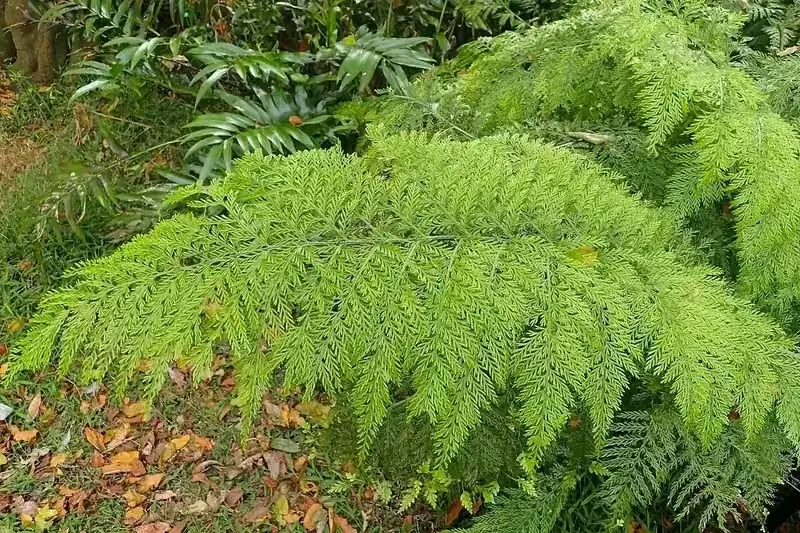
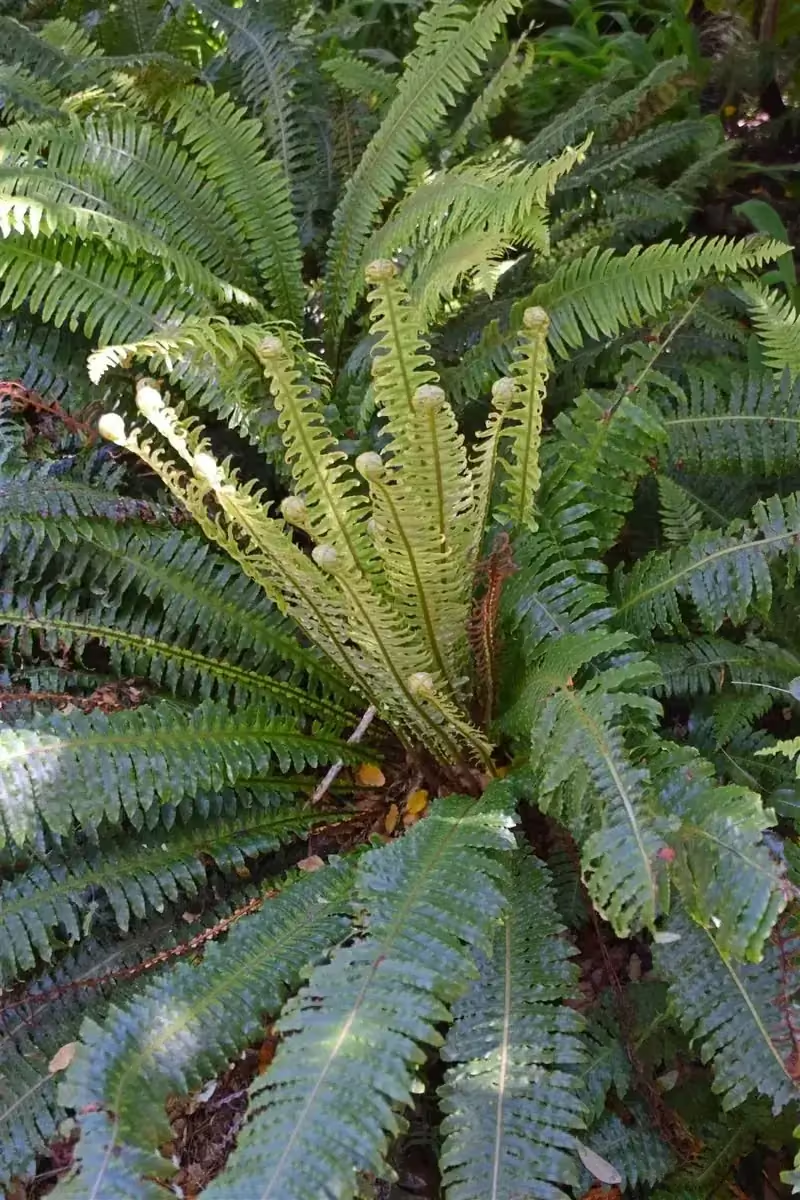
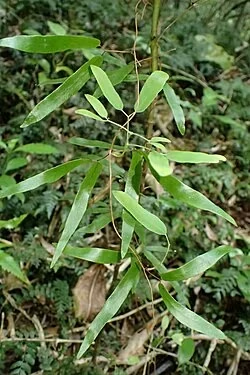
Explore other native plants that share similar characteristics or habitats with Chatham Island Spleenwort ( Asplenium chathamense ), offering further insights into New Zealand's diverse flora. These related species provide context and opportunities for complementary planting in your garden.


Plant Conservation
Conservation Status and Threats
Asplenium chathamense is listed as "Naturally Uncommon" in the New Zealand Threat Classification System. This classification highlights its endemic status to the Chatham Islands and its restricted natural range. While not considered "Threatened" in a critical sense, its naturally uncommon status means its populations are inherently more vulnerable to habitat loss, environmental changes, or the introduction of invasive species within its small geographic footprint. Conservation efforts for this species primarily focus on protecting its coastal habitats on the Chatham Islands, which include exposed rocks, cliffs, and coastal scrub. Understanding its specific ecological requirements and ensuring the preservation of these unique island ecosystems are key to safeguarding its long-term survival. Educational initiatives and careful management of human activities in its natural range also play a role in its ongoing protection.
Frequently Asked Questions
How tall does Chatham Spleenwort grow?
Asplenium chathamense has fronds ranging from about 10 to 100 cm long, with a spread of up to 50 cm.
Where does Chatham Spleenwort grow?
It is endemic to the Chatham Islands, growing on exposed coastal rocks, cliffs, crevices and in coastal scrub and forest.
Is Chatham Spleenwort rare?
Yes, it is classed as naturally uncommon and is restricted to the coastal habitats of the Chatham Islands.
Does Chatham Spleenwort tolerate salt?
Yes, it has high salt tolerance and naturally grows in exposed, salt-laden coastal environments.
Sources and Further Reading
The botanical, growing, and conservation details for Chatham Spleenwort (Asplenium chathamense) on this page draw on authoritative New Zealand plant references and citizen-science observation records. Consult the sources below for full technical records and the latest distribution data.