Poor K. Spleenwort
Asplenium pauperequitum
Last updated:
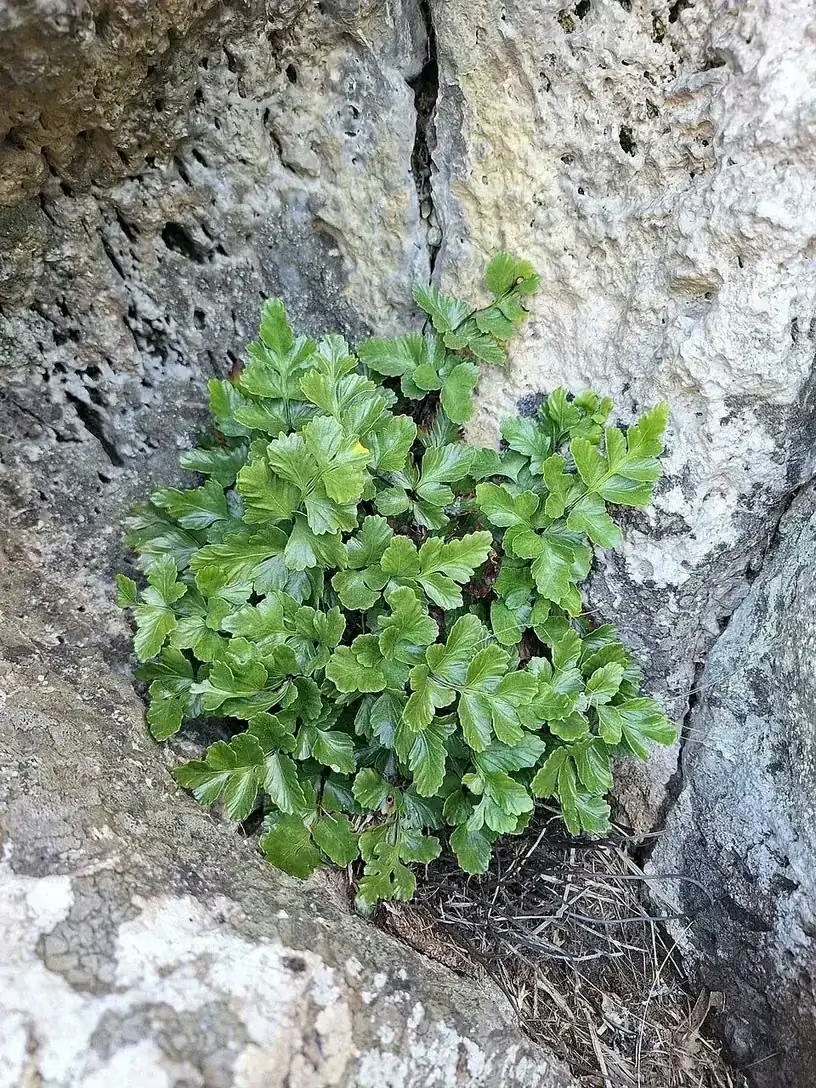
Poor Knights Spleenwort (Asplenium pauperequitum) is a tiny, tufted endemic New Zealand fern, just 3 to 10 cm tall, that forms dense colonies in dark, damp rock overhangs. Its very short, erect rhizomes carry fronds with dark red-brown, almost black shiny stipes and fleshy, triangular (deltoid) blades that are glossy dark green above and paler beneath. A strictly rupestral species, it grows only on rock, favouring seepages, crevices and damp rhyolitic surfaces on exposed coastal bluffs. Classified as Threatened - Nationally Endangered, it is restricted to a few offshore islands and is not suited to cultivation. Explore more native ferns in our native plant guide.

Plant Description
Identification and Physical Characteristics
Asplenium pauperequitum , commonly known as Poor Knights Spleenwort, is a small, tufted endemic New Zealand fern that forms dense colonies, typically nestled within dark, damp overhangs. Its very short, erect rhizomes give rise to distinctive fronds, characterized by dark red-brown, almost black, shiny stipes and raches, adorned with fine hair-like scales, particularly at the base.
The fronds themselves are somewhat fleshy and deltoid (triangular) in outline, ranging from 30-100 mm in length and 25-80 mm in width. They display a glossy dark green on their upper surface, contrasting with a paler underside. The pinnae (leaflets) are arranged in 1-5 pairs, typically broadly ovate or triangular, and may be 3-lobed on larger fronds, with margins that are either smooth or slightly toothed. Spore-producing sori can be up to 12 mm long and characteristically curve away from the margins. Unusually among New Zealand Asplenium species, A. pauperequitum has not been recorded to hybridize with any other species, underscoring its unique genetic isolation. Its specialized morphology and growth habit are perfectly adapted to its specific, sensitive habitat requirements.
Quick Facts
| Scientific Name | Asplenium pauperequitum |
|---|---|
| Height | 3-10 cm |
| Spread | 2.5-8 cm |
| Water Needs | High (Requires constant dampness) |
| Light | Deep shade to very low light |
| Frost Tolerance | Low (Coastal species, intolerant of frost) |
| Salt Tolerance | High (Coastal species, tolerant of salt spray) |
| Growth Rate | Very Slow |
| Lifespan | Perennial (Long-lived if conditions stable) |
Climate Best Suited to
Asplenium pauperequitum is highly specialized and best suited to a very specific coastal climate found on its native New Zealand islands. It requires consistently damp, humid conditions with deep shade or very low light levels, typically found within sheltered rock overhangs, crevices, and cave entrances. It is intolerant of drying out and dislikes high light exposure. Its natural environment often involves proximity to seabird guano, suggesting a tolerance for nutrient-rich substrates. Due to its extreme sensitivity and restricted range, it is not suitable for general cultivation outside its specific microclimate.
Regional Suitability
| City | Climate Suitability |
|---|---|
| Auckland | Unsuitable (Requires very specific microclimate not easily replicated) |
| Wellington | Unsuitable (Requires very specific microclimate not easily replicated) |
| Christchurch | Unsuitable (Too dry, insufficient humidity, not coastal microclimate) |
| Dunedin | Unsuitable (Requires very specific microclimate not easily replicated) |
| Queenstown | Unsuitable (Too cold and dry, insufficient humidity) |
Plant Habitat
Natural Occurrence and Ecology
Poor Knights Spleenwort is a rupestral species, meaning it grows exclusively on rocks, thriving in the unique microclimates of seepages, crevices, and damp surfaces of rhyolitic rock. Its preferred habitat typically involves dark, damp overhangs or cave entrances, often found on exposed coastal bluffs or underneath a coastal forest canopy on its endemic islands. This fern is notably associated with nutrient-rich environments influenced by seabird guano and the presence of moisture-loving, nitrogen-fixing blue-green algae like Nostoc . It is highly intolerant of drying out and dislikes high light levels, defining its very specific niche from sea level up to 190 meters.
Growing Requirements
Soil Requirements
Grows on specific rock types (rhyolitic) in crevices and seepages, often enriched by guano. Cannot be cultivated in typical soil.
- Requires very specific rock substrate
- Benefits from nutrient-rich (guano) conditions
- Not suitable for conventional soil mixes
Light Requirements
Thrives in deep shade to very low light levels, typically in dark, damp overhangs. Intolerant of direct or high light.
- Deep, consistent shade
- Very low light levels
- Intolerant of any direct sunlight
Water Requirements
Requires constant dampness and high humidity in its microhabitat. Highly intolerant of drying out.
- Constant moisture from seepage or spray
- Very high humidity levels
- Intolerant of any dry periods
Planting and Establishing
Establishment Guidance
Due to its extremely specialized habitat requirements and critically endangered status, Asplenium pauperequitum is not suitable for typical garden planting. It cannot be easily established or maintained in cultivation. Successful establishment would require a precisely replicated microclimate of dark, damp, rhyolitic rock overhangs with consistent seepage and high humidity, ideally enriched by seabird guano. Any attempt at cultivation outside of a highly specialized scientific or conservation setting is highly likely to fail and is not recommended. Its survival depends entirely on the protection of its very specific natural habitats on the Poor Knights and Chatham Islands.
Ecological Role
Biodiversity and Ecosystem Impact
As a critically endangered endemic species, Asplenium pauperequitum plays a highly specialized and delicate ecological role within its restricted island microhabitats. Its presence is indicative of pristine, undisturbed coastal rock environments, contributing to the unique biodiversity of these rare ecosystems. By colonizing damp rock crevices and overhangs, it helps to initiate primary succession and creates microhabitats for other specialized organisms. Its reliance on specific environmental conditions, including seabird guano and blue-green algae, highlights its integral position within a complex and fragile island food web, making its conservation critically important for the overall health of these unique insular environments.
Uses & Significance
Garden Uses
Asplenium pauperequitum is unequivocally not suitable for garden use. Its highly specific and sensitive environmental requirements, combined with its "Nationally Endangered" conservation status, mean that any attempt to cultivate it outside of its native habitat or a specialized conservation facility is strongly discouraged and almost certain to fail. Its value lies purely in its ecological and scientific significance as a rare, endemic species.
- Not suitable for conventional gardening
- Only for highly specialized conservation facilities
- Requires extremely precise microclimate replication
Ecological Value
Critically important for the unique biodiversity of its endemic island habitats, contributing to soil formation on bare rock and supporting specialized micro-ecosystems.
- Indicator of pristine coastal rock habitats
- Contributes to soil formation in rock crevices
- Supports unique micro-ecosystems
- Essential for island biodiversity
Landscaping Uses
Asplenium pauperequitum has no landscaping uses outside of its natural habitat or extremely specialized conservation initiatives. Its critically endangered status and precise environmental needs make it entirely unsuitable for integration into conventional landscaping projects. Efforts should instead be directed towards the protection and preservation of its rare natural coastal rock habitats on the Poor Knights and Chatham Islands, which are vital for its continued survival. Its value is entirely ecological and scientific, not horticultural.
Seasonal Care Calendar
Spring
In its natural habitat, spring would bring renewed growth with consistent moisture from seepages. No artificial care is recommended or possible for this species in cultivation.
- No artificial care recommended
- Protection of natural habitat is paramount
Summer
Natural conditions would maintain dampness and shade. Avoid any attempt to cultivate, as drying out is fatal.
- Natural damp and shade required
- Artificial cultivation not feasible
Autumn
Consistent humidity and moisture are crucial. Natural leaf litter and guano provide nutrients.
- Natural conditions maintain humidity
- Nutrients from natural processes
Winter
Its coastal habitat would offer frost-free conditions. Protection from any cold or drying winds is essential for its survival.
- Frost-free conditions are vital
- Protection from drying winds
When to Prune and How Much
Pruning of Asplenium pauperequitum is neither recommended nor applicable, as it is a critically endangered species that cannot be sustained in typical cultivation. In its natural environment, any dead or senescent fronds would naturally decompose, returning nutrients to its specialized microhabitat. Human intervention in the form of pruning would be detrimental to this sensitive fern. Its survival depends on the integrity of its undisturbed habitat.
- Pruning not recommended
- Allow natural processes in its habitat
- Human intervention is detrimental
Conservation efforts focus entirely on protecting its unique and fragile natural habitats, rather than any horticultural practices.
How to Grow Poor K. Spleenwort
Cultivating Poor Knights Spleenwort ( Asplenium pauperequitum ) is not a feasible endeavor for the typical gardener due to its critically endangered status and extremely specialized environmental requirements. This fern is highly intolerant of drying out, dislikes high light levels, and thrives exclusively in the dark, damp overhangs and crevices of rhyolitic rock, often enriched by seabird guano. It has proven nearly impossible to maintain in cultivation, even in highly controlled environments. Its survival hinges entirely on the preservation of its unique natural habitats on the Poor Knights and Chatham Islands, making conservation of these sites paramount rather than attempting to grow it artificially.
From Spores
Propagation of Asplenium pauperequitum from spores occurs naturally within its highly specific microhabitats. Artificial spore propagation for this species would demand an exceptional level of environmental control and sterility that is beyond the scope of general horticulture. It would necessitate replicating conditions of constant dampness, deep shade, specific mineral content from rhyolitic rock, and potentially a very particular microbiome. Given its delicate nature and "Nationally Endangered" status, any such attempts should only be undertaken by expert conservationists in specialized, dedicated facilities, with the primary goal being species recovery rather than general distribution. The process would be protracted, demanding extreme patience and precise scientific management to achieve even limited success.
- Not recommended for home gardeners due to extreme difficulty and endangered status.
- Requires highly specialized sterile lab conditions.
- Replication of precise microclimate is essential.
- Only for expert conservation efforts, not general cultivation.
Given its delicate nature and "Nationally Endangered" status, any such attempts should only be undertaken by expert conservationists in specialized, dedicated facilities, with the primary goal being species recovery rather than general distribution.
From Cuttings
Vegetative propagation through "cuttings" (division of rhizomes) is not a practical or recommended method for Asplenium pauperequitum . This fern forms dense, small colonies and is extremely sensitive to disturbance. Attempting to divide its delicate rhizomes would likely result in irreparable damage and lead to the death of the plant, especially given its inability to tolerate drying out and its specialized root-rock interface. The risk to an endangered plant specimen from such an invasive procedure far outweighs any potential benefit, particularly as its survival in cultivation is already severely limited.
- Not a recommended propagation method.
- Extremely sensitive to disturbance.
- Likely to cause irreparable damage and plant death.
- Focus should be on habitat preservation, not invasive propagation.
Additional Methods
There are no additional methods of propagation for Asplenium pauperequitum that are recommended or feasible for general application. Its unique biology and ecological niche preclude common horticultural techniques such as layering or the development of bulbils for easy vegetative reproduction. The extreme fragility and "Nationally Endangered" status of this species mean that any focus on propagation must be part of a comprehensive, expert-led conservation strategy, not a gardening endeavor. Preserving its existing populations and undisturbed habitats is the most critical and effective form of "growing" this fern.
Pests & Diseases
Information on specific pests and diseases for Asplenium pauperequitum is not extensively documented in the context of its specialized natural habitat. However, given its critically endangered status and extreme sensitivity to environmental conditions, any deviation from its ideal microclimate would likely constitute the greatest threat. It is highly intolerant of drying out, which can lead to rapid decline. While not specifically documented for common fern pests like scale or mealybugs, any infestation would likely exacerbate its precarious existence. The primary focus for its health lies in maintaining the integrity and specific conditions of its natural rock-crevice, damp, shaded habitat, rather than managing typical horticultural pest and disease issues.
Cultural Significance
Asplenium pauperequitum , the Poor Knights Spleenwort, holds significant cultural importance due to its endemic and critically endangered status, intrinsically linking it to the unique natural heritage of New Zealand's Poor Knights and Chatham Islands. While direct traditional Māori or Moriori uses might not be extensively recorded given its niche habitat, its existence as part of these islands' unique flora contributes to their spiritual and ecological value. Its rarity emphasizes the importance of biodiversity and the fragile beauty of endemic species. The fern serves as a poignant symbol for conservation efforts, representing the unique and vulnerable life forms that thrive in remote New Zealand ecosystems, and highlighting the need for protection of these irreplaceable natural treasures.
Bonus Tip
Instead of attempting to cultivate this critically endangered fern, focus your efforts on supporting conservation initiatives dedicated to protecting New Zealand's endemic flora, particularly those safeguarding the unique island ecosystems where Asplenium pauperequitum naturally thrives. Understanding its specialized habitat is a profound way to appreciate the delicate balance of nature.
Related Plants
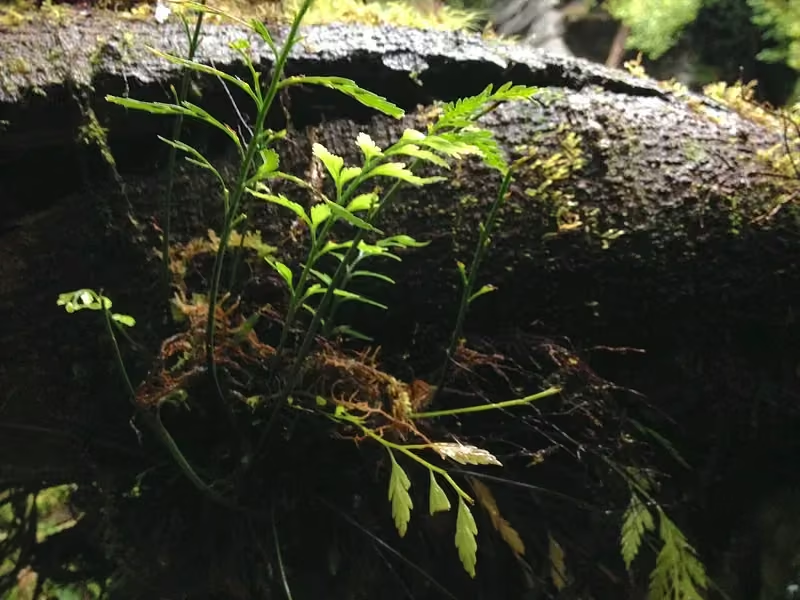
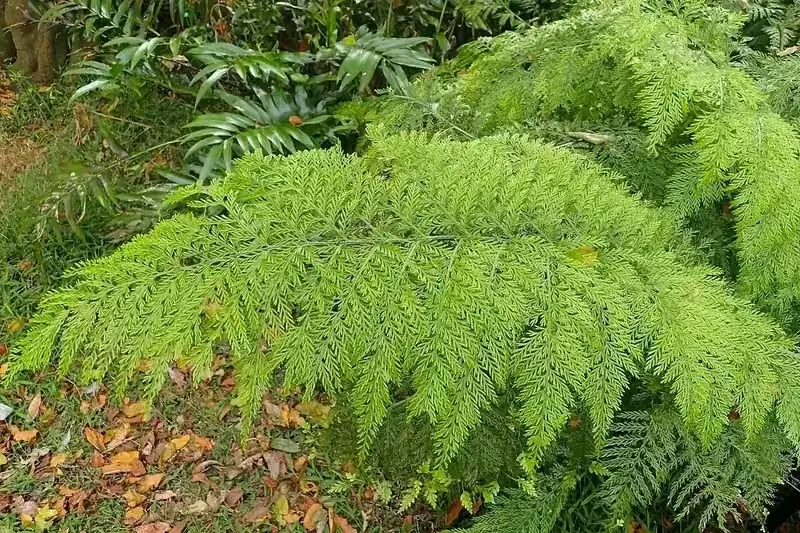
Explore other native plants that share similar characteristics or habitats with Poor Knights Spleenwort ( Asplenium pauperequitum ), offering further insights into New Zealand's diverse flora. These related species provide context and opportunities for complementary planting in your garden.

Plant Conservation
Conservation Status and Threats
Asplenium pauperequitum is listed as "Threatened - Nationally Endangered" in the New Zealand Threat Classification System, with qualifiers EF (Extreme Fluctuations) and RR (Restricted Range). This critically highlights its precarious conservation status due to a combination of its highly specialized and limited natural habitat, and sensitivity to environmental changes. Efforts to protect this species are focused on preserving its unique coastal rock microhabitats on the Poor Knights and Chatham Islands, which are vital for its survival. Given the extreme difficulty in cultivating this fern, in-situ conservation (protection within its natural habitat) is the primary and most effective strategy for its long-term survival. Public awareness of its endangered status is important to prevent accidental disturbance.
Frequently Asked Questions
How tall does Poor Knights Spleenwort grow?
It is very small, reaching only 3 to 10 cm tall with a spread of 2.5 to 8 cm.
What is the conservation status of Poor Knights Spleenwort?
It is classified as Threatened - Nationally Endangered, restricted to a few offshore island rock habitats.
Where does Poor Knights Spleenwort grow?
It grows exclusively on rock, in seepages, crevices and damp rhyolitic overhangs on exposed coastal bluffs of its endemic islands.
Does Poor Knights Spleenwort tolerate frost?
No, it has low frost tolerance as a sheltered coastal species requiring constant dampness and deep shade.
Sources and Further Reading
The botanical, growing, and conservation details for Poor K. Spleenwort (Asplenium pauperequitum) on this page draw on authoritative New Zealand plant references and citizen-science observation records. Consult the sources below for full technical records and the latest distribution data.