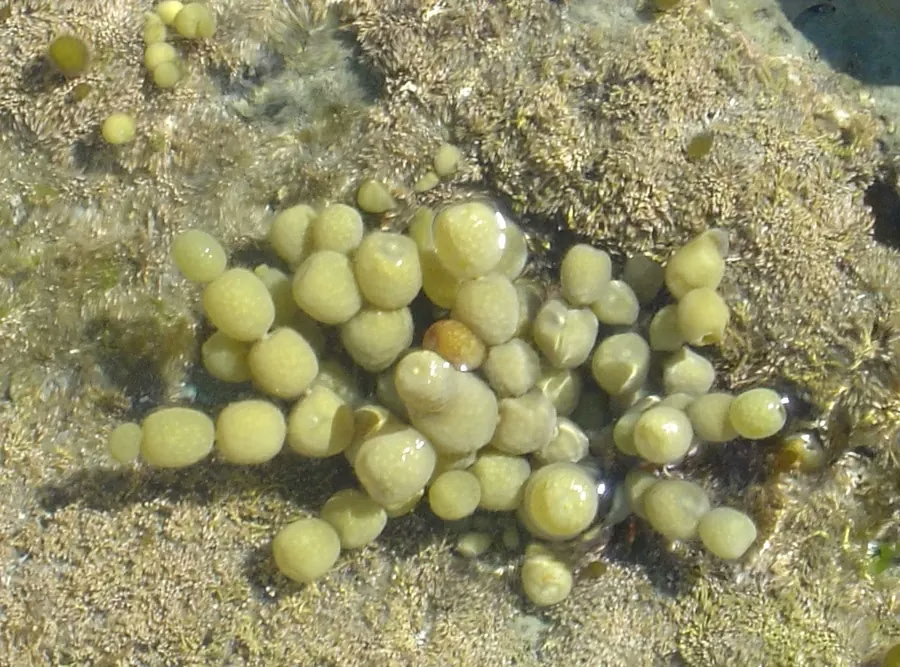
Neptune's Necklace
Hormosira banksii
Last updated:
Neptune's Necklace (Hormosira banksii), also called sea grapes or bubbleweed, is a distinctive brown alga that is one of the most recognisable features of New Zealand's intertidal rocky shores. Its fronds are strings of olive-brown, gas-filled spherical beads, usually 5 to 15 mm across, connected by short narrow links and anchored by a small disc-shaped holdfast. Whole fronds reach 30 to 40 cm long and form dense mats across rock platforms and pools in the mid-tide zone. A marine species, it needs regular tidal inundation and is a key habitat-forming seaweed for shore invertebrates. Explore more coastal native plants in our native plant guide.

Species Description
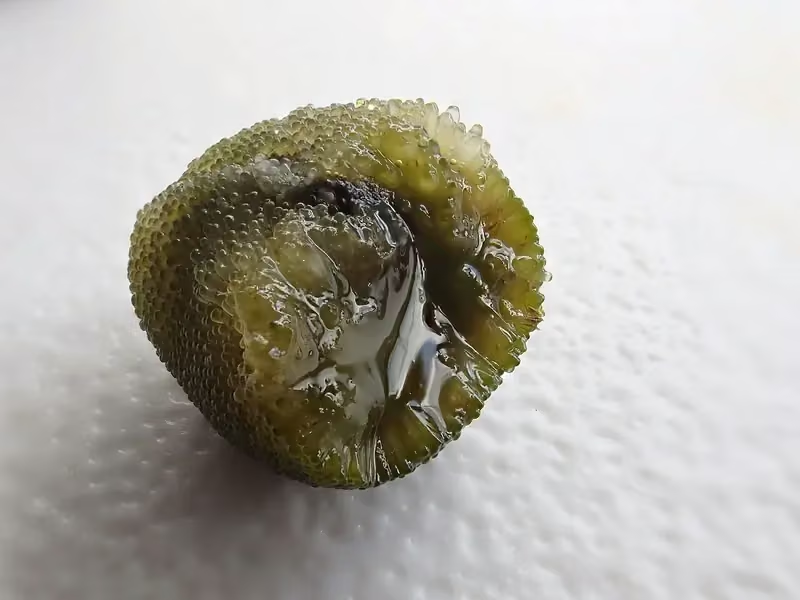
Hormosira banksii , commonly known as Neptune's Necklace, Sea Grapes, or Bubbleweed, is a distinctive brown algae (Phaeophyceae) that forms one of the most recognizable features of New Zealand's intertidal zones. The thallus consists of strings of olive-brown, spherical, gas-filled pneumatocysts or beads that resemble a necklace, giving rise to its common name. These hollow beads typically measure 5-15 mm in diameter but can grow larger to 20 mm in calm, muddy environments. The spheres are connected by short, narrow internodes and taper towards a small but strong disc-shaped holdfast that anchors the algae to rocky substrates. The entire frond can reach lengths of 30-40 cm, though size varies considerably depending on environmental conditions. The surface of mature beads displays visible conceptacles (reproductive organs) as rough-looking dimples. The species produces a protective slime layer that helps reduce desiccation during low tide exposure, and the gas-filled beads provide buoyancy, allowing the fronds to float upward during high tide to maximize light capture.
Quick Facts
| Scientific Name | Hormosira banksii |
|---|---|
| Height | 30-40 cm (frond length) |
| Spread | Forms dense mats across rock platforms |
| Water Needs | Marine - requires regular tidal inundation |
| Light | Full sun to partial shade |
| Frost Tolerance | Not applicable (marine species) |
| Salt Tolerance | Obligate marine species |
| Growth Rate | Moderate to fast |
| Lifespan | Perennial (several years) |
Climate Best Suited to
Neptune's Necklace thrives in temperate marine climates with moderate wave action and regular tidal cycles. It is found throughout New Zealand's coastline where water temperatures range from 10-20°C. The species shows remarkable adaptability to different coastal conditions but performs best in areas with consistent tidal patterns and moderate exposure to wave action. It cannot survive in freshwater or brackish environments and requires full marine salinity. The algae is most abundant in regions with cool to moderate water temperatures and is less common in subtropical northern areas.
Regional Suitability
| Coastal Region | Habitat Suitability |
|---|---|
| Auckland Coast | Good |
| Wellington Coast | Excellent |
| Canterbury Coast | Excellent |
| Otago Coast | Excellent |
| West Coast | Good (where rocky shores present) |
| Fiordland | Moderate (limited by freshwater input) |
Natural Habitat
Hormosira banksii is most commonly found in the mid-littoral zone on exposed rock platforms and in rock pools between tide marks. It thrives on low-energy rocky reefs within the intertidal zone at mid-tide levels, where it forms extensive monospecific stands that can dominate the landscape. The species shows remarkable versatility in substrate preference, colonizing not only solid rock but also stones in sand or mud areas within calm inlets and harbors. Neptune's Necklace demonstrates exceptional tolerance to desiccation, allowing it to survive extended periods of air exposure during low tides. It typically occupies the zone between mean high water neap and mean low water neap tides, though its exact position varies with local conditions. The species often grows in high-density aggregations, which helps reduce moisture loss and provides mutual protection from environmental stresses. In optimal conditions, it can exclude other algal species through competitive superiority, forming near-monocultures across suitable rocky surfaces.
Growing Requirements
Substrate Requirements
Requires hard substrate for holdfast attachment. Cannot grow in sand or soft sediments without solid attachment points. Prefers stable rocky surfaces.
- Solid rock platforms preferred
- Can attach to stable stones and boulders
- Requires firm attachment surface
- Cannot survive on shifting substrates
Light Requirements
Requires adequate sunlight for photosynthesis but has adaptations to cope with varying light conditions throughout the tidal cycle.
- Full sun exposure during low tide
- Filtered light when submerged
- Buoyant beads maximize light capture at high tide
- Can tolerate some shading from other algae
Water Requirements
As a marine species, requires regular inundation by seawater with full oceanic salinity. Cannot survive in freshwater or low salinity conditions.
- Regular tidal inundation essential
- Full marine salinity (35 ppt) required
- Can tolerate several hours of air exposure
- Slime layer helps retain moisture during low tide
Establishment and Cultivation
While Hormosira banksii cannot be cultivated in traditional gardens, it can be encouraged to establish in suitable marine aquarium systems or restored to degraded intertidal areas. Natural colonization occurs through the settlement of reproductive propagules released during spawning events. For restoration projects, transplantation of adult plants with intact holdfasts can be attempted, though success rates vary. The key factors for establishment include appropriate tidal height (mid-littoral zone), suitable hard substrate for attachment, protection from excessive trampling or disturbance during the initial establishment phase, and presence of other Hormosira populations nearby for reproductive success. In aquaculture or marine aquarium settings, maintaining appropriate water temperature (12-18°C), salinity (35 ppt), and simulating tidal cycles through water level changes or flow patterns is essential. The species is sensitive to pollution and requires good water quality for successful establishment and growth.
Ecological Role
Neptune's Necklace is regarded as an ecosystem engineer and habitat former in New Zealand's intertidal zones. It provides critical habitat structure for numerous marine organisms, with young crustaceans and molluscs relying on its dense canopies for shelter, protection from predators, and prevention of desiccation at low tide. The algae serves as a primary food source for various herbivores including sea urchins, amphipods, isopods, and some juvenile fish species. Its fronds provide substrate for sessile organisms and epiphytic algae, notably the obligate epiphyte Notheia anomala . The dense mats formed by Hormosira moderate environmental conditions, reducing temperature fluctuations and maintaining humidity for associated fauna. As a primary producer, it contributes significantly to coastal productivity and nutrient cycling. The species plays a vital role in energy transfer from primary production to higher trophic levels. Its presence indicates healthy intertidal ecosystem functioning and it often serves as an indicator species for monitoring coastal environmental health.
Uses & Significance
Ecological Value
Neptune's Necklace is fundamental to the health and biodiversity of New Zealand's rocky intertidal ecosystems, supporting complex food webs and providing essential ecosystem services.
- Primary habitat former in intertidal zones
- Nursery area for juvenile marine organisms
- Food source for diverse herbivores
- Substrate for epiphytic species
- Coastal productivity contributor
- Environmental stress buffer for associated fauna
Scientific and Educational Value
This species serves as an important model organism for studying intertidal ecology, climate change impacts, and marine conservation strategies.
- Indicator species for environmental monitoring
- Research subject for desiccation tolerance studies
- Educational tool for marine biology programs
- Climate change impact assessment species
- Intertidal zonation demonstration organism
Conservation and Management
While not formally assessed for conservation status, Hormosira banksii faces several anthropogenic threats that require active management. The species is particularly vulnerable to human trampling, with studies showing significant reduction in cover in areas of high foot traffic. Even light trampling can dislodge the holdfast, and recovery can take several years. Collection for bait or food, though less common in New Zealand than Australia, can impact local populations. Pollution, particularly from urban runoff and sewage discharge, negatively affects growth and reproduction. Climate change poses emerging threats through ocean warming, acidification, and changes in wave patterns and storm intensity. Conservation efforts focus on establishing marine protected areas, implementing trampling management through boardwalks and designated paths, monitoring population health as an indicator of ecosystem condition, public education about intertidal ecology, and restoration of degraded habitats. The species' role as an ecosystem engineer makes its conservation critical for maintaining intertidal biodiversity.
Seasonal Patterns
Spring
Peak growth period with increasing day length and warming waters. New fronds develop rapidly and reproductive conceptacles begin forming.
- Rapid growth of new beads
- Increased photosynthetic activity
- Early reproductive development
- Recovery from winter storm damage
Summer
Main reproductive season with conceptacle maturation and gamete release. Growth continues but may slow during extreme low tides with extended exposure.
- Peak reproductive activity
- Gamete release synchronized with tides
- Maximum biomass achieved
- Increased desiccation stress during low tides
Autumn
Continued reproduction with secondary spawning events. Growth rate decreases as temperatures drop and storm frequency increases.
- Secondary reproductive period
- Preparation for winter conditions
- Accumulation of storage compounds
- Increased storm damage risk
Winter
Reduced growth with minimal reproduction. Plants endure increased wave action and storms, with some frond loss common.
- Minimal growth activity
- Storm damage and frond loss
- Survival through stored reserves
- Holdfast persistence critical
Harvesting and Collection Guidelines
While collection of Neptune's Necklace is generally discouraged to protect intertidal ecosystems, traditional and scientific collection may occur under specific circumstances with appropriate permissions.
- Never remove entire plants including holdfasts
- If collecting, take only small portions of fronds
- Avoid collection from protected areas
- Leave reproductive plants undisturbed during spawning season
- Minimize trampling when accessing collection sites
Sustainable harvesting, if permitted, should follow the principle of taking no more than 10% of available biomass from any area. Recovery of harvested areas should be monitored, and collection should rotate between sites to allow regeneration. Always check local regulations and obtain necessary permits before any collection activity.
How to Grow Neptune's Necklace
Cultivating Neptune's Necklace ( Hormosira banksii ) is a specialized endeavor primarily undertaken in marine aquarium systems, research facilities, or restoration projects. This species can be propagated through several methods, each requiring specific marine conditions to ensure healthy growth and establishment. Successful propagation depends on replicating the species' natural intertidal environment and providing appropriate substrate and water conditions.
From Spores
Propagation from reproductive propagules is the primary method for establishing new populations of Neptune's Necklace. The species is monoecious, with both male and female reproductive organs (conceptacles) present on the same plant.
Reproductive propagules are released during spawning events typically triggered by spring tides and temperature cues. In controlled settings, spawning can be induced by temperature manipulation and simulated tidal cycles. Collect mature fronds with visible conceptacles (appearing as rough dimples on bead surfaces) and place them in filtered seawater.
- Select mature fronds with developed conceptacles during reproductive season
- Place fronds in shallow trays of filtered seawater at 15-18°C
- Expose to air briefly to trigger gamete release upon reimmersion
- Allow gametes to settle on prepared substrate tiles or rocks
- Maintain gentle water flow to prevent sediment accumulation
- Keep in bright, indirect light during initial development
- Germlings appear within 1-2 weeks under optimal conditions
- Gradually increase light exposure as young plants develop
- Transfer to final growing position once holdfasts are established
Success rates improve significantly when multiple parent plants are used to ensure genetic diversity and when spawning is synchronized with natural reproductive cycles.
Vegetative Propagation
While sexual reproduction is the primary propagation method, vegetative spread can occur through fragmentation and reattachment of healthy frond portions with intact tissue capable of regeneration.
Fragment propagation is less reliable than spore cultivation but can be useful for rapid establishment in restoration projects. Select healthy fronds with intact beads and carefully fragment them, ensuring each piece retains some basal tissue capable of holdfast regeneration.
- Select vigorous plants with healthy, undamaged fronds
- Cut fronds into sections retaining basal tissue
- Attach fragments to substrate using biodegradable thread or mesh
- Position at appropriate tidal height in restoration site
- Secure firmly to prevent dislodgement by wave action
- Monitor attachment and growth over several weeks
- Remove securing materials once holdfast develops
- Protect from excessive disturbance during establishment
Transplantation Methods
Transplantation of established plants is sometimes necessary for restoration projects or to establish populations in rehabilitated areas. This method requires careful handling to preserve the integrity of the holdfast.
Whole plant translocation should be done during cooler months to minimize stress. Remove plants with intact holdfasts by carefully chiseling around the attachment point, keeping some substrate attached if possible.
- Select donor sites with healthy, abundant populations
- Choose plants of various sizes for population structure
- Remove with substrate chunk if possible using chisel
- Transport in seawater maintaining temperature
- Minimize air exposure during transfer
- Attach to new substrate using marine epoxy if needed
- Position at same tidal height as origin
- Monitor for several tidal cycles to ensure attachment
- Document survival rates for future reference
Threats & Stressors
Neptune's Necklace faces various natural and anthropogenic stressors that can impact population health and distribution. Grazing pressure from herbivores like sea urchins, limpets, and amphipods is a natural control mechanism but can become destructive if herbivore populations explode due to ecosystem imbalances. Epiphytic algae, particularly during nutrient enrichment events, can smother fronds and reduce photosynthetic efficiency. Sedimentation from coastal development or erosion can bury holdfasts and prevent settlement of new propagules. Extreme weather events, increasingly common with climate change, can cause massive frond loss through mechanical damage. Invasive species may compete for space, though Hormosira is generally competitively superior in its preferred zone. Disease outbreaks, while rare, have been documented in stressed populations. Oil spills and chemical pollutants can cause immediate mortality and long-term reproductive impacts. Rising sea temperatures may shift the species' distribution southward, potentially causing local extinctions in warmer northern areas. Ocean acidification could affect the species' ability to maintain cellular pH balance and may impact reproductive success.
Cultural Significance
While not as culturally prominent as some terrestrial plants, Neptune's Necklace has played a role in coastal Māori traditions and continues to be recognized as an indicator of healthy marine environments. The distinctive beaded appearance made it easily recognizable and it was used as a seasonal indicator for various coastal harvesting activities. Traditional ecological knowledge recognized its importance as habitat for small shellfish and other edible marine life. In some regions, the presence of healthy Hormosira beds indicated good conditions for gathering kaimoana (seafood). Contemporary New Zealanders recognize Neptune's Necklace as an iconic feature of rocky shores, and it frequently appears in marine education programs and coastal artwork. The species has become a symbol of healthy intertidal ecosystems and is often used in environmental campaigns highlighting the importance of marine conservation. Its common name has entered popular culture, inspiring jewelry designs and appearing in children's books about the seashor. Scientific research on the species has contributed to understanding of intertidal ecology globally, with New Zealand populations providing important comparative data for international studies.
- Indicator for shellfish gathering conditions
- Educational symbol for marine ecology
- Bioindicator of coastal water quality
- Inspiration for art and design
- Research organism for climate change studies
Bonus Tip
When exploring rock pools at low tide, look for Neptune's Necklace in the mid-tide zone where it often forms a distinct band. The satisfying 'pop' made when squeezing the beads has entertained generations of Kiwi children, but remember to be gentle with these important ecosystem engineers. For the best viewing experience, visit during a spring low tide when the full extent of the intertidal zonation is revealed. Take only photos and memories, leaving these fascinating algae to continue their vital ecological role.
Related Species
Explore other native marine and coastal species that share similar habitats with Neptune's Necklace ( Hormosira banksii ), offering further insights into New Zealand's diverse marine flora. These related species provide context and opportunities for understanding intertidal ecology. For another coastal species, explore Kermadec Nettle-Tree.

Conservation Status
Current Status and Threats
Hormosira banksii has not been formally evaluated under the New Zealand Threat Classification System, reflecting its current abundance and widespread distribution. However, this lack of formal assessment should not be interpreted as absence of conservation concern. The species faces increasing anthropogenic pressures that could lead to localized population declines. Research has documented significant reductions in cover and biomass in areas subject to human trampling, with recovery taking 2-5 years even after disturbance ceases. Urban coastal development continues to impact populations through pollution, sedimentation, and altered drainage patterns. Climate change presents an emerging threat, with rising sea temperatures potentially causing range shifts and local extinctions in warmer areas. Ocean acidification may affect calcifying epiphytes and associated fauna more than Hormosira itself, but indirect ecosystem effects could be significant. The species' role as an ecosystem engineer and habitat former makes its conservation crucial for maintaining intertidal biodiversity. Monitoring programs increasingly use Neptune's Necklace as an indicator species for assessing coastal ecosystem health and the impacts of human activities. Conservation strategies should focus on integrated coastal zone management, establishing and maintaining marine protected areas, and public education about the ecological importance of intertidal habitats.
Frequently Asked Questions
What is Neptune's Necklace?
It is a brown intertidal alga forming strings of gas-filled beads, also called sea grapes.
How long do the fronds grow?
The fronds reach about 30 to 40 cm long, with beads usually 5 to 15 mm across.
Where does Hormosira banksii grow?
It grows on mid-tide rock platforms and pools around New Zealand's coast, needing tidal inundation.
Why is Neptune's Necklace important?
It is a habitat-former, sheltering young crustaceans, molluscs and other shore life.
Sources and Further Reading
The botanical, growing, and conservation details for Neptune's Necklace (Hormosira banksii) on this page draw on authoritative New Zealand plant references and citizen-science observation records. Consult the sources below for full technical records and the latest distribution data.