Molloy's Potato Orchid
Gastrodia molloyi
Last updated:
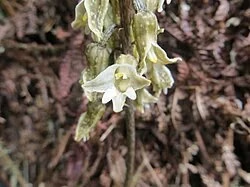
Molloy's Potato Orchid (Gastrodia molloyi) is a leafless New Zealand orchid that spends most of the year underground as a tuberous rhizome. In summer, from December to March, it sends up a single golden-brown to pinkish-grey flower spike up to 80 cm tall, streaked with grey-white and carrying up to 55 bell-shaped, knobbly flowers that smell strongly of freesias. Having no green parts, it looks like a dead stick until closely inspected. It is a myco-heterotroph, tapping fungal networks that break down dead wood. Remarkably adaptable, it grows from the Waikato south to Stewart Island in beech, tawa and kanuka forest, willow stands and even garden mulch. It is classed as Not Threatened. Explore more native flowering plants in our native plant guide.
Plant Description
Identification and Physical Characteristics
Gastrodia molloyi is a tall, slender orchid that spends most of its life underground as a tuberous rhizome. During the summer months (December to March), it sends up a solitary, golden-brown to pink-greyish flower spike that can reach up to 80 cm in height. The stem is patterned with distinctive grey-whitish streaks. The flowers are numerous (up to 55), bell-shaped, and knobbly, with a colour ranging from greenish-gold to golden brown. They emit a strong, sweet scent often likened to freesias. As a leafless plant, it has no green parts and appears somewhat like a dead stick until closely inspected.
Quick Facts
| Scientific Name | Gastrodia molloyi |
|---|---|
| Height | 30-80 cm |
| Spread | 5-10 cm |
| Water Needs | Moderate (Soil Moisture) |
| Light | Shade |
| Frost Tolerance | High |
| Salt Tolerance | Low |
| Growth Rate | Seasonal |
| Lifespan | Perennial |
Climate Best Suited to
This orchid is found throughout New Zealand, from the Waikato southwards to Stewart Island. It thrives in cool, temperate climates and is adapted to forest environments where humidity is relatively high and temperature fluctuations are moderated by the canopy.
Regional Suitability
| City | Climate Suitability |
|---|---|
| Auckland | Suitable (South) |
| Wellington | Suitable |
| Christchurch | Suitable |
| Dunedin | Suitable |
| Invercargill | Suitable |
Plant Habitat
Natural Occurrence and Ecology
Gastrodia molloyi is surprisingly adaptable in its choice of habitat. While often associated with indigenous forests dominated by Beech ( Nothofagus / Fuscospora / Lophozonia ), Tawa, or Kānuka, it frequently colonizes disturbed sites. It can be found in exotic willow forests, along flood-prone riverbanks, and even in garden woodchip mulch or under pine trees. The key requirement seems to be the presence of specific mycorrhizal fungi associated with decaying wood and tree roots.
Growing Requirements
Soil Requirements
Requires soil rich in decaying organic matter.
- Fungal-rich humus
- Decaying wood/leaf litter
- Moist but well-drained
- Undisturbed soil structure
Light Requirements
Grows in deep to dappled shade.
- No direct sunlight needed
- Photosynthesis is not required
- Thrives under canopy cover
Water Requirements
Relies on consistent soil moisture.
- Maintain humidity
- Avoid waterlogging
- Seasonal rainfall is usually sufficient
Planting and Establishing
Establishment Guidance
Important: Gastrodia molloyi cannot be purchased in garden centers and should never be dug up from the wild. It is nearly impossible to transplant successfully because severing the connection with its host fungi usually results in the death of the plant. The only way to "have" this plant is to preserve existing native bush or forest remnants on your property and protect the soil from disturbance, allowing natural colonization.
Ecological Role
Biodiversity and Ecosystem Impact
As a saprophyte (or myco-heterotroph), this orchid plays a specialized role in the decomposition cycle. It taps into the fungal networks (mycelium) that break down dead wood and leaf litter, indirectly recycling nutrients. Its flowers are pollinated by small insects, attracted by their sweet, freesia-like scent.
Uses & Significance
Garden Uses
Not a garden plant in the traditional sense, but a treasured discovery for those with bush blocks.
- Indicator of soil fungal health
- Botanical curiosity
Ecological Value
Part of complex underground fungal networks.
- Demonstrates forest connectivity
- Supports specialized pollinators
Landscaping Uses
This orchid is not suitable for landscaping design. Its value lies in its presence within a preserved ecological system. Finding it growing naturally in a wooded area of a garden is a sign of a healthy, functioning soil ecosystem rich in organic matter and fungi.
Seasonal Care Calendar
Spring
Underground activity.
- Avoid digging in potential areas
- Mark known spots
Summer
Flowering season.
- Enjoy the flowers
- Watch for seed pods
Autumn
Seed dispersal.
- Seeds are dust-like
- Stems collapse and disappear
Winter
Dormancy.
- Plant is invisible underground
- Leave leaf litter undisturbed
When to Prune and How Much
No pruning is required or recommended.
- Do not cut back flower stems
- Allow to seed and die back naturally
The dead stems rapidly decompose, returning nutrients to the soil.
Regular maintenance through careful pruning ensures the plant remains healthy and maintains its desired shape. Focus on removing dead or diseased wood to promote better air circulation and prevent the spread of pathogens. Proper pruning techniques help the plant direct its energy toward new growth, resulting in a more robust and aesthetically pleasing specimen in your garden.
How to Grow Molloy's Potato Orchid
Cultivating Molloy's Potato Orchid ( Gastrodia molloyi ) is not a standard gardening activity. Because of its total dependence on specific soil fungi for survival (myco-heterotrophy), it cannot be grown in pots, propagated by cuttings, or transplanted like typical plants. The "cultivation" of this species is essentially habitat management-creating and maintaining the conditions that allow the orchid and its fungal partner to thrive.
Understanding Its Needs
The orchid does not have roots in the traditional sense; it has a tuberous rhizome that is infected by fungal threads. These fungi are usually saprophytic, breaking down wood and leaf litter, or mycorrhizal, connected to the roots of nearby trees (like Beech or Tea Tree). Therefore, you are not just growing a plant; you are managing a complex underground ecosystem.
Encouraging Natural Growth
If you live near native bush or have a property with established trees, you may be able to encourage Gastrodia to colonize.
- Preserve Leaf Litter: Do not clear away dead leaves, twigs, or fallen branches under trees. This organic material is the food source for the fungi that the orchid eats.
- Avoid Fungicides: Never use antifungal sprays or soil drenches in areas where you wish to encourage orchids. These chemicals will kill the essential symbiotic partners.
- Minimize Disturbance: Avoid digging, rototilling, or compacting the soil under the tree canopy. The orchid's tubers are fragile and can be easily damaged.
- Use Woodchip Mulch: Some gardeners have found Gastrodia appearing in piles of old woodchip mulch. Maintaining a deep layer of woody mulch can simulate the forest floor conditions it prefers.
Seed Dispersal
If you are lucky enough to have a flowering plant, you can try to help it spread.
- Wait for the seed pods to mature and turn brown. They will split open to release millions of microscopic, dust-like seeds.
- Gently shake the seed stem over areas of suitable habitat-damp, shady spots rich in decaying wood or leaf mould.
- Be patient. It may take several years for a seed to encounter the right fungus, form a protocorm, develop a tuber, and finally produce a flower spike.
Pests & Diseases
Slugs and snails are the main threat to the emerging flower spikes, which they can devour overnight. Possums and pigs may also dig up and eat the starchy tubers (hence the name "Potato Orchid").
Cultural Significance
The rhizomes of Gastrodia species were known as edible by Māori and were historically a food source (hūperei/perei), although they are not commonly eaten today. Gastrodia molloyi is named in honor of Dr. Brian Molloy, a prominent New Zealand botanist.
- Traditional food source (rhizome)
- Named after Dr. Brian Molloy
Bonus Tip
Look for this orchid in unexpected places! It is known to pop up in established gardens, especially where large amounts of woodchip or bark mulch have been used and left undisturbed for years.
Related Plants
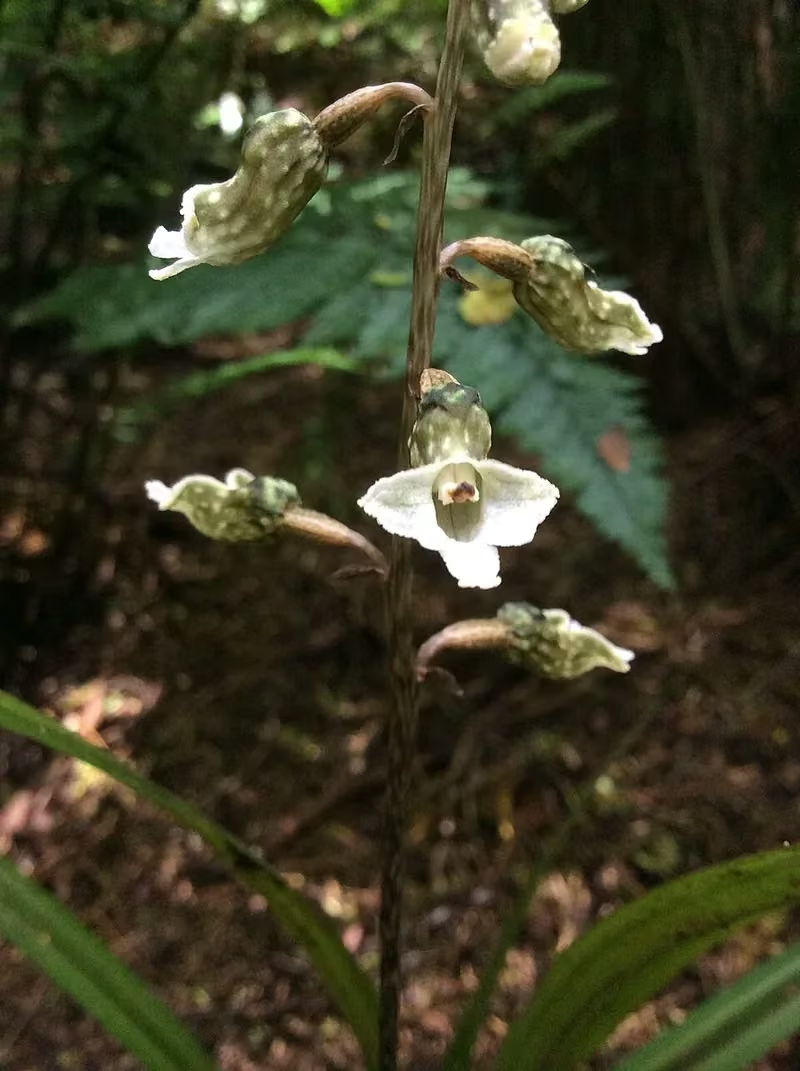
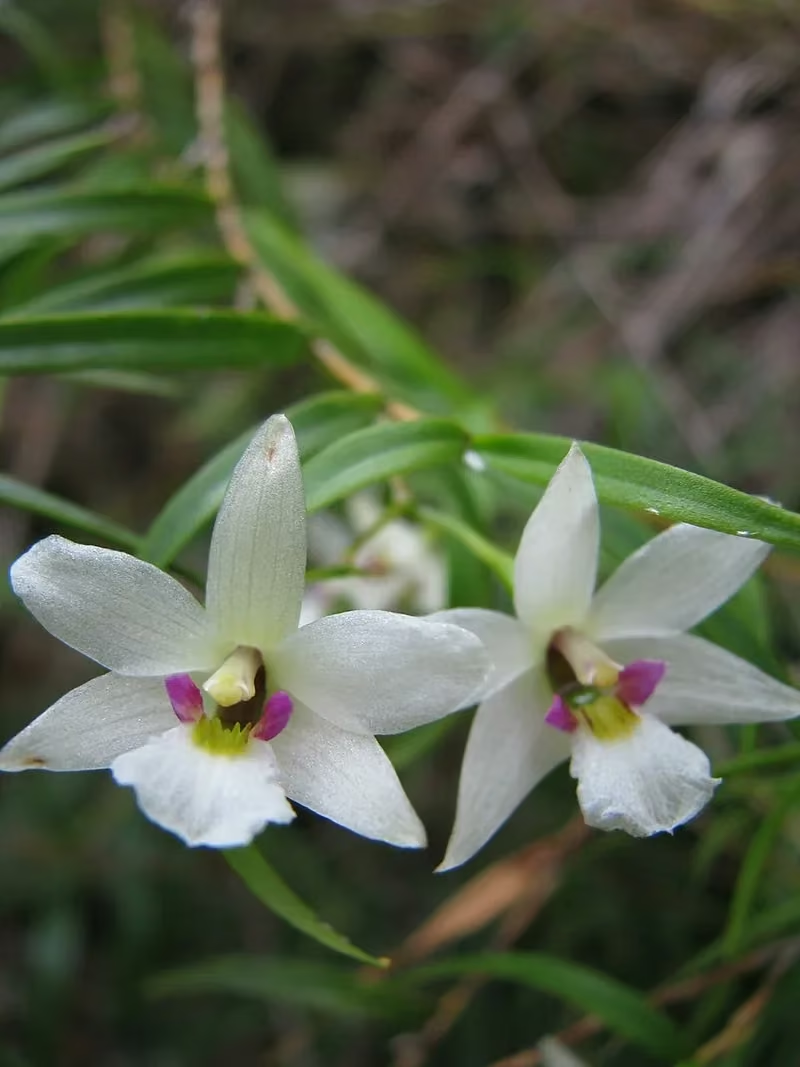
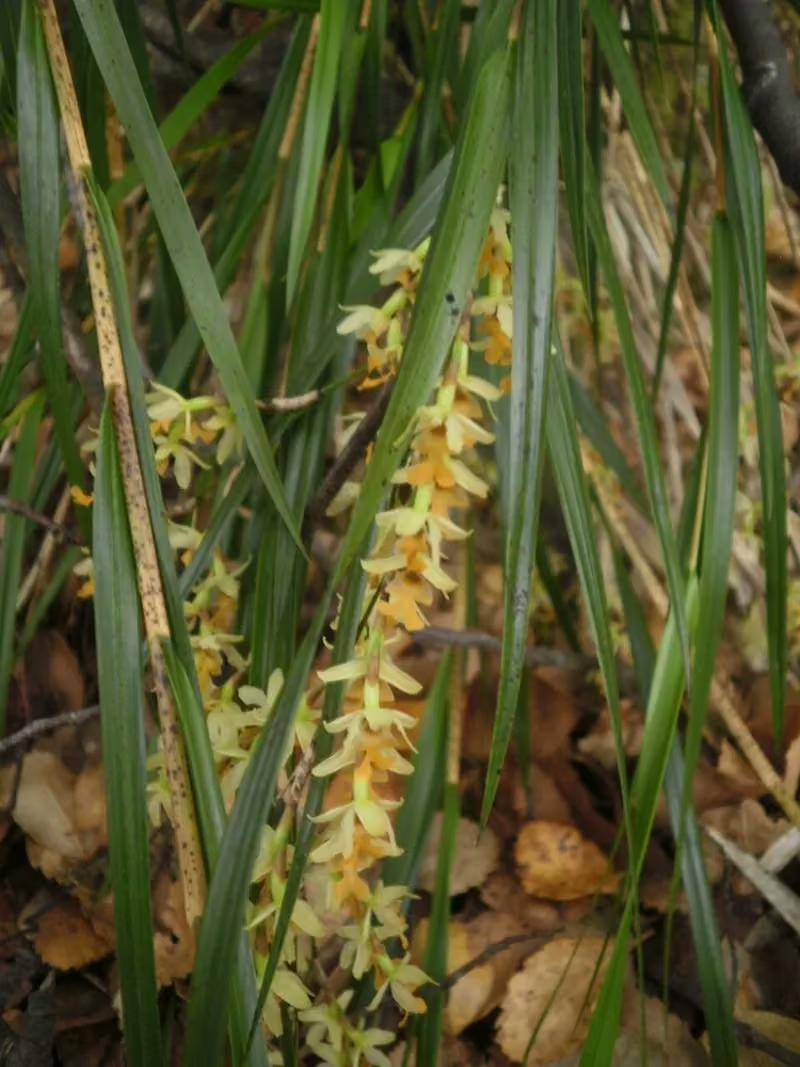
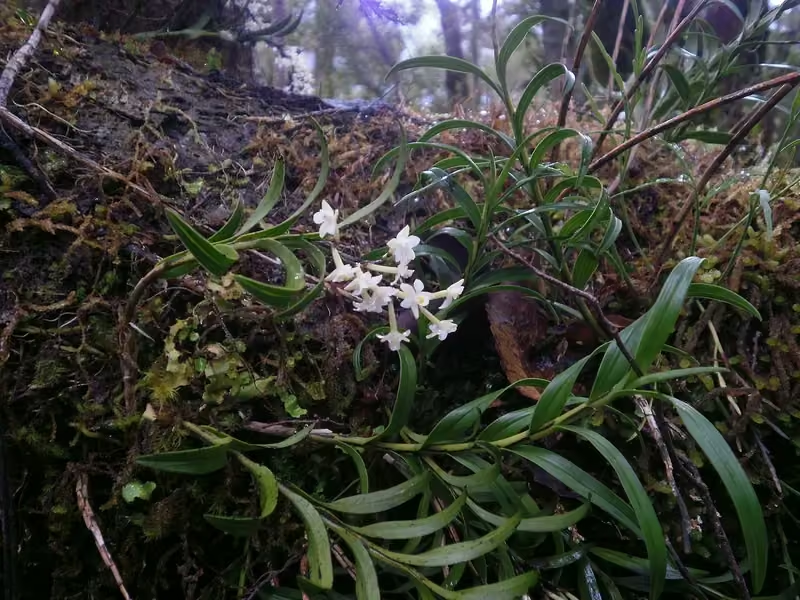
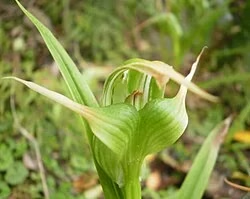
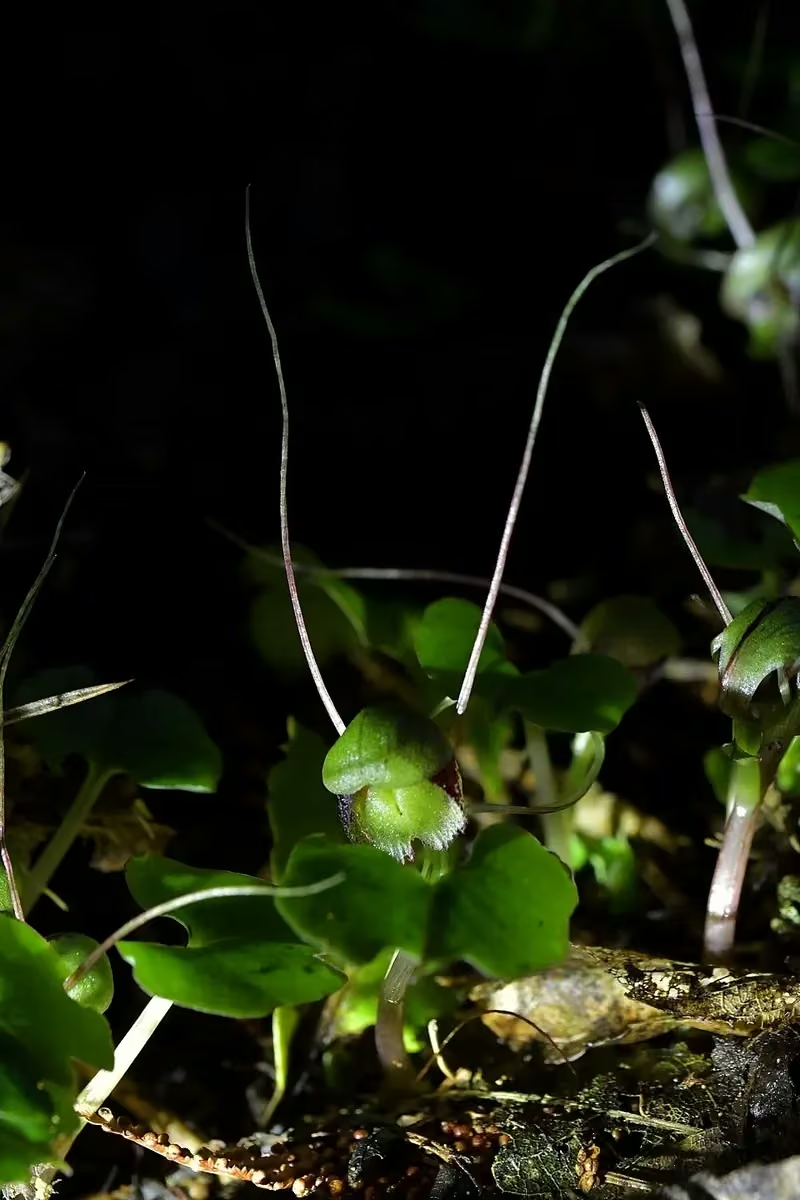
Explore other native plants that share similar characteristics or habitats with Molloy's Potato Orchid ( Gastrodia molloyi ), offering further insights into New Zealand's diverse flora. These related species provide context and opportunities for complementary planting in your garden.


Plant Conservation
Conservation Status and Threats
Gastrodia molloyi is currently classified as Not Threatened. However, like many orchids, it is sensitive to habitat loss and changes in soil conditions. Its reliance on specific fungi means that the health of the entire forest ecosystem is crucial for its survival.
Frequently Asked Questions
How tall does Molloy's Potato Orchid grow?
Its flower spike reaches 30 to 80 cm tall in summer.
When does Gastrodia molloyi flower?
It flowers in summer, from December to March.
Does Gastrodia molloyi have a scent?
Yes, its flowers emit a strong sweet scent likened to freesias.
Where does Gastrodia molloyi grow?
It occurs from the Waikato south to Stewart Island in forests and disturbed sites.
Sources and Further Reading
The botanical, growing, and conservation details for Molloy's Potato Orchid (Gastrodia molloyi) on this page draw on authoritative New Zealand plant references and citizen-science observation records. Consult the sources below for full technical records and the latest distribution data.