Alpine Speargrass
Aciphylla similis
Last updated:
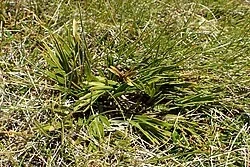
Aciphylla similis, commonly called alpine speargrass, is a compact South Island mountain speargrass that forms dense rosettes of rigid, deeply divided leaves radiating from a central point. The leaves grow up to about 23 cm long, tapering to needle-sharp tips, and give the rosette a diameter of roughly 20 cm in healthy green to slightly blue-green tones. When mature it produces a stout flowering stem up to 40 cm high with dense umbels of tiny cream flowers framed by rigid spiny bracts. It grows through the South Island mountains, typically between 900 and 1100 metres, on open sunny ground in subalpine to alpine tussock grasslands, rocky outcrops and stabilised scree. Slow growing and very frost hardy, it needs good ventilation and low humidity. Explore more native plants such as Anomalous Speargrass.
Plant Description
Identification and Physical Characteristics
Aciphylla similis forms compact rosettes of rigid, deeply divided leaves. These leaves, which can grow up to 23 cm in length, are arranged in a dense cluster that radiates from a central point, reaching approximately 20 cm in diameter. The leaflets are narrow and taper to incredibly sharp, needle-like tips, providing a formidable defense against browsing. The foliage typically maintains a healthy green to slightly blue-green hue. When mature, the plant produces a stout flowering stem that can rise up to 40 cm in height. The inflorescence consists of dense umbels of tiny, cream-coloured flowers, beautifully protected by rigid, spiny bracts.
Quick Facts
| Scientific Name | Aciphylla similis |
|---|---|
| Height | 0.3 - 0.4 metres (when flowering) |
| Spread | 0.2 - 0.3 metres |
| Water Needs | Moderate; requires good drainage |
| Light | Full sun - requires bright, open conditions |
| Frost Tolerance | High - adapted to severe alpine winters |
| Salt Tolerance | Low |
| Growth Rate | Slow |
| Lifespan | Long-lived perennial |
Climate Best Suited to
Alpine Speargrass is an inhabitant of the cool, clear mountain regions of the South Island. it thrives in climates characterized by distinct seasons, including cold winters with regular snow cover and cool, bright summers. It requires excellent ventilation and low humidity, struggling in stagnant, humid lowland environments. It is a true mountain specialist, evolved for the high-altitude climate of New Zealand.
Regional Suitability
| City | Climate Suitability |
|---|---|
| Auckland | Low (too humid and warm) |
| Wellington | Medium (requires a cool, airy site) |
| Christchurch | High (in appropriate garden settings) |
| Invercargill | High |
Plant Habitat
Natural Occurrence and Ecology
In its natural environment, Aciphylla similis is found throughout the South Island mountains, typically at elevations between 900 and 1100 meters above sea level. It favors open, sunny ground and is a common component of subalpine to alpine grasslands dominated by Rytidosperma species or tall tussocks. It also colonizes rocky outcrops and stabilized scree slopes where the soil is mineral-rich and well-drained.
Growing Requirements
Soil Requirements
Must have exceptionally well-drained soil. A gritty, rocky substrate that mimics alpine conditions is ideal. It prefers lean, low-fertility soils and is highly susceptible to root rot in heavy, waterlogged ground.
- Excessively well-drained
- Gritty / Stony
- Low fertility
Light Requirements
Requires full sun. As an alpine specialist, it is adapted to high light intensity and will not thrive in shade. Bright, open positions are essential for the plant to maintain its healthy, compact form.
- Full Sun only
Water Requirements
Water needs are moderate. While the plant requires consistent moisture around its root zone during the growing season, the surface drainage must be sharp to prevent the crown from rotting. Avoid overwatering in humid conditions.
- Moderate
- Consistent root moisture
Planting and Establishing
Establishment Guidance
Like all speargrasses, Aciphylla similis is sensitive to root disturbance once mature. It should be planted into its final position while young. Select a permanent, sunny position with perfect drainage. Prepare a deep, gritty hole and plant at the original level. A deep mulch of stone chips or small rocks around the base is essential to protect the crown and mimic its natural alpine habitat.
Ecological Role
Biodiversity and Ecosystem Impact
In alpine ecosystems, Alpine Speargrass provides specialized habitat for mountain-dwelling invertebrates. Its flowers are an important source of nectar and pollen for alpine insects, and its rigid rosettes offer structural diversity in the grassland. Its presence is an indicator of a healthy and diverse alpine community.
Uses & Significance
Garden Uses
A highly prized specimen for alpine garden enthusiasts. Its compact size makes it perfect for alpine troughs, rock gardens, or as a textural focus in specialized native containers. It represents the unique character of New Zealand's alpine flora perfectly.
- Alpine troughs
- Small rock gardens
- Trough displays
Ecological Value
Essential for supporting alpine biodiversity and providing critical resources for mountain pollinators.
- Pollinator resource
- Alpine habitat contributor
Landscaping Uses
In specialized landscape designs, Aciphylla similis is used to create authentic representations of the South Island high country. Its compact rosettes are perfect for creating structural interest in minimalist native gardens or rock-edged features. Its unique form and hardiness make it a durable choice for high-altitude parks.
Seasonal Care Calendar
Spring
Watch for signs of new growth. Check that the stones around the base are stable and the drainage remains clear as the spring rains commence.
- Monitor growth
- Check drainage
Summer
The primary flowering period. Ensure the root zone stays moist during dry spells, but avoid wetting the rosettes during the heat of the day.
- Watch for flowering
- Maintain root moisture
Autumn
Collect mature seeds. Tidy up the area by removing any dead leaves that have fallen into the rosettes to prevent rot as the weather cools.
- Seed collection
- Tidy debris
Winter
The plant is dormant and extremely cold-hardy. Ensure the site is free-draining and no stagnant water freezes over the crown.
- Maintain dormancy
- Monitor drainage
When to Prune and How Much
Minimal pruning is necessary. Remove the spent flowering stalks at the base once they have finished and seeds have been harvested. Occasionally, trim off any dead leaves at the base of the rosette to keep the plant healthy and tidy.
- Remove spent flower stems
- Trim dead base leaves
Always wear gloves and use sharp, sterilized tools when working with speargrasses.
How to Grow Alpine Speargrass
Growing Alpine Speargrass ( Aciphylla similis ) from seed or division is a rewarding challenge for the dedicated native gardener. This species, highly adapted to the rigorous conditions of the South Island alpine zones, requires specific care to ensure successful germination and healthy long-term development. The most critical factors for success are providing absolute full sun, excellent air movement, and a substrate that provides rapid drainage while still allowing the deep roots to access consistent moisture. Because it is an alpine specialist, it is often easier to manage in specialized alpine houses or troughs where its environment can be carefully monitored.
From Seed
Propagation from seed is the most reliable method for Aciphylla similis . Collect seeds in late summer when the flower umbels have turned firm and brown. Fresh seed is vital for the best results. Sow the seeds onto the surface of a very gritty seed-raising mix-a blend of fine gravel, pumice, and sterilized potting soil is ideal. Lightly cover with a thin layer of fine grit. The seeds require a period of cold stratification to break their natural dormancy. In colder climates, leaving the trays outdoors in a sheltered spot over winter provides this naturally. In warmer regions, a 6-week period in a refrigerator may be necessary before moving them to a cool, bright spot for germination. Germination can be slow and sporadic, often taking several months.
- Collect fresh seeds in autumn
- Sow on gritty, sterile mix
- Provide cold stratification
- Maintain root moisture
Once seedlings are robust enough, move them into individual deep pots to accommodate their developing taproot.
From Cuttings / Division
Vegetative propagation via division is possible but carries a high degree of risk. Mature plants have a sensitive taproot system that resents disturbance. If division is attempted, it should be done in early spring as new growth begins. Carefully lift the clump and use a sharp, sterilized knife to separate individual rosettes, ensuring each piece has a good portion of the root system attached.
Replant the divisions immediately into a gritty mix and maintain consistent moisture until established. This method is generally less successful than growing from seed.
- Divide in early spring
- Use clean, sharp tools
- Replant immediately
Additional Methods
Because the plant is so difficult to transplant once mature, the best "additional method" is meticulous site selection and preparation. Creating a dedicated rockery or trough with a deep layer of drainage material at the bottom ensures that the roots can remain cool while the surface drainage stays sharp. Using a deep mulch of stone chips or fine gravel around the base of the plant is vital; it protects the crown from excess moisture while beautifully mimicking the plant's natural mineral-rich mountain habitat.
- Select bright, airy position
- Use stone chip mulch
- Avoid root disturbance
Pests & Diseases
Alpine Speargrass is generally resistant to many common pests. However, in lowland settings, it can be susceptible to aphids on the new growth and root rot if the soil is too heavy. Fungal issues can occur in humid environments with poor air movement. Maintain sharp drainage and a bright, airy position to prevent these problems.
Cultural Significance
Speargrasses, or Taramea, have a significant place in New Zealand's cultural and botanical heritage. While Aciphylla similis is a specialized alpine species, it is part of this broader lineage of unique and resilient plants that characterize the high country of Aotearoa. It is highly valued by botanists and collectors for its sculptural form and its role in New Zealand's unique mountain biodiversity.
- High-country botanical heritage
- Alpine biodiversity specialist
Bonus Tip
When growing in a trough, pair Alpine Speargrass with low-growing Raoulia species to create a stunning, natural alpine scene in realistic miniature form effectively.
Cultivating this species effectively involves a deep understanding of its natural adaptations and environmental preferences. By mimicking its native habitat-whether that be the cool, moist understory of a temperate rainforest or the exposed, well-drained slopes of an alpine range-gardeners can ensure robust growth and long-term health. Regular observation and minimal, targeted intervention are often the best strategies for maintaining the unique characteristics and ecological contributions of this remarkable New Zealand native plant.
Related Plants
Explore other native plants that share similar characteristics or habitats with Alpine Speargrass ( Aciphylla similis ), offering further insights into New Zealand's diverse flora. These related species provide context and opportunities for complementary planting in your garden.
Speargrass
Aciphylla anomala

Golden Speargrass
Aciphylla aurea

Colenso's Speargrass
Aciphylla colensoi
Congested Speargrass
Aciphylla congesta
Narrow-Leaved Speargrass
Aciphylla crenulata
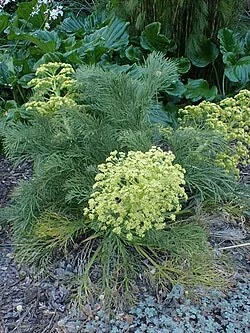
Dieffenbach's Speargrass
Aciphylla dieffenbachii
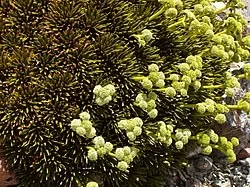
Dobson's Speargrass
Aciphylla dobsonii
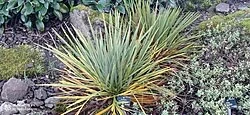
Giant Speargrass
Aciphylla scott-thomsonii
Plant Conservation
Conservation Status and Threats
Currently classified as "Not Threatened," Aciphylla similis remains common throughout its South Island alpine range. However, it is vulnerable to the long-term impacts of climate change and localized damage from introduced browsing mammals. Protecting New Zealand's alpine grassland environments is key to the continued health of this and many other specialized native mountain species.
Frequently Asked Questions
How tall does Aciphylla similis grow?
It forms rosettes about 20 cm across with flowering stems reaching 0.3 to 0.4 metres tall.
Where does alpine speargrass grow?
It grows through the South Island mountains, mostly between 900 and 1100 metres, in tussock grasslands, outcrops and scree.
Does Aciphylla similis tolerate frost?
Yes, it is highly frost hardy and adapted to severe alpine winters with snow cover.
What conditions does it prefer?
It prefers full sun, good drainage and well-ventilated, low-humidity mountain air.
Sources and Further Reading
The botanical, growing, and conservation details for Alpine Speargrass (Aciphylla similis) on this page draw on authoritative New Zealand plant references and citizen-science observation records. Consult the sources below for full technical records and the latest distribution data.