Dieff. Speargrass
Aciphylla dieffenbachii
Last updated:
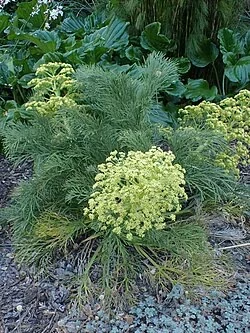
Aciphylla dieffenbachii, known as Dieffenbach's speargrass, is a robust speargrass endemic to the Chatham Islands, where it forms impressive rosettes of rigid, pinnately divided leaves that can build clumps over a metre across. Individual leaves reach 20 to 45 cm long, are thick, leathery and blue-green to grey-green with yellow or orange margins, and each segment ends in a fiercely sharp spine. A stout woody rootstock and deep taproot anchor it against the constant Chatham winds. It grows from coastal cliffs to the islands' highest peaks in open grasslands and peat bogs, tolerating heavy salt spray. Rosettes and flowering stems reach 40 to 80 cm, and it is classed as At Risk - Naturally Uncommon. Explore more native plants such as Anomalous Speargrass.
Plant Description
Identification and Physical Characteristics
Aciphylla dieffenbachii forms impressive rosettes of rigid, pinnately divided leaves that can create clumps over one meter across in optimal conditions Discover more about native ferns. Individual leaves reach 20-45 cm long and 10-25 mm wide, divided into 5-9 pairs of segments plus a prominent terminal segment. Each segment ends in an extremely sharp, yellowish spine capable of penetrating thick clothing and gumboots. The leaves are thick, leathery, and blue-green to gray-green with distinctive yellow or orange margins.The species develops a stout, woody rootstock with a deep taproot extending up to 1.5 meters, anchoring the plant against the fierce winds that regularly batter the Chatham Islands. Lateral roots spread extensively, allowing the plant to access moisture and nutrients across a wide area. The crown accumulates persistent dead leaves that form a protective thatch around the living rosette.Flowering occurs from November to January, earlier than most mainland species due to the milder oceanic climate. Plants are dioecious with separate male and female individuals. The inflorescences rise 40-80 cm tall, bearing compound umbels of small cream to yellowish flowers. Male plants produce more numerous, showier flower heads. The flowers emit a sweet, honey-like fragrance that attracts the limited pollinator fauna of the islands. Seeds are relatively large achenes, 7-10 mm long with prominent wings, adapted for wind dispersal across the treeless landscapes of the Chathams.
Quick Facts
| Scientific Name | Aciphylla dieffenbachii |
|---|---|
| Height | 40-80 cm rosettes; flowering stems to ~80 cm |
| Spread | 60-120 cm clumps in mature stands |
| Water Needs | Moderate - adapts from moist peat to freely drained slopes |
| Light | Full sun and wind-exposed coastal light |
| Frost Tolerance | Moderate; tolerates light frosts but prefers mild winters |
| Salt Tolerance | High - naturally endures Chatham Island salt spray |
| Growth Rate | Moderate; rosettes enlarge steadily in oceanic climates |
| Lifespan | Long-lived perennial (many years) |
Climate Best Suited to
Aciphylla dieffenbachii is well adapted to various New Zealand regions.
Regional Suitability
| City | Climate Suitability |
|---|---|
| Auckland | High |
| Wellington | High |
| Christchurch | Medium |
Plant Habitat
Natural Occurrence and Ecology
Aciphylla dieffenbachii occupies diverse habitats across the Chatham Islands, from coastal cliffs to the highest peaks, though it is most abundant in open grasslands and peat bogs. The species thrives in the islands' hyperoceanic climate, characterized by cool summers (average 16°C), mild winters (average 9°C), and persistent strong winds. Annual rainfall of 800-1000mm is distributed fairly evenly throughout the year.Soil preferences are remarkably broad, growing in everything from free-draining volcanic soils to waterlogged peat. The species shows particular abundance in the unique Chatham Island schist-derived soils and in the extensive peat accumulations that characterize much of the islands' interior. It tolerates salt spray in coastal locations, unusual for a speargrass.The species often dominates in the distinctive vegetation communities of the Chathams. It grows with endemic species likeMyosotidium hortensia(Chatham Island Forget-Me-Not),Astelia chathamica, andDracophyllum arboreum. In peat bogs, it associates withSporadanthus traversii and various sedges. The absence of mammalian browsers until human arrival allowed the evolution of plant communities where spiny defenses were less crucial, though A. dieffenbachii retained its formidable armament.
Growing Requirements
Soil Requirements
Prefers well-draining soil rich in organic matter.
- Well-drained
- Loamy
Light Requirements
Grows best in partial to full sun.
- Full Sun
- Partial Shade
Water Requirements
Requires regular watering during dry periods.
- Regular
- Drought tolerant once established
Planting and Establishing
Establishment Guidance
Establishing Dieffenbach's Speargrass in a garden requires careful consideration of its oceanic origins. It must be planted in a position with full sun and excellent air circulation to avoid humidity-related issues. While it can adapt to various soil types including damp peat and sand, the substrate must be extremely free-draining to prevent root rot. Dig a hole twice the width of the root ball and ensure the plant is well-supported. It is vital that the plant is never allowed to dry out completely, as even established specimens can collapse if they experience severe moisture stress.
Ecological Role
Biodiversity and Ecosystem Impact
In its native Chatham Islands ecosystems, Aciphylla dieffenbachii is a keystone species. Its large rosettes create stable micro-climates with moderated temperatures, providing a vital refuge for many endemic invertebrates that are found nowhere else on Earth. The species has co-evolved with unique island pollinators; its sweet, honey-scented flowers are frequented by flies, beetles, and the endemic Chatham Island red admiral butterfly. This plant is a critical component of the island's food web, and its spiny architecture provides protection for smaller, more vulnerable native herbs in the open grassland and bog habitats.
Uses & Significance
Garden Uses
For the specialist native gardener, Dieffenbach's Speargrass is an incomparable sculptural plant. Its bold, blue-green rosettes and distinctive yellow-margined leaves provide year-round architectural interest. It is a spectacular choice for rock gardens, coastal plantings, or as a centerpiece in a raised bed where its fine details can be appreciated. Because it is highly tolerant of salt spray, it is an excellent and unique option for seaside gardens. However, care should be taken to position it away from high-traffic areas due to its needle-sharp spines.
- Architectural focal point
- Coastal rock gardens
Ecological Value
Ecologically, it is an essential species for restoration projects on the Chatham Islands. It helps stabilize soils on exposed cliffs and peat bogs, providing the necessary environmental structure for other endemic flora and fauna to thrive in these specialized island ecosystems.
- Endemic butterfly support
- Soil stabilization
Landscaping Uses
In professional landscape design, Dieffenbach's Speargrass offers a unique sense of place and exotic beauty. Its large scale and rigid radiating habit make it an ideal choice for mass planting on coastal banks or as a dramatic accent in contemporary native garden designs. The play of light across its thick, leathery leaves and the sweet fragrance of its summer blooms add a multi-sensory dimension to the landscape. It provides a rugged yet refined aesthetic that perfectly captures the wild spirit of New Zealand's remote offshore islands.
Seasonal Care Calendar
Spring
The start of the active growth phase. Ensure the soil remains consistently moist as the plant begins its seasonal growth. Check for any winter debris caught in the rosette and gently remove it.
- Fertilize
- Mulch
Summer
Produces sweet-scented flowers from November to January. Provide regular deep watering during dry spells to maintain mat health, as this island species is very sensitive to drying out.
- Water
- Check for pests
Autumn
The winged seeds mature and are dispersed by the wind in autumn. This is a good time to tidy the surrounding area and ensure no heavy fallen leaves are smothering the growing points.
- Prune lightly
- Plant new specimens
Winter
Naturally adapted to mild, oceanic winters but can tolerate light frosts. Requires minimal care; just ensure the site stays free-draining during winter rains to prevent any risk of crown rot.
- Frost protection
When to Prune and How Much
Dieffenbach's Speargrass requires very little conventional pruning. The persistent dead leaves that form at the base are a natural part of its habit and provide protection for the crown. For a cleaner garden appearance, individual dead or damaged leaves can be carefully removed at the base using sharp, long-handled shears. Always wear heavy-duty leather gloves and eye protection when working with any Aciphylla species to avoid painful injuries from the sharp leaf tips.
- Remove dead branches
Always use clean, sharp tools.
How to Grow Dieff. Speargrass
Growing Dieffenbach's Speargrass ( Aciphylla dieffenbachii ) from seed is the most reliable way to produce new plants. This species has a significant taproot and a single-crown habit that makes vegetative division difficult and risky. Success depends on sourcing fresh seed, as viability is often short-term, and providing the cool, high-light conditions it experiences in its native Chatham Island home.
From Seed
Seeds should be collected in late summer when they are dry and ready for wind dispersal. Sow them fresh onto the surface of a gritty, free-draining seed-raising mix. They benefit from a period of cold stratification to improve germination rates. Placing the sown trays in a cool, bright outdoor position over winter is often the most effective method for mainland New Zealand gardeners.
Sow fresh seeds in a seed-raising mix.
- Collect seeds
- Sow in trays
Keep moist until germination.
From Cuttings
Vegetative propagation via cuttings is generally not an option for this speargrass. While very old specimens might occasionally develop multiple crowns, the risk of rot and fatal root damage during division is extremely high. Focusing on seed propagation ensures healthy plants with strong taproots that can establish successfully in their permanent garden positions.
Take semi-hardwood cuttings in late summer.
- Take cuttings
- Use rooting hormone
Additional Methods
Depending on the growth habit of Aciphylla dieffenbachii , other methods such as division or layering might also be viable options. Division is particularly suitable for plants that form dense clumps or have spreading root systems, while layering can be used for species with trailing or flexible stems.
Young plants are slow-growing and must be protected from drying out at all times. They are also vulnerable to browsing by slugs and snails in the early stages. A top-dressing of crushed rock or gravel around the base of the plant will help keep the crown dry and provide a professional, mountain-like appearance while mimicry its natural rocky habitats.
- Divide clumps
- Replant immediately
Pests & Diseases
Dieffenbach's Speargrass is remarkably resistant to most common garden pests once its sharp spines have developed. The most significant threat is root and crown rot, caused by poor drainage, stagnant water, or excessive humidity. In lowland garden settings, the tender newly emerging leaves may be targeted by slugs or snails. Maintaining a well-ventilated, sunny position with perfect drainage is essential for the long-term health of this specialized island native.
Cultural Significance
As a flagship species of the Chatham Islands, Dieffenbach's Speargrass holds significant cultural and botanical heritage. It represents the unique evolutionary path of New Zealand's island flora, adapted to an isolated hyperoceanic environment. Its role as a host for endemic butterflies and invertebrates makes it a symbol of the interconnectedness of life on the Chathams. Today, it is valued by conservationists and native plant enthusiasts as a beautiful and unique part of our national biodiversity.
- Traditional medicine
- Crafts
Bonus Tip
To really showcase Dieffenbach's Speargrass, plant it alongside other Chatham Island endemics like the Chatham Island Forget-Me-Not (Myosotidium hortensia). The contrast between the rigid, spiny speargrass and the large, soft leaves of the forget-me-not creates a stunning and authentic island-themed display.
Related Plants
Explore other native plants that share similar characteristics or habitats with Aciphylla Dieffenbachii ( Aciphylla dieffenbachii ), offering further insights into New Zealand's diverse flora. These related species provide context and opportunities for complementary planting in your garden.




Plant Conservation
Conservation Status
Listed as 'At Risk - Naturally Uncommon' due to its restricted island distribution, Aciphylla dieffenbachii faces several conservation challenges. While still locally common in suitable habitat, the total population is limited by the small land area of the Chatham Islands (roughly 1000 square kilometers).Introduced mammals pose significant threats. Sheep, cattle, and pigs damage plants through trampling and rooting. Possums, introduced in the early 1900s, browse young plants before spines fully develop. Habitat modification for agriculture has eliminated many lowland populations, confining the species increasingly to reserves and inaccessible areas.Climate change impacts are uncertain but concerning. The Chatham Islands' climate is strongly influenced by ocean currents and weather patterns that may shift with global warming. Increased storm intensity could cause erosion and habitat loss, while temperature changes might affect the species' competitive relationships with other plants.Conservation efforts include habitat protection, control of invasive mammals, and ex-situ cultivation in mainland botanic gardens. The species' cultural significance adds importance to its conservation, as it features in traditional Moriori and Māori practices.
Frequently Asked Questions
How big does Aciphylla dieffenbachii get?
Rosettes and flowering stems reach 40 to 80 cm tall, forming clumps 60 to 120 cm across in mature stands.
Where does Dieffenbach's speargrass grow?
It is endemic to the Chatham Islands, growing from coastal cliffs to high peaks in open grasslands and peat bogs.
Is Aciphylla dieffenbachii salt tolerant?
Yes, it has high salt tolerance and naturally endures the strong salt-laden winds of the Chatham Islands.
Does it tolerate frost?
It has moderate frost tolerance, handling light frosts but preferring the mild oceanic Chatham winters.
Sources and Further Reading
The botanical, growing, and conservation details for Dieff. Speargrass (Aciphylla dieffenbachii) on this page draw on authoritative New Zealand plant references and citizen-science observation records. Consult the sources below for full technical records and the latest distribution data.