Colenso's Speargrass
Aciphylla colensoi
Last updated:
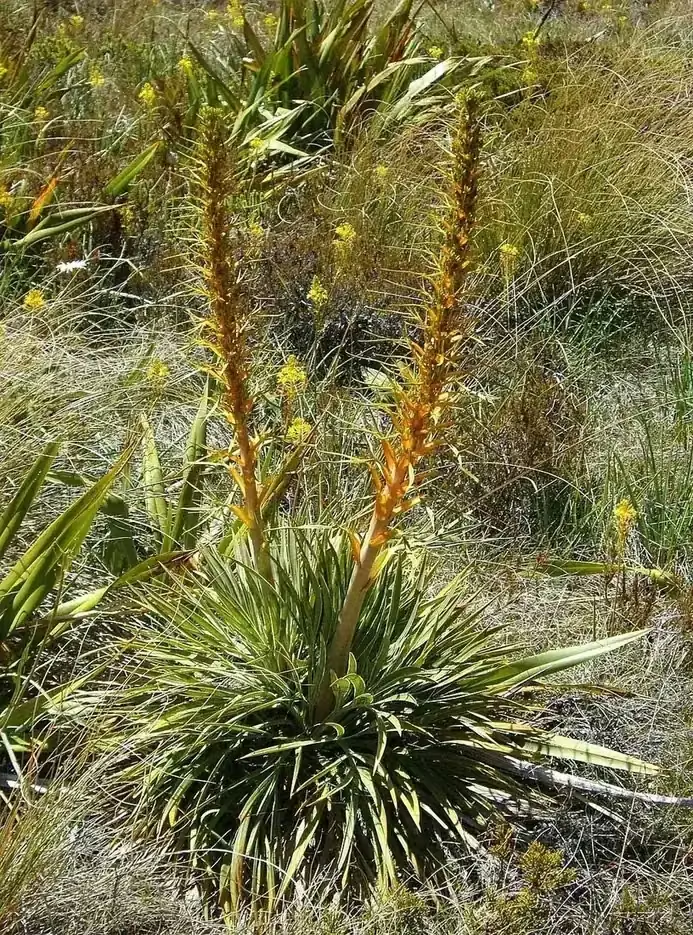
Colenso's Speargrass (Aciphylla colensoi), also called giant speargrass or taramea, is an evergreen native perennial of New Zealand's mountains. It forms massive, dense clumps of rigid, bluish-green leaves, each divided into long, narrow, spine-tipped segments with a distinctive orange or reddish midrib. Tall, stout flower stems bearing creamy-yellow blooms rise well above the foliage from December to February, on separate male and female plants. It grows in montane to low-alpine tussock grasslands, herbfields and rocky slopes between 900 and 1500 metres, in free-draining soils. Highly frost tolerant and sun-loving, its fierce spines evolved as a defence against browsing moa. Explore more native plants such as Anomalous Speargrass.

Plant Description
Identification and Physical Characteristics
Aciphylla colensoi is an evergreen perennial that forms massive, dense clumps of rigid, bluish-green or greyish-green leaves. Each leaf is strongly divided into long, narrow, spine-tipped segments and features a distinctive orange or reddish midrib. These leaves are thick and leathery, designed to withstand the harsh alpine environment. Flowering occurs from December to February, with stout stems bearing small, creamy-yellow flowers in dense clusters. The species is dioecious, with separate male and female plants. The seeds are winged and dispersed by the wind. The entire plant is armed with sharp spines that serve as a natural defense against browsers, a legacy of its evolution alongside the now-extinct moa.
Quick Facts
| Scientific Name | Aciphylla colensoi |
|---|---|
| Height | 20-60 cm |
| Spread | 30-60 cm |
| Water Needs | Low to moderate |
| Light | Full sun |
| Frost Tolerance | High - tolerant of severe freezes |
| Salt Tolerance | Low to moderate |
| Growth Rate | Fast |
| Lifespan | Long-lived perennial |
Climate Best Suited to
Aciphylla colensoi is well adapted to various New Zealand regions.
Regional Suitability
| City | Climate Suitability |
|---|---|
| Auckland | High |
| Wellington | High |
| Christchurch | Medium |
Plant Habitat
Natural Occurrence and Ecology
Giant Speargrass thrives in montane to low-alpine areas at altitudes between 900 and 1,500 meters. Its preferred habitats include open tussock grasslands, alpine herbfields, and rocky slopes where it often grows in moist but very free-draining stony or sandy mineral soils. It shows a preference for sites with strong airflow and cool summers, avoiding the humid heat of lowland environments. In its natural South Island range, it is a hallmark of the eastern high-country landscapes, often growing alongside other hardy alpines like Celmisia and various tussock grasses.
Growing Requirements
Soil Requirements
Prefers well-draining soil rich in organic matter.
- Well-drained
- Loamy
Light Requirements
Grows best in partial to full sun.
- Full Sun
- Partial Shade
Water Requirements
Requires regular watering during dry periods.
- Regular
- Drought tolerant once established
Planting and Establishing
Establishment Guidance
Establishing Giant Speargrass in a garden requires replicating its well-drained, high-light natural environment. It must be planted in a very free-draining, gritty, or rocky soil mix to prevent root rot, which is its primary weakness in cultivation. Full sun is essential for the plant to maintain its characteristic dense form and vibrant leaf colour. Dig a hole twice the width of the root ball and ensure the crown is slightly elevated to encourage rapid drainage. Provide moderate watering during the first growing season, after which the plant becomes exceptionally drought-tolerant and resilient to wind and frost.
Ecological Role
Biodiversity and Ecosystem Impact
Aciphylla colensoi plays a significant ecological role in alpine and subalpine communities. Its spiny architecture provides protection for smaller, more palatable native herbs and grasses, creating sheltered micro-habitats within the tussockland. The tall, nectar-rich flower stalks attract a wide range of native pollinators, including alpine flies, bees, and moths. While its spines deter many browsers, it is still a food source for specialized native insects. Interestingly, hares have adapted to graze the leaves from the side to avoid the spiny tips, and feral pigs are known to dig up the plants to access the nutritious, carrot-like taproots.
Uses & Significance
Garden Uses
In large-scale landscape design, Giant Speargrass is an incomparable architectural plant. Its bold, structured form and impressive flower stalks make it a spectacular focal point in rock gardens or expansive native borders. It is particularly effective when used to create a sense of the rugged high-country aesthetic. However, due to its formidable spines and large size, it should be positioned carefully away from paths, driveways, and areas where children or pets play to ensure safety while still allowing its dramatic form to be appreciated from a distance.
- Architectural focal point
- High-country gardens
Ecological Value
Ecologically, it is a key species for high-altitude restoration projects and soil stabilization on rocky slopes. It supports local biodiversity by providing habitat and resources for specialized alpine fauna and contributes to the overall resilience of the mountain ecosystem.
- Native pollinator support
- Soil stabilization
Landscaping Uses
Modern landscaping in mountain or coastal regions utilizes Giant Speargrass to add a sense of wild, untamed beauty. Its greyish-green foliage and orange-tinted midribs provide subtle colour variations that complement natural stone and wooden architectural elements. It is ideal for mass planting on exposed, sunny banks where its structural presence can suppress weeds and provide year-round visual interest. The incredible scale of its flowering stalks provides a dramatic seasonal highlight that few other native plants can match, making it a true icon of New Zealand's botanical heritage.
Seasonal Care Calendar
Spring
The start of the active growth phase. Remove any heavy winter debris from the center of the rosette using long tweezers or careful pruning. Apply a light dressing of slow-release native fertilizer.
- Fertilize
- Mulch
Summer
Flowering occurs from December to February. Provide deep watering during prolonged summer droughts to maintain mat health, ensuring the crown remains dry to prevent rot.
- Water
- Check for pests
Autumn
Seeds mature and are dispersed by the wind in autumn. This is a good time to tidy the surrounding area and ensure the site remains free-draining before the onset of winter rains.
- Prune lightly
- Plant new specimens
Winter
Naturally very frost-hardy and snow-tolerant. Requires minimal care during the winter months; simply avoid any heavy disturbance to the root zone while the ground is frozen.
- Frost protection
When to Prune and How Much
Giant Speargrass requires very little conventional pruning. The dead leaves that accumulate at the base are a natural part of its growth habit and provide protection for the crown. In a garden setting, individual dead or damaged leaves can be carefully removed to maintain a cleaner appearance. This should be done using sharp, long-handled loppers or shears. Always wear heavy-duty leather gloves and protective eyewear when working with this plant, as the needle-sharp leaf tips can cause significant injury.
- Remove dead branches
Always use clean, sharp tools.
How to Grow Colenso's Speargrass
Growing Giant Speargrass ( Aciphylla colensoi ) from seed is the most reliable method of propagation. This long-lived perennial has a deep, carrot-like taproot and a single-crown habit that makes vegetative division nearly impossible and highly risky. Success depends on sourcing fresh seed and providing the specific germination conditions that mimic its high-country home.
From Seed
Seeds should be collected in late summer or autumn when they are dry and ready to fall. For the best results, sow them fresh onto the surface of a gritty, free-draining seed-raising mix. They require a period of cold stratification to break dormancy. Placing the sown trays in a cool, protected outdoor position over winter allows natural temperature fluctuations to trigger germination in the spring.
Sow fresh seeds in a seed-raising mix.
- Collect seeds
- Sow in trays
Keep moist until germination.
From Cuttings
Vegetative propagation via cuttings is not an option for this species. While extremely old plants might occasionally develop multiple crowns that could theoretically be divided, the success rate is very low due to the risk of fatal damage to the primary taproot. Growing from seed is the standard and most successful approach for this impressive native plant.
Take semi-hardwood cuttings in late summer.
- Take cuttings
- Use rooting hormone
Additional Methods
Depending on the growth habit of Aciphylla colensoi , other methods such as division or layering might also be viable options. Division is particularly suitable for plants that form dense clumps or have spreading root systems, while layering can be used for species with trailing or flexible stems.
Young speargrasses are slow-growing and vulnerable to browsing by hares and rabbits before their protective spines fully develop. They should be protected with wire mesh or other deterrents in areas where these animals are present. A top-dressing of crushed rock or gravel around the base of the plant will help keep the crown dry and provide a naturalistic mountain aesthetic.
- Divide clumps
- Replant immediately
Pests & Diseases
Giant Speargrass is remarkably resistant to most common pests once established, as its sharp spines act as a formidable deterrent to most animals. The most significant threat is crown and root rot, caused by poor drainage or excessive humidity. In garden settings, slugs and snails may target the tender newly emerging leaves. Feral pigs can also be a threat in rural areas, as they are known to dig up mature plants to eat the nutritious roots.
Cultural Significance
Giant Speargrass, or Taramea, holds deep cultural significance for Māori. The highly aromatic gum or resin was historically a prized item, used as a fragrance and in various ceremonies. Its fierce spines also provided a natural form of protection for settlements. Today, it remains an iconic symbol of New Zealand's wild high-country, representing the incredible adaptation and resilience of our native alpine flora and continuing to be valued for its unique botanical and cultural heritage.
- Traditional medicine
- Crafts
Bonus Tip
To see Giant Speargrass at its most spectacular, plant it where it will be catch the low-angle light of the setting sun. The orange midribs and golden flower stalks will glow, creating a stunning visual highlight that perfectly captures the essence of the New Zealand mountains.
Related Plants
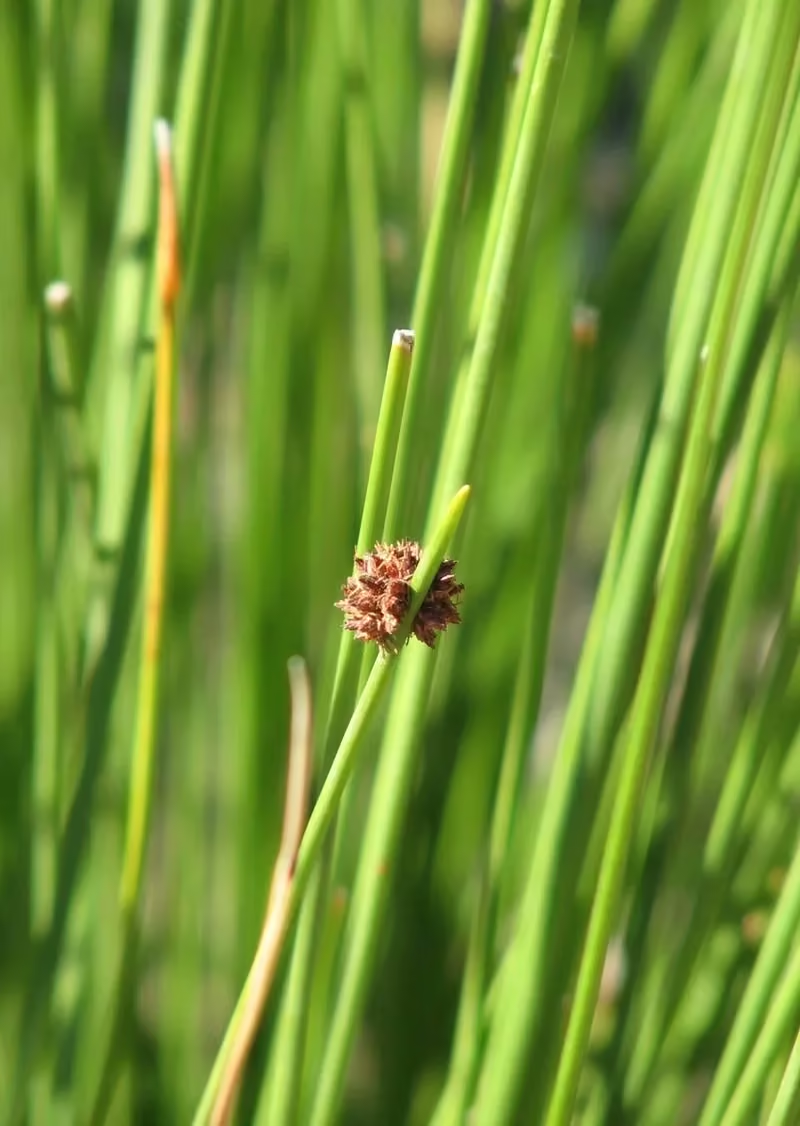
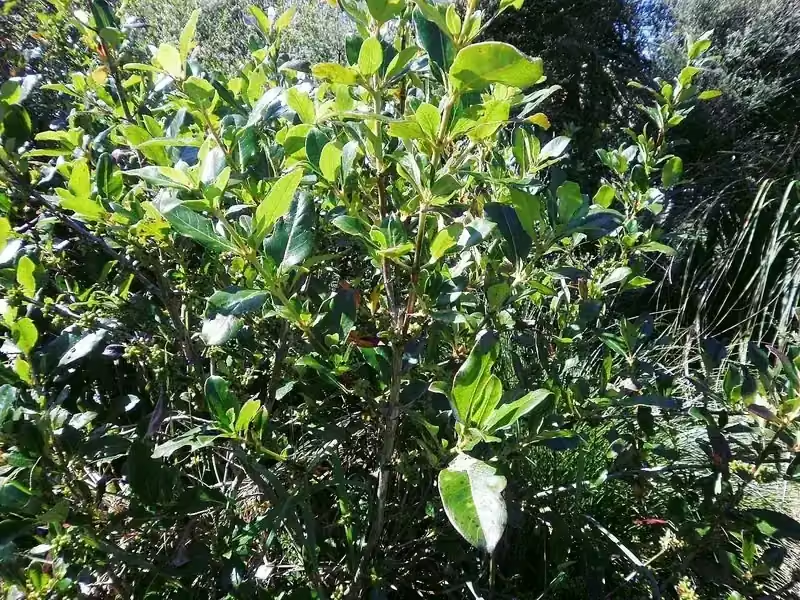
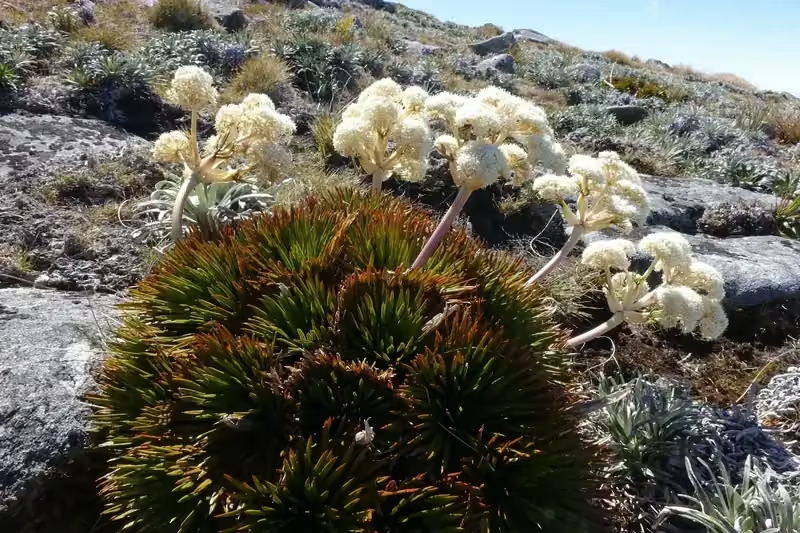
Explore other native plants that share similar characteristics or habitats with Aciphylla Colensoi ( Aciphylla colensoi ), offering further insights into New Zealand's diverse flora. These related species provide context and opportunities for complementary planting in your garden.




Plant Conservation
Conservation Status
Currently classified as 'Not Threatened', Giant Speargrass remains a stable component of New Zealand's alpine flora. However, its populations have historically been impacted by burning, grazing by introduced mammals like rabbits and hares, and habitat modification. Protecting intact alpine herbfields and tussocklands from excessive grazing and weed invasion is essential for ensuring this iconic species continues to thrive across its natural range.
Frequently Asked Questions
Where does Colenso's Speargrass grow naturally?
It grows in montane to low-alpine tussock grasslands and rocky slopes between 900 and 1500 metres in New Zealand.
Does Colenso's Speargrass tolerate frost?
Yes, it is highly frost tolerant and withstands severe alpine freezes.
When does Aciphylla colensoi flower?
It flowers from December to February, with separate male and female plants.
Why does Colenso's Speargrass have sharp spines?
Its spines are a natural defence thought to have evolved against browsing by the extinct moa.
Sources and Further Reading
The botanical, growing, and conservation details for Colenso's Speargrass (Aciphylla colensoi) on this page draw on authoritative New Zealand plant references and citizen-science observation records. Consult the sources below for full technical records and the latest distribution data.