Giant Speargrass
Aciphylla scott-thomsonii
Last updated:
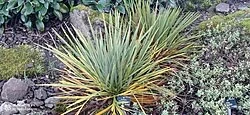
Aciphylla scott-thomsonii, the giant speargrass, is the largest of New Zealand's speargrasses, forming massive tussocks of rigid blue-green foliage. Individual compound leaves can grow up to 1.5 metres long, divided into many segments ending in extremely sharp points that make a formidable barrier. At maturity it throws up a spectacular, robust flowering stalk that can soar to 3 or 4 metres, carrying dense umbels of small cream flowers among feathery spiny bracts. It grows throughout the subalpine and alpine regions of the South Island, in montane grasslands and shrublands on well-drained stony soils, from coastal mountain faces up into the low-alpine zone. Very frost hardy and long-lived, it needs full sun and free drainage. Explore more native plants such as Anomalous Speargrass.
Plant Description
Identification and Physical Characteristics
Aciphylla scott-thomsonii forms massive, impressive tussocks of rigid, blue-green foliage. Individual leaves are compound and can grow up to 1.5 meters long, divided into numerous segments that end in extremely sharp, rigid points. These rosettes provide a powerful visual and physical barrier in their natural habitat. When the plant reaches maturity and enters its reproductive cycle, it produces a spectacular central flowering stalk. This stalk is incredibly robust and can soar to heights between 3 and 4 meters. The inflorescence is a dense collection of umbels with small, cream-coloured flowers, protected by feathery, spiny bracts.
Quick Facts
| Scientific Name | Aciphylla scott-thomsonii |
|---|---|
| Height | 2.0 - 4.0 metres (when flowering) |
| Spread | 1.5 - 2.0 metres |
| Water Needs | Moderate; requires well-drained conditions |
| Light | Full sun - requires bright, open conditions |
| Frost Tolerance | High - adapted to severe alpine winters |
| Salt Tolerance | Medium - can handle coastal mountain environments |
| Growth Rate | Slow to moderate |
| Lifespan | Long-lived perennial |
Climate Best Suited to
Giant Speargrass is a hardy inhabitant of the South Island high country. It is perfectly suited to climates with significant seasonal variation, including very cold, snow-prone winters and cool, airy summers. It thrives in high-light environments and demonstrates high resistance to frost, wind, and drought once its deep root system is established. It generally avoids humid or stagnant lowland climates where its foliage might be prone to fungal issues.
Regional Suitability
| City | Climate Suitability |
|---|---|
| Auckland | Low (too humid and warm) |
| Wellington | Medium (requires a cool, windy site) |
| Christchurch | High |
| Dunedin | High |
Plant Habitat
Natural Occurrence and Ecology
In the wild, Aciphylla scott-thomsonii is found throughout the subalpine and alpine regions of New Zealand's South Island. It is a prominent member of montane grasslands and shrublands, often growing in well-drained, stony soils on mountain slopes and flats. Its broad ecological range allows it to exist from coastal mountain faces up to low-alpine environments where it is frequently exposed to snow and high winds. It is particularly common in the high rainfall zones along the Southern Alps.
Growing Requirements
Soil Requirements
Must have free-draining soil. Thrives in gritty, stony, or sandy substrates. Avoid heavy, wet soils which can lead to crown or root rot. It prefers lean, low-fertility soils that mimic its natural alpine environment.
- Excessively well-drained
- Gritty / Stony
- Low fertility
Light Requirements
Requires absolute full sun to maintain its massive rosettes and reach its full flowering potential. It is a plant of the open mountain peaks and will not tolerate shade.
- Full Sun only
Water Requirements
Water needs are moderate. While the plant is drought-tolerant once mature, it benefits from consistent moisture at root level during the growing season. Ensure the crown remains dry to prevent rot.
- Moderate
- Avoid stagnant water
Planting and Establishing
Establishment Guidance
Establishment is best achieved with young plants, as mature speargrasses have deep, sensitive taproots and do not transplant well. Select a permanent, sunny position with excellent drainage. Dig a deep hole and backfill with a gritty soil mix. Mulching with stone chips or large gravel is highly recommended to protect the crown and maintain cool root temperatures. Once established, it is a very resilient and low-maintenance species.
Ecological Role
Biodiversity and Ecosystem Impact
As a "foundation species" in its native mountain habitats, Aciphylla scott-thomsonii provides immense structural diversity. Its large, spiny rosettes offer refuge for native lizards and ground-nesting birds, shielding them from wind and predators. The massive flower stalks are a major source of nectar and pollen for a wide range of alpine insects. Its vigorous root system plays a vital role in binding mountain soils and preventing erosion in high-rainfall alpine zones.
Uses & Significance
Garden Uses
An exceptional architectural plant for large native gardens or public spaces. Its grand scale and unique form provide a dramatic focal point. Suitable for large rock gardens, drought-tolerant landscapes, or as an effective natural barrier along boundaries.
- Grand architectural specimen
- Drought-tolerant gardens
- Natural security barrier
Ecological Value
Essential for supporting alpine biodiversity and providing critical resources for native high-country fauna.
- Pollinator magnet
- Protective habitat
Landscaping Uses
In large-scale landscape projects, Aciphylla scott-thomsonii is used to create a sense of awe and rugged beauty. Its massive, blue-green rosettes provide incredible textural contrast when paired with smaller tussock grasses or low-growing alpine herbs. It is perfect for representing the majesty of the New Zealand Southern Alps in designed environments.
Seasonal Care Calendar
Spring
Watch for new rosettes and the beginning of the massive flower stalks. This is the best time for a light mulch check and ensured drainage after winter.
- Monitor growth
- Ensure sharp drainage
Summer
The primary season for its spectacular flowering. Maintain root moisture during hot, dry spells, but ensure the foliage stays dry to prevent sun scorch or rot.
- Maintain root moisture
- Watch for flowering
Autumn
Collect mature seeds for propagation. Carefully remove any large debris from the rosettes to prevent rot during the wetter months.
- Seed collection
- Tidy base
Winter
The plant enters a dormant phase and is extremely hardy. Simply ensure the site is free-draining and the plant is not smothered by non-native leaf litter.
- Maintain dormancy
- Ensure drainage
When to Prune and How Much
Minimal pruning is required. The primary task is removing the spent flowering stalks. These should be cut at the very base with a sharp tool once the seeds have been harvested. Individual dead leaves at the base of the rosettes can be removed periodically to keep the plant looking its best.
- Remove spent flower stalks
- Trim old base leaves
Always use sharp, clean tools and wear protective clothing when handling this spiny species.
How to Grow Giant Speargrass
Growing Giant Speargrass ( Aciphylla scott-thomsonii ) from seed or division is a rewarding pursuit for the dedicated native plant gardener. This robust species, perfectly adapted to the extreme conditions of New Zealand's South Island mountains, requires specific conditions to ensure successful germination and healthy long-term development. The most critical factors for success are providing sharp drainage, absolute full sun, and a cool root run. Due to its large size and sensitive root system, it is generally easier to establish from young plants in their final garden positions.
From Seed
Seed propagation is the most reliable method for Aciphylla scott-thomsonii . Collect seeds in late summer when the flower umbels have turned dry and firm. Fresh seed is highly recommended for the best results. Sow the seeds onto the surface of a very gritty seed-raising mix-a blend of fine gravel, pumice, and sterilized potting soil is ideal. Lightly cover with a thin layer of fine grit. The seeds require a period of cold stratification to overcome their natural dormancy. In colder climates, leaving the trays outdoors in a sheltered spot over winter provides this naturally. In warmer regions, a 6-week period in a refrigerator may be necessary before moving them to a cool, bright spot for germination. Germination can be slow and sporadic, often occurring in the following spring.
- Collect fresh seeds in autumn
- Sow on gritty, sterile mix
- Provide cold stratification
- Maintain consistent moisture
Once the seedlings are robust enough, move them into individual deep pots to accommodate their developing taproot.
From Cuttings / Division
Vegetative propagation via division is possible but carries a high degree of risk. Mature plants have a very deep and sensitive taproot system that resents any disturbance. If division is attempted, it should be done in early spring as new growth begins. Carefully lift the clump and use a sharp, sterilized knife to separate individual rosettes, ensuring each piece has a substantial portion of the root system attached.
Replant the divisions immediately into well-prepared, gritty soil and maintain consistent moisture until established. This method is generally less successful than growing from seed.
- Divide in early spring
- Use clean, sharp tools
- Replant immediately
Additional Methods
Because the plant is so difficult to transplant once mature, the best "additional method" is meticulous site preparation and selection. Creating a deep, scree-like environment with a coarse drainage layer at the bottom ensures that the roots can remain cool while the surface drainage stays perfect. Using a deep mulch of large stones or fine gravel around the base of the plant is vital; it protects the crown from excess moisture, reflects light into the rosettes, and beautifully mimics the plant's natural mineral-rich mountain habitat.
- Select bright, open position
- Use deep stone mulch
- Avoid moving established plants
Pests & Diseases
Giant Speargrass is generally very resistant to pests. In lowland gardens, it can occasionally be susceptible to aphids on the new growth or root rot if the soil is too heavy. Fungal issues can occur in very humid environments. Maintain sharp drainage and a bright, airy position to prevent these problems.
Cultural Significance
Speargrasses, known to Māori as Taramea, have a significant place in New Zealand's cultural and botanical history. The aromatic resin found in some of the larger species like Aciphylla scott-thomsonii was traditionally harvested and used to create highly prized fragrances. It stands as a testament to the extraordinary evolutionary adaptations required to survive in the most extreme mountain environments of Aotearoa.
- Traditional aromatic uses
- Iconic high-country flora
Bonus Tip
Plant in an open, elevated spot to emphasize its grand architectural form and ensure the best possible air movement around the foliage throughout the entire year consistently.
Cultivating this species effectively involves a deep understanding of its natural adaptations and environmental preferences. By mimicking its native habitat-whether that be the cool, moist understory of a temperate rainforest or the exposed, well-drained slopes of an alpine range-gardeners can ensure robust growth and long-term health. Regular observation and minimal, targeted intervention are often the best strategies for maintaining the unique characteristics and ecological contributions of this remarkable New Zealand native plant.
Related Plants
Explore other native plants that share similar characteristics or habitats with Giant Speargrass ( Aciphylla scott-thomsonii ), offering further insights into New Zealand's diverse flora. These related species provide context and opportunities for complementary planting in your garden.
Needle Speargrass
Aciphylla anomala

Golden Speargrass
Aciphylla aurea

Aciphylla colensoi
Aciphylla colensoi
Congested Speargrass
Aciphylla congesta
Narrow-leaved Speargrass
Aciphylla crenulata
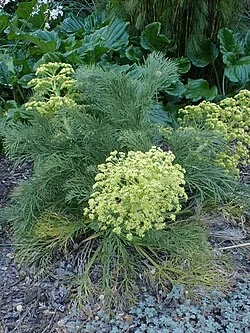
Dieffenbach's Speargrass
Aciphylla dieffenbachii
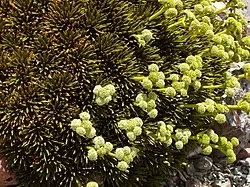
Dobson's Speargrass
Aciphylla dobsonii
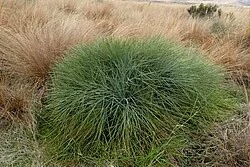
Blue Spaniard
Aciphylla glaucescens
Plant Conservation
Conservation Status and Threats
Currently classified as "Not Threatened," Aciphylla scott-thomsonii maintains stable and significant populations in its remote high-altitude habitats. However, it is essential to monitor its populations for any long-term impacts from climate change or localized habitat degradation. Protecting New Zealand's South Island subalpine environments is crucial for the continued success of this and many other specialized mountain species.
Frequently Asked Questions
How tall does Aciphylla scott-thomsonii grow?
Its flowering stalks reach 2 to 4 metres tall, with tussocks spreading 1.5 to 2 metres across.
Where does giant speargrass grow?
It grows through the subalpine and alpine South Island, in montane grasslands and shrublands on well-drained stony soils.
Is Aciphylla scott-thomsonii frost hardy?
Yes, it is highly frost hardy and withstands severe snow-prone alpine winters.
Is it the largest speargrass?
Yes, it is New Zealand's largest Aciphylla, with flower stalks reaching up to 4 metres.
Sources and Further Reading
The botanical, growing, and conservation details for Giant Speargrass (Aciphylla scott-thomsonii) on this page draw on authoritative New Zealand plant references and citizen-science observation records. Consult the sources below for full technical records and the latest distribution data.