Blue Spaniard
Aciphylla glaucescens
Last updated:
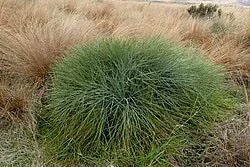
Aciphylla glaucescens, commonly called blue spaniard, is a large, densely spiny New Zealand speargrass named for its glaucous blue-grey foliage, coloured by a waxy coating that reflects intense sunlight. Its compound leaves divide into numerous rigid, needle-sharp segments, and the foliage rosettes typically reach 60 to 90 cm high and wide. In summer a massive central flowering stem can soar to around 2 metres, carrying dense umbels of tiny cream flowers. Widespread through the South Island and the mountains of the southern North Island, it grows from sea level to about 1400 metres in rocky grasslands, herbfields and streamsides. Highly versatile, it is drought tolerant once established, very frost hardy and tolerant of coastal salt. Explore more native plants such as Anomalous Speargrass.
Plant Description
Identification and Physical Characteristics
Aciphylla glaucescens forms large, dense, and exceptionally spiny tussocks. The foliage is characterized by its glaucous (blue-grey) coloration, a result of a waxy coating that helps the plant reflect intense sunlight and conserve moisture in its often exposed habitats. The leaves are compound and pinnately divided into numerous rigid, needle-sharp segments that can easily penetrate clothing and skin. The rosettes of foliage typically grow to 60-90 cm in height and spread. When the plant matures and conditions are favorable, it produces a massive central flowering stem that can rise dramatically to a height of 2 meters. These stalks bear dense umbels of tiny, cream-coloured flowers protected by sharp, feathery bracts.
Quick Facts
| Scientific Name | Aciphylla glaucescens |
|---|---|
| Height | 0.9 - 2.0 metres (when flowering) |
| Spread | 0.6 - 0.8 metres |
| Water Needs | Low once established; drought tolerant |
| Light | Full sun - requires bright, open conditions |
| Frost Tolerance | High - adapted to alpine and coastal winters |
| Salt Tolerance | High - suitable for coastal environments |
| Growth Rate | Slow to moderate |
| Lifespan | Long-lived perennial |
Climate Best Suited to
Blue Spaniard is a highly versatile species, capable of thriving in a range of New Zealand climates. It is equally at home on wind-swept coastal cliffs as it is in the cool, moist environments of subalpine grasslands. It prefers regions with clear air and high light levels. While it is extremely frost-hardy, it is also remarkably drought-tolerant once it has established its deep root system. It generally avoids humid, stagnant lowland areas where it may be prone to fungal issues.
Regional Suitability
| City | Climate Suitability |
|---|---|
| Auckland | Medium (requires excellent drainage) |
| Wellington | High |
| Christchurch | High |
| Dunedin | High |
Plant Habitat
Natural Occurrence and Ecology
Aciphylla glaucescens is widespread throughout the South Island and is also found in the mountainous regions of the southern North Island. Its natural range extends from sea level up to approximately 1400 meters. It inhabits a variety of open sites, including rocky grasslands, herbfields, stream-sides, and damp depressions. It is particularly common along the eastern South Island high country, where its silvery cushions are a distinctive feature of the tussock lands. It thrives in sites where there is minimal competition from taller shrubs or trees.
Growing Requirements
Soil Requirements
Must have free-draining soil. It thrives in lean, rocky, or sandy substrates. Avoid rich, heavy garden soils which can lead to rapid, weak growth or root rot. Perfect for scree gardens or rocky slopes.
- Excessively well-drained
- Rocky / Sandy / Lean
- Low fertility
Light Requirements
Requires absolute full sun to maintain its healthy glaucous coloration and compact form. Shady positions will result in leggy plants that lose their structural integrity and are more susceptible to pests.
- Full Sun only
Water Requirements
Establishment requires regular watering, but once mature, the Blue Spaniard is highly drought-tolerant due to its deep taproot. It is crucial to avoid overwatering, as the crown of the plant is sensitive to rot in stagnant conditions.
- Low (once established)
- Drought tolerant
Planting and Establishing
Establishment Guidance
Choose a permanent position carefully, as mature speargrasses have deep taproots and do not transplant well. Plant in autumn or spring. Ensure the hole is deep enough for the roots and backfill with a gritty, free-draining mix. Position the plant so the crown is slightly above the surrounding soil level to prevent water from pooling. Mulching with gravel or stone chips is highly recommended to keep the root zone cool and suppress weeds while maintaining the necessary sharp drainage around the foliage.
Ecological Role
Biodiversity and Ecosystem Impact
In its native ecosystems, Aciphylla glaucescens is a key structural plant. Its spiny rosettes provide safe haven for small native lizards and ground-nesting birds, protecting them from larger predators. The summer flower spikes are a magnet for native pollinators, including specialized flies, moths, and bees. Furthermore, the extensive root systems of these speargrasses are vital for stabilizing thin alpine and coastal soils against erosion from wind and water.
Uses & Significance
Garden Uses
The Blue Spaniard is a premier choice for architectural and low-maintenance native gardens. Its striking form and unique colour provide a dramatic focal point. It is ideally suited for rock gardens, large containers, or as a barrier plant to deter traffic along boundaries.
- Architectural specimen
- Rock / Gravel gardens
- Security / Barrier planting
Ecological Value
Vital for supporting alpine and coastal biodiversity and providing resources for native insect and lizard populations.
- Pollinator attractant
- Lizard habitat
Landscaping Uses
In professional landscape design, Aciphylla glaucescens is used to create strong textural contrasts. Its rigid, blue-grey foliage pairs perfectly with the softer textures of tussock grasses or the dark green leaves of Coprosma species. It is excellent for modern, minimalist designs or for large-scale ecological restorations in dry, rocky areas where a robust and visually impactful plant is required.
Seasonal Care Calendar
Spring
Watch for the emergence of new growth from the center of the rosettes. This is the best time for a very light application of native plant fertilizer if the plant is in a container.
- Monitor growth
- Light feeding
Summer
The primary flowering season. Ensure the plant has sufficient moisture during extreme heatwaves, but always allow the surface soil to dry out between waterings.
- Watch flower spikes
- Maintain root moisture
Autumn
Collect mature seeds once the flower stalks turn brown. Carefully remove any dead foliage from the base of the plant to improve air circulation and appearance.
- Seed collection
- Tidy debris
Winter
The plant is dormant and extremely hardy. In very wet regions, ensure that no mulch or debris is sitting against the crown, which could cause winter rot.
- Ensure drainage
- Monitor crown health
When to Prune and How Much
Minimal pruning is required. The main maintenance task is removing the spent flowering stalks. These should be cut at the very base once the seeds have been collected. Occasionally, individual leaves at the bottom of the rosette will die back naturally; these can be carefully trimmed off to keep the plant looking sharp.
- Remove spent flower stalks
- Trim dead base leaves
Always wear heavy gloves and use clean, sharp tools when working with this spiny species.
How to Grow Blue Spaniard
Growing Blue Spaniard ( Aciphylla glaucescens ) from seed or division is an engaging process for the native plant enthusiast. This robust alpine specialist, like many of its speargrass relatives, requires specific conditions to ensure successful germination and long-term health. The most critical factors for success are providing sharp drainage, high light levels, and cool root runs. If you are starting from seed, it is important to remember that speargrass seeds often have a limited shelf life and frequently require a period of cold stratification to overcome their natural dormancy.
From Seed
Seeds should be collected in late summer or autumn when the inflorescences have turned brown and the seeds are firm and dry. Fresh seed is highly recommended for the best results. Sow the seeds onto the surface of a well-draining, gritty seed-raising mix. A mixture of equal parts sterilized potting soil, fine gravel, and pumice is often effective. The seeds should be only lightly covered with a thin layer of fine grit, as some light can stimulate germination. To overcome dormancy, the sown trays usually need a period of cold stratification. In cooler regions, this can be achieved by leaving the trays in a sheltered spot outdoors over winter. In warmer areas, a 6-week period in a refrigerator may be necessary. Germination can be slow and irregular, sometimes taking a year or more.
- Collect fresh seeds in autumn
- Sow on gritty mix
- Provide cold stratification
- Maintain consistent moisture
Once the seedlings are large enough to handle, move them into individual deep pots to protect their developing taproot.
From Cuttings / Division
Vegetative propagation via division is possible but carries significant risk. Mature plants have a deep and sensitive taproot system that resents being disturbed. If division is attempted, it must be done in early spring as new growth begins. Carefully lift the clump and use a sharp, sterilized knife to separate individual rosettes, ensuring each division has a substantial portion of the root system attached.
Replant the divisions immediately into well-prepared, gritty soil and maintain consistent moisture until established. This method is generally less successful than seed propagation.
- Divide rosettes in early spring
- Use clean, sharp tools
- Replant immediately
Additional Methods
Due to the difficulty of transplanting mature specimens, the best "additional method" is careful site preparation and selection. Creating a dedicated rockery or scree bed with a layer of coarse drainage material at the bottom will provide the perfect environment for the Blue Spaniard. Using a stone mulch around the base of the plant is vital; it keeps the roots cool, protects the crown from excess moisture, and mimics the plant's natural mineral-rich mountain habitat.
Monitor the young plants closely for any signs of root rot or fungal attack, which are common in non-alpine conditions. Ensuring a bright, airy position with no competition from aggressive weeds is key to maintaining a healthy and impressive specimen.
- Ensure bright, airy position
- Use deep stone mulch
- Avoid moving mature plants
Pests & Diseases
Blue Spaniard is generally resistant to many common pests. However, in lowland gardens, it can be susceptible to aphids on the new rosettes and root rot if the soil is too heavy or poorly drained. Fungal issues can occur in humid environments. Maintain good air movement and sharp drainage to prevent these problems.
Cultural Significance
Speargrasses, known to Māori as Taramea, have long been significant in New Zealand's cultural history. The aromatic resin found in some of the larger species was traditionally harvested and used to create highly prized fragrances and ceremonial oils. Aciphylla glaucescens , with its impressive size and striking colour, is a prominent member of this respected lineage of plants that characterize the New Zealand high country.
- Traditional aromatic uses
- Iconic high-country flora
Bonus Tip
The Blue Spaniard makes an excellent 'natural fence' when planted in a row along a boundary, providing both visual interest and a formidable barrier.
Cultivating this species effectively involves a deep understanding of its natural adaptations and environmental preferences. By mimicking its native habitat-whether that be the cool, moist understory of a temperate rainforest or the exposed, well-drained slopes of an alpine range-gardeners can ensure robust growth and long-term health. Regular observation and minimal, targeted intervention are often the best strategies for maintaining the unique characteristics and ecological contributions of this remarkable New Zealand native plant.
Related Plants
Explore other native plants that share similar characteristics or habitats with Blue Spaniard ( Aciphylla glaucescens ), offering further insights into New Zealand's diverse flora. These related species provide context and opportunities for complementary planting in your garden.
Needle Speargrass
Aciphylla anomala

Golden Speargrass
Aciphylla aurea

Giant Speargrass
Aciphylla colensoi
Congested Speargrass
Aciphylla congesta
Narrow-leaved Speargrass
Aciphylla crenulata
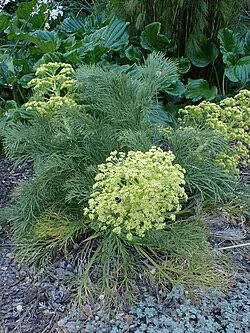
Dieffenbach's Speargrass
Aciphylla dieffenbachii
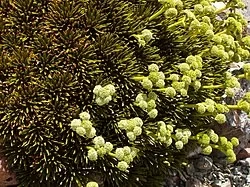
Dobson's Speargrass
Aciphylla dobsonii
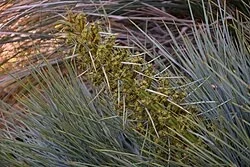
Common Speargrass
Aciphylla squarrosa
Plant Conservation
Conservation Status and Threats
Currently classified as "Not Threatened," Aciphylla glaucescens maintains healthy and widespread populations. However, its survival depends on the continued health of New Zealand's open alpine and coastal ecosystems. Like all high-country flora, it is susceptible to the impacts of introduced browsing animals and the long-term shifts in habitat caused by climate change.
Frequently Asked Questions
How tall does Aciphylla glaucescens grow?
Its flowering stems reach 0.9 to 2 metres tall, above foliage rosettes of about 0.6 to 0.8 metres.
Where does blue spaniard grow?
It grows across the South Island and southern North Island mountains, from sea level to around 1400 metres.
Is Aciphylla glaucescens suitable for coastal gardens?
Yes, it has high salt tolerance and thrives on exposed coastal cliffs as well as inland grasslands.
Is it drought tolerant?
Yes, once established it is drought tolerant and needs full sun with low watering.
Sources and Further Reading
The botanical, growing, and conservation details for Blue Spaniard (Aciphylla glaucescens) on this page draw on authoritative New Zealand plant references and citizen-science observation records. Consult the sources below for full technical records and the latest distribution data.