Townsons Tree Daisy
Olearia townsonii
Last updated:
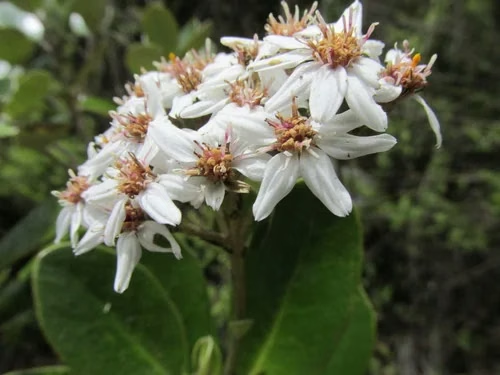
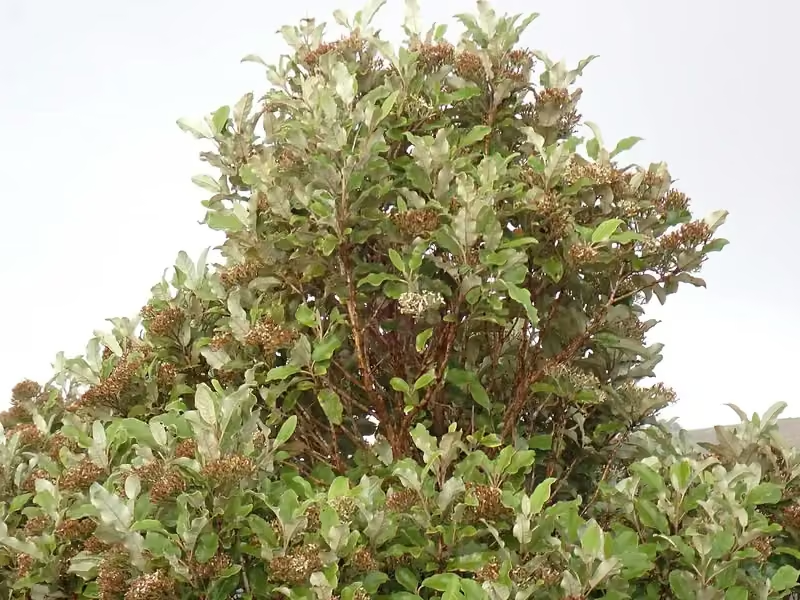
Townsons Tree Daisy (Olearia townsonii) is a small to medium evergreen tree or large shrub in the daisy family, growing about 3 to 8 metres tall and occasionally to 12 metres. Its most striking feature is the large, thick, leathery leaves, 10 to 25 cm long, dark glossy green above and covered in dense white to buff felt beneath. In spring and early summer it bears clusters of small white daisy-like flowers. Endemic to montane forest in the South Island, it is a Nationally Vulnerable species valued for its bold foliage and rarity. Explore more New Zealand native trees in our native plant guide.
Plant Description
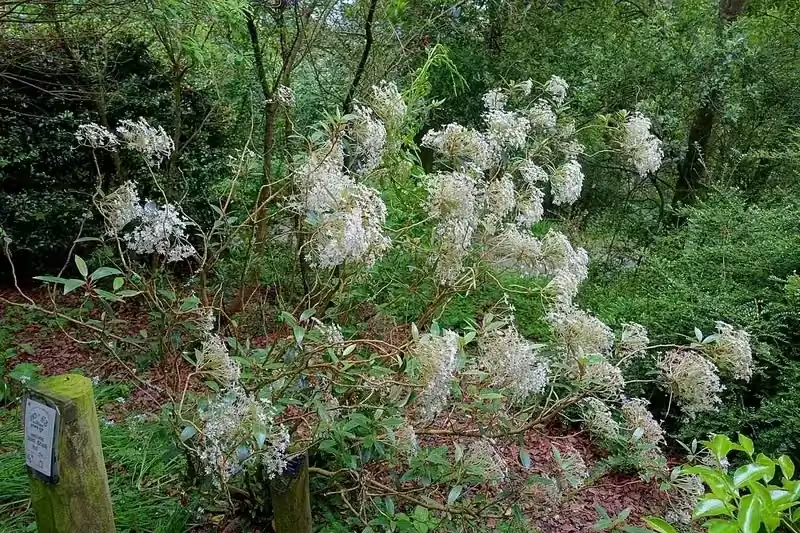
Olearia townsonii is a distinctive small to medium-sized evergreen tree or large shrub that typically grows 3-8 meters tall in cultivation, though it can reach up to 12 meters in ideal conditions. The leaves are the plant's most striking feature - they are large, thick, and leathery, measuring 10-25 cm long and 4-8 cm wide, with a distinctive obovate shape (widest above the middle). The upper surface is dark glossy green, while the undersides are covered in dense white or buff-coloured feltlike hairs (tomentum). The leaves have prominent parallel veins and are arranged alternately on sturdy branches. In spring and early summer, the tree produces clusters of small white daisy-like flowers arranged in large terminal panicles, creating a striking display against the dark foliage. These are followed by small achenes with fluffy white pappus that aid in seed dispersal.
Quick Facts
| Scientific Name | Olearia townsonii |
|---|---|
| Height | 3-8 meters (up to 12 meters in ideal conditions) |
| Spread | 3-5 meters |
| Water Needs | Moderate - Requires good drainage but adequate moisture |
| Light | Full sun to partial shade |
| Frost Tolerance | Moderate - Protect from severe frosts when young |
| Salt Tolerance | Moderate - Some coastal tolerance |
| Growth Rate | Moderate |
| Lifespan | 50-100+ years |
Climate Best Suited to
Townsons Tree Daisy thrives in temperate climates with mild, moist conditions. It prefers areas with reliable rainfall and protection from extreme temperatures and drying winds. This species shows best performance in regions that mimic its natural montane forest habitat, with cool, humid conditions and protection from harsh weather. While adaptable to various climates, it requires careful placement in drier or more extreme environments.
Regional Suitability
| City | Climate Suitability |
|---|---|
| Auckland | Good - Provide shelter and adequate water |
| Wellington | Good - Shelter from strong winds essential |
| Christchurch | Moderate - Protect from frost and dry conditions |
| Dunedin | Good - Suits cooler, moist conditions |
| Hamilton | Good |
| Tauranga | Good - Ensure adequate moisture |
| Nelson | Good - May need extra water in dry summers |
| Napier | Moderate - Requires regular watering and shelter |
| Palmerston North | Good |
| Invercargill | Excellent - Suits cool, moist climate |
Plant Habitat
In its natural habitat, Olearia townsonii is endemic to a very small area of montane forest on the eastern slopes of the Kaikōura Ranges in Canterbury, New Zealand. It occurs at elevations between 300-1200 meters in mixed broadleaf-podocarp forest, typically growing in sheltered valleys and gullies with rich, well-drained but moist soils. The species thrives in the cool, humid microclimate created by the forest canopy, where it receives dappled light and protection from strong winds. It often grows alongside other native trees such as mountain beech, kānuka, and various podocarp species. The limited natural range and specific habitat requirements make this one of New Zealand's rarest native trees, emphasizing the importance of conservation efforts and careful cultivation practices.
Growing Requirements
Soil Requirements
Townsons Tree Daisy requires well-drained but moisture-retentive soils with good organic content, preferring slightly acidic conditions.
- Well-drained, humus-rich soils essential
- Prefers slightly acidic to neutral pH (5.5-7.0)
- Intolerant of waterlogged conditions
- Benefits from organic mulch and compost
Light Requirements
This species prefers partial shade to dappled sunlight, mimicking its natural forest understory habitat.
- Partial shade to filtered light ideal
- Tolerates full sun with adequate moisture
- Protect from hot afternoon sun
- Benefits from shelter from strong winds
Water Requirements
Regular, consistent moisture is essential, but waterlogging must be avoided to prevent root rot.
- Consistent moisture throughout growing season
- Avoid both drought stress and waterlogging
- Mulch to retain soil moisture
- Deep, infrequent watering preferred
Planting and Establishing
When planting Olearia townsonii , select a sheltered site with dappled light and protection from strong winds and extreme temperatures. Plant in autumn or spring when soil conditions are optimal and temperatures are moderate. Prepare a planting hole twice the width of the root ball and incorporate plenty of organic matter such as compost or well-rotted bark. Ensure excellent drainage while maintaining moisture retention - this may require creating raised beds or improving heavy clay soils. Plant at the same depth as in the container and water thoroughly after planting. Apply a thick mulch layer around the base, keeping it away from the trunk. Young plants require careful attention to watering, particularly during their first 2-3 years of establishment. Provide temporary windbreak protection if necessary, as this species is sensitive to desiccating winds.
Ecological Role
Townsons Tree Daisy plays a crucial but localized ecological role within its native montane forest habitat. The flowers provide nectar for native insects, including beetles, flies, and butterflies, while the seeds with their fluffy pappus are dispersed by wind and possibly birds. As a component of the forest understory and sometimes emergent canopy, it provides shelter and habitat structure for various forest birds and invertebrates. The large leaves create significant leaf litter that contributes to forest floor nutrient cycling. Due to its extremely limited natural distribution, every individual tree is ecologically significant for maintaining genetic diversity and providing stepping stones for wildlife movement within its restricted range. Conservation of this species is vital not only for its own survival but for maintaining the integrity of the unique montane forest ecosystem it represents.
Uses & Significance
Garden Uses
Townsons Tree Daisy is valued in specialist gardens and collections for its distinctive foliage and conservation importance.
- Specimen tree in protected positions
- Conservation plantings and arboreta
- Sheltered woodland gardens
- Educational and botanical gardens
- Native plant collections
Ecological Value
As a rare endemic species, every cultivated specimen contributes to conservation efforts.
- Genetic conservation through cultivation
- Habitat for specialized forest insects
- Educational value for conservation awareness
- Research material for botanical studies
- Seed source for restoration projects
Landscaping Uses
In landscape design, Olearia townsonii serves as a special-interest specimen for gardeners committed to rare plant conservation. Its distinctive large leaves with contrasting surfaces create strong architectural interest in sheltered woodland settings. Use it as a focal point in protected courtyards or as part of specialized native collections where its unique character can be appreciated. The tree works well in forest-style plantings combined with other montane species, creating educational landscapes that showcase New Zealand's rare flora. Consider it for institutional gardens, botanic gardens, and conservation areas where its story can be shared with visitors. The striking foliage makes it an excellent choice for creating dramatic contrasts with finer-textured plants, while its rarity ensures it will always be a conversation piece that raises awareness about plant conservation.
Seasonal Care Calendar
Spring
Active growth period with flowering beginning in late spring.
- Apply balanced slow-release fertilizer
- Refresh organic mulch layer
- Monitor for new growth and flowering
- Check and adjust irrigation systems
Summer
Peak flowering period requiring careful moisture management.
- Maintain consistent soil moisture
- Provide shade during extreme heat
- Monitor for stress signs
- Collect seed if plants are flowering
Autumn
Seed dispersal period and preparation for winter dormancy.
- Harvest viable seed for propagation
- Reduce watering frequency slightly
- Plant new specimens if available
- Apply winter protection if needed
Winter
Dormant period with minimal growth activity.
- Protect young plants from frost
- Maintain wind protection
- Check for storm damage
- Plan spring plantings and expansions
When to Prune and How Much
Townsons Tree Daisy requires minimal pruning due to its naturally attractive form and slow growth. Any necessary pruning should be done in late winter or early spring, before new growth begins. Focus on maintaining the natural shape rather than heavy pruning.
- Remove dead, damaged, or diseased branches anytime
- Light shaping if necessary in late winter
- Remove crossing or rubbing branches
- Avoid heavy pruning due to slow recovery
- Clean cuts heal better than torn branches
Given the rarity and slow growth of this species, pruning should be kept to an absolute minimum. The natural form is usually the most attractive, and the plant may take considerable time to recover from heavy pruning. Always use clean, sharp tools to prevent disease transmission, which is particularly important for rare species.
How to Grow Townsons Tree Daisy
Cultivating Townsons Tree Daisy ( Olearia townsonii ) is a rewarding endeavor for any gardener interested in New Zealand's unique flora. This species can be propagated through several methods, each requiring specific conditions to ensure healthy growth and establishment. Successful propagation depends on mimicking the plant's natural environment and providing consistent care during the early stages of development.
From Seed
Propagation from seed is often the most effective way to produce a large number of Townsons Tree Daisy plants. Seeds should be collected when they are fully mature. Freshly collected seeds generally have higher germination rates than those that have been stored for long periods.
Seeds are produced following the summer flowering and should be collected when the fluffy white pappus is fully developed but before natural dispersal occurs, typically in late summer to early autumn.
- Collect seeds with pappus intact from mature flower heads
- Clean seeds gently, removing excess pappus material
- Sow fresh seeds immediately in a well-draining seed mix
- Cover lightly with fine sand or vermiculite
- Keep consistently moist at 15-20°C with good air circulation
Germination is often slow and erratic, taking 4-12 weeks. Provide consistent conditions and be patient with this rare species.
From Cuttings
For those wishing to replicate specific characteristics of a parent plant, vegetative propagation via cuttings is the preferred method. This technique ensures that the new plants are genetically identical to the source. Semi-hardwood cuttings taken during the appropriate season usually yield the best results for this species.
Cutting propagation can be challenging but is important for maintaining genetic diversity in cultivation. Semi-hardwood cuttings taken in late summer or early autumn generally give the best results.
- Take 8-12 cm semi-hardwood cuttings with heel if possible
- Remove lower leaves and treat with rooting hormone
- Insert in a mix of peat and perlite or sand
- Maintain high humidity and consistent temperature
- Be patient - rooting may take 3-6 months
Additional Methods
Depending on the growth habit of Townsons Tree Daisy, other methods such as grafting or air layering might also be viable options. These advanced techniques are sometimes used by specialist propagators for rare species conservation.
For conservation purposes, tissue culture and other advanced propagation techniques may be employed by specialized facilities to increase numbers of this rare species.
- Consult with botanical experts for specialized techniques
- Participate in conservation seed collection programs
- Support specialized nurseries working with rare species
- Share propagation successes with conservation groups
- Maintain detailed records of parent plant sources
Pests & Diseases
Olearia townsonii appears to be generally resistant to most common pests and diseases, possibly due to its limited cultivation history and specialized growing requirements. However, as with many rare species, vigilance is required as they may lack resistance to common horticultural pests they wouldn't encounter in their natural habitat. Scale insects and aphids may occasionally appear, particularly on stressed plants, and should be controlled promptly with horticultural oils or insecticidal soaps. Root rot can be a serious issue if drainage is inadequate, especially given this species' preference for moist but well-drained conditions. Fungal leaf spots may develop in overly humid conditions with poor air circulation. Caterpillars of some moths may feed on foliage, but significant damage is unusual. The most important factor is maintaining optimal growing conditions to keep plants healthy and resistant to problems. Regular monitoring and early intervention are crucial for rare species conservation.
Cultural Significance
As a recently described species (formally named in the 1980s) with an extremely limited natural range, Olearia townsonii has limited traditional cultural use. However, it represents an important part of New Zealand's botanical heritage and the ongoing story of botanical discovery.
- Named after the Townson family who first brought it to botanical attention
- Represents the importance of citizen science in conservation
- Symbol of New Zealand's unique and threatened flora
- Educational value for conservation awareness
- Part of scientific research into rare plant biology
- Important for understanding mountain forest ecosystems
Bonus Tip
If you're fortunate enough to grow Townsons Tree Daisy, consider yourself a conservation partner rather than just a gardener. Keep detailed records of your plant's performance, flowering times, and any successful propagation. Share information with conservation groups and botanical gardens, as every cultivated specimen contributes valuable data about this rare species. The distinctive two-toned leaves are particularly beautiful when backlit, so position your plant where morning or evening light can highlight the contrast between the dark green upper surfaces and pale undersides. Consider participating in seed collection and distribution programs to help secure the future of this remarkable New Zealand endemic.
Related Plants
Explore other native plants that share similar characteristics or habitats with Townsons Tree Daisy ( Olearia townsonii ), offering further insights into New Zealand's diverse flora. These related species provide context and opportunities for complementary planting in your garden. For another native tree, explore Toatoa.





Plant Conservation
Olearia townsonii is classified as Nationally Vulnerable, one of New Zealand's rarest endemic trees with fewer than 1000 individuals known in the wild. Its extremely limited natural range makes it highly susceptible to environmental changes, disease, or habitat destruction. Active conservation efforts include habitat protection in the Kaikōura Ranges, seed collection for long-term storage, and cultivation programs in botanical gardens and specialist collections. Climate change poses a significant threat as temperature and rainfall patterns shift. Home gardeners can contribute to conservation by growing this species when available from ethical sources, participating in seed collection programs, and supporting conservation organizations working to protect rare New Zealand plants. Every successfully cultivated specimen serves as a genetic reservoir and insurance against extinction. When sourcing plants, ensure they come from legitimate conservation-focused nurseries that work with Department of Conservation protocols rather than wild collection.
Frequently Asked Questions
How tall does Townsons Tree Daisy grow?
It usually grows 3 to 8 metres tall, and can reach up to 12 metres in ideal conditions.
What do the leaves of Olearia townsonii look like?
The leaves are large and leathery, 10 to 25 cm long, dark glossy green above with dense white to buff felt on the undersides.
Is Townsons Tree Daisy frost tolerant?
It has moderate frost tolerance, though young plants should be protected from severe frosts.
How rare is Olearia townsonii?
It is classed as Nationally Vulnerable and is endemic to a limited area of South Island montane forest.
Sources and Further Reading
The botanical, growing, and conservation details for Townsons Tree Daisy (Olearia townsonii) on this page draw on authoritative New Zealand plant references and citizen-science observation records. Consult the sources below for full technical records and the latest distribution data.