Creeping
Epilobium nummulariifolium
Last updated:
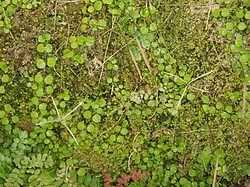
Creeping Willowherb (Epilobium nummulariifolium) is a low-growing, mat-forming perennial herb native to New Zealand. Its pale purplish, finely hairy stems creep just 2 to 5 cm high but spread 50 cm to 1 metre wide, forming dense mats. It is easily recognised by its small, nearly circular, coin-like leaves, yellowish-green and often edged in red, with finely toothed margins. Small white or pale pink flowers nod from the leaf axils. A pioneer plant, it colonizes open, disturbed ground including forest margins, stream banks, rocky outcrops and even garden paths, preferring damp sites. Fast-growing and adaptable, it suits moist, shaded garden spots. Explore more native ground covers in our native plant guide.
Plant Description
Identification and Physical Characteristics
Creeping Willowherb is a low-growing, perennial herb that forms dense, creeping mats often extending up to one metre in diameter. Its stems are pale purplish and covered in fine hairs. The leaves are a key identifying feature: they are small, yellowish-green, and nearly circular (orbicular), often possessing a distinct reddish margin. These coin-like leaves are arranged oppositely along the stem and have finely serrated edges. The flowers are individually borne in the leaf axils; they are small, white or occasionally pale pink, and typically nod downwards before the stalk elongates. Following flowering, the plant produces long, slender capsules that are densely covered in greyish hairs. These capsules eventually split to release numerous small seeds, each equipped with a tuft of hairs (coma) for wind dispersal.
Quick Facts
| Scientific Name | Epilobium nummulariifolium |
|---|---|
| Height | 2-5 cm (Creeping) |
| Spread | 50-100 cm |
| Water Needs | Moderate to High |
| Light | Partial Shade to Full Sun |
| Frost Tolerance | Moderate |
| Salt Tolerance | Moderate |
| Growth Rate | Fast |
| Lifespan | Perennial |
Climate Best Suited to
Creeping Willowherb is highly adaptable and can be found in a wide range of New Zealand climates, from coastal regions to montane and subalpine zones. It prefers temperate conditions but is capable of withstanding the cooler temperatures found in higher altitudes. It thrives best in areas with consistent moisture and high humidity, making it common in both islands and the Chatham Islands.
Regional Suitability
| City | Climate Suitability |
|---|---|
| Auckland | Suitable |
| Wellington | Highly Suitable |
| Christchurch | Suitable |
| Dunedin | Suitable |
| Queenstown | Suitable |
| Invercargill | Suitable |
Plant Habitat
Natural Occurrence and Ecology
This species is a pioneer plant, often found colonizing open, disturbed ground. Its natural habitats include forest margins, grasslands, stream banks, and rocky outcrops. It is particularly fond of damp, shaded sites but can tolerate full sun if the soil remains moist. Due to its opportunistic nature, it is also frequently found in urban environments, thriving in gravel pathways, garden borders, drains, and nursery pots, where it is often regarded as a persistent weed.
Growing Requirements
Soil Requirements
Adaptable to most soil types but prefers moist, well-draining soils rich in organic matter.
- Loamy soil
- Moist but drained
- Rich in humus
Light Requirements
Performs best in partial shade, where its foliage maintains a bright yellowish-green. Can tolerate full sun.
- Dappled sunlight
- Partial shade
- Full sun (with moisture)
Water Requirements
Requires consistent moisture to thrive. It will quickly wither in dry soils but recovers well once watered.
- Regular watering
- Damp conditions
- High humidity preferred
Planting and Establishing
Establishment Guidance
Establishing Creeping Willowherb is straightforward due to its vigorous growth habit. When planting from pots, ensure the site is clear of aggressive weeds that might overtop the young plants. Space individuals about 30 cm apart to allow for their spreading mats to merge. It is best planted in spring or autumn when soil moisture is high. Once the stems touch the ground, they will often root at the nodes, helping the plant anchor itself and spread quickly across the surface.
Ecological Role
Biodiversity and Ecosystem Impact
As a native pioneer, Epilobium nummulariifolium plays a role in stabilizing disturbed soils and preventing erosion on banks and stream margins. Its dense mats provide cover and a cool, moist microclimate for soil invertebrates. The small white flowers are visited by native bees and flies, while the wind-dispersed seeds provide a food source for some small native birds. Its presence in forest margins helps fill ecological niches that might otherwise be occupied by exotic weeds.
Uses & Significance
Garden Uses
In the garden, it is an excellent choice for a native ground cover in damp, shaded spots where other plants might struggle. It works well in rock gardens, along the edges of ponds, or as a "living mulch" between larger shrubs.
- Damp ground cover
- Pond margins
- Rockery filler
Ecological Value
Supports local biodiversity by providing habitat for invertebrates and stabilizing soils in vulnerable areas. It is an important part of the successional process in native habitats.
- Soil stabilization
- Pollinator support
- Invertebrate habitat
Landscaping Uses
Landscapers use Creeping Willowherb for its attractive coppery-green foliage and its ability to quickly carpet bare ground. It is particularly effective in native restoration projects and in urban "green infrastructure" such as rain gardens or bio-filtration strips where its tolerance for damp conditions is an asset.
Seasonal Care Calendar
Spring
Main growth period. Watch for rapid spread. This is the ideal time for propagation by division or from rooted fragments.
- Divide mats
- Keep moist
Summer
Flowers appear in early summer. Ensure the plant does not dry out during hot spells, as it has a shallow root system.
- Frequent watering
- Deadhead if desired
Autumn
Capsules ripen and release seeds. The plant may take on a more reddish or coppery hue as temperatures cool.
- Seed collection
- Trim edges
Winter
Growth slows significantly. In frost-prone areas, the foliage may die back slightly but the core of the mat usually survives.
- Protect from heavy frost
- Minimal maintenance
When to Prune and How Much
Pruning is generally used to control the spread of Creeping Willowherb rather than for the health of the plant itself. If it begins to encroach on smaller, less vigorous neighbours, simply pull back or trim the creeping stems.
- Control spread
- Remove untidy stems
A light trim in late winter can help refresh the mat for spring, removing any frost-damaged or old coppery leaves and encouraging new yellowish-green growth.
How to Grow Creeping Willowherb
Cultivating Creeping Willowherb ( Epilobium nummulariifolium ) is remarkably simple, making it an ideal choice for gardeners of all skill levels. This species is naturally vigorous and will often establish itself in any damp, open area without much assistance. However, for deliberate cultivation, there are several reliable methods to ensure a healthy and attractive mat. Whether you are using it for a large-scale restoration project or as a delicate accent in a private rockery, the key is maintaining consistent moisture and providing a suitable substrate for its creeping stems to anchor into.
From Seed
Spore-like seeds are produced in abundance and are easily germinated. Collect the long, slender capsules just as they begin to turn brown and split.
Fresh seeds have a very high germination rate and do not require complex pre-treatments like stratification.
- Sow seeds onto the surface of a moist, fine seed-raising mix. Do not cover them deeply, as light can aid germination.
- Keep the tray in a warm, humid environment with indirect light.
- Prick out seedlings once they are large enough to handle and have several true leaves.
- Grow on in small pots until they form a small mat before transplanting into the garden.
- Ensure they are kept well-watered during the nursery stage.
Be aware that because the seeds are wind-dispersed, this plant can easily self-seed in unwanted areas of the garden.
From Division
This is the most common and effective method for gardeners. Because the plant naturally roots at the nodes as it creeps, established mats are full of pre-rooted sections.
Division is best performed in early spring or autumn when the weather is mild and the soil is naturally damp.
- Locate a healthy, established mat of Creeping Willowherb.
- Use a sharp trowel or spade to cut out a square section (about 10cm x 10cm) of the mat, ensuring you include the roots and some underlying soil.
- Prepare the new site by loosening the soil and adding a little compost if the soil is poor.
- Press the divided section firmly into the new soil.
- Water thoroughly and continue to mist or water daily for the first two weeks until the section shows signs of new growth.
Additional Methods
Stem cuttings are also viable. Simply snip off a few centimetres of a healthy stem and place it in a glass of water or directly into moist potting mix. Within a week or two, roots will emerge from the nodes. This method is particularly useful for quickly generating new plants for terrariums or small container displays.
Pests & Diseases
Creeping Willowherb is generally resistant to most pests and diseases. Occasionally, it can be affected by powdery mildew if the air circulation is very poor in extremely humid environments. Slugs and snails may browse on the tender new growth, but the plant's rapid growth rate usually means it can easily outpace any minor damage.
Cultural Significance
While not as prominently featured in traditional Māori lore as larger trees, Epilobium species are part of the broader category of small herbs known to Māori. They are recognized for their role as pioneer plants in the forest landscape. In modern times, it is valued by native plant enthusiasts as a symbol of the resilience and subtle beauty of New Zealand's "overlooked" flora.
- Pioneer species awareness
- Resilient native flora
Bonus Tip
If you want a more "bronze" look for your mat, plant it in a spot that receives more direct sunlight. The leaves will develop deeper coppery-red margins as a natural sunblock, providing a beautiful contrast to the bright white flowers.
Related Plants
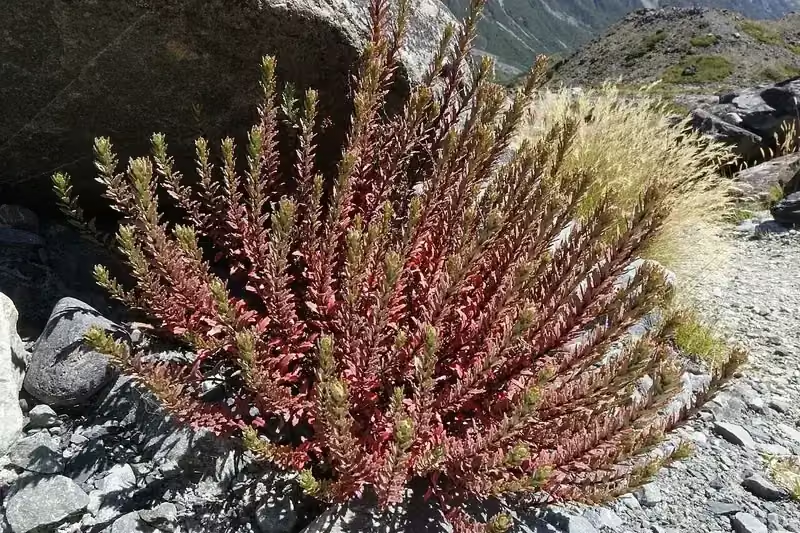
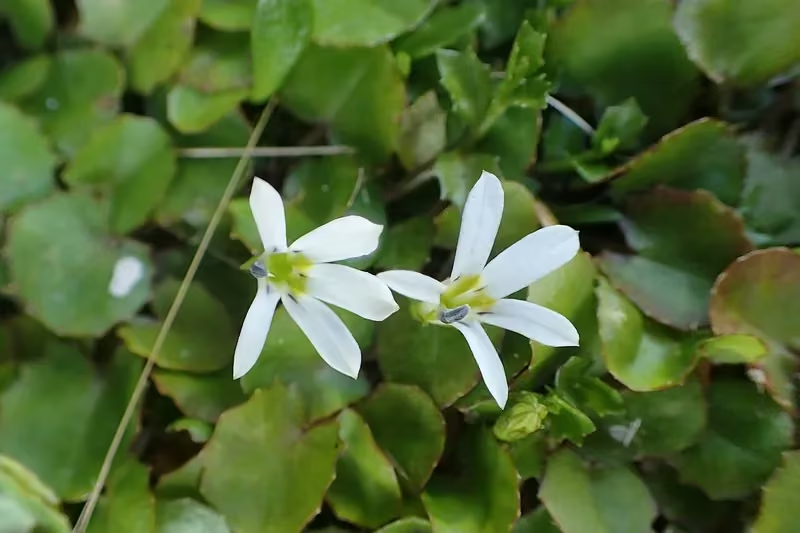
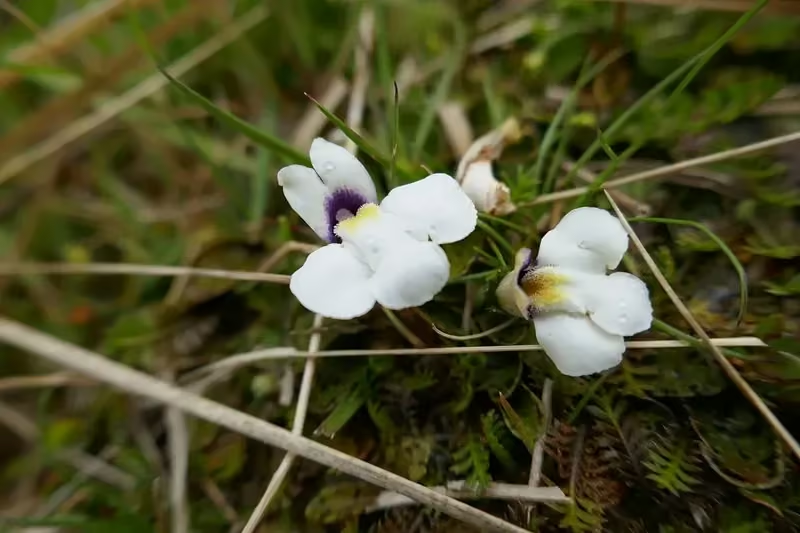
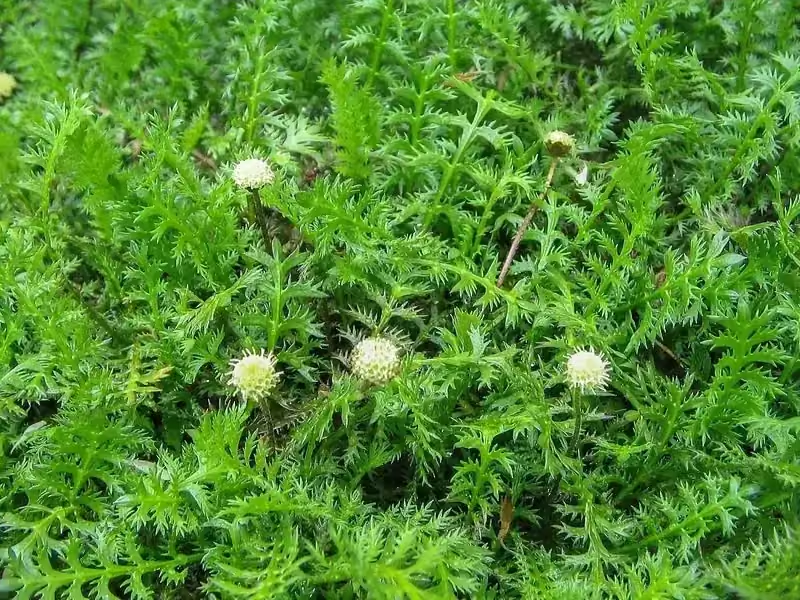
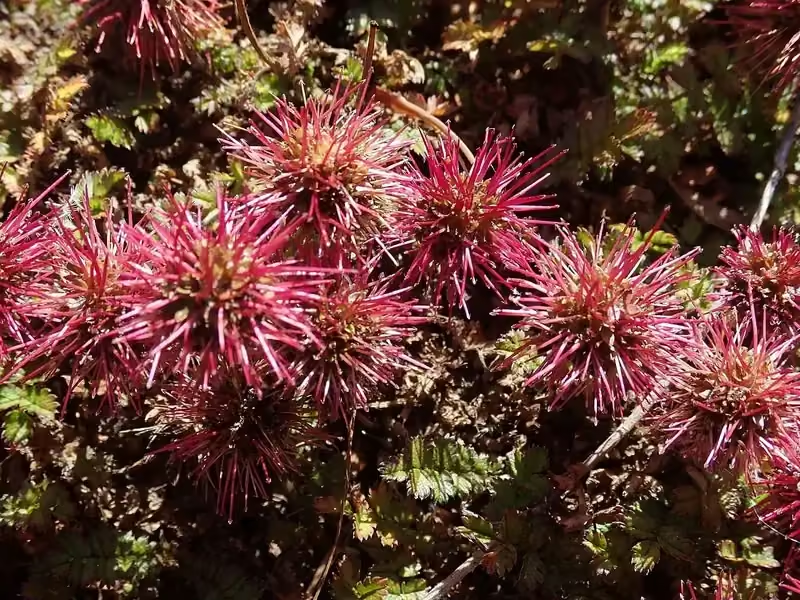
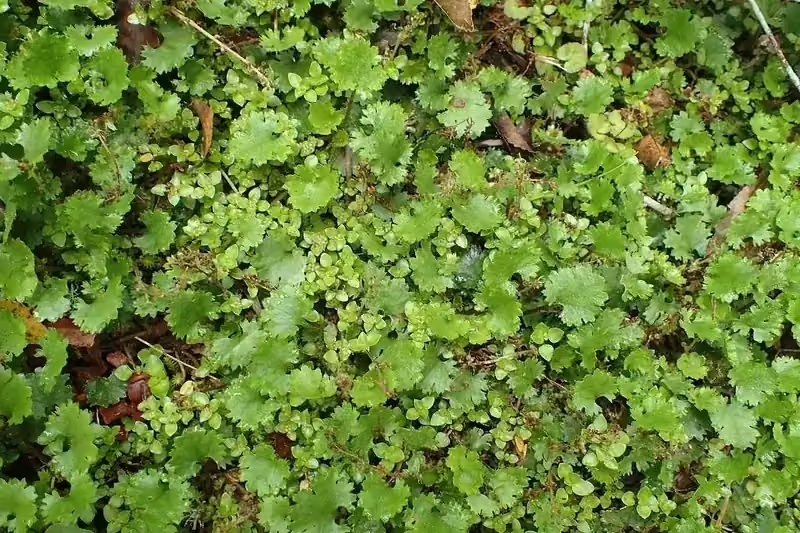
Explore other native plants that share similar characteristics or habitats with Creeping Willowherb ( Epilobium nummulariifolium ), offering further insights into New Zealand's diverse flora. These related species provide context and opportunities for complementary planting in your garden.

Plant Conservation
Conservation Status and Threats
Epilobium nummulariifolium is currently listed as Not Threatened. It is widespread throughout New Zealand and often benefits from human activity that creates the open, disturbed ground it prefers. While it is not a species of conservation concern itself, it remains a valuable part of the native botanical fabric and provides important ecological services in many habitats.
Frequently Asked Questions
How big does Creeping Willowherb get?
It grows just 2 to 5 cm tall but spreads 50 cm to 1 metre wide into mats.
Where does Creeping Willowherb grow naturally?
It colonizes open, disturbed ground such as forest margins, grasslands, stream banks and rocky outcrops.
Does Creeping Willowherb tolerate frost?
Yes, it tolerates moderate frost and cooler high-altitude conditions.
How do you identify Creeping Willowherb?
Look for its small, coin-like, yellowish-green leaves with reddish margins and nodding white flowers.
Sources and Further Reading
The botanical, growing, and conservation details for Creeping (Epilobium nummulariifolium) on this page draw on authoritative New Zealand plant references and citizen-science observation records. Consult the sources below for full technical records and the latest distribution data.