Parataniwha
Elatostema rugosum
Last updated:
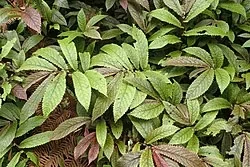
Parataniwha (Elatostema rugosum), also called New Zealand begonia, is a striking herbaceous perennial endemic to the North Island. A member of the nettle family, it is completely non-stinging, unlike its relatives. It forms sprawling clumps 1 to 2 metres tall with succulent, brittle stems that root at the nodes, and its most distinctive feature is the large, asymmetrical, deeply wrinkled leaves, dark green above and often purplish beneath. Parataniwha grows in damp, shaded forest, favouring streamsides, gullies and seepages where soil stays consistently moist. It is frost-sensitive and prized as a lush groundcover for cool, humid, shaded gardens. Explore more native ground covers in our native plant guide.
Plant Description
Elatostema rugosum , commonly known as Parataniwha or New Zealand Begonia, is a distinctive herbaceous perennial endemic to New Zealand's North Island. This member of the nettle family (Urticaceae) is notable for being completely non-stinging, unlike its relatives. The plant forms sprawling mats or clumps reaching heights of 1-2 meters, with succulent, brittle stems that root at the nodes. Its most striking feature is the large, asymmetrical leaves that are deeply wrinkled (rugose), giving rise to its specific epithet. The leaves are typically 5-15 cm long, dark green above and often purplish underneath, with prominent veining and a distinctive begonia-like appearance that explains one of its common names. The plant produces tiny, inconspicuous flowers in clusters from the leaf axils, with separate male and female flowers on the same plant. Small papery achenes develop after flowering and are dispersed by both ballistic projection and water, allowing the plant to colonize suitable habitats along stream margins.
Quick Facts
| Scientific Name | Elatostema rugosum |
|---|---|
| Height | 1-2 m |
| Spread | 1-3 m (forming colonies) |
| Water Needs | High - requires consistently moist soil |
| Light | Deep shade to filtered light |
| Frost Tolerance | Low - sensitive to frost |
| Salt Tolerance | Very low - intolerant of salt spray |
| Growth Rate | Fast in suitable conditions |
| Lifespan | Perennial (several years) |
Climate Best Suited to
Parataniwha thrives in warm, humid climates with consistent moisture and protection from frost. It performs best in the northern regions of New Zealand where temperatures remain mild year-round and rainfall is regular. The plant requires a frost-free environment and struggles in areas with cold winters or dry summers. Coastal and lowland forest areas of the North Island provide ideal conditions, particularly where there is natural shelter from wind and direct sun.
Regional Suitability
| City | Climate Suitability |
|---|---|
| Auckland | Excellent |
| Wellington | Good (with shelter) |
| Christchurch | Poor (too cold and dry) |
| Hamilton | Excellent |
| Tauranga | Excellent |
| Dunedin | Very Poor (too cold) |
Plant Habitat
Elatostema rugosum naturally inhabits damp, shaded areas within lowland to montane forests throughout the North Island, from North Cape to Kapiti Island and the Tararua Range. It shows a strong preference for streamside environments, gully systems, and seepage areas where soil moisture remains consistently high. The species thrives in the understory of native forest, particularly beneath tree ferns and broadleaved canopy species that provide the deep shade it requires. It often forms extensive colonies on forest floors rich in leaf litter and humus, where the soil remains cool and moist throughout the year. The plant is frequently found growing alongside other moisture-loving species such as ferns, mosses, and other herbaceous forest floor plants. In cultivation, recreating these conditions is essential for success.
Growing Requirements
Soil Requirements
Requires rich, humus-laden soil with excellent moisture retention but good drainage. The ideal growing medium mimics forest floor conditions with high organic content.
- Rich in organic matter and leaf mold
- Consistently moist but not waterlogged
- Slightly acidic to neutral pH (6.0-7.0)
- Well-aerated with good structure
Light Requirements
Parataniwha is a true shade plant that cannot tolerate direct sunlight. It thrives in deep shade to dappled light conditions similar to its forest understory habitat.
- Deep shade preferred
- Filtered or dappled light acceptable
- Protect from all direct sun
- Ideal under tree canopy or shade cloth
Water Requirements
High water requirements reflecting its streamside origins. The soil must never dry out completely, but waterlogging should be avoided to prevent root rot.
- Keep soil consistently moist
- Water regularly during dry periods
- Increase frequency in warmer months
- Mist foliage in dry conditions to increase humidity
Planting and Establishing
Plant Parataniwha in spring after all frost danger has passed, choosing a sheltered, shaded location that mimics its natural forest habitat. Prepare the planting area by incorporating generous amounts of compost, leaf mold, or well-rotted organic matter to create the humus-rich conditions this plant requires. Dig a hole twice the width of the root ball and ensure good drainage by adding coarse sand or pumice if the soil is heavy. Plant at the same depth it was growing in its container, firming the soil gently around the roots. Water thoroughly after planting and apply a thick layer of organic mulch to retain moisture and suppress weeds. During establishment, maintain consistent soil moisture and protect from wind and any direct sun. The plant will begin spreading via its creeping stems once established, forming an attractive groundcover. Regular applications of leaf mulch will help maintain the forest floor conditions this species prefers.
Ecological Role
Parataniwha plays an important role in forest ecosystems as a groundcover species that helps prevent soil erosion along stream banks and in damp gullies. Its spreading habit creates shelter and humid microhabitats for small invertebrates, including native snails and insects. The plant provides food for several native herbivores, particularly stick insects and caterpillars of some moth species. Its flowers, though small, are visited by tiny native flies and other small pollinators. The dense foliage helps maintain soil moisture and contributes to the accumulation of leaf litter that enriches forest soils. As a fast-growing colonizer of disturbed forest areas, it helps in the natural regeneration process following events like tree falls or landslips. The plant's ability to propagate vegetatively through stem fragments makes it an effective species for stabilizing loose soil in shaded, moist environments.
Uses & Significance
Garden Uses
Parataniwha makes an excellent groundcover for shaded areas of the garden where few other plants will thrive. Its attractive foliage provides year-round interest in ferneries and shade gardens.
- Shade garden groundcover
- Fernery underplanting
- Streamside plantings
- Tropical-style garden accent
- Container plant for shaded patios
Ecological Value
This species contributes significantly to forest biodiversity by providing habitat and food sources for native fauna while helping to maintain forest floor integrity.
- Erosion control on shaded slopes
- Habitat for native invertebrates
- Food source for herbivorous insects
- Soil moisture retention
- Forest floor stabilization
Landscaping Uses
In landscape design, Parataniwha serves as an invaluable solution for challenging deeply shaded areas where traditional groundcovers fail. Its lush, tropical appearance creates a dramatic textural contrast when planted beneath tree ferns or alongside other shade-tolerant natives. The plant works exceptionally well in recreating natural forest floor aesthetics in urban gardens, particularly in narrow side passages or beneath established trees. Use it to soften the edges of shaded water features or to create living mulch in woodland gardens. Its spreading nature makes it ideal for covering large areas quickly, though it should be contained in smaller gardens. The attractive foliage provides an excellent backdrop for showcasing smaller ferns and shade-loving perennials, while its begonia-like leaves add an unexpected tropical element to temperate shade gardens.
Seasonal Care Calendar
Spring
Begin active growth period with increased watering and feeding. Apply slow-release fertilizer and refresh mulch layer. Check for new shoot development and propagate if desired.
- Increase watering frequency
- Apply balanced liquid fertilizer monthly
- Refresh organic mulch
- Propagate from stem cuttings
Summer
Peak growing season requiring vigilant moisture management. Monitor for any pest issues and ensure adequate humidity during hot, dry periods.
- Water daily in dry weather
- Mist foliage in low humidity
- Continue monthly feeding
- Trim spreading growth if needed
Autumn
Reduce feeding as growth slows. Prepare plants for winter by ensuring good drainage and adding protective mulch in cooler areas.
- Gradually reduce watering
- Stop fertilizing
- Add winter mulch layer
- Collect any ripe seeds
Winter
Protect from frost and cold winds. Maintain minimal watering to prevent soil from completely drying out. Plants may die back in colder areas but resprout in spring.
- Provide frost protection
- Water sparingly but don't let dry completely
- Remove damaged foliage
- Check for adequate shelter
When to Prune and How Much
Parataniwha requires minimal pruning but benefits from occasional grooming to maintain its appearance and control spread. The best time to prune is in early spring before new growth begins, though light trimming can be done throughout the growing season.
- Remove frost-damaged foliage in early spring
- Trim back overgrown stems to contain spread
- Cut out any dead or yellowing leaves regularly
- Prune flowering stems after seed dispersal if desired
When pruning, be aware that the stems are brittle and break easily - this is actually a natural propagation method for the plant. Save healthy stem pieces for propagation. Avoid heavy pruning as the plant relies on its foliage for photosynthesis in low light conditions. Regular light maintenance is preferable to infrequent heavy cutting.
How to Grow Parataniwha
Cultivating Parataniwha ( Elatostema rugosum ) is a rewarding endeavor for any gardener interested in New Zealand's unique flora. This species can be propagated through several methods, each requiring specific conditions to ensure healthy growth and establishment. Successful propagation depends on mimicking the plant's natural environment and providing consistent care during the early stages of development.
From Seed
Propagation from seed is often the most effective way to produce a large number of Parataniwha plants. Seeds should be collected when they are fully mature. Freshly collected seeds generally have higher germination rates than those that have been stored for long periods.
Seeds are tiny and produced in papery achenes that are naturally dispersed by water and ballistic projection. Collect seeds when capsules begin to dry but before they split open. Sow immediately on the surface of a fine, moist seed-raising mix as the seeds need light to germinate.
- Prepare trays with fine, moist seed-raising mix
- Scatter seeds thinly on the surface - do not cover
- Mist gently to settle seeds without washing them away
- Cover with clear plastic to maintain humidity
- Place in warm, bright location but out of direct sun
- Keep constantly moist using bottom watering
- Germination occurs in 2-4 weeks at 18-22°C
- Transplant seedlings when large enough to handle
Seed propagation can be challenging due to the tiny seed size and specific germination requirements. Success rates improve significantly when seeds are fresh and conditions are carefully controlled.
From Cuttings
For those wishing to replicate specific characteristics of a parent plant, vegetative propagation via cuttings is the preferred method. This technique ensures that the new plants are genetically identical to the source. Semi-hardwood cuttings taken during the appropriate season usually yield the best results for this species.
Stem cuttings are the easiest and most reliable method of propagation. The brittle stems root readily at the nodes when in contact with moist soil. Take cuttings during the active growing season from spring through autumn for best results.
- Select healthy stem sections 10-15cm long with at least 2-3 nodes
- Remove lower leaves, keeping 2-3 leaves at the tip
- Dip cut end in rooting hormone (optional but helpful)
- Insert cuttings into moist propagating mix
- Ensure at least one node is below soil surface
- Cover with plastic bag or place in propagation box
- Maintain high humidity and consistent moisture
- Roots develop in 2-3 weeks in warm conditions
- Gradually harden off before transplanting
Additional Methods
Depending on the growth habit of Parataniwha, other methods such as division or layering might also be viable options. Division is particularly suitable for plants that form dense clumps or have spreading root systems, while layering can be used for species with trailing or flexible stems.
Natural layering occurs when stems touch moist soil and root at the nodes. This can be encouraged by pegging down healthy stems in contact with soil. Division of established clumps is possible in spring but handle carefully as the brittle stems break easily.
- For layering: peg down healthy stems onto moist soil
- Cover the node area with additional moist compost
- Keep consistently moist until roots develop (3-4 weeks)
- Sever from parent plant once well-rooted
- For division: carefully lift established clumps in spring
- Gently separate rooted sections
- Replant immediately in prepared sites
- Water thoroughly and maintain high humidity until established
Pests & Diseases
Parataniwha is generally pest and disease resistant when grown in appropriate conditions, though it can suffer from problems related to poor growing conditions. Slugs and snails may feed on the succulent foliage, particularly on young plants, and can be managed through organic baits or physical barriers. Aphids occasionally colonize new growth but are rarely serious and can be controlled with insecticidal soap sprays. The main disease risk is root rot caused by overly wet or poorly drained soil - ensure good drainage while maintaining the consistent moisture the plant requires. Fungal leaf spots may develop in overly humid conditions with poor air circulation. Prevent issues by avoiding overhead watering, providing adequate spacing between plants, and removing any diseased foliage promptly. Plants stressed by too much sun, insufficient water, or frost damage are more susceptible to problems.
Cultural Significance
Parataniwha holds special significance in Māori traditional knowledge and continues to be valued for both its practical and medicinal properties. The name 'Parataniwha' connects this plant to Māori mythology, with 'taniwha' referring to powerful spiritual beings that often dwelt in waterways - appropriate given the plant's preference for streamside habitats. Traditionally, the large leaves were used as a wrapping material, particularly for preserving and cooking food, with kūmara (sweet potato) commonly wrapped in Parataniwha leaves for cooking in hāngī (earth ovens). The plant has recognized medicinal properties, with traditional uses including treatment of skin conditions and wounds. Modern research has confirmed antibacterial and antioxidant properties in leaf extracts, validating traditional knowledge. Some iwi used preparations of the plant for treating boils and other skin ailments.
- Food wrapping for hāngī cooking
- Traditional medicine for skin conditions
- Antibacterial wound treatment
- Cultural indicator species for suitable kūmara growing areas
Bonus Tip
Create a microclimate for Parataniwha by planting it near a shaded water feature or installing a simple drip irrigation system with a timer. The constant moisture and increased humidity from water evaporation will significantly improve growth and reduce maintenance. For an authentic forest floor effect, underplant with native ferns and allow fallen leaves to accumulate as natural mulch, only removing them when they become too thick.
Related Plants
Explore other native plants that share similar characteristics or habitats with Parataniwha ( Elatostema rugosum ), offering further insights into New Zealand's diverse flora. These related species provide context and opportunities for complementary planting in your garden. For another native ground cover, explore Tetra. Hamilt..



Plant Conservation
Elatostema rugosum is currently classified as "Not Threatened" according to the New Zealand Threat Classification System (2023). As an endemic species found only in New Zealand's North Island, it maintains stable populations throughout its natural range from North Cape to Kapiti Island and the Tararua Range. While locally sparse in the lower North Island, the species faces no immediate conservation threats. The main risk factors include habitat loss through forest clearance, particularly of lowland forest areas, and competition from invasive shade-tolerant weeds in disturbed forest margins. Climate change may affect its distribution as it requires consistently moist conditions and frost-free environments. Conservation efforts focus on protecting existing forest habitats and maintaining stream quality in catchments where it occurs. The plant is occasionally available from specialist native plant nurseries, helping to preserve genetic diversity through cultivation. Home gardeners can contribute to conservation by growing this species in appropriate conditions and sharing propagation material with others interested in native plants.
Frequently Asked Questions
How tall does parataniwha grow?
It forms clumps 1 to 2 metres tall and can spread 1 to 3 metres wide into colonies.
Does parataniwha sting like a nettle?
No, despite being in the nettle family it is completely non-stinging.
Does parataniwha tolerate frost?
No, it has low frost tolerance and needs a sheltered, frost-free spot.
Where does parataniwha grow naturally?
It grows in damp, shaded North Island forest, especially along streamsides, gullies and seepage areas.
Sources and Further Reading
The botanical, growing, and conservation details for Parataniwha (Elatostema rugosum) on this page draw on authoritative New Zealand plant references and citizen-science observation records. Consult the sources below for full technical records and the latest distribution data.