Small Shade Nettle
Australina pusilla
Last updated:
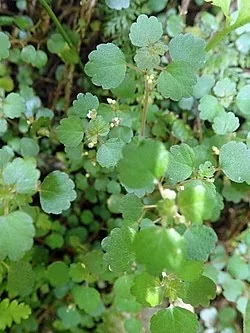
Small shade nettle (Australina pusilla) is a low-growing perennial herb that forms delicate, sprawling mats on the forest floor, reaching about 25 centimetres tall. Its slender stems creep or ascend, carrying alternate, heart-shaped to circular leaves 11 to 16 millimetres across with a few blunt, scalloped teeth. Unlike most of the nettle family, it lacks stinging hairs, making it a smooth, harmless groundcover. It grows in moist, shaded coastal to montane forests across the North, South, Stewart and Chatham Islands, especially along stream banks and in damp fern gullies where it stabilises soil and shelters small invertebrates. Explore more native ground covers in our native plant guide.
Plant Description
Australina pusilla is a low-growing, perennial herb that forms delicate, sprawling mats on the forest floor. It produces numerous slender stems that can be either prostrate (creeping along the ground) or ascending, reaching a maximum height of approximately 250 mm. The foliage ranges from a deep, dark green to a vibrant grass-green. The leaves are alternate and heart-shaped to orbicular (circular), typically measuring 11-16 mm in length and width. A key feature is the presence of 1 to 4 blunt or rounded teeth along the leaf margins, giving them a slightly scalloped appearance.
Unlike many members of the Urticaceae (nettle) family, Australina pusilla lacks stinging hairs, making it a "smooth" or "soft" nettle that is pleasant to handle. The flowers are tiny, inconspicuous, and yellowish-green, appearing from late spring through early summer (September to December). The species is monoecious, with both male and female flowers found on the same plant. Small, dry fruits follow the flowering period, maturing between December and April. Its overall form is one of quiet elegance, perfectly designed for life in the moist, shaded niches of the New Zealand bush.
Quick Facts
| Scientific Name | Australina pusilla |
|---|---|
| Height | Up to 25 cm |
| Spread | 30 - 50 cm (mat-forming) |
| Water Needs | High (Requires consistently moist soil) |
| Light | Full shade to semi-shade (Avoid direct sun) |
| Frost Tolerance | Moderate (Protected by forest canopy) |
| Salt Tolerance | Low (Primarily inland or sheltered coastal) |
| Growth Rate | Moderate |
| Lifespan | Perennial |
Climate Best Suited to
Small Shade Nettle thrives in the cool, temperate, and humid climates found across New Zealand. It is highly dependent on high ambient humidity and consistently moist soil, making it perfectly suited to regions with high rainfall and consistent cloud cover. It performs best in the sheltered, buffered microclimates of the forest interior, where it is protected from extreme temperature fluctuations and drying winds. While it can tolerate moderate frosts, it requires the protective canopy of larger trees or shrubs to succeed in colder regions. It is not suitable for hot, dry, or exposed areas where its delicate foliage would quickly desiccate.
Regional Suitability
| City | Climate Suitability |
|---|---|
| Auckland | Suitable (In localized, moist, shaded spots) |
| Wellington | Highly Suitable (Temperate and humid) |
| Christchurch | Suitable (With protection and consistent irrigation) |
| Dunedin | Highly Suitable (Enjoys the cooler, moist conditions) |
| Nelson | Highly Suitable (In shaded riparian zones) |
Plant Habitat
Australina pusilla is a widespread indigenous species found on the North, South, Stewart, and Chatham Islands. Its primary habitat is the moist, shaded ground of coastal to montane forests. It is particularly abundant in riparian forests, where it colonizes the fertile soil along stream banks and in damp fern gullies. It is a classic understory specialist, thriving in low-light conditions where it often forms a lush, green carpet alongside other shade-loving natives like bitter cresses, larger nettles, and forest sedges. Its presence is a sign of a healthy, undisturbed forest floor with a stable, high-moisture microclimate.
Growing Requirements
Soil Requirements
Requires consistently moist, fertile soil rich in organic matter.
- High leaf litter or compost content
- Retains moisture but should not be stagnant
- Prefers loamy or silty textures
- Acidic to neutral pH
Light Requirements
Requires deep shade to partial shade. Direct sunlight will scorch and kill the plant.
- Forest understory conditions
- Sheltered, south-facing sites
- Protection from harsh midday sun
Water Requirements
High water needs. Soil should remain damp at all times.
- Regular watering during dry periods
- Benefits from automated misting in dry gardens
- Ideal for proximity to water features
- Sensitivity to prolonged dry air
Planting and Establishing
To successfully establish Australina pusilla , choose a location that mimics its native forest niche-deep shade and constant moisture. Enrich the planting area with plenty of leaf mold or well-rotted compost to create a humus-rich substrate. Gently place the small plants or divisions into the soil, ensuring the roots are well-covered but the crown is not buried too deeply. Water thoroughly immediately after planting and maintain high moisture levels throughout the establishment phase. Because it is a creeping plant, space individuals 20-30 cm apart to allow them to grow together and form a continuous mat. Once established, it will naturally spread through its prostrate stems, provided the area remains shaded and damp.
Ecological Role
Small Shade Nettle is an essential component of the forest floor ecosystem. Its mat-forming habit provides critical soil stabilization in damp riparian areas, preventing erosion during heavy rain events. The dense greenery offers a humid refuge and foraging ground for a multitude of small forest invertebrates, which are vital for the forest's nutrient cycle. Furthermore, it serves as an indicator species for pristine understory habitats, as it is sensitive to environmental changes such as canopy opening or soil compaction. Its subtle flowering and fruiting provide resources for native fauna, contributing to the complex web of life within New Zealand's temperate rainforests.
Uses & Significance
Garden Uses
The Small Shade Nettle is a perfect choice for specialized shade gardens, native forest restoration, and as a low-impact groundcover in cool, moist garden niches. It is particularly valuable for underplanting larger native trees and shrubs where other plants might struggle with the low light levels.
- Understory groundcover
- Shaded rockeries and fern gullies
- Riparian restoration planting
- Native forest floor simulation
- Moist, shaded patio containers
Ecological Value
Provides soil protection, supports invertebrate biodiversity, and contributes to the overall health of moist forest understories.
- Stabilizes damp soil
- Creates essential invertebrate micro-habitats
- Maintains forest floor humidity
- Indicator of healthy forest ecosystems
Landscaping Uses
In landscaping, Australina pusilla is utilized to create lush, naturalistic scenes in the most shaded parts of a property. It is an ideal tool for blending the transition between a formal garden and a native bush area. Landscape designers often use it to soften the edges of shaded paths or to fill the gaps between larger ferns and hostas in moist, sheltered zones. Its ability to form a dense, vibrant green carpet without being aggressive or having stinging hairs makes it a versatile and user-friendly choice for intimate garden spaces. It effectively creates a sense of "primeval forest" when used in mass plantings beneath a dense canopy.
Seasonal Care Calendar
Spring
As the growing season begins, ensure the soil remains consistently moist. Apply a very light layer of organic mulch if necessary to retain humidity.
- Monitor soil moisture closely
- Light application of leaf mold
- Check for new spring growth
Summer
This is the most challenging time for this moisture-loving plant. Provide regular, deep watering and ensure it remains protected from all direct sunlight.
- Intense focus on consistent irrigation
- Maintain high ambient humidity
- Ensure 100% shade protection
Autumn
Gradually reduce watering frequency as temperatures cool. Allow fallen leaves from surrounding trees to provide natural mulch and nutrients.
- Reduce watering
- Allow natural leaf litter to accumulate
- Monitor for maturing fruits
Winter
The plant will grow slowly during this time. Minimal intervention is required other than ensuring the area remains undisturbed.
- Minimal care needed
- Avoid excessive winter fertilization
- Protect from severe, direct frosts
When to Prune and How Much
Pruning for Australina pusilla is almost never required due to its low-growing, mat-forming habit. The plant is naturally self-maintaining. If the mat becomes too large or encroaches upon paths, simply pull back or trim the leading stems with garden scissors. This can be done at any time during the growing season. Removing any dead or yellowing patches in spring will keep the mat looking vibrant and healthy. Because it lacks stinging hairs, maintenance is easy and safe. Focus on keeping the environment around the plant healthy rather than active pruning.
- Minimal maintenance required
- Trim edges if necessary
- Remove dead patches in spring
Always ensure that you do not disturb the main crown of the plant during any maintenance activities, as the root system is shallow and delicate.
How to Grow Small Shade Nettle
Propagating the Small Shade Nettle ( Australina pusilla ) is a straightforward process that allows you to easily expand this charming groundcover within your garden. Given its creeping nature and preference for moist, shaded environments, successful propagation can be achieved through both division and, with a bit more patience, from seed. Both methods are effective for populating shaded niches under larger native plants.
From Division
Division is the simplest and fastest method for propagating Australina pusilla . Because it naturally produces creeping stems that root at the nodes, established mats are easy to divide. The best time for this is in spring or early autumn when moisture levels are high and the plant is in an active growth phase. Carefully lift a small patch of the mat, ensuring you take a good clump of roots and several healthy stems. Use a sharp, clean knife or your fingers to separate the clump into smaller sections. Replant these immediately into moist, organic-rich soil in a fully shaded location. Water thoroughly and keep the area consistently damp until the new divisions show signs of active growth and spread.
- Lift a healthy portion of an established mat in spring.
- Identify rooted stems or nodes within the clump.
- Gently separate into smaller sections.
- Replant immediately into moist, shaded soil.
- Maintain high moisture until the division is established.
From Seed
Growing Australina pusilla from seed is also possible, although the seeds are tiny and require careful handling. Collect mature fruits between December and April. Sow the seeds immediately onto the surface of a moist, fine-textured seed-raising mix that is high in organic matter. Do not cover the seeds with soil, as they may require light to germinate. Place the tray in a cool, shaded greenhouse or a sheltered outdoor spot and maintain high humidity by covering the tray with a clear plastic lid or placing it in a plastic bag. Keep the surface moist but not waterlogged. Germination usually occurs within a few weeks. Once the seedlings are large enough to handle, carefully transplant them into individual small pots before final planting in the garden.
- Collect mature fruits in late summer or autumn.
- Sow tiny seeds on the surface of a moist, organic mix.
- Provide cool, shaded, and high-humidity conditions.
- Maintain consistent surface moisture.
- Transplant young plantlets into containers once robust.
Consistency in providing shade and moisture is the most critical factor for success with either propagation method. Patient care during the initial establishment phase will result in a lush, healthy carpet of native greenery.
Additional Methods
While division and seed are the primary methods, the plant's natural tendency to root at the nodes means that layering can also be utilized. Simply pin down a healthy, sprawling stem onto the soil surface and keep it moist; it will usually develop its own roots at the point of contact within a few weeks, after which it can be severed from the parent plant and moved. Always use clean tools and sterile media to prevent the introduction of pathogens. Providing a stable, humid environment for young plants is key to their long-term health and success in the garden.
Pests & Diseases
Australina pusilla is generally a low-maintenance plant with few significant pest or disease problems, especially when grown in its ideal cool, shaded environment. Its main vulnerability is excessively dry air or soil, which can lead to rapid wilting and death. In garden settings, slugs and snails may occasionally browse the tender foliage; these can be managed with environment-friendly bait or physical barriers. Occasionally, in very humid, stagnant air, mildews or leaf spots may appear; improving air circulation around the mat will usually resolve these issues. Providing the correct environmental conditions-maximum shade and consistent moisture-is the most effective way to ensure this delicate native remains healthy and pest-free.
Cultural Significance
While Australina pusilla is a small and often unnoticed part of the forest understory, its presence contributes to the overall botanical diversity and ecological health of Aotearoa. In Māori culture, the forest understory is a realm of great spiritual and medicinal importance, and although specific traditional uses for the Small Shade Nettle may not be widely recorded compared to larger, more prominent species, it forms part of the intricate tapestry of the native bush. Its resilience in the dim, damp niches of the forest reflects the specialized and enduring nature of New Zealand's indigenous flora. Protecting its habitats ensures that the full complexity of our forest ecosystems is preserved for future generations to appreciate and learn from.
Bonus Tip
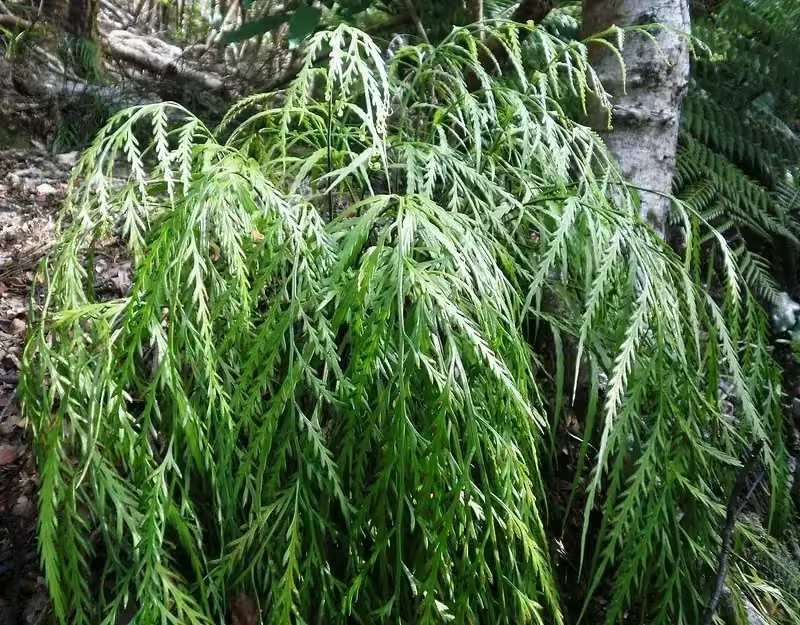
To create a truly authentic forest floor effect, plant Small Shade Nettle alongside native ferns like Asplenium flaccidum (Hanging Spleenwort) or Hymenophyllum species (Filmy Ferns). The contrasting textures and shared love for deep shade will create a lush, tranquil oasis in even the darkest corners of your garden. Remember to keep the leaf litter from surrounding trees in place, as this provides the natural mulch and nutrient cycle that this species thrives on.
Related Plants
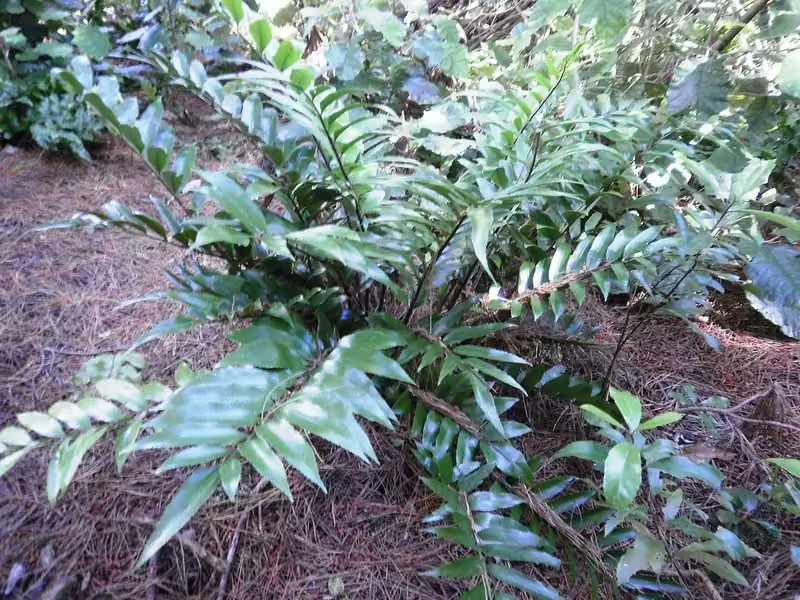
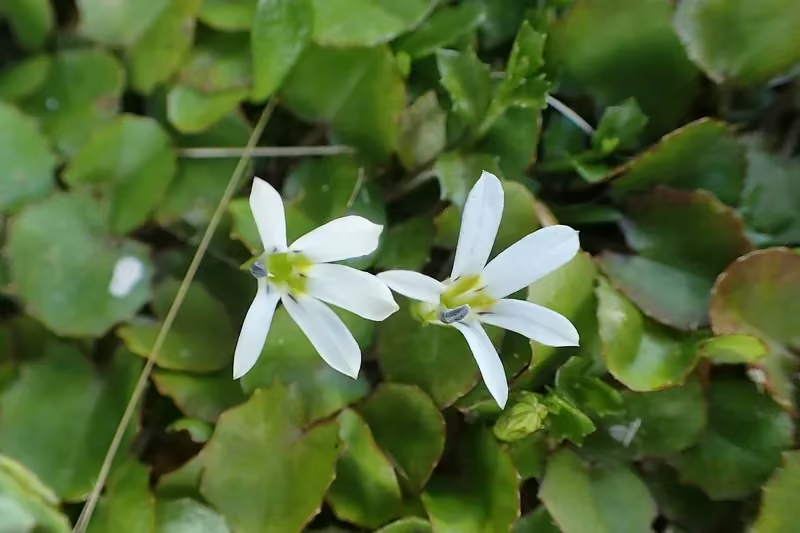
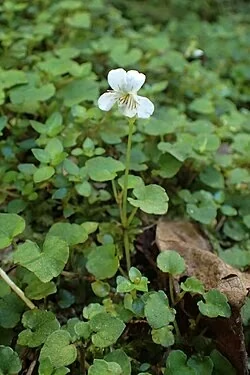
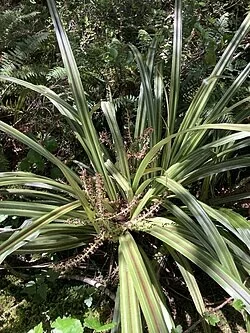
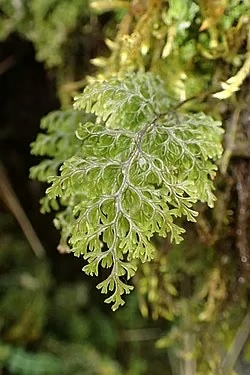
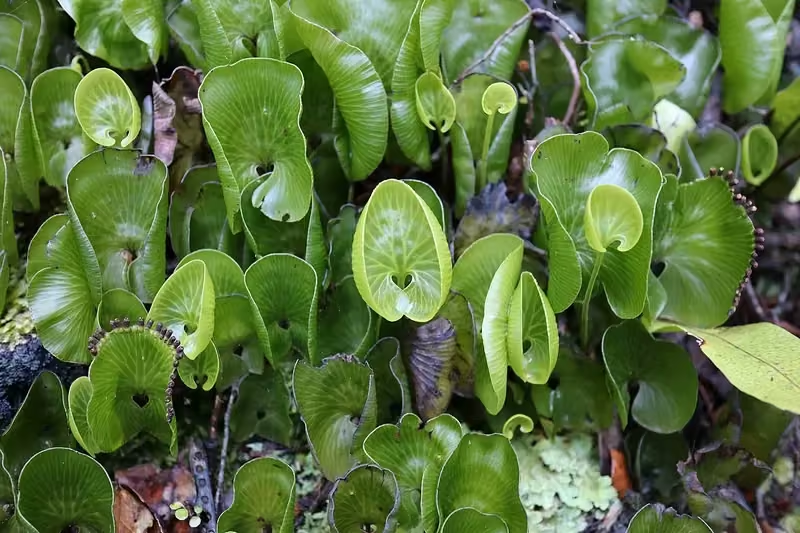
Explore other native New Zealand plants that share characteristics or habitats with the Small Shade Nettle ( Australina pusilla ), offering further insights into our diverse and specialized understory flora. These related species can provide inspiration for creating a cohesive and beautiful shade garden.
Plant Conservation
Australina pusilla is currently classified as "Not Threatened" in the New Zealand Threat Classification System. While it remains common across much of its natural range, especially in the South Island, it is noted to be increasingly localized and scarce north of the Waikato. The primary threats to this delicate species are the degradation of its specialized moist forest and riparian habitats. Land clearing, livestock encroachment into forest remnants, and the drying effects of climate change all impact the stable, high-humidity environments it requires. Active conservation of our remaining riparian corridors and the protection of forest floors from compaction and weeds are essential for its long-term survival. Gardeners can contribute by incorporating Small Shade Nettle into shaded restoration projects and by promoting the value of our often-overlooked understory biodiversity.
Frequently Asked Questions
How tall does Small Shade Nettle grow?
It grows up to 25 centimetres tall and spreads 30 to 50 centimetres as a mat.
Does Australina pusilla sting?
No, unlike most nettles it lacks stinging hairs and is harmless to touch.
Where does Small Shade Nettle grow?
It grows on moist, shaded forest floors from coastal to montane areas across New Zealand's main and outlying islands.
What conditions does Small Shade Nettle need?
It needs full to semi-shade and consistently moist soil, avoiding direct sun.
Sources and Further Reading
The botanical, growing, and conservation details for Small Shade Nettle (Australina pusilla) on this page draw on authoritative New Zealand plant references and citizen-science observation records. Consult the sources below for full technical records and the latest distribution data.