Jointed Fern
Arthropteris tenella
Last updated:
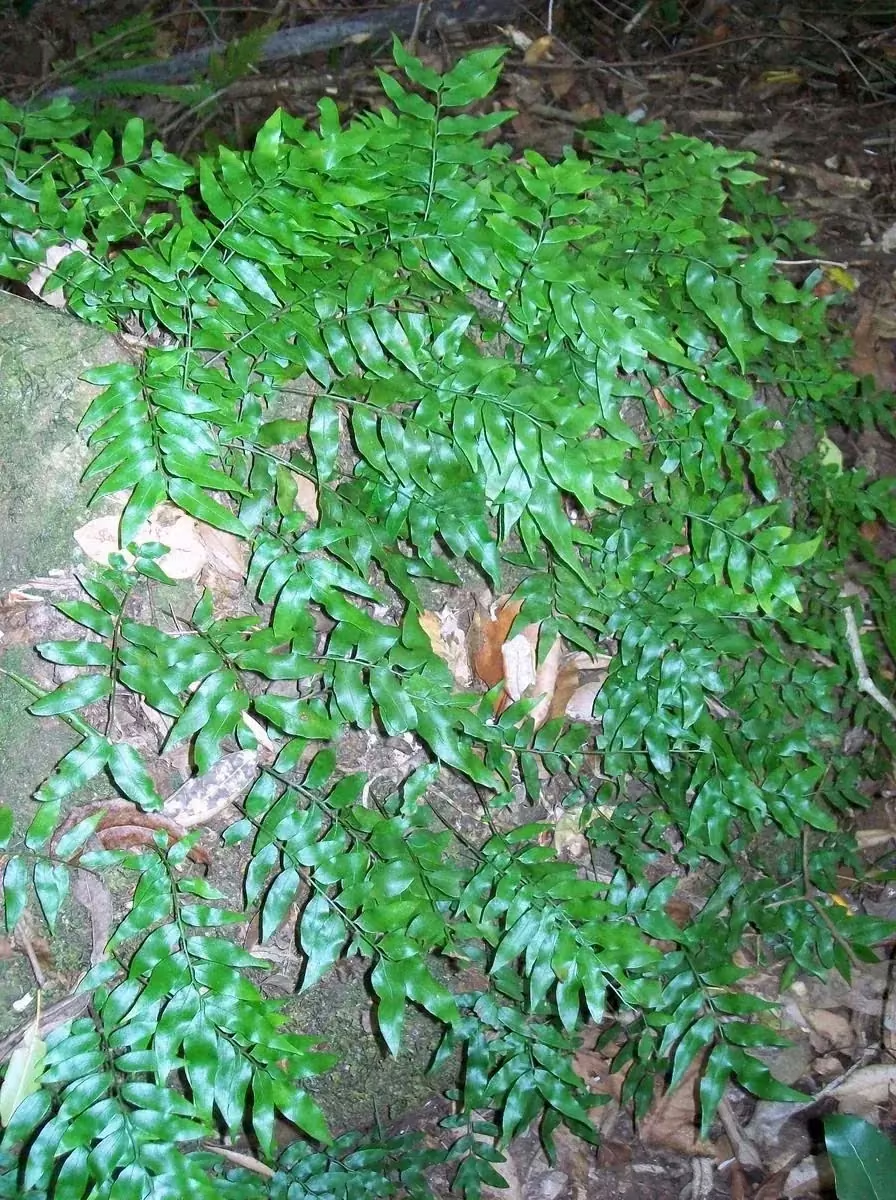
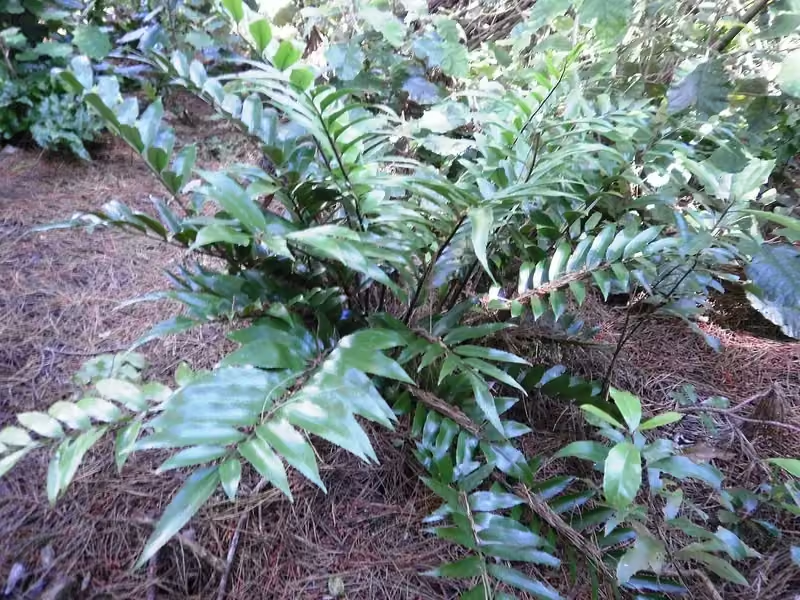
Jointed Fern (Arthropteris tenella) is a distinctive native New Zealand fern that grows both on the ground and as an epiphyte, often scrambling over rocks and climbing tree trunks in coastal and lowland forest. It spreads by long-creeping, rigid rhizomes, densely covered with ovate scales, that can extend up to 1.15 metres. Its shiny, dark green, thinly leathery fronds range from about 8.5 to 60 centimetres long, with pinnae jointed to the main stalk, a feature that gives the fern its common name. Found from the Three Kings Islands south to Banks Peninsula and the Chatham Islands, it favours shaded, humid, frost-free sites in stream beds, gullies and on river terraces. Explore more native ferns in our native plant guide.

Plant Description
Identification and Physical Characteristics
Arthropteris tenella , commonly known as the Jointed Fern, is a distinctive rainforest fern native to eastern Australia and New Zealand. This versatile fern can grow both terrestrially on the ground and epiphytically on other plants, frequently observed scrambling over rocks and climbing tree trunks in its natural habitat. It features long-creeping, rigid rhizomes that can extend up to 1.15 meters and are densely covered with ovate scales. Its fronds are shiny, dark green, and thinly leathery, typically ranging from 8.5 to 60 cm in length. The pinnae (leaflets) are jointed to the main stalk, and their margins can be smooth or subtly scalloped. Reproduction occurs via round sori, clusters of spores, found on the underside of the fronds.
Quick Facts
| Scientific Name | Arthropteris tenella |
|---|---|
| Height | Fronds up to 60 cm (2 feet) |
| Spread | Spreading, rhizomes up to 1.15 metres (3.7 feet) |
| Water Needs | Moderate to high; prefers consistent moisture. |
| Light | Partial shade to full shade. |
| Frost Tolerance | Low |
| Salt Tolerance | Low |
| Growth Rate | Moderate |
| Lifespan | Perennial |
Climate Best Suited to
Arthropteris tenella thrives in the warm, humid conditions of coastal and lowland rainforests. It is well-adapted to the temperate to subtropical climates of its native range in eastern Australia and New Zealand. It requires frost-free conditions and consistent moisture, often found in sheltered, shady areas within forests.
Regional Suitability
| City | Climate Suitability |
|---|---|
| Auckland | Suitable |
| Whangārei | Suitable |
| Hamilton | Suitable (in sheltered, frost-free locations) |
| Wellington | Suitable (in sheltered, frost-free locations) |
| Christchurch | Not suitable (due to frost) |
Plant Habitat
Natural Occurrence and Ecology
The Jointed Fern is indigenous to New Zealand, found on the Three Kings Islands, North Island, and extending to the southern limits of the South Island (Banks Peninsula), as well as the Chatham Islands. Its preferred habitat is coastal and lowland forests, particularly in shady areas where it can scramble over rocks or climb tree trunks. It is commonly found in stream beds, on river terraces, in gorges, and gullies, and at forest margins, growing on various rock types such as limestone, greywacke, basalt, lava, and scoria. Its altitudinal range is from near sea level up to 400 meters.
Growing Requirements
Soil Requirements
Arthropteris tenella prefers well-draining, humus-rich soil, indicative of its rainforest origins. It can tolerate a range of soil types, including those found on rocky ground, but consistent moisture and good organic content are essential for optimal growth.
- Well-drained
- Humus-rich
- Consistently moist
Light Requirements
This fern thrives in partial to full shade. Direct sunlight, especially during the hotter parts of the day, can scorch its delicate fronds. It is ideally suited for understory planting or locations that receive filtered light throughout the day.
- Partial to full shade
- Avoid direct sun
- Filtered light preferred
Water Requirements
Arthropteris tenella requires consistent moisture, reflecting its rainforest habitat. The soil should be kept moist but not waterlogged. High humidity is also beneficial. Regular watering is crucial, especially during dry periods, to prevent the fronds from drying out.
- Consistently moist soil
- High humidity
- Regular watering
Planting and Establishing
Establishment Guidance
When planting Jointed Fern, choose a frost-free location with partial to full shade and well-draining, humus-rich soil. Provide a structure for it to climb, such as a tree trunk, rock face, or a trellis, to encourage its epiphytic or scrambling growth habit. Ensure consistent moisture after planting.
Ecological Role
Biodiversity and Ecosystem Impact
As a native fern, Arthropteris tenella plays a role in the understory ecosystems of New Zealand's coastal and lowland forests. By growing on rocks and tree trunks, it contributes to the structural complexity of these habitats, potentially providing microhabitats for small invertebrates. Its presence is an indicator of healthy, humid forest conditions.
Uses & Significance
Garden Uses
Jointed Fern is an excellent choice for shady, frost-free native gardens, woodland gardens, and for planting in fernerys or under large trees. Its scrambling habit makes it ideal for covering rocks, logs, or the base of tree trunks. It adds a lush, tropical feel and year-round green to shaded areas.
- Shady native gardens
- Woodland gardens
- Fernerys
- Groundcover for shaded areas
- Climbing element for trunks and rocks
Ecological Value
The ecological value of Arthropteris tenella lies in its contribution to the biodiversity and structural integrity of New Zealand's native forests. It helps to maintain humidity in the understory and can stabilize soil on banks. As an epiphytic fern, it adds to the biomass and complexity of its host trees.
- Contributes to forest understory ecosystems
- Provides microhabitats
- Indicates healthy, humid forest conditions
- Stabilizes soil
Landscaping Uses
In landscaping, Jointed Fern is highly effective for creating a lush, native, and shaded garden. It can be used as a groundcover where it will scramble over features, or planted at the base of trees to climb, mimicking its natural growth habit. Its glossy fronds provide texture and visual interest in shaded, damp areas.
Seasonal Care Calendar
Spring
In spring, ensure the soil remains consistently moist as temperatures rise and new growth emerges. Apply a light layer of compost or slow-release fern fertilizer if the soil is poor.
Summer
Maintain high humidity and consistent soil moisture during summer, especially in dry spells. Protect from direct sun to prevent frond scorch.
Autumn
Reduce watering slightly as temperatures cool. Ensure good drainage to prevent waterlogging during wetter periods.
Winter
Protect from frost in colder regions by providing overhead cover or a thick layer of mulch. Ensure good air circulation to prevent fungal diseases in damp, cool conditions.
When to Prune and How Much
Arthropteris tenella requires very little pruning. The primary reason for pruning would be to remove any old, damaged, or yellowing fronds to maintain a tidy appearance and promote healthy new growth. This can be done at any time of year as needed.
- Remove old, damaged, or yellowing fronds
Always use clean, sharp scissors or secateurs to avoid tearing the fronds.
How to Grow Jointed Fern
Cultivating Jointed Fern ( Arthropteris tenella ) is a rewarding endeavor for any gardener interested in New Zealand's unique flora. This species can be propagated through several methods, each requiring specific conditions to ensure healthy growth and establishment. Successful propagation depends on mimicking the plant's natural environment and providing consistent care during the early stages of development.
From Seed
Propagation of Arthropteris tenella is typically from spores, as ferns do not produce seeds in the traditional sense. Spore collection and cultivation require specific techniques to mimic their natural germination conditions. To propagate from spores, collect mature spores (often found as brown dots on the underside of fertile fronds) and sow them on a sterile, moist substrate in a humid environment. Patience is key as germination can be slow.
- Collect mature spores from the underside of fronds (when brown).
- Prepare a sterile, moist substrate (e.g., peat-perlite mix or specialized fern mix).
- Lightly sprinkle spores over the surface of the substrate; do not cover.
- Place the container in a humid environment (e.g., a sealed clear plastic bag or terrarium).
- Maintain consistent moisture and indirect light.
- Germination may take several weeks to months, first appearing as a green film (prothalli).
- Once prothalli are established, tiny fern sporophytes will emerge.
- Gradually acclimatize young ferns to ambient conditions before transplanting.
Ensure consistent humidity and sterile conditions to prevent contamination during spore germination.
From Cuttings
For those wishing to replicate specific characteristics of a parent plant, vegetative propagation via cuttings is the preferred method. This technique ensures that the new plants are genetically identical to the source. Semi-hardwood cuttings taken during the appropriate season usually yield the best results for this species.
Vegetative propagation through division of its creeping rhizomes is an effective method for Arthropteris tenella . This allows for the easy establishment of new plants from an existing, healthy specimen, bypassing the often challenging spore propagation process.
- Carefully lift a section of the rhizome from an established plant, ensuring it has roots and at least one healthy frond or growth point.
- If separating from a larger plant, use clean, sharp tools to make a clean cut.
- Replant the rhizome section onto a suitable substrate (humus-rich, well-draining) at its original depth or slightly buried.
- Keep consistently moist and in a humid, shaded environment until new growth appears.
Additional Methods
Depending on the growth habit of Jointed Fern, other methods such as layering might also be viable options. However, due to its rhizomatous nature, division is often the most straightforward vegetative propagation method. Spore propagation, while more complex, offers genetic diversity.
Pests & Diseases
Arthropteris tenella is generally robust against pests and diseases. The most common issues arise from environmental stresses such as insufficient humidity, too much direct sun, or poor drainage leading to root rot. Scale insects or mealybugs can occasionally affect ferns, but are usually manageable with horticultural oil or manual removal. Ensuring optimal growing conditions is the best preventative measure.
Cultural Significance
As an indigenous fern, Arthropteris tenella contributes to New Zealand's rich biodiversity. While specific traditional Māori uses are not widely documented for this particular fern, ferns in general (rarauhe) held significance in Māori culture for food, medicine, and weaving. Its presence in the forest understory would have been part of the revered natural environment, symbolizing the lushness and ancient heritage of Aotearoa's forests.
Bonus Tip
To highlight its scrambling and epiphytic nature in a garden setting, try planting Jointed Fern at the base of a suitable tree or along a rock wall, allowing its fronds and rhizomes to naturally clamber upwards and create a lush, living tapestry.
Related Plants
Explore other native plants that share similar characteristics or habitats with Jointed Fern ( Arthropteris tenella ), offering further insights into New Zealand's diverse flora. These related species provide context and opportunities for complementary planting in your garden.
True Maidenhair Fern
Adiantum aethiopicum
Cunningham's Maidenhair Fern
Adiantum cunninghamii
Small Maidenhair Fern
Adiantum diaphanum
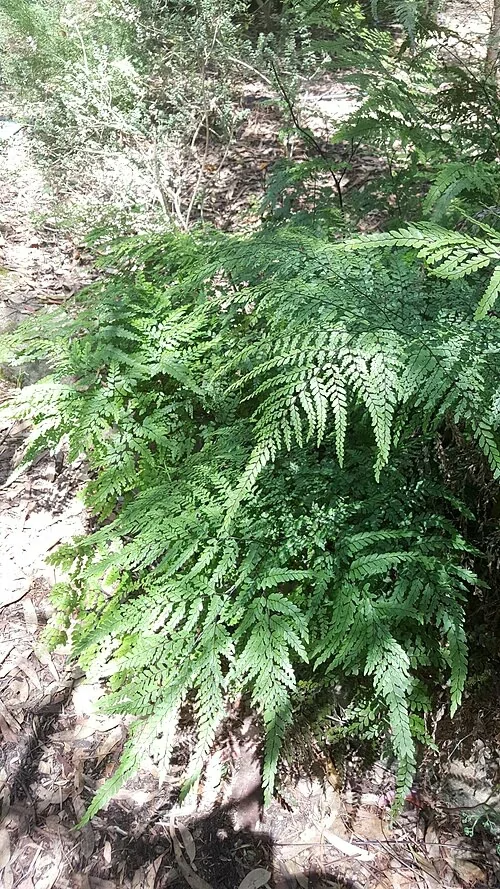
Giant Maidenhair
Adiantum formosum
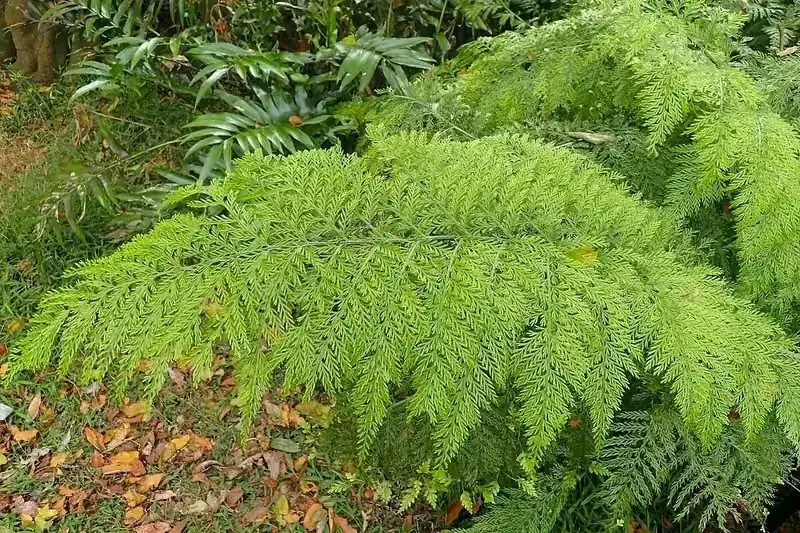
Mother Spleenwort
Asplenium bulbiferum
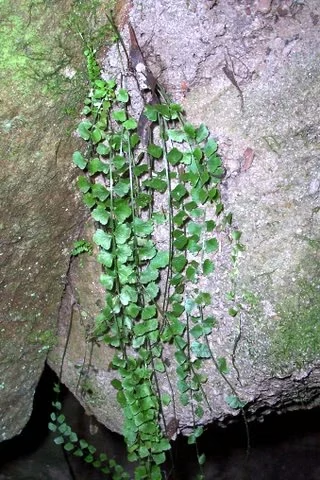
Necklace Fern
Asplenium flabellifolium
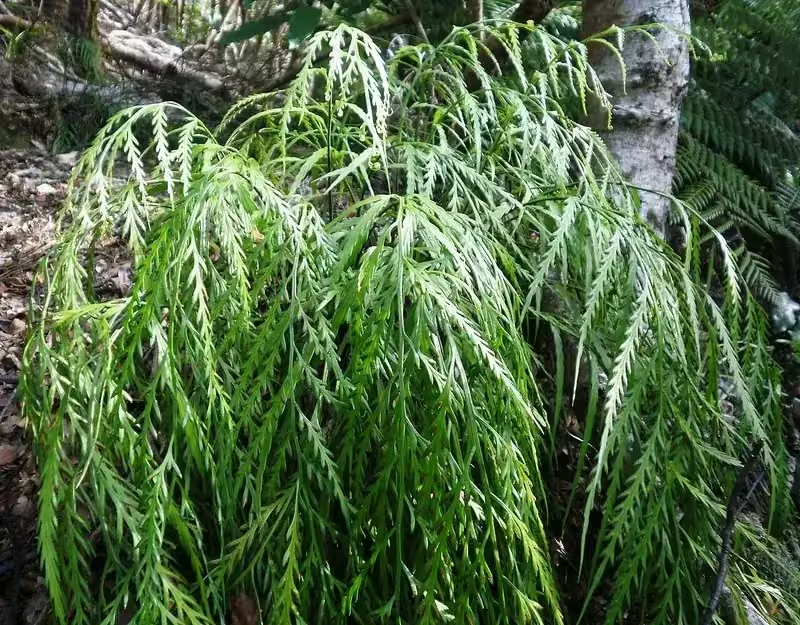
Hanging Spleenwort
Asplenium flaccidum
Huruhuru-Whenua
Asplenium oblongifolium
Plant Conservation
Conservation Status and Threats
Arthropteris tenella is classified as "Not Threatened" by the New Zealand Threat Classification System. It is an indigenous species, widespread across its range in the North and South Islands and some offshore islands. While currently stable, its habitat in coastal and lowland forests can be vulnerable to ongoing deforestation, habitat degradation, and the impact of introduced pests. Conservation efforts focus on protecting these forest ecosystems and managing invasive species to ensure the long-term health of this and other native ferns.
Frequently Asked Questions
How big does Jointed Fern grow?
Arthropteris tenella has fronds up to 60 cm long and spreading rhizomes that can reach about 1.15 metres.
Does Jointed Fern tolerate frost?
No, it has low frost tolerance and needs frost-free, sheltered conditions with consistent moisture.
Where does Jointed Fern grow naturally?
It grows in shady coastal and lowland forests from the Three Kings Islands to Banks Peninsula and the Chatham Islands.
Can Jointed Fern climb trees?
Yes, it grows both terrestrially and epiphytically, scrambling over rocks and climbing tree trunks.
Sources and Further Reading
The botanical, growing, and conservation details for Jointed Fern (Arthropteris tenella) on this page draw on authoritative New Zealand plant references and citizen-science observation records. Consult the sources below for full technical records and the latest distribution data.