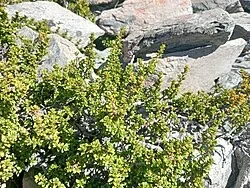
Foweraker's Coprosma
Coprosma fowerakeri
Last updated:
Coprosma fowerakeri, or Foweraker's coprosma, is a low, mat-forming evergreen shrub endemic to New Zealand's South Island high country. It grows just 15 to 60 cm tall but spreads 1 to 2 metres on long, trailing branches that root where they touch the ground, knitting over rocky terrain. Its small, thick, narrow leaves range from dark green to bronze-green. Female plants carry fleshy drupes in bright orange, red, or yellow. It colonises subalpine and alpine boulder fields, rocky outcrops, and scree from Kahurangi to Fiordland, and is exceptionally frost-hardy and wind-tolerant. Explore more native shrubs in our native plant guide.
Plant Description
Coprosma fowerakeri is a low-growing, evergreen shrub that forms dense mats or cushions. It is characterized by its long, trailing branches that can root upon contact with the soil, allowing it to spread effectively across rocky terrain. The leaves are small, thick, and narrow, typically ranging from dark green to a striking bronze-green hue. This species is dioecious, meaning individual plants are either male or female. Female plants produce attractive, fleshy drupes that can be bright orange, red, or yellow, providing a vital food source for native birds in subalpine regions.
Quick Facts
| Scientific Name | Coprosma fowerakeri |
|---|---|
| Height | 0.15-0.60 metres |
| Spread | 1.0-2.0 metres |
| Water Needs | Moderate; drought tolerant once established |
| Light | Full sun to partial shade |
| Frost Tolerance | Very High (Alpine hardy) |
| Salt Tolerance | Low |
| Growth Rate | Slow to Moderate |
| Lifespan | 20-50 years |
Climate Best Suited to
Foweraker's Coprosma is exceptionally well-suited to cooler, temperate climates and subalpine conditions. It is highly resistant to frost and can withstand the harsh winds and cold temperatures typical of New Zealand's high-country environments. While it thrives in the South Island's mountainous regions, it can be grown in lowland gardens if provided with excellent drainage and protection from extreme summer heat.
Regional Suitability
| City | Climate Suitability |
|---|---|
| Auckland | Marginal (needs shade/drainage) |
| Wellington | Good |
| Christchurch | Excellent |
| Dunedin | Excellent |
| Invercargill | Excellent |
Plant Habitat
In its natural state, Coprosma fowerakeri is primarily found in the South Island of New Zealand, from Kahurangi National Park down to Fiordland. It inhabits subalpine and alpine zones, often colonizing boulder fields, rocky outcrops, and the base of stable scree slopes. It is a resilient pioneer species that helps stabilize loose rocky ground and provides cover for small alpine invertebrates and lizards.
Growing Requirements
Soil Requirements
This plant requires extremely well-drained soil to thrive. It is naturally adapted to rocky and gritty substrates where water does not pool.
- Well-drained rocky or gritty soil
- Tolerant of poor nutrient levels
- Prefers slightly acidic to neutral pH
Light Requirements
Prefers bright conditions to maintain its compact growth habit and vibrant foliage colour.
- Full sun for best colour
- Partial shade in warmer districts
- Avoid deep shade
Water Requirements
Regular moisture is needed during the establishment phase, but the plant becomes quite drought-resistant thereafter.
- Keep moist while young
- Drought tolerant once established
- Sensitive to waterlogging
Planting and Establishing
When planting Coprosma fowerakeri , choose a spot with excellent drainage, such as a rock garden or a sloping site. Dig a hole twice the width of the root ball and just as deep. If your soil is heavy clay, incorporate plenty of grit and organic matter to improve aeration. Carefully remove the plant from its container and place it in the hole, ensuring it sits at the same level as it was in the pot. Firm the soil around the roots and water deeply. Applying a thin layer of stone mulch or gravel around the base can help mimic its natural rocky habitat and keep the roots cool.
Ecological Role
As a mat-forming species, Coprosma fowerakeri plays a crucial role in preventing soil erosion in sensitive alpine environments. Its dense growth provides shelter and a microclimate for other smaller alpine plants and insects.
Uses & Significance
Garden Uses
It is an ideal plant for rock gardens, alpine troughs, or as a groundcover on steep banks. Its trailing habit makes it perfect for spilling over retaining walls.
- Rock gardens and alpine troughs
- Groundcover for banks
- Trailing over walls
Ecological Value
The colourful fruits are highly attractive to native birds, such as the silvereye and bellbird, which play a major role in seed dispersal.
- Food source for native birds
- Habitat for alpine lizards
- Erosion control in rocky areas
Landscaping Uses
In landscaping, it is valued for its texture and hardiness. It provides a low-maintenance solution for areas where taller plants might be buffeted by wind or where a dense, weed-suppressing mat is desired.
Seasonal Care Calendar
Spring
Apply a light dressing of slow-release fertilizer if growth appears sluggish. Check for any winter damage and trim back dead tips.
- Apply slow-release fertilizer
- Remove winter debris
- Trim dead tips
Summer
Ensure the plant receives occasional deep watering during prolonged dry spells, especially in warmer lowland areas.
- Water during dry spells
- Monitor for pests
- Mulch with gravel
Autumn
This is a good time for taking semi-hardwood cuttings. Ensure the plant is well-mulched to protect roots from early frosts.
- Take cuttings
- Check drainage
- Mulch for winter
Winter
Generally requires very little care in winter. In extremely wet areas, ensure the site remains free-draining to prevent root rot.
- Minimal maintenance
- Monitor drainage
- Protect young plants from extreme ice
When to Prune and How Much
Foweraker's Coprosma generally maintains a tidy habit and requires very little pruning. However, you can trim the edges to keep it within its allocated space or to encourage denser growth.
- Trim to control spread
- Remove dead or diseased wood
- Lightly prune after fruiting
Avoid heavy pruning into old, woody stems as the plant may be slow to recover. Light, regular tipping is far more effective for maintaining a neat appearance.
How to Grow Foweraker's Coprosma
Cultivating Foweraker's Coprosma ( Coprosma fowerakeri ) is a rewarding endeavor for any gardener interested in New Zealand's unique flora. This species can be propagated through several methods, each requiring specific conditions to ensure healthy growth and establishment. Successful propagation depends on mimicking the plant's natural environment and providing consistent care during the early stages of development.
From Seed
Propagation from seed is often the most effective way to produce a large number of Foweraker's Coprosma plants. Seeds should be collected when they are fully mature. Freshly collected seeds generally have higher germination rates than those that have been stored for long periods.
Collect the fleshy drupes when they are fully ripe in late summer or autumn. Squeeze the seeds out of the pulp and wash them thoroughly in clean water.
- Sow seeds in a well-drained seed-raising mix.
- Cover lightly with a thin layer of fine grit.
- Keep the mix moist but not saturated.
- Place in a cool, shaded spot over winter for natural stratification.
- Expect germination in early spring as temperatures rise.
Seedlings should be pricked out into individual pots once they have two or three true leaves and grown on in a sheltered spot for their first year.
From Cuttings
For those wishing to replicate specific characteristics of a parent plant, vegetative propagation via cuttings is the preferred method. This technique ensures that the new plants are genetically identical to the source. Semi-hardwood cuttings taken during the appropriate season usually yield the best results for this species.
Semi-hardwood cuttings can be taken in late summer or autumn. Choose firm, healthy stems from the current season's growth.
- Take 5-10cm cuttings and remove the lower leaves.
- Dip the base in a rooting hormone powder or gel.
- Insert into a mix of peat and perlite or coarse sand.
- Keep in a humid, shaded environment until roots form.
Additional Methods
Depending on the growth habit of Foweraker's Coprosma, other methods such as division or layering might also be viable options. Division is particularly suitable for plants that form dense clumps or have spreading root systems, while layering can be used for species with trailing or flexible stems.
Because this species naturally layers itself, you can often find stems that have already developed roots where they touch the ground.
- Identify a rooted stem and carefully sever it from the parent plant.
- Lift the rooted section with plenty of soil around the roots.
- Pot it up and keep it well-watered until it is fully established.
Pests & Diseases
Coprosma fowerakeri is generally very resistant to pests and diseases. However, in overly humid or poorly drained conditions, it may be susceptible to root rot or leaf spots. Scale insects can occasionally be a problem in some gardens but can be managed with horticultural oils.
Cultural Significance
While not as widely used as some other Coprosma species, C. fowerakeri is respected as part of the unique high-country flora that defines the South Island's wilderness.
- Important part of alpine biodiversity
- Contributor to New Zealand's 'wild' aesthetic
- Endemic to the South Island
Bonus Tip
Plant Foweraker's Coprosma alongside other stunning alpine beauties like Celmisia or Aciphylla to create an authentic, low-maintenance high-country themed garden that captures the essence of New Zealand's mountain landscapes.
Related Plants
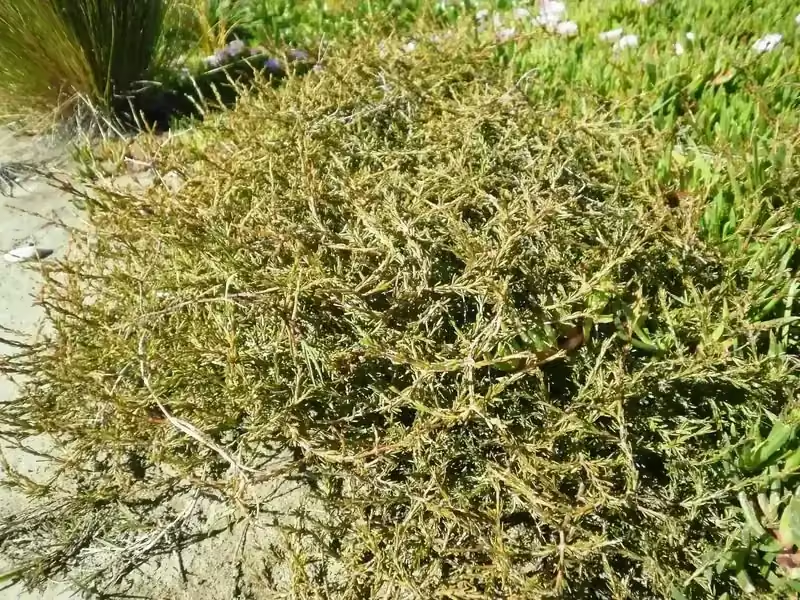
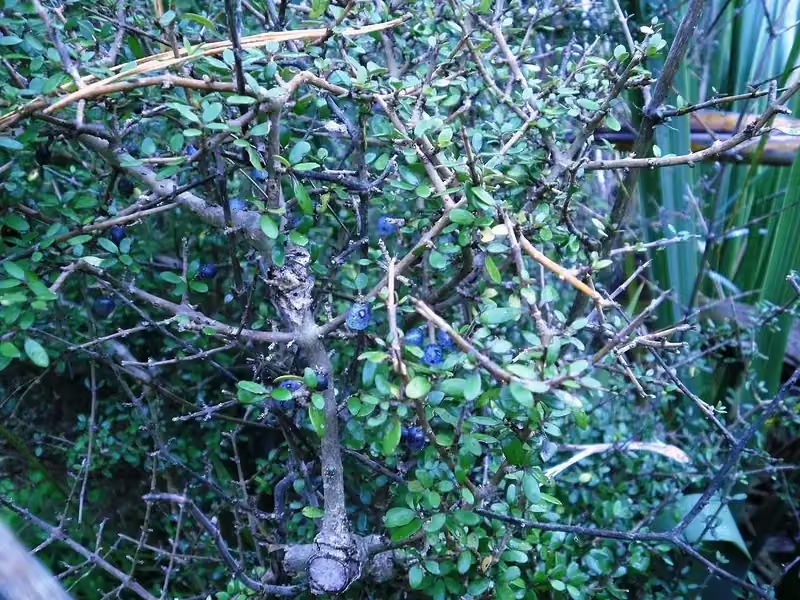
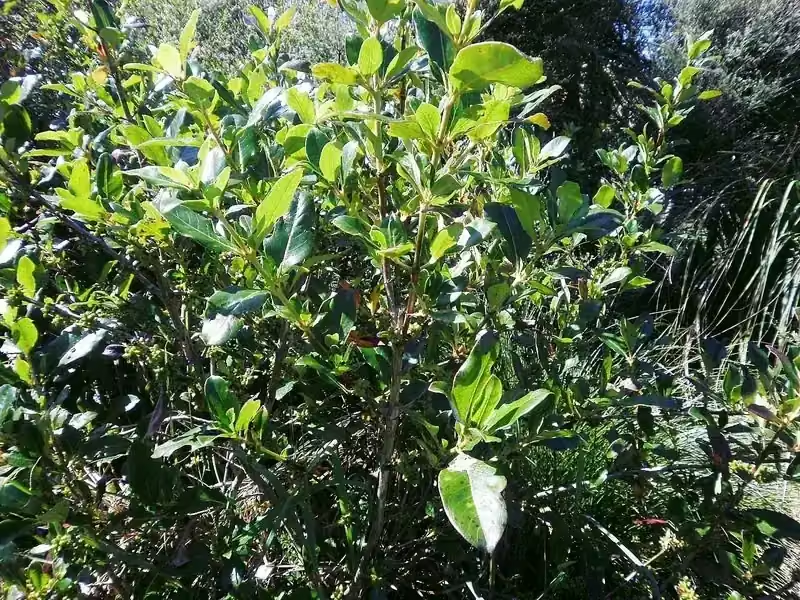
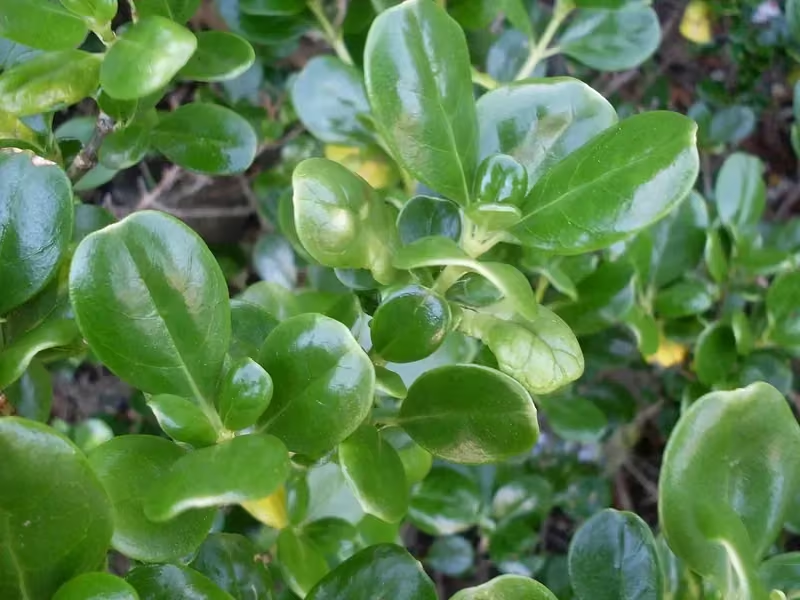
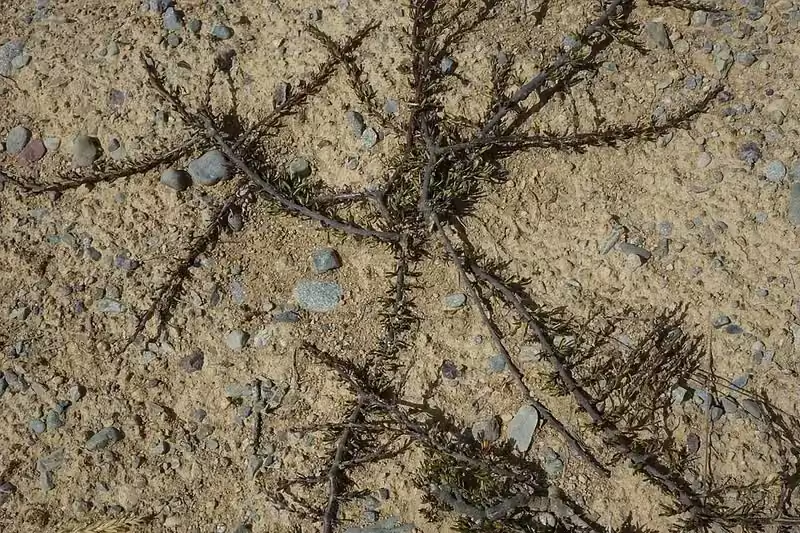
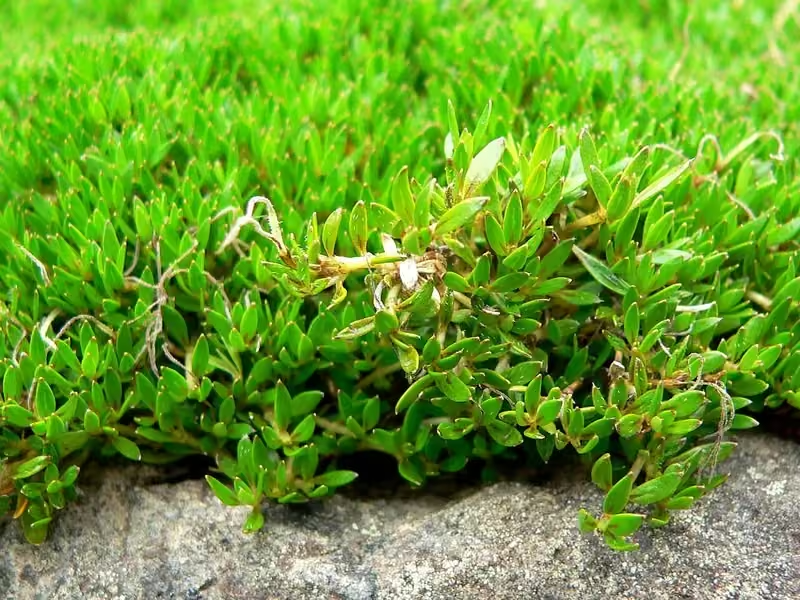
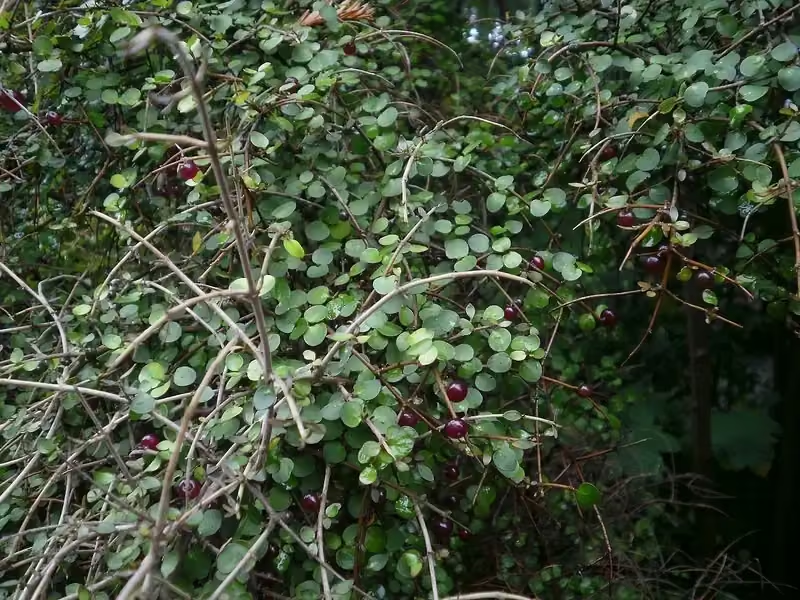
Explore other native plants that share similar characteristics or habitats with Foweraker's Coprosma ( Coprosma fowerakeri ), offering further insights into New Zealand's diverse flora. These related species provide context and opportunities for complementary planting in your garden.

Plant Conservation
Foweraker's Coprosma is currently classified as "Not Threatened" in the New Zealand Threat Classification System. It is relatively abundant in its specialized alpine and subalpine habitats across the South Island. However, like all alpine plants, it faces long-term risks from climate change and potential encroachment of invasive weeds into high-altitude zones.
Frequently Asked Questions
How tall does Coprosma fowerakeri grow?
It is very low-growing, about 0.15 to 0.60 metres tall, spreading 1 to 2 metres as a mat.
Is Foweraker's coprosma frost-hardy?
Yes, it is exceptionally frost-hardy and adapted to harsh subalpine and alpine conditions.
Where does Coprosma fowerakeri grow naturally?
It grows in South Island subalpine and alpine zones, from Kahurangi to Fiordland, on boulder fields, rocky outcrops, and scree.
What colour are its fruits?
Female plants produce bright orange, red, or yellow fleshy drupes that feed native birds.
Sources and Further Reading
The botanical, growing, and conservation details for Foweraker's Coprosma (Coprosma fowerakeri) on this page draw on authoritative New Zealand plant references and citizen-science observation records. Consult the sources below for full technical records and the latest distribution data.