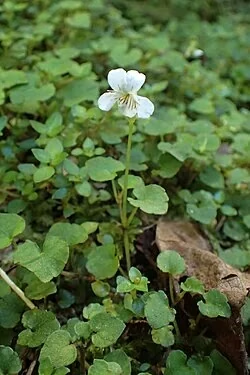
Forest Violet
Viola filicaulis
Last updated:
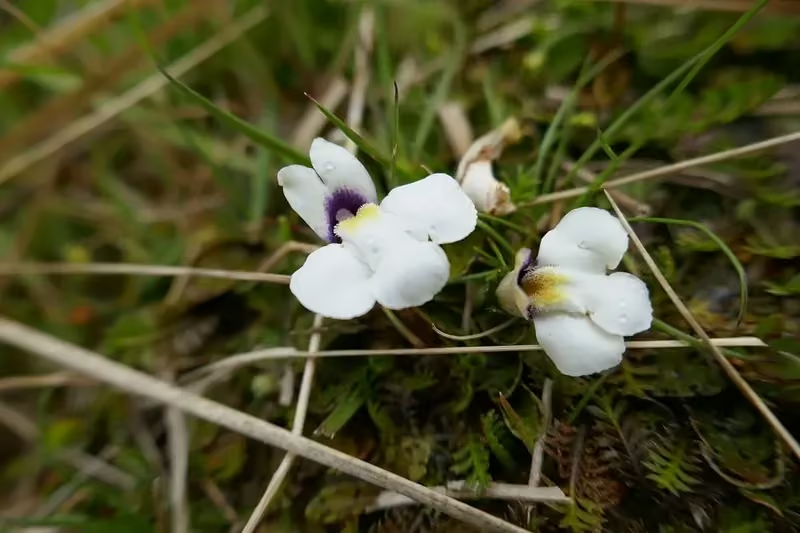
Forest Violet (Viola filicaulis) is a small, graceful perennial herb endemic to New Zealand, growing just 5 to 15 cm high with slender, creeping reddish stems that spread up to 30 cm across the forest floor. Its small leaves are heart or kidney-shaped with scalloped edges, and from spring to early summer it bears delicate white to cream flowers veined with fine purple lines. It grows in the deep shade of lowland to montane forests throughout the North, South and Stewart Islands. Explore more native ground covers in our native plant guide.
Plant Description
Identification and Physical Characteristics
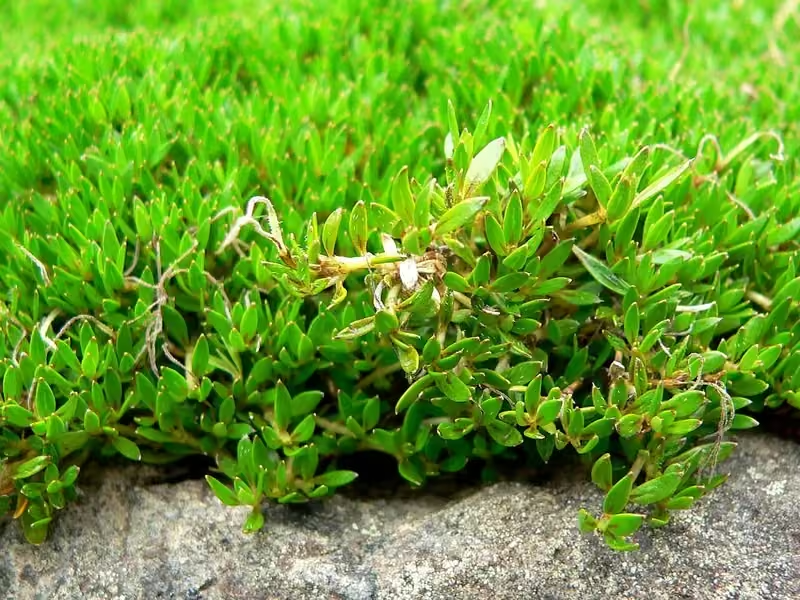
Viola filicaulis , commonly known as the Forest Violet, is a graceful perennial herb endemic to New Zealand. It is characterized by its slender, creeping stems that can grow up to 30 cm in length, often taking on a reddish hue as they spread across the forest floor. The leaves are small, heart-shaped (cordate) or kidney-shaped (reniform), with edges that are gently scalloped or toothed. From spring through to early summer, the Forest Violet produces small, delicate flowers approximately 1 to 1.5 cm in diameter. These flowers are usually white or cream-coloured, often featuring fine purple veins that act as nectar guides for small insects. The plant has a modest but charming presence, forming low carpets in shaded, moist environments.
Quick Facts
| Scientific Name | Viola filicaulis |
|---|---|
| Height | 5-15 cm |
| Spread | Up to 30 cm |
| Water Needs | Moderate to high; prefers moist sites |
| Light | Partial to full shade |
| Frost Tolerance | High |
| Salt Tolerance | Low |
| Growth Rate | Moderate |
| Lifespan | Perennial |
Climate Best Suited to
The Forest Violet is ideally suited to the temperate and montane climates of New Zealand. It thrives in regions with high humidity and consistent rainfall, where the forest floor remain shaded and cool. It is remarkably frost-hardy and can withstand the cold winters of the South Island andStewart Island, provided it has adequate shelter from drying winds.
Regional Suitability
| City | Climate Suitability |
|---|---|
| Auckland | Medium |
| Wellington | High |
| Christchurch | High |
| Dunedin | High |
| Invercargill | High |
Plant Habitat
Natural Occurrence and Ecology
As its name suggests, Viola filicaulis is primarily a forest-dwelling species. It is found throughout the North, South, and Stewart Islands, typically growing in the deep shade of lowland to montane forests. It is particularly common along the margins of forest tracks, near stream banks, and in other wet, shaded places where competition from larger plants is reduced. Its ability to grow in very low light levels allows it to occupy the deepest parts of the forest understory.
Growing Requirements
Soil Requirements
Requires moisture-retentive, humus-rich soil. It thrives in the organic-rich layer of the forest floor.
- Humus-rich
- Moist
- Loamy
Light Requirements
Best in deep to partial shade. Exposure to direct afternoon sun can scorch the delicate foliage.
- Deep Shade
- Dappled Light
Water Requirements
Needs consistent moisture. It is sensitive to drought and should be kept damp throughout the growing season.
- Regular water
- High humidity
Planting and Establishing
Establishment Guidance
When establishing Forest Violet in a garden setting, it is essential to choose a shaded spot that does not dry out. Preparing the soil with plenty of leaf mould or compost will help simulate its natural habitat. Space the plants about 15-20 cm apart; they will eventually spread via their creeping stems to fill the gaps. Planting is best done in autumn or early spring when temperatures are cooler and rainfall is more frequent.
Ecological Role
Biodiversity and Ecosystem Impact
The Forest Violet plays a subtle but important role in New Zealand's forest ecosystems. By forming low mats, it helps to protect the soil surface from erosion and maintains ground-level humidity. Its flowers provide a source of nectar for small native insects, including flies and moths, which are active in the shaded understory. It is a facultative wetland species, meaning it bridges the gap between terrestrial forest and wetland environments.
Uses & Significance
Garden Uses
In New Zealand gardens, Viola filicaulis is an excellent choice for a native woodland garden, a shaded rockery, or as a delicate ground cover under taller ferns and trees.
- Woodland gardens
- Under-planting
- Shaded ground cover
Ecological Value
Its primary ecological value lies in its contribution to the biodiversity of the forest floor, supporting specialized understory invertebrates.
- Soil protection
- Invertebrate support
- Biodiversity
Landscaping Uses
Landscape designers often use the Forest Violet to create a sense of age and naturalness in shaded areas. It is particularly effective when allowed to grow naturally among moss-covered stones or at the base of established native trees like Ponga or Beech.
Seasonal Care Calendar
Spring
Apply a thin layer of fine compost or leaf mould. This is the start of the flowering period.
- Light mulching
- Monitor moisture
Summer
Ensure consistent watering during dry periods. The plant can wilt quickly if the soil dries out completely.
- Deep watering
- Maintain shade
Autumn
Clear away any heavy debris that might smother the low-growing foliage.
- Remove leaf litter
- Divide if needed
Winter
The plant is very hardy and requires minimal care during its dormant phase.
- Minimal intervention
- Check drainage
When to Prune and How Much
The Forest Violet requires very little pruning.
- Remove damaged leaves
- Trim runners if needed
Only prune to remove dead or diseased foliage or to prevent the plant from spreading into unwanted areas.
How to Grow Forest Violet
Cultivating the Forest Violet ( Viola filicaulis ) is a delightful project for gardeners looking to bring a touch of the New Zealand bush into their shaded outdoor spaces. Because this species is naturally adapted to the cool, moist understory of native forests, the most important factor in its success is the provision of a stable, damp environment. It is not a plant for a sunny, dry border; instead, it belongs in the cool damp corners of the garden where other plants might find the light levels too low.
The most straightforward way to propagate Forest Violet is through the division of established mats. As the plant grows, its creeping stems naturally root at various points along their length. In early spring, you can carefully lift a portion of the mat, ensuring that each piece has several healthy roots and a cluster of leaves. These divisions can be transplanted directly into their new locations. It is vital to keep these new transplants well-shaded and consistently watered until they show signs of active growth.
From Seed
Growing from seed is also an option, although it requires more patience. The seeds are produced in small, three-valved capsules that explode when ripe, scattering the seeds nearby. To collect them, you must monitor the plants closely in late summer.
Sow the seeds onto a moist, peat-based seed-raising mix. A light covering of fine grit can help keep the seeds in place. Like many native herbs, they may benefit from a period of cold stratification to improve germination rates.
- Collect seeds in late summer.
- Sow on moist organic mix.
- Keep in a cool, shaded spot.
Seedlings should be handled gently and kept in a humid environment until they are robust enough to be hardened off and planted out.
From Cuttings
Vegetative propagation can also be achieved by taking small stem cuttings from the vigorous creeping runners. These should include at least one node and be placed in a very moist, shaded cutting frame.
- Select a healthy runner.
- Place in a moist sand/peat mix.
- Maintain high humidity.
Pests & Diseases
The Forest Violet is generally a robust plant with few major disease issues. However, its preference for damp, shaded environments makes it a target for slugs and snails. Regular inspections and the use of environment-friendly pest control methods are recommended to protect the delicate foliage. Occasionally, in very stagnant air, some fungal leaf spots may develop; this can be avoided by ensuring there is some air movement around the plants while still maintaining the necessary humidity.
Cultural Significance
The Forest Violet is a modest but treasured member of the New Zealand flora. It represents the intricate beauty of the forest floor, often overlooked but essential to the forest's overall health. Its presence is often used as an indicator of a healthy, intact forest understory. In botanical history, it is recognized as a truly endemic species that has evolved to perfectly suit the unique light and moisture conditions of the New Zealand bush.
- Symbol of forest floor health
- Endemic botanical heritage
- Understory indicator species
Bonus Tip
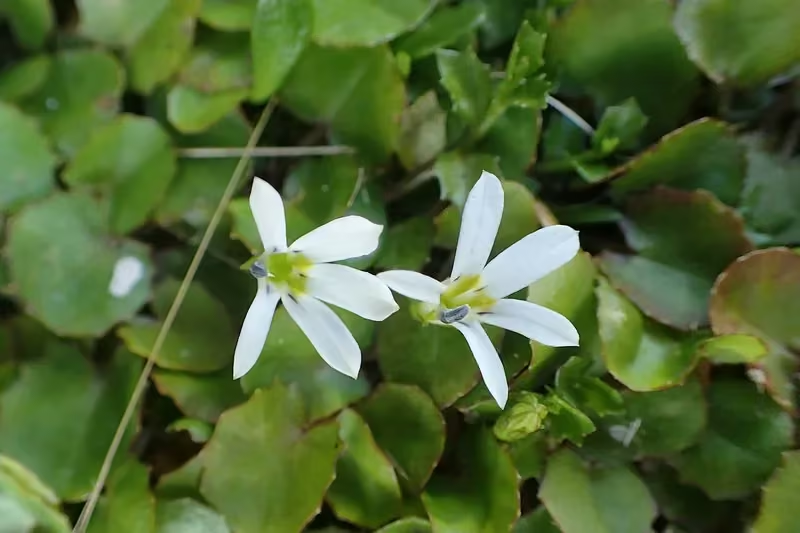
To create a beautiful native ground cover display, plant Forest Violet alongside Lobelia angulata (Panakenake). Their similar growth habits and contrasting flower forms will create a rich, textured carpet that will thrive in any shaded, damp part of your garden.
Related Plants
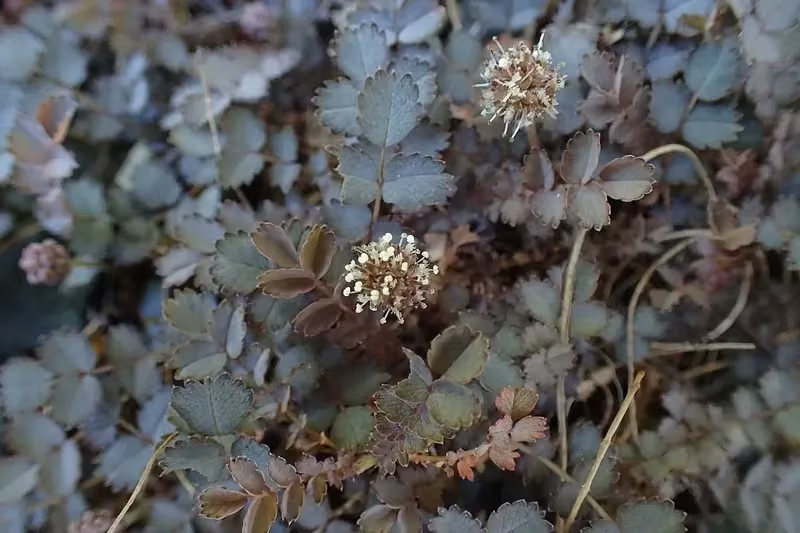
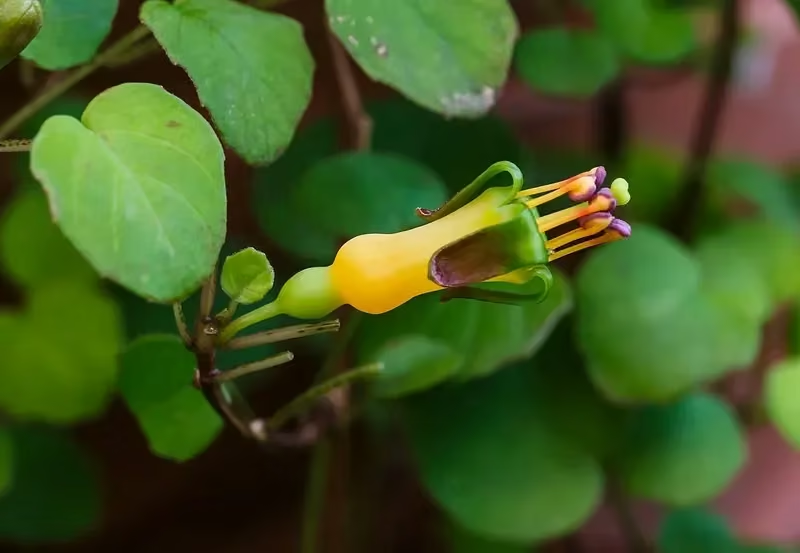
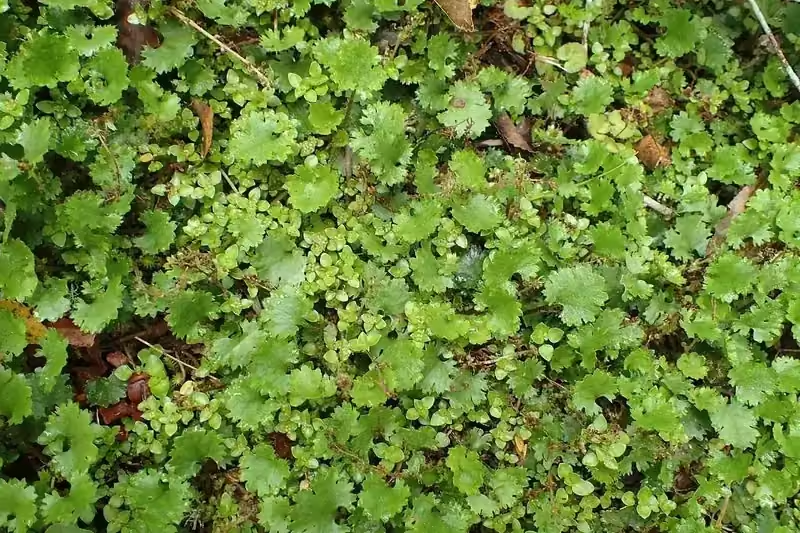
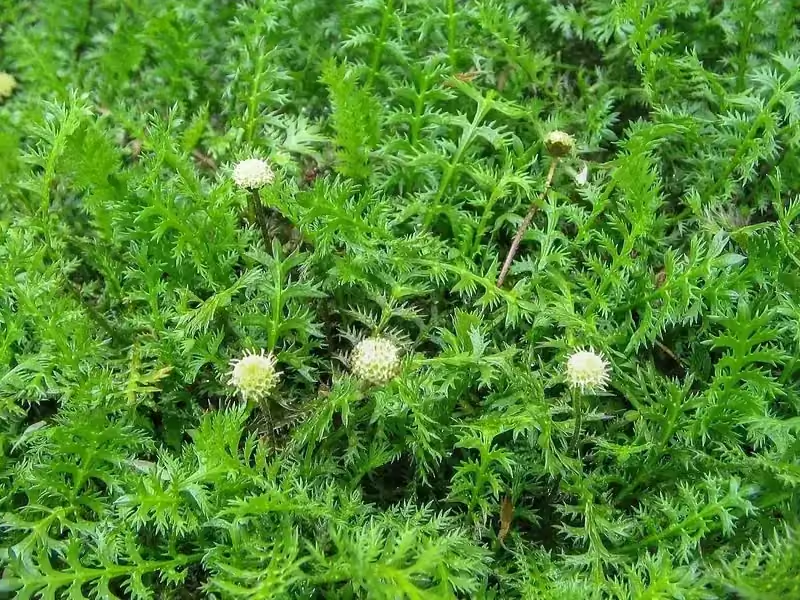
Explore other native plants that share similar characteristics or habitats with Forest Violet ( Viola filicaulis ), offering further insights into New Zealand's diverse flora. These related species provide context and opportunities for complementary planting in your garden.
Plant Conservation
Conservation Status and Threats
Currently classified as 'Not Threatened', the Forest Violet remains a common species throughout New Zealand's forested areas. However, its survival is linked to the preservation of native forest and wetland habitats. Protecting these areas from fragmentation and invasive pests ensures that species like Viola filicaulis continue to thrive in their natural understory niche.
Frequently Asked Questions
How tall does Forest Violet grow?
It is low growing, just 5 to 15 cm high, spreading up to 30 cm.
Where does Viola filicaulis grow naturally?
In shaded lowland to montane forests of the North, South and Stewart Islands.
Does Forest Violet tolerate frost?
Yes, it is frost hardy and withstands cold South Island winters.
What light does it need?
It prefers partial to full shade with moist soil.
Sources and Further Reading
The botanical, growing, and conservation details for Forest Violet (Viola filicaulis) on this page draw on authoritative New Zealand plant references and citizen-science observation records. Consult the sources below for full technical records and the latest distribution data.