Travers' Archeria
Archeria traversii
Last updated:
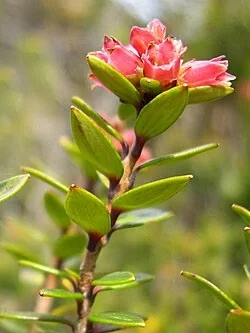
Archeria traversii, sometimes called Travers' Archeria, is an erect shrub in the Ericaceae family, endemic to southern New Zealand including the South Island and Stewart Island. This variable shrub grows up to 5 metres tall, often forming multiple twisted, rough trunks that can host epiphytic mosses. Its narrow, lanceolate, leathery leaves are roughly 7 to 12 mm long, dark green above and paler below, with acute, sometimes reddish tips. Small urn-shaped flowers, white, pink or deep red, are arranged in racemes. It grows in shrublands and conifer-broadleaf forests from lowland to montane altitudes, favouring well-drained but consistently moist sites, and is largely absent from the drier eastern South Island. It is highly frost tolerant. Explore more native shrubs in our native plant guide.
Plant Description
Identification and Physical Characteristics
Archeria traversii is an erect shrub species endemic to the southern New Zealand, including the South Island and Stewart Island, belonging to the Ericaceae family. This variable shrub can grow up to 5 meters tall, often forming multiple, twisted, and rough trunks that can host epiphytic bryophytes. Its branches spread or ascend, covered in dark brown bark, with young branchlets being light reddish. The leaves are narrow, lanceolate, glabrous, and leathery, displaying a dark green upper surface and a paler underside. Leaf tips are acute to subacute and sometimes reddish, measuring roughly 7-12 mm long and 2-4 mm wide. Small, urn-shaped flowers, which can be white, pink, or deep red, are arranged in solitary terminal racemes containing 8-16 flowers.
Quick Facts
| Scientific Name | Archeria traversii |
|---|---|
| Height | Up to 5 metres (16 feet) |
| Spread | Up to 2-3 metres |
| Water Needs | Moderate to high; prefers consistent moisture. |
| Light | Medium to bright indirect light; tolerates semi-shade. |
| Frost Tolerance | High |
| Salt Tolerance | Low |
| Growth Rate | Moderate |
| Lifespan | Perennial, likely long-lived. |
Climate Best Suited to
Archeria traversii is found across the South Island and Stewart Island of New Zealand, thriving in climates ranging from lowland to montane altitudes. It is adapted to temperate conditions, preferring areas with consistent rainfall and high humidity. Its habitat in shrublands and conifer-broadleaf forests suggests a preference for sheltered yet bright conditions. It is largely absent from drier eastern South Island regions.
Regional Suitability
| City | Climate Suitability |
|---|---|
| Dunedin | Suitable |
| Queenstown | Suitable (in appropriate garden settings) |
| Christchurch | Not suitable (too dry) |
| Wellington | Not suitable (outside natural range) |
| Auckland | Not suitable (outside natural range) |
Plant Habitat
Natural Occurrence and Ecology
The natural habitat of Archeria traversii includes shrublands and conifer-broadleaf forests across the South Island and Stewart Island of New Zealand, from lowland to montane altitudes. It is largely absent from the drier regions of Marlborough and much of the eastern South Island. It typically occurs in well-drained but consistently moist environments, often forming multi-stemmed shrubs in the understory or at forest margins. Like other members of the Ericaceae family, it shows a preference for acidic soils.
Growing Requirements
Soil Requirements
Archeria traversii thrives in well-drained, acidic soils rich in organic matter. Consistent moisture is important, but the soil should not be waterlogged. In cultivation, replicating these conditions is key, often requiring amendments to achieve the necessary acidity and organic content.
- Well-drained
- Acidic (pH < 7)
- Rich in organic matter
- Consistently moist
Light Requirements
This shrub prefers medium to bright indirect light, similar to its forest edge and understory habitats. While it can tolerate some sun, direct, intense sunlight, especially during the hottest parts of the day, can scorch its leaves. It generally benefits from receiving 6-8 hours of daily light exposure in a location that provides some shelter from harsh midday sun.
- Medium to bright indirect light
- Partial shade from harsh midday sun
- 6-8 hours of light exposure daily
Water Requirements
Archeria traversii requires consistent moisture and should be watered regularly, ideally weekly, to keep the soil moist but not waterlogged. It benefits greatly from mulching, which helps to retain soil moisture and regulate soil temperature. Established plants are not drought-tolerant and will suffer if allowed to dry out.
- Consistent moisture
- Water weekly
- Benefits from mulching
Planting and Establishing
Establishment Guidance
Transplanting Archeria traversii is best done in mid to late spring when soil moisture levels are optimal and the risk of severe frost has passed. Choose a location that provides the preferred light conditions and ensures the soil is well-drained and acidic. Prepare the planting hole by amending with organic matter to improve soil structure and acidity. Water thoroughly after planting.
Ecological Role
Biodiversity and Ecosystem Impact
As an endemic New Zealand shrub, Archeria traversii contributes to the unique biodiversity of its local ecosystems. It provides structural habitat within shrubland and conifer-broadleaf forest communities. Its flowers, which bloom in racemes, are a potential food source for native insects, and its capsules contain small seeds that are dispersed by wind, playing a role in the natural regeneration of its habitat.
Uses & Significance
Garden Uses
Archeria traversii is a beautiful ornamental shrub suitable for native plant gardens, woodland gardens, or as an understory planting in suitable climates, particularly in the cooler, moister regions of the South Island. Its elegant form and flowering display add aesthetic appeal, and its preference for acidic soils makes it a good companion for other ericaceous plants.
- Native plant gardens
- Woodland gardens
- Understory planting
- Specimen plant
Ecological Value
The ecological value of Archeria traversii lies in its role as a component of specific New Zealand forest and shrubland ecosystems. It supports local insect populations as a food source during its flowering period and its fruits contribute to seed dispersal. Its presence contributes to the overall health and complexity of these native plant communities, particularly in southern New Zealand.
- Provides habitat in shrubland and forest edges
- Food source for native insects (flowers)
- Seed dispersal
- Contributes to local biodiversity
Landscaping Uses
In landscaping, Archeria traversii can be used to create naturalistic plantings in sheltered positions within gardens that mimic its native forest edge environment, particularly in southern New Zealand. It works well in mixed shrub borders, as a specimen plant in a semi-shaded area, or as part of a revegetation project in suitable acidic soil conditions.
Seasonal Care Calendar
Spring
In spring, as new growth begins, ensure consistent moisture. This is also a good time to apply a slow-release, acid-loving fertilizer if needed, and to refresh mulch around the base of the plant to conserve moisture and suppress weeds.
Summer
Maintain consistent moisture during summer, watering weekly, especially during dry spells. Protect from intense direct sun during the hottest parts of the day if leaves show signs of scorching.
Autumn
Reduce watering as temperatures cool, but ensure the plant does not dry out completely. Autumn is a good time to prepare for winter by ensuring adequate mulching.
Winter
Archeria traversii is generally frost-tolerant, but in areas with severe winters, some protection or a sheltered location is beneficial. Pruning can be done in late winter to shape the plant and remove any dead or damaged wood before spring growth.
When to Prune and How Much
Archeria traversii benefits from regular, light pruning to maintain its shape, promote bushiness, and remove any dead or damaged branches. The best time for pruning is in late winter or early spring, before the onset of new growth. This ensures the plant directs its energy into producing healthy new shoots.
- Remove dead or damaged branches
- Thin out crowded areas for better air circulation
- Shape the plant to maintain desired form
Always use clean, sharp pruning tools to make clean cuts and prevent the spread of diseases.
How to Grow Travers' Archeria
Cultivating Archeria traversii ( Archeria traversii ) is a rewarding endeavor for any gardener interested in New Zealand's unique flora. This species can be propagated through several methods, each requiring specific conditions to ensure healthy growth and establishment. Successful propagation depends on mimicking the plant's natural environment and providing consistent care during the early stages of development.
From Seed
Propagation from seed is a viable method for Archeria traversii , though it can be slow. Seeds should be collected from ripe fruits in autumn. A period of cold stratification can enhance germination rates, mimicking the natural conditions the seeds would experience over winter. Sow seeds on an acidic, well-draining seed-raising mix.
- Collect ripe seeds from fruits in autumn (February to April).
- Clean seeds and, if desired, perform cold stratification for 4-6 weeks.
- Sow seeds thinly on a fine, well-draining, acidic seed-raising mix.
- Lightly cover seeds with fine grit or mix.
- Keep the substrate consistently moist and in a cool, sheltered location.
- Germination can be slow and irregular, requiring patience.
- Once seedlings are robust enough, prick them out into individual pots.
- Grow on in a protected environment until ready for planting out.
Ensure consistent moisture and protect young seedlings from strong sunlight and pests.
From Cuttings
For those wishing to replicate specific characteristics of a parent plant, vegetative propagation via cuttings is the preferred method. This technique ensures that the new plants are genetically identical to the source. Semi-hardwood cuttings taken during the appropriate season usually yield the best results for this species.
Archeria traversii can also be propagated from semi-hardwood cuttings. This method allows for genetic replication of the parent plant and can sometimes lead to faster establishment than from seed. Cuttings should be taken during the summer or early autumn.
- Take 10-15 cm long semi-hardwood cuttings from healthy, non-flowering shoots in summer or early autumn.
- Remove the lower leaves and dip the cut end in rooting hormone.
- Insert cuttings into an acidic, well-draining propagation mix.
- Place in a warm, humid environment with indirect light (a propagation misting system or covered tray helps).
- Keep the rooting medium consistently moist.
- Roots should form within several weeks to a few months.
- Once rooted, pot up into individual containers and grow on.
Additional Methods
Depending on the growth habit of Archeria traversii , other methods such as division or layering might also be viable options. Division is particularly suitable for plants that form dense clumps or have spreading root systems, while layering can be used for species with trailing or flexible stems.
Pests & Diseases
Archeria traversii is generally a hardy plant and not particularly prone to severe pest or disease issues when grown in appropriate conditions. The most common problems arise from improper soil conditions, such as insufficient acidity or poor drainage, which can lead to root diseases. Ensuring good air circulation can help prevent fungal issues.
Cultural Significance
While specific traditional Māori uses for Archeria traversii are not widely documented, like many native New Zealand plants, it would have been recognized for its presence in the forest and shrubland ecosystems of the South Island and Stewart Island. Its endemic status and unique characteristics contribute to the overall botanical heritage of Aotearoa.
Bonus Tip
Archeria traversii is an excellent choice for adding evergreen structure to a native garden in cooler, southern regions. Its often twisted trunks and leathery leaves provide year-round interest.
Related Plants
Explore other native plants that share similar characteristics or habitats with Archeria traversii ( Archeria traversii ), offering further insights into New Zealand's diverse flora. These related species provide context and opportunities for complementary planting in your garden. For another native shrub, explore New Zealand Bush.
Yellow Mistletoe
Alepis flavida
Bush Daphne
Alseuosmia banksii
Narrow-leaved Toropapa
Alseuosmia linariifolia
Large-Leaved Toropapa
Alseuosmia macrophylla

Oak-leaved Toropapa
Alseuosmia quercifolia

Mānuka
Leptospermum scoparium
Mingimingi
Leucopogon fasciculatus
Coast Beard-Heath
Leucopogon parviflorus
Plant Conservation
Conservation Status and Threats
Archeria traversii is classified as "Not Threatened" by the New Zealand Threat Classification System (as of 2023). This indicates a healthy and stable population within its natural range across the South Island and Stewart Island. However, like all native species, it benefits from ongoing habitat protection and responsible land management practices, particularly in areas where forest edges and shrublands are under pressure from development or introduced pests.
Frequently Asked Questions
How tall does Archeria traversii grow?
It grows up to 5 metres tall, often forming multiple twisted, multi-stemmed trunks.
Where does Archeria traversii grow naturally?
It is endemic to the South Island and Stewart Island, in shrublands and conifer-broadleaf forests from lowland to montane altitudes.
Does Archeria traversii tolerate frost?
Yes, it has high frost tolerance and prefers cool, moist, well-drained temperate conditions.
What colour are Archeria traversii flowers?
Its small urn-shaped flowers can be white, pink or deep red, arranged in racemes.
Sources and Further Reading
The botanical, growing, and conservation details for Travers' Archeria (Archeria traversii) on this page draw on authoritative New Zealand plant references and citizen-science observation records. Consult the sources below for full technical records and the latest distribution data.