New Zealand Pellitory
Parietaria debilis
Last updated:
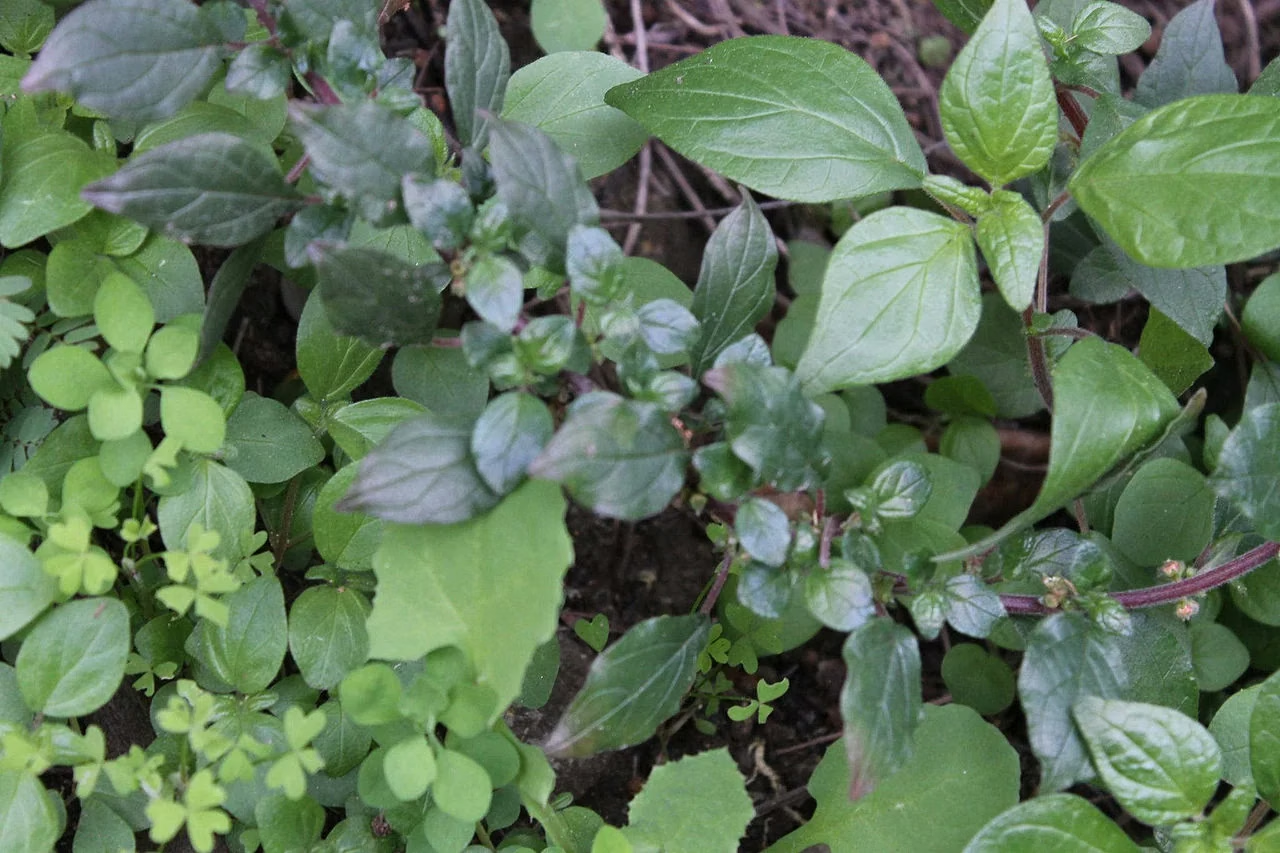
New Zealand Pellitory (Parietaria debilis), also called native pellitory or smooth nettle, is a slender, softly hairy annual or short-lived perennial herb in the nettle family that, unlike many relatives, has no stinging hairs. It grows up to about 50 cm tall, with translucent, often pinkish, somewhat succulent stems and delicate heart-shaped to oval bright green leaves. Small greenish-white flowers cluster in the leaf axils, followed by tiny glossy dark brown seeds. Classed as Not Threatened, it grows in coastal scrub, often around seabird burrow entrances where soils are rich, as well as rock overhangs, limestone outcrops and stable dunes. Explore more coastal native plants in our native plant guide.
Plant Description
Identification and Physical Characteristics
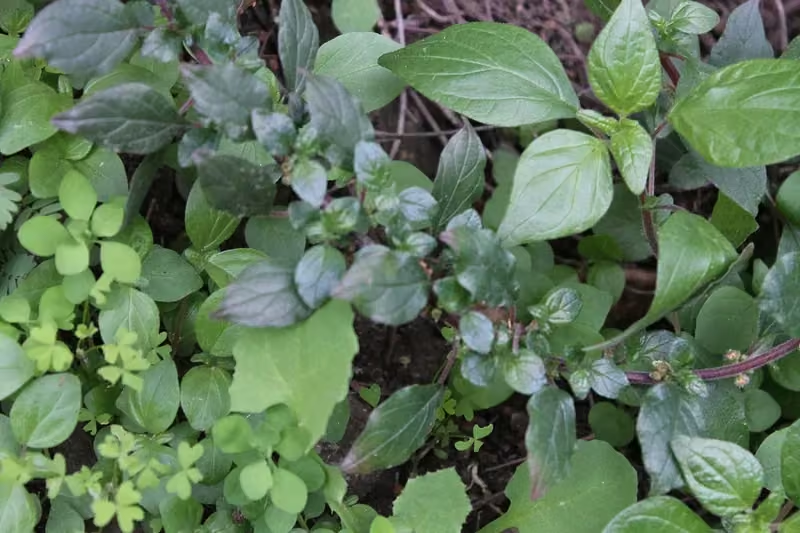
Parietaria debilis , commonly known as New Zealand Pellitory, Native Pellitory, or Smooth Nettle, is a slender, softly hairy annual or short-lived perennial herb. It belongs to the Urticaceae (Nettle) family but lacks the stinging hairs found on many of its relatives. The plant features translucent, often pinkish stems that are somewhat succulent and can reach lengths of up to 80 cm, though it often remains lower and more diffuse. The leaves are delicate, heart-shaped or oval, and bright green, held on long stalks. Small, inconspicuous greenish-white flowers are produced in clusters at the leaf axils. These are followed by tiny, glossy dark brown seeds. The entire plant has a soft, almost fragile appearance, especially when growing in the deep shade of a forest floor.
Quick Facts
| Scientific Name | Parietaria debilis |
|---|---|
| Height | Up to 50 cm |
| Spread | Up to 80 cm |
| Water Needs | Moderate; prefers consistent moisture |
| Light | Partial to full shade |
| Frost Tolerance | Low to medium |
| Salt Tolerance | High (coastal varieties) |
| Growth Rate | Fast |
| Lifespan | Annual to short-lived perennial |
Climate Best Suited to
New Zealand Pellitory is a highly adaptable species found across a wide range of New Zealand's climatic zones. It is particularly successful in coastal and lowland regions where frosts are infrequent. It thrives in humid, shaded environments but can also adapt to open, rocky sites where sea mists provide regular moisture. While it can handle the warmer climates of the North Island and Kermadec Islands, it is also found in sheltered niches throughout the South Island and Chathams.
Regional Suitability
| City | Climate Suitability |
|---|---|
| Auckland | High |
| Wellington | High |
| Christchurch | Medium |
| Dunedin | Medium |
| Invercargill | Medium |
Plant Habitat
Natural Occurrence and Ecology
The natural habitat of Parietaria debilis is remarkably varied. It is commonly found in coastal scrub, often growing around the entrances of seabird burrows where the soil is rich in nutrients. It also colonizes gaps in the forest canopy, rock overhangs, limestone outcrops, and stable sand dunes. It is a specialist of sheltered, damp places where its delicate foliage is protected from drying winds. Despite its fragility, it is a persistent member of New Zealand's lowland ecosystems, often reappearing quickly after disturbance.
Growing Requirements
Soil Requirements
Prefers well-drained, loamy soils rich in organic matter. It responds exceptionally well to high levels of soil nitrogen.
- Nutrient-rich
- Well-drained
- Humus-rich
Light Requirements
Best in partial to full shade. In coastal environments, it can tolerate more light if sufficient moisture is present.
- Shade preferred
- Dappled Light
Water Requirements
Needs consistent moisture to maintain its succulent stems. It will quickly wilt if allowed to dry out completely.
- Regular moisture
- Avoid waterlogging
Planting and Establishing
Establishment Guidance
Establishing New Zealand Pellitory is straightforward due to its fast-growing nature. Choose a sheltered, shaded spot, ideally under the canopy of larger native trees or along a south-facing wall. Prepare the soil by incorporating well-rotted compost. If you are planting near the coast, ensure the site is protected from direct salt spray. Space plants about 30 cm apart; they will quickly fill the space. Because it is often an annual, it is beneficial to allow it to self-seed to ensure a permanent presence in the garden.
Ecological Role
Biodiversity and Ecosystem Impact
Parietaria debilis plays a unique role in New Zealand's coastal ecosystems, particularly on offshore islands. Its preference for guano-rich soils near bird burrows makes it a key part of the specialized flora that recycles nutrients from the sea back into the terrestrial environment. It provides ground cover that helps maintain soil moisture and supports a community of small invertebrates. Furthermore, its flowers and seeds offer food for native insects, contributing to the overall biodiversity of the forest floor and coastal margins.
Uses & Significance
Garden Uses
While not a traditional ornamental plant, its delicate green foliage makes it an excellent filler for shaded native garden beds or as a naturalistic ground cover in woodland restoration projects.
- Shaded ground cover
- Woodland restoration
- Naturalized borders
Ecological Value
It is ecologically significant as a high-nutrient specialist and provides food and shelter for specialized native invertebrates.
- Nutrient cycling
- Invertebrate support
- Soil stabilization
Landscaping Uses
In landscaping, New Zealand Pellitory is primarily used for its functional role as a quick-growing cover for damp, shaded areas where few other plants will thrive. Its translucent stems and heart-shaped leaves provide a soft, airy texture that can be used to contrast with the more rigid forms of ferns and shrubs. It is particularly effective in coastal restoration designs where a diverse ground-level flora is desired.
Seasonal Care Calendar
Spring
Active growth and flowering period. Monitor soil moisture and ensure the plant is not being outcompeted by aggressive weeds.
- Monitor moisture
- Light weeding
Summer
Seeds mature during the late summer. Maintain watering schedules during dry spells to prevent premature die-back.
- Watering
- Seed maturation
Autumn
The plant may naturally decline after seeding. Gently clear away dead stems, allowing the seeds to reach the soil surface.
- Cleanup
- Encourage self-seeding
Winter
Often present as seedlings or dormant seeds. Ensure the area is not heavily disturbed to protect the next generation.
- Minimal disturbance
- Check drainage
When to Prune and How Much
Traditional pruning is rarely necessary for this delicate herb.
- Remove dead stems in autumn
- Trim to control spread
Simply pinch back any stems that grow into unwanted areas or clear away the entire plant once it has finished its life cycle to allow room for new seedlings.
How to Grow New Zealand Pellitory
Successfully growing New Zealand Pellitory ( Parietaria debilis ) is a matter of providing the right niche environment rather than intensive care. This plant is a specialist of the shaded, nutrient-rich margins where New Zealand's forests meet the sea or where limestone outcrops provide a unique soil chemistry. Replicating these conditions in a garden setting ensures that this delicate herb will thrive and persist through its natural cycle of growth and self-seeding.
The most common and effective way to propagate New Zealand Pellitory is from fresh seed. Because the plant is often an annual or a very short-lived perennial, its survival strategy is based on producing a large number of seeds that germinate quickly when conditions are favorable. Collect the tiny seeds from the leaf axils once the plant begins to yellow in late summer. Sow them immediately onto the surface of a moist, organic-rich soil mix. Do not cover the seeds deeply; a very light dusting of fine compost is sufficient. Keep the soil consistently damp and placed in a shaded area. Germination is usually rapid, and once the seedlings have established their first few leaves, they can be transplanted to their final positions.
From Seed
Self-seeding is the most natural way to maintain a population of Pellitory in your garden. Once established, the plant will usually manage its own propagation.
- Collect mature seeds in late summer.
- Sow on moist, humus-rich soil.
- Maintain high humidity and shade.
Seedlings are delicate and should be protected from heavy rainfall or direct sun during their first few weeks of life.
From Cuttings
Vegetative propagation can be achieved by taking soft-wood cuttings from healthy, vigorous stems in late spring.
- Select a succulent, non-flowering stem.
- Place in a very moist, sandy medium.
- Keep in deep shade until roots form.
Pests & Diseases
New Zealand Pellitory is remarkably free from pests, likely due to its soft, non-stinging hairs which may still deter some browsers. Slugs and snails are the most common issue, as they thrive in the same damp, shaded spots the Pellitory prefers. Powdery mildew can sometimes occur in very stagnant, humid air; this can be mitigated by ensuring there is some air movement while still maintaining the soil moisture.
Cultural Significance
The New Zealand Pellitory is an indigenous species that highlights the interconnectedness of New Zealand's coastal ecosystems. While not as well-known as the stinging nettle (ongaonga), it is part of the same family and represents a different evolutionary path-one of soft, unobtrusive adaptation. It is a significant part of the biodiversity of our offshore islands and is a key indicator of nutrient-rich, healthy coastal environments. Its name "debilis" refers to its slender, almost weak habit, which belies its true ecological resilience.
- Member of the native nettle family
- Indicator of nutrient-rich soils
- Indigenous botanical heritage
Bonus Tip
If you have a shaded rock wall or an old concrete feature, try establishing New Zealand Pellitory in the crevices. It will soften the hard edges with its airy green foliage, creating a charming, aged appearance that looks like it has been there for decades.
Related Plants
Explore other native plants that share similar characteristics or habitats with New Zealand Pellitory ( Parietaria debilis ), offering further insights into New Zealand's diverse flora. These related species provide context and opportunities for complementary planting in your garden.




Plant Conservation
Conservation Status and Threats
Currently classified as 'Not Threatened', New Zealand Pellitory is widespread and common. However, the delicate nature of its preferred habitats-coastal scrub and shaded forest gaps-means it can be vulnerable to local extinctions if these areas are cleared for development or overrun by highly aggressive exotic weeds. Supporting the conservation of native coastal and forest ecosystems ensures that this humble native herb continues to play its part in New Zealand's biodiversity.
Frequently Asked Questions
Does New Zealand Pellitory sting?
No, unlike many nettle relatives it lacks stinging hairs and is soft to the touch.
How tall does Parietaria debilis grow?
It grows up to about 50 cm tall, with a spread of up to 80 cm.
Where does New Zealand Pellitory grow naturally?
It grows in coastal scrub, often near seabird burrows, and on rock overhangs, limestone outcrops and stable dunes.
Is New Zealand Pellitory salt tolerant?
Yes, coastal forms have high salt tolerance and thrive in sheltered coastal sites.
Sources and Further Reading
The botanical, growing, and conservation details for New Zealand Pellitory (Parietaria debilis) on this page draw on authoritative New Zealand plant references and citizen-science observation records. Consult the sources below for full technical records and the latest distribution data.