Alpine Sundew
Drosera arcturi
Last updated:
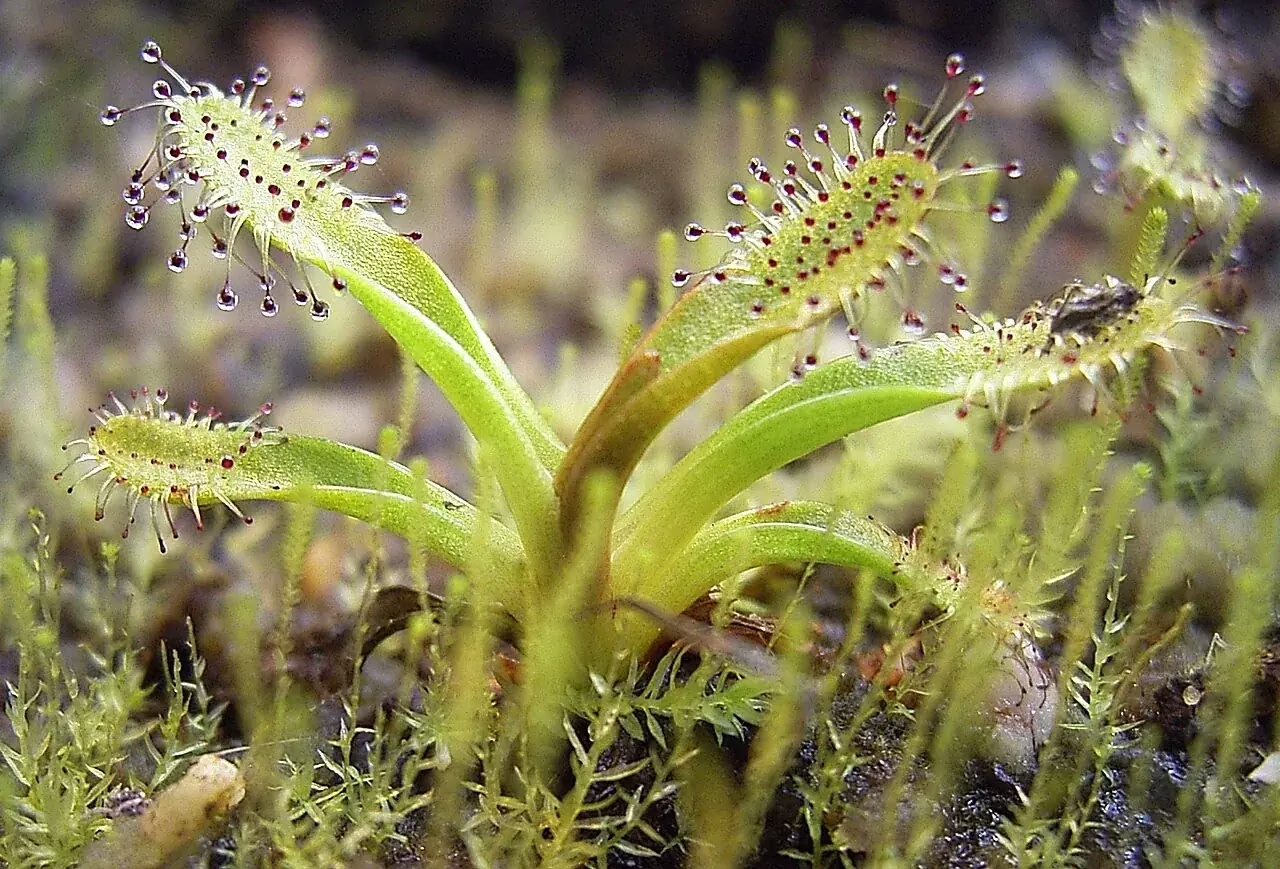
Alpine Sundew (Drosera arcturi) is a small perennial carnivorous herb of New Zealand's alpine and subalpine bogs, standing just 2 to 5 cm tall. It forms a compact rosette of thick, leathery leaves covered in red glandular hairs that secrete sticky droplets to trap insects, supplementing the poor nutrition of its acidic, waterlogged habitat. Unusually, it keeps only two or three healthy leaves at a time, an adaptation to harsh conditions where frost can damage larger rosettes. In summer it produces a single white flower about 13 mm across. Highly frost tolerant, it grows in Sphagnum bogs and seepages from the East Cape south to Stewart Island. Explore more New Zealand alpine plants in our native plant guide.
Plant Description
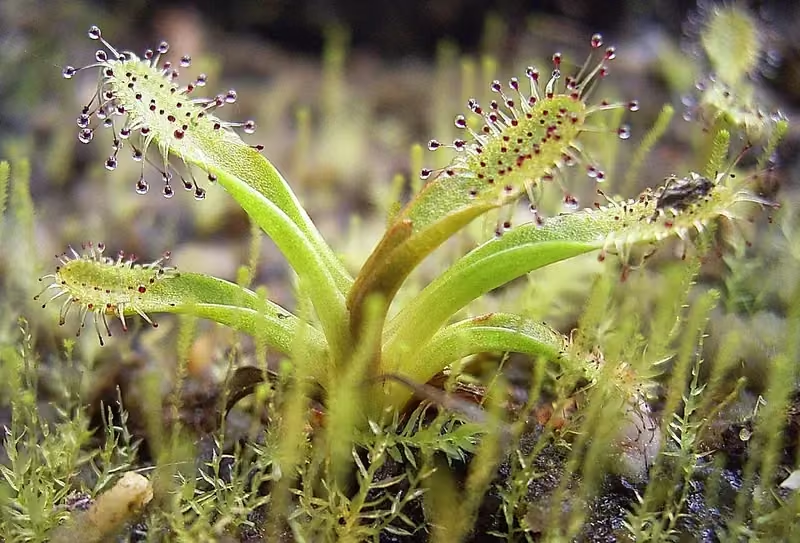
Drosera arcturi is a small perennial carnivorous herb with distinctive thick, leathery leaves that form a compact rosette. The leaves are covered with red glandular hairs that secrete sticky droplets to trap insects. Unlike many sundews, this species typically maintains only two to three healthy leaves at a time, an adaptation to harsh alpine conditions where sudden frosts could damage larger rosettes. Young leaves emerge folded along their center and unfold like a book when mature. During summer, the plant produces a solitary white flower approximately 13mm across on a short stalk positioned near the top of the leaves.
Quick Facts
| Scientific Name | Drosera arcturi |
|---|---|
| Height | 2-5 cm |
| Spread | 3-8 cm |
| Water Needs | Constantly moist to wet |
| Light | Full sun to partial shade |
| Frost Tolerance | Highly frost tolerant (alpine adapted) |
| Salt Tolerance | None |
| Growth Rate | Very slow |
| Lifespan | Perennial (several years) |
Climate Best Suited to
Alpine Sundew thrives in cold, alpine to sub-alpine climates with cool summers and cold winters with snow cover. It requires consistently cool temperatures year-round and cannot tolerate hot conditions. The plant is highly adapted to areas that receive winter snowfall, forming a non-carnivorous resting bud (hibernaculum) during the snowy season. It performs best in regions with high altitude or southern latitude locations where temperatures remain cool even in summer.
Regional Suitability
| City | Climate Suitability |
|---|---|
| Auckland | Poor - Too warm year-round |
| Wellington | Poor - Insufficient cold period |
| Christchurch | Marginal - Possible at altitude only |
| Dunedin | Fair - Better at higher elevations |
| Invercargill | Good - Cool enough at sea level |
| Queenstown | Excellent - Alpine climate ideal |
Plant Habitat
Drosera arcturi inhabits alpine and sub-alpine bogs, tarns, and seepages from the East Cape of the North Island southwards to Stewart Island. In the North Island, it occurs above 1,500 meters altitude, while in the South Island it descends to sea level in the far south. The species is commonly found in Sphagnum bogs and other wetland areas with permanently saturated, nutrient-poor, acidic soils. It often grows alongside other specialized alpine plants in open areas with minimal competition from larger vegetation.
Growing Requirements
Soil Requirements
Alpine Sundew requires extremely nutrient-poor, acidic soil that remains constantly moist. The ideal growing medium mimics its natural bog habitat with high organic content and excellent water retention while maintaining adequate aeration.
- Use a mix of sphagnum moss and sand (2:1 ratio)
- Maintain pH between 4.0-5.5
- Never use fertilized soil or potting mix
- Ensure excellent drainage while keeping constantly moist
Light Requirements
This species requires bright, direct sunlight for optimal growth and carnivorous leaf development. However, the intense light must be balanced with consistently cool root temperatures.
- Provide full sun to light shade
- Minimum 6 hours direct sunlight daily
- Protect from hot afternoon sun in warmer regions
- Bright light essential for red coloration
Water Requirements
Water management is critical for Alpine Sundew. The plant requires constant moisture but with cool water temperatures, mimicking alpine stream and bog conditions.
- Keep soil permanently saturated
- Use only rainwater, distilled, or reverse osmosis water
- Never allow to dry out completely
- Maintain cool water temperatures
Planting and Establishing
Establishing Alpine Sundew is extremely challenging and not recommended for beginners. The plant requires specialized conditions that are difficult to replicate outside its natural alpine habitat. If attempting cultivation, use shallow containers with excellent drainage holes, filled with appropriate carnivorous plant medium. Plants should never be collected from the wild. Seeds, if available from reputable sources, can take years to germinate and require cold stratification. Seedlings grow extremely slowly, producing only a few leaves each season. The critical factor is maintaining consistently cool temperatures, especially at the root zone, which makes cultivation nearly impossible in warm climates without specialized cooling equipment.
Ecological Role
Alpine Sundew plays a unique role in New Zealand's alpine ecosystems as one of the few carnivorous plants adapted to high-altitude environments. By trapping and digesting small insects, it supplements the poor mineral nutrition available in alpine bog soils. The sticky leaves capture various small arthropods, particularly flying insects attracted to the glistening droplets. This carnivorous adaptation allows the plant to thrive in extremely nutrient-poor habitats where most other plants cannot survive. The minute, wind-dispersed seeds contribute to colonization of suitable wetland habitats across alpine regions. As an obligate wetland species, it serves as an indicator of intact alpine bog ecosystems and high-quality water sources.
Uses & Significance
Garden Uses
Alpine Sundew is primarily of interest to specialist carnivorous plant collectors and botanical enthusiasts rather than general gardeners due to its extremely specific requirements.
- Specialist alpine or bog garden collections
- Educational displays about carnivorous plants
- Conservation collections in botanical gardens
- Scientific research specimens
Ecological Value
This species contributes significantly to the biodiversity and ecological balance of New Zealand's alpine wetlands through its specialized adaptations.
- Natural insect control in alpine bogs
- Indicator species for pristine wetland habitats
- Part of specialized alpine plant communities
- Contributes to nutrient cycling in bog ecosystems
Landscaping Uses
Alpine Sundew has very limited landscaping applications due to its highly specialized requirements. It is unsuitable for conventional gardens and can only be maintained in carefully controlled environments. The species is best appreciated in its natural habitat or in specialized botanical collections with alpine houses or cool greenhouse facilities. For those interested in carnivorous plants but lacking specialized facilities, other New Zealand natives like Drosera binata or Drosera spatulata are much more amenable to cultivation. Educational institutions and botanical gardens may feature this species in alpine plant displays to demonstrate the remarkable adaptations of high-altitude flora.
Seasonal Care Calendar
Spring
Plants emerge from winter dormancy as temperatures rise and snow melts. New carnivorous leaves begin to unfold from the hibernaculum.
- Gradually increase watering as growth resumes
- Ensure adequate sunlight for new growth
- Monitor for pest activity on emerging leaves
- Maintain cool root temperatures
Summer
Active growing season with maximum leaf production and flowering. This is when the plant is fully carnivorous and actively trapping prey.
- Maintain constant moisture levels
- Provide maximum sunlight exposure
- White flowers appear from November to February
- Seeds mature January to March if pollinated
Autumn
Growth slows as temperatures drop. Leaves gradually reduce in size as the plant prepares for winter dormancy.
- Reduce watering frequency slightly
- Remove dead leaves carefully
- Observe formation of winter hibernaculum
- Prepare for winter protection if cultivated
Winter
Plant forms a non-carnivorous resting bud (hibernaculum) and remains dormant under snow cover in nature.
- Maintain just above freezing temperatures
- Keep barely moist but not waterlogged
- Provide winter chill period for proper dormancy
- Protect from temperature extremes below -5°C
When to Prune and How Much
Alpine Sundew requires minimal pruning due to its small size and limited leaf production. The main maintenance involves removing dead or damaged leaves to prevent fungal issues.
- Remove only completely dead, brown leaves
- Use fine tweezers to avoid damaging healthy tissue
- Never remove more than one-third of leaves at once
- Clean trapped insect remains that begin to mold
Exercise extreme care when handling this delicate plant, as it produces very few leaves and damage can be fatal. Remove spent flower stalks after seed collection if desired. The plant naturally sheds old leaves as part of its growth cycle, and excessive pruning can weaken an already slow-growing species. Focus on maintaining optimal growing conditions rather than active pruning.
How to Grow Alpine Sundew
Cultivating Alpine Sundew ( Drosera arcturi ) is considered one of the most challenging endeavors in carnivorous plant cultivation. This species requires extremely specific conditions that replicate its natural alpine bog habitat. Success depends on maintaining consistently cool temperatures, particularly at the root zone, while providing bright light and constant moisture with pure water. The plant's slow growth rate and production of only a few leaves per season means that any cultural mistakes can be fatal. Most attempts at cultivation fail due to inability to provide the required cool conditions year-round.
From Seed
Propagation from seed is the primary method for this species, though germination can take years and success rates are typically low. Seeds remain viable for decades under proper storage conditions, so patience is essential.
Seeds require a lengthy cold stratification period of 3-6 months at temperatures just above freezing. Sow on the surface of moist sphagnum moss in a sealed container.
- Prepare sterile sphagnum moss medium in a shallow container
- Scatter seeds on surface without covering
- Place in refrigerator at 2-4°C for stratification period
- After stratification, move to cool, bright conditions
- Maintain constant moisture with distilled water
- Germination may occur sporadically over several years
Even after germination, seedlings grow extremely slowly and may take several years to reach maturity. Many growers report seeds germinating after 2-3 years of waiting.
From Cuttings
Vegetative propagation through cuttings is not viable for this species due to its growth form. Unlike some other sundews, Alpine Sundew does not produce offsets or runners that can be divided.
The plant's limited leaf production and lack of suitable cutting material make vegetative propagation impossible. Any attempt to take cuttings would likely kill the parent plant.
- This method is not applicable to Alpine Sundew
- Focus efforts on seed propagation instead
- Maintain parent plants carefully to ensure seed production
Additional Methods
Given the extreme difficulty in cultivation, the best approach for most enthusiasts is to appreciate this species in its natural habitat through responsible eco-tourism or in botanical garden displays rather than attempting home cultivation.
Some specialized growers have had limited success using controlled environment chambers with cooling systems to maintain the required temperature regime. Alpine houses in botanical gardens provide the most reliable cultivation environment.
- Consider visiting alpine regions to observe plants in nature
- Support botanical gardens maintaining conservation collections
- Join carnivorous plant societies for expert guidance
- Start with easier Drosera species before attempting D. arcturi
Pests & Diseases
Alpine Sundew faces few pest and disease issues in its natural habitat but can be susceptible to problems in cultivation. The main threat is fungal infections, particularly gray mold (Botrytis) and root rot, which develop in conditions of poor air circulation or excessive moisture without proper drainage. Trapped insects that are not fully digested can develop mold, potentially damaging leaves. In cultivation, aphids may occasionally attack flower stalks, though the carnivorous leaves typically protect themselves. Slugs and snails can damage plants in outdoor bog gardens. The best prevention is maintaining optimal growing conditions with good air circulation, appropriate moisture levels, and prompt removal of dead material. Avoid using any pesticides or fungicides, as these can damage the sensitive carnivorous leaves.
Cultural Significance
While Alpine Sundew lacks documented traditional cultural uses, it represents an important part of New Zealand's unique alpine biodiversity. The genus name Drosera comes from the Greek word "droseros," meaning dewy, referring to the glistening droplets on the leaves. This remarkable plant fascinates botanists and nature enthusiasts as one of only two alpine carnivorous plants in New Zealand. Its presence indicates pristine alpine wetland habitats, making it valuable for ecological assessment and conservation planning. The species contributes to scientific understanding of plant adaptations to extreme environments and carnivory evolution. Modern appreciation focuses on its ecological significance and its role in demonstrating the remarkable diversity of New Zealand's alpine flora.
- Scientific research on carnivorous plant evolution
- Indicator species for wetland health assessment
- Educational value in demonstrating plant adaptations
- Conservation symbol for alpine wetland protection
Bonus Tip
If you're fascinated by carnivorous plants but find Alpine Sundew too challenging, try the more adaptable Fork-Leaved Sundew ( Drosera binata ) or Spoon-Leaved Sundew ( Drosera spatulata ) instead. These New Zealand natives are much easier to grow and still display the fascinating insect-trapping abilities. They can thrive in a simple tray of distilled water on a sunny windowsill, providing the carnivorous plant experience without the extreme cultivation challenges of alpine species.
Related Plants
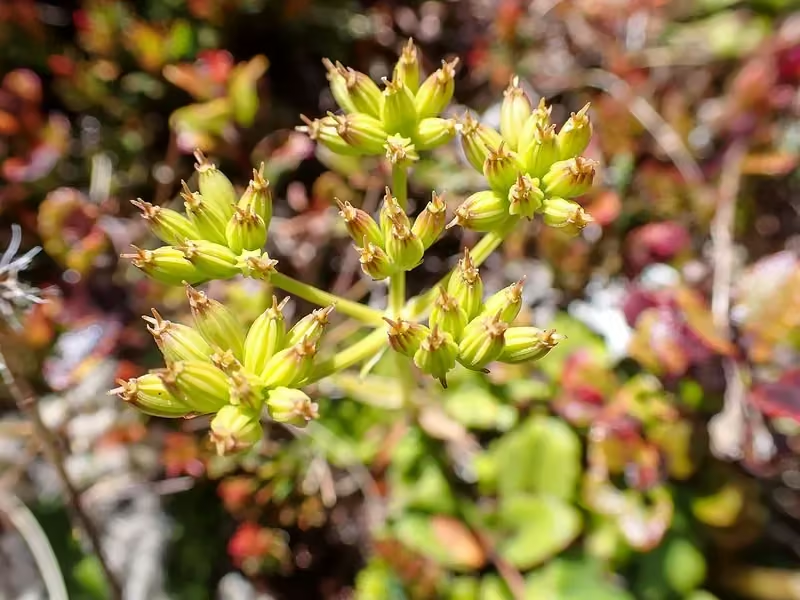
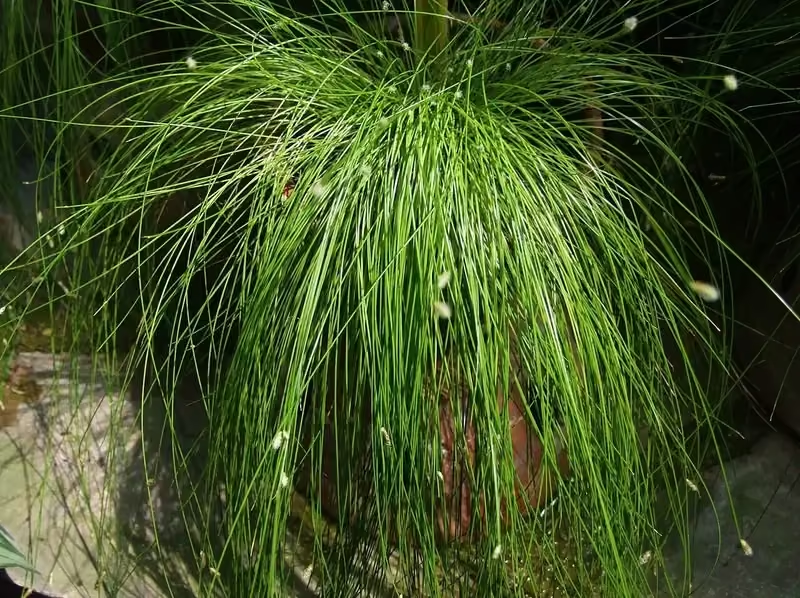
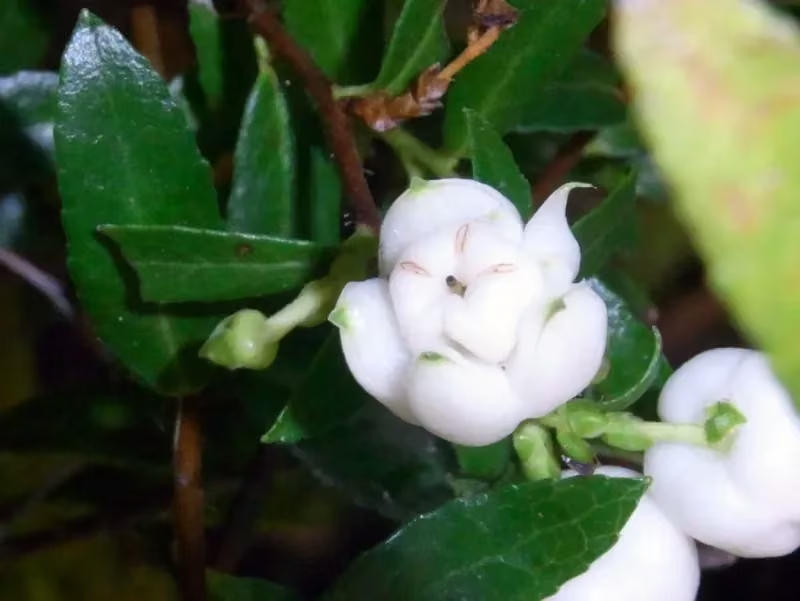
Explore other native plants that share similar characteristics or habitats with Alpine Sundew ( Drosera arcturi ), offering further insights into New Zealand's diverse flora. These related species provide context and opportunities for complementary planting in your garden.



Plant Conservation
Alpine Sundew is currently classified as "Not Threatened" according to the New Zealand Threat Classification System, indicating stable populations across its range. However, the species faces potential long-term threats from climate change, which may reduce suitable alpine wetland habitat as temperatures rise and snow cover decreases. Habitat degradation from introduced browsing animals, particularly deer and pigs, can damage the delicate bog ecosystems where this plant thrives. Conservation efforts focus on protecting alpine wetlands through pest control and maintaining natural hydrology. It is illegal to collect this plant from the wild without permits. Supporting alpine conservation initiatives and responsible eco-tourism helps preserve the unique habitats that support this remarkable carnivorous plant and its associated alpine flora.
Frequently Asked Questions
How big is Alpine Sundew?
Alpine Sundew is very small, forming a rosette just 2 to 5 cm tall and 3 to 8 cm across.
Is Drosera arcturi carnivorous?
Yes, it is carnivorous, trapping insects on sticky red-tipped hairs and digesting them for nutrients.
Does Alpine Sundew tolerate frost?
Yes, it is highly frost tolerant, being adapted to cold alpine and subalpine environments.
Where does Drosera arcturi grow naturally?
It grows in alpine and subalpine bogs and seepages from the East Cape south to Stewart Island.
Sources and Further Reading
The botanical, growing, and conservation details for Alpine Sundew (Drosera arcturi) on this page draw on authoritative New Zealand plant references and citizen-science observation records. Consult the sources below for full technical records and the latest distribution data.