Holloway's Broom
Carmichaelia hollowayi
Last updated:
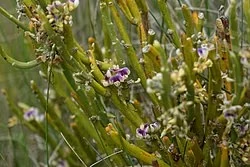
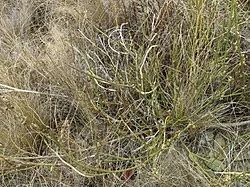
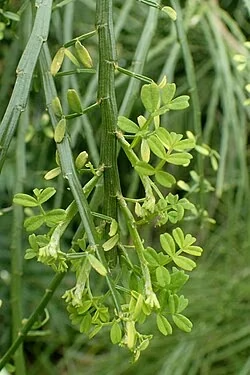
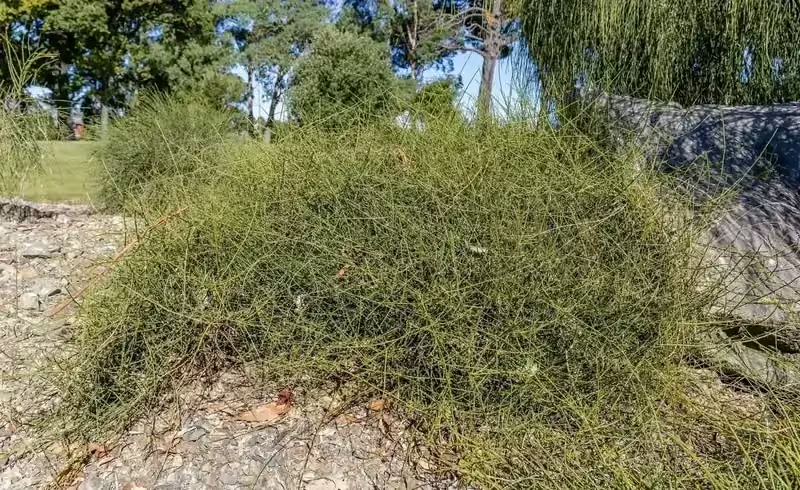
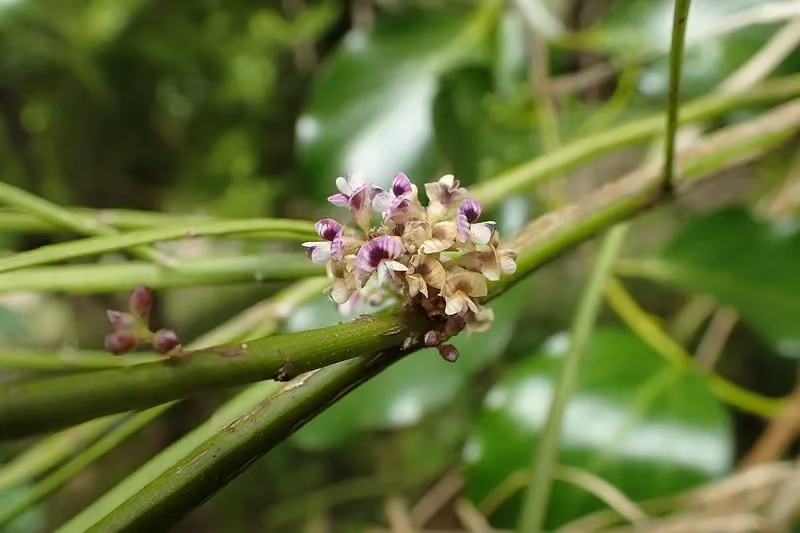
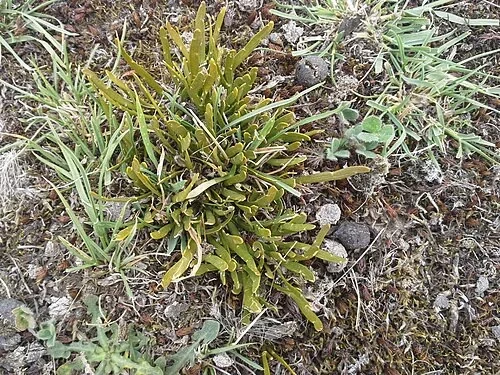
Carmichaelia hollowayi, or Holloway's Broom, is a critically endangered dwarf, suckering native shrub endemic to a tiny area of the South Island. It forms a low, spreading mat of yellowish, erect, almost leafless branches (cladodes) with rounded tips that photosynthesise in place of leaves. From late spring to early autumn it bears small white pea-like flowers with a distinctive dark purple centre, followed by persistent pods holding a few hard olive seeds. It survives only on limestone outcrops, bluffs and rendzina soils along the south bank of the Waitaki River, where free-draining, exposed and dry conditions prevail. Classified Nationally Critical, it is a flagship species for dryland conservation. Explore more native shrubs in our native plant guide.
Plant Description
Carmichaelia hollowayi , commonly known as Holloway's Broom, is a critically endangered dwarf, suckering shrub endemic to a very restricted area of New Zealand's South Island. This unique plant typically grows as a low, spreading mat of yellowish, erect, and virtually leafless branches (cladodes) with rounded tips. These cladodes perform the photosynthetic function of leaves. In late spring to early autumn, it produces small, delicate pea-like flowers that are white with a distinctive dark purple center, offering a subtle beauty. These are followed by dry, persistent seed pods containing a few hard olive seeds. Its rarity and specific habitat make it a plant of significant conservation concern.
Quick Facts
| Scientific Name | Carmichaelia hollowayi |
|---|---|
| Height | 0.50-0.60 metres |
| Spread | 1.0-2.0 metres |
| Water Needs | Low; highly drought-tolerant once established |
| Light | Full sun to partial shade |
| Frost Tolerance | High |
| Salt Tolerance | Low |
| Growth Rate | Moderate |
| Lifespan | 10-20 years |
Climate Best Suited to
Holloway's Broom is adapted to the dry, often windswept conditions of its specific limestone habitat along the Waitaki River. It tolerates strong sunlight and moderate frosts but is sensitive to high humidity and waterlogged conditions. In cultivation, it requires excellent drainage and a position with good air circulation, making it suitable for rock gardens or specialized dry plantings in cooler, drier climates.
Regional Suitability
| City | Climate Suitability |
|---|---|
| Auckland | Poor (too humid) |
| Wellington | Marginal (needs very good drainage) |
| Christchurch | Good |
| Dunedin | Excellent |
| Invercargill | Excellent |
Plant Habitat
This critically endangered species is exclusively found on limestone outcrops, bluffs, and associated rendzina soils along the south bank of the Waitaki River in the South Island. Its habitat is characterized by free-draining, often exposed, and dry conditions. It is a specialist species, thriving where other plants struggle due to its unique adaptations to limestone environments. Conservation efforts focus on protecting these few remaining wild populations.
Growing Requirements
Soil Requirements
Demands exceptionally well-drained, rocky, alkaline soils, typical of limestone environments. It is highly intolerant of heavy, acidic, or waterlogged conditions.
- Rocky, very free-draining soil
- Alkaline (limestone) soils
- Intolerant of heavy clay or waterlogging
Light Requirements
Requires full sun for optimal health and flowering. It can tolerate partial shade, but growth may be less vigorous and flowering reduced.
- Full sun essential
- Partial shade tolerated
- Needs bright, open exposure
Water Requirements
Highly drought-tolerant once established. Requires minimal watering, only during prolonged dry spells. Overwatering is detrimental.
- Drought-tolerant once established
- Water sparingly
- Intolerant of wet feet
Planting and Establishing
Plant Holloway's Broom in a very free-draining site that mimics its natural limestone habitat, such as a rock garden or a raised bed with a gritty, alkaline soil mix. Ensure the planting site is sunny and has good air circulation. Plant with the crown slightly elevated and top-dress with fine gravel or limestone chips to prevent moisture accumulation around the base. Water thoroughly upon planting, then reduce watering significantly once established.
Ecological Role
Carmichaelia hollowayi plays a crucial role in the unique limestone ecosystems of the Waitaki River, contributing to soil stabilization and providing habitat in an otherwise harsh environment. As a legume, it fixes nitrogen, improving soil fertility.
Uses & Significance
Garden Uses
A highly prized and ecologically significant plant for specialized rock gardens or conservation plantings, particularly where limestone soils can be replicated.
- Specialized rock gardens
- Conservation plantings
- Limestone-themed landscapes
Ecological Value
Its flowers provide nectar for native insects, and its seed pods offer a food source for birds, contributing to the biodiversity of its restricted habitat.
- Nectar source for native insects
- Seeds as food for birds
- Nitrogen fixation in poor soils
Landscaping Uses
Due to its critically endangered status, it is primarily used in conservation and specialist native plant landscaping, highlighting its unique adaptations to limestone.
Seasonal Care Calendar
Spring
Minimal care needed. Light tip pruning can encourage denser growth. Check for any winter damage and remove dead stems.
- Light tip pruning for shape
- Remove dead stems
- Avoid over-fertilizing
Summer
Requires very little attention. Ensure it is not overwatered during hot periods.
- Very low water needs
- Monitor for pests in humid spells
- Ensure good air circulation
Autumn
Collect seeds from mature pods for propagation. Minimal tidying of old flowering stems can be done.
- Collect mature seeds
- Light tidying
- Check drainage for winter
Winter
Extremely hardy. Requires minimal intervention. Ensure good drainage to prevent rot during wet periods.
- Minimal maintenance
- Resistant to cold and snow
- Ensure adequate drainage
When to Prune and How Much
Pruning is generally not essential for this plant. If necessary, light tip pruning after flowering can encourage bushier growth. Avoid heavy cuts into old wood.
- Light tip pruning after flowering
- Remove any dead or diseased stems
- Avoid heavy pruning into old wood
The plant can regenerate from the base if hard-pruned, but it's best to keep pruning minimal.
How to Grow Holloway's Broom
Cultivating Holloway's Broom ( Carmichaelia hollowayi ) is a rewarding endeavor for any gardener interested in New Zealand's unique flora. This species can be propagated through several methods, each requiring specific conditions to ensure healthy growth and establishment. Successful propagation depends on mimicking the plant's natural environment and providing consistent care during the early stages of development.
From Seed
Propagation from seed is often the most effective way to produce a large number of Holloway's Broom plants. Seeds should be collected when they are fully mature. Freshly collected seeds generally have higher germination rates than those that have been stored for long periods.
Propagation from seed is a reliable method, but seeds require scarification due to their hard coat.
- Collect mature seeds.
- Scarify seeds by gently rubbing with sandpaper or nicking with a knife.
- Sow pre-treated seeds in a free-draining seed-raising mix.
- Maintain consistent moisture, but avoid waterlogging.
- Germination can be erratic.
As a critically endangered species, careful and controlled propagation is vital for its conservation.
From Cuttings
For those wishing to replicate specific characteristics of a parent plant, vegetative propagation via cuttings is the preferred method. This technique ensures that the new plants are genetically identical to the source. Semi-hardwood cuttings taken during the appropriate season usually yield the best results for this species.
Hardwood cuttings can be attempted but are generally less successful than seed propagation due to the leafless nature of the plant and its hard stems.
- Take semi-hardwood cuttings (8-12cm) in late summer.
- Remove any soft growth from the tip and base, and treat the cut end with rooting hormone.
- Insert cuttings into a very gritty, well-aerated propagation mix.
- Place in a sheltered, well-ventilated environment with good humidity.
Additional Methods
Depending on the growth habit of Holloway's Broom, other methods such as division or layering might also be viable options. Division is particularly suitable for plants that form dense clumps or have spreading root systems, while layering can be used for species with trailing or flexible stems.
Holloway's Broom is not typically propagated by division due to its growth habit and critical conservation status.
- Focus on seed or cutting propagation for best results.
- Ensure that environmental conditions are optimal for establishment.
- Protect young plants from competition and harsh elements.
Pests & Diseases
Holloway's Broom is generally very resistant to pests and diseases. The primary concern is root rot if the plant is subjected to inadequate drainage or overwatering. Ensure good air circulation around the plant to prevent fungal issues.
Cultural Significance
Carmichaelia hollowayi is a rare jewel of the New Zealand flora, representing the unique adaptations of plants to challenging limestone environments and serving as a flagship species for conservation efforts.
- Critically endangered species
- Unique adaptation to limestone habitats
- Focus of conservation efforts
Bonus Tip
Due to its conservation status, if you are growing this plant, consider contributing to seed banks or conservation programs to help ensure its survival.
Related Plants
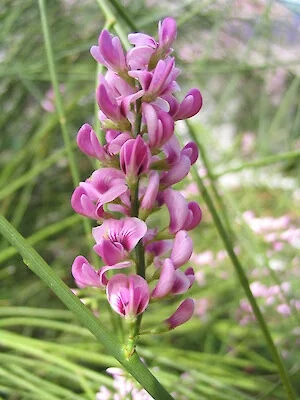
Explore other native plants that share similar characteristics or habitats with Holloway's Broom ( Carmichaelia hollowayi ), offering further insights into New Zealand's diverse flora. These related species provide context and opportunities for complementary planting in your garden. For another native shrub, explore Large-Fruited Coprosma.


Plant Conservation
Carmichaelia hollowayi is currently classified as "Nationally Critical" under the New Zealand Threat Classification System. Its rarity is primarily due to habitat loss and degradation from agricultural development, as well as browsing by introduced animals. Conservation efforts focus on protecting its remaining natural habitats and establishing new populations through propagation and careful reintroduction.
Frequently Asked Questions
How tall does Carmichaelia hollowayi grow?
Holloway's Broom is a dwarf shrub, only about 0.5 to 0.6 metres tall, spreading 1 to 2 metres.
Where does Carmichaelia hollowayi grow naturally?
It grows only on limestone outcrops along the south bank of the Waitaki River in the South Island.
How rare is Carmichaelia hollowayi?
It is classified as Nationally Critical, making it one of New Zealand's most threatened broom species.
What growing conditions does Carmichaelia hollowayi need?
It needs excellent drainage, full sun to partial shade and is highly drought-tolerant once established.
Sources and Further Reading
The botanical, growing, and conservation details for Holloway's Broom (Carmichaelia hollowayi) on this page draw on authoritative New Zealand plant references and citizen-science observation records. Consult the sources below for full technical records and the latest distribution data.