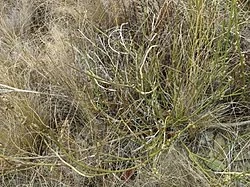
Dwarf Broom
Carmichaelia curta
Last updated:
Carmichaelia curta, known as Dwarf Broom, is a spreading to sprawling native shrub that grows 0.5 to 1 metre tall and can reach up to 2.5 metres wide. Its most distinctive feature is a mass of erect, slender, grooved yellow-green stems called cladodes, which do the work of leaves so the plant appears essentially leafless. In summer it produces small pea-like flowers, white with dark purple streaks. Endemic to the eastern South Island, it is largely restricted to the Waitaki, Clutha, and Taieri river catchments, growing in grey scrub, on river terraces and rocky outcrops. It is a nitrogen-fixing legume valued in dryland gardens, though it is now classified as Nationally Vulnerable. Explore more native shrubs in our native plant guide.
Plant Description
Carmichaelia curta is a spreading to sprawling shrub that typically grows 0.5-1 metre tall and can reach up to 2.5 metres wide. Its most notable feature is its mass of erect, slender, yellow-green stems (cladodes) which are grooved and oval in cross-section. Young stems often have a purplish tint. The plant is essentially leafless in open situations, though small leaves with 1-7 leaflets may appear in shaded spots. In summer, it produces small, delicate pea-like flowers that are white with distinct dark purple streaks or veins. These are followed by small, dry, flattened pods containing hard seeds.
Quick Facts
| Scientific Name | Carmichaelia curta |
|---|---|
| Height | 0.5 - 1 m |
| Spread | 1 - 2.5 m |
| Water Needs | Low |
| Light | Full Sun |
| Frost Tolerance | Very Hardy |
| Salt Tolerance | Low |
| Growth Rate | Medium |
| Lifespan | Perennial |
Climate Best Suited to
Carmichaelia curta is highly adapted to the dry, continental climates of the eastern South Island. It thrives in regions with hot, dry summers and cold, frosty winters. It prefers low humidity and is particularly well-suited to drought-prone areas. While it is extremely frost hardy, it may struggle in warm, humid, or high-rainfall climates typical of the northern North Island, where it can be prone to fungal diseases.
Regional Suitability
| City | Climate Suitability |
|---|---|
| Auckland | Challenging |
| Wellington | Suitable (in dry spots) |
| Christchurch | Very Suitable |
| Dunedin | Very Suitable |
| Queenstown | Very Suitable |
| Invercargill | Suitable |
| Hamilton | Challenging |
Plant Habitat
This species is endemic to the South Island, restricted primarily to the Waitaki, Clutha, and Taieri river catchments. Its natural habitat is the distinctive "grey scrub" communities, river terraces, alluvial flats, and rocky outcrops. It often colonizes disturbed sites such as roadside banks, dry alluvial fans, and cliffs. It grows in association with other dryland species in semi-natural tussock grasslands and shrublands.
Growing Requirements
Soil Requirements
Demands free-draining soil; intolerant of wet feet.
- Sandy loam
- Rocky alluvium
- Gritty mixes
Light Requirements
Requires full sun to maintain compact growth and health.
- Full Sun
- Open exposure
Water Requirements
Very drought tolerant once established.
- Low water needs
- Water deeply but rarely
Planting and Establishing
Choose a sunny, open site with excellent drainage. If your soil is heavy or retains water, plant Carmichaelia curta on a raised mound or incorporate plenty of grit and gravel. Spring or autumn planting is best to allow roots to establish before summer heat or winter freeze. Water regularly during the first growing season to get the plant established, but reduce watering significantly thereafter. Space plants to allow for air circulation, which is crucial for preventing disease.
Ecological Role
Carmichaelia curta is a nitrogen-fixing plant, meaning it can improve soil fertility in the nutrient-poor environments it inhabits. It provides habitat and shelter for insects and lizards in dryland ecosystems. Its flowers are a source of nectar for native pollinators, including bees and butterflies.
Uses & Significance
Garden Uses
Ideal for dryland or xeriscape gardens.
- Rock gardens
- Dry banks
- Native specimen planting
- Container planting (gritty mix)
Ecological Value
Conservation species for dryland restoration.
- Endangered habitat restoration
- Soil stabilization
Landscaping Uses
In landscaping, Carmichaelia curta provides a unique textural element with its stiff, vertical, yet sprawling form. It contrasts effectively with the rounded forms of tussock grasses and low-growing hebes. It is an excellent candidate for "dry gardens" or gravel gardens where water conservation is a priority. Its leafless nature gives it an architectural, almost skeletal appearance that is visually striking year-round.
Seasonal Care Calendar
Spring
Prepare for growth.
- Check drainage
- Light tip pruning
Summer
Water wisely.
- Water only during extreme dry
- Watch for pests
Autumn
Planting time.
- Plant new specimens
- Collect seed
Winter
Dormancy.
- Ensure no waterlogging
- Very hardy
When to Prune and How Much
Carmichaelia curta generally requires little pruning. However, it can be lightly trimmed to maintain a denser shape or control its spread.
- Prune sparingly
- Remove dead wood anytime
If the plant becomes too open or leggy, tip pruning the young green stems in spring can encourage branching. Avoid cutting back into old, hard wood as it may not regenerate well.
How to Grow Dwarf Broom
Cultivating Dwarf Broom ( Carmichaelia curta ) is a straightforward process for gardeners who can provide the dry, sunny conditions it loves. It is a resilient native shrub that rewards neglect rather than fussing. Over-watering and rich soils are its enemies. Propagation is commonly achieved through seed or semi-hardwood cuttings. Because it is a threatened species in the wild, growing it in gardens helps maintain the genetic diversity of this unique plant. It is particularly satisfying to grow from seed, observing the transformation from leafy seedling to leafless adult form.
From Seed
Seed propagation is effective and results in plants with strong root systems. Seeds are contained in small pods that ripen in late summer or autumn.
Fresh or scarified seed germinates best.
- Harvest the pods when they are dry and brown. Shell the small, hard seeds.
- Scarify the seeds to break their hard coat. This can be done by rubbing them between two sheets of sandpaper or nicking the coat with a knife.
- Soak the scarified seeds in warm water overnight; they should swell up.
- Sow the swollen seeds in a tray of gritty, free-draining seed mix. Cover lightly.
- Keep the mix barely moist in a warm, bright place. Germination usually occurs within a few weeks.
- Prick out seedlings into individual pots when they are large enough to handle. Note that seedlings will have leaves, unlike the adult plant.
From Cuttings
Semi-hardwood cuttings taken in late summer can also be successful, though they may be slower to root than other shrub species.
Use a gritty rooting medium.
- Select healthy, semi-ripe stems about 10cm long.
- Dip the cut end in rooting hormone to encourage root development.
- Insert cuttings into a pot filled with a mix of sand and perlite or pumice.
- Place in a sheltered, warm spot out of direct sun. Maintain humidity but ensure good airflow to prevent fungal rot.
- Once roots have formed (check by gently tugging), pot up into a free-draining mix.
Additional Methods
The most critical "method" for Carmichaelia curta is simulating its natural dryland habitat.
Key establishment tips:
- Site selection is paramount: full sun and wind exposure are preferred.
- Soil preparation: Incorporate gravel or sharp sand into the planting hole if the soil is not naturally stony.
- Weeding: Keep the base of the plant free from weeds and grass competition, which can smother this light-loving shrub.
Pests & Diseases
Carmichaelia curta is largely pest-free in its preferred environment. However, caterpillars of the native broom moth can sometimes browse on the stems. In humid climates or damp soils, it is susceptible to root rot and collar rot (Phytophthora). Keeping the plant dry and ensuring excellent drainage is the best prevention against these fungal issues.
Cultural Significance
While specific Māori names or traditional uses for Carmichaelia curta are not widely recorded in general literature, it is part of the diverse suite of brooms that define the unique character of New Zealand's eastern drylands. Its decline has made it a focus for conservation efforts, highlighting the fragility of our dryland ecosystems.
- Icon of NZ drylands
- Conservation priority
Bonus Tip
Plant in a gravel garden alongside native tussocks like Poa cita ; the beige and tawny grasses perfectly complement the yellow-green stems of the broom.
Related Plants
Explore other native plants that share similar characteristics or habitats with Dwarf Broom ( Carmichaelia curta ), offering further insights into New Zealand's diverse flora. These related species provide context and opportunities for complementary planting in your garden.

Whip Broom
Carmichaelia flagelliformis
Distinctive NZ broom with slender, whip-like branches and fragrant purple flowers; native to the North Island.
Learn more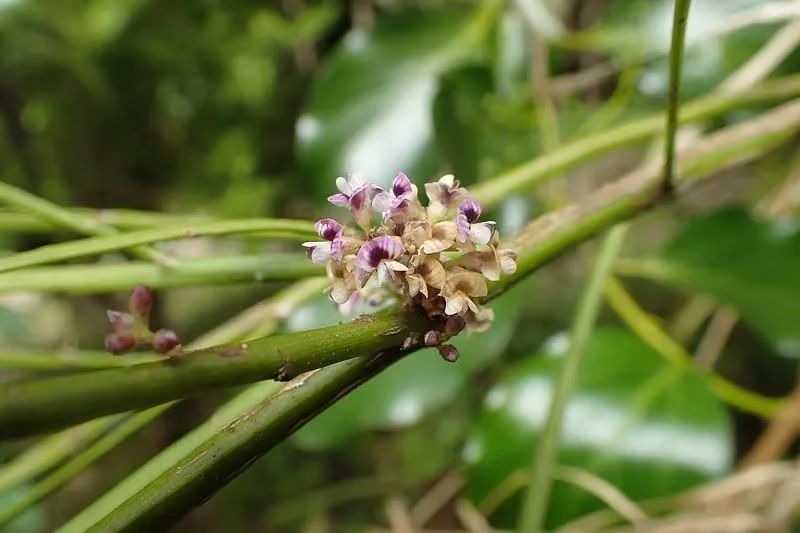
Common Broom
Carmichaelia australis
The most widespread native broom, featuring flattened green stems and small white-purple flowers.
Learn more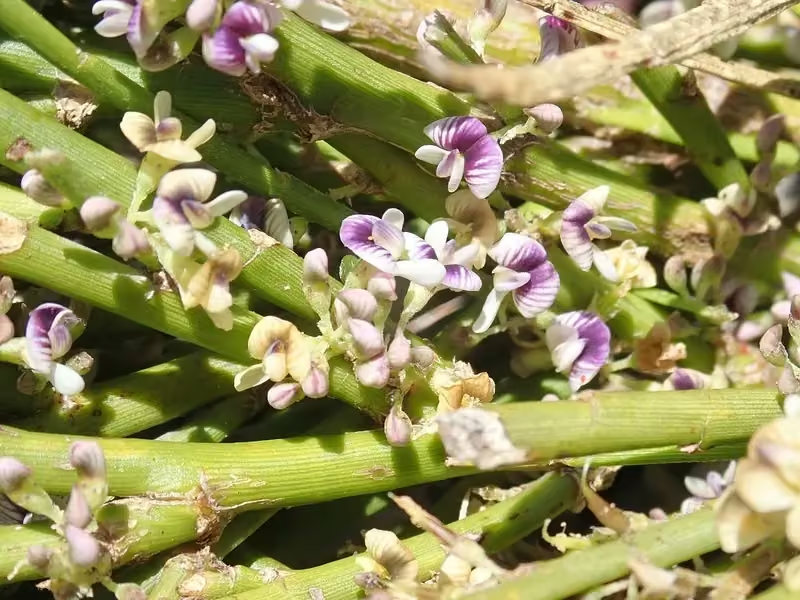
Prostrate Broom
Carmichaelia appressa
A specialized broom that grows flat along the ground, adapted to stony coastal sites.
Learn more
Stout Dwarf Broom
Carmichaelia monroi
Rare leafless shrub with stout, yellow-green branches and delicate pea-like flowers, ideal for dry, rocky gardens.
Learn more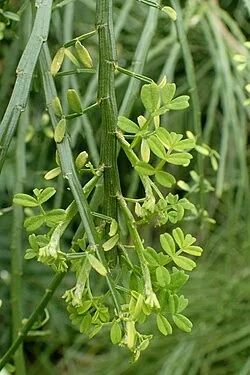
Scented Broom
Carmichaelia odorata
A leafy broom noted for its highly fragrant, profuse sprays of mauve flowers.
Learn more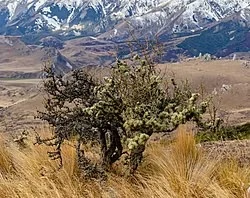
Matagouri
Discaria toumatou
Thorny divaricating shrub of dry country; shares the same harsh habitats as Carmichaelia curta .
Learn more
Silver Tussock
Poa cita
Hardy tussock grass that is a common companion plant in dryland ecosystems.
Learn more
Porcupine Shrub
Melicytus alpinus
Toughest of native shrubs with stiff, porcupine-like branchlets; ideal for lizard habitat in dry gardens.
Learn morePlant Conservation
Carmichaelia curta is currently classified as "Nationally Vulnerable" under the New Zealand Threat Classification System. It faces threats from habitat loss due to agricultural intensification, weed invasion (especially by woody weeds), and lack of recruitment due to grazing by introduced mammals. Protecting its remaining fragmented populations is critical.
Frequently Asked Questions
How tall does Carmichaelia curta grow?
Dwarf Broom typically grows 0.5 to 1 metre tall and can spread up to 2.5 metres wide.
Does Carmichaelia curta tolerate frost?
Yes, it is very hardy and well suited to the cold, frosty winters of the eastern South Island.
Where does Carmichaelia curta grow naturally?
It is endemic to the South Island, restricted mainly to the Waitaki, Clutha, and Taieri river catchments.
How fast does Carmichaelia curta grow?
It has a medium growth rate and needs low water, thriving in full sun on dry, free-draining sites.
Sources and Further Reading
The botanical, growing, and conservation details for Dwarf Broom (Carmichaelia curta) on this page draw on authoritative New Zealand plant references and citizen-science observation records. Consult the sources below for full technical records and the latest distribution data.