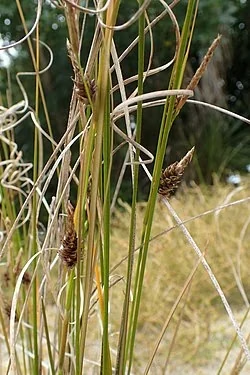
Sea Sedge
Carex litorosa
Last updated:
Carex litorosa, commonly called Sea Sedge, is an attractive, erect coastal sedge that forms dense clumps 60 to 80 cm tall. Its narrow, plano-convex leaves have distinctive curly, spirally twisted dried tips, and the foliage varies from pale green to silvery-green or reddish-brown when exposed to full sun and salt. Upright cylindrical stems carry light brown spikes. A coastal specialist native to the North, South and Stewart Islands, it grows on sandy tidal riverbanks, brackish marshes and estuary margins, tolerating salt and regular brackish inundation. Now classed At Risk - Declining, its cultivation helps conserve threatened salt-marsh habitats. Explore more coastal native plants in our native plant guide.
Plant Description
Carex litorosa is an attractive, erect sedge that forms dense clumps. It typically grows to a height of 60 to 80 cm. The leaves are narrow, plano-convex (flat on one side, curved on the other), and have distinctive curly, dried tips that twist spirally. The foliage colour is variable, often appearing pale green, silvery-green, or developing reddish-brown hues, especially when exposed to full sun and salt. The flowering stems are cylindrical and upright, bearing light brown spikes that are shorter than or equal to the length of the leaves.
Quick Facts
| Scientific Name | Carex litorosa |
|---|---|
| Height | 0.6 - 0.8 m |
| Spread | 0.5 - 0.8 m |
| Water Needs | High |
| Light | Full Sun |
| Frost Tolerance | Hardy |
| Salt Tolerance | High |
| Growth Rate | Medium |
| Lifespan | Perennial |
Climate Best Suited to
Carex litorosa is native to coastal areas throughout the North, South, and Stewart Islands. It is well-adapted to the windy, exposed conditions of the coast and tolerates saline environments well. While it naturally occurs in temperate maritime climates, it is hardy enough to be grown in most regions of New Zealand, provided it has sufficient moisture. It prefers open, sunny situations and is not suited to deep shade.
Regional Suitability
| City | Climate Suitability |
|---|---|
| Auckland | Suitable |
| Wellington | Very Suitable |
| Christchurch | Very Suitable |
| Dunedin | Suitable |
| Queenstown | Suitable (if moist) |
| Invercargill | Suitable |
| Hamilton | Suitable |
Plant Habitat
As its common name suggests, Sea Sedge is a coastal specialist. Its natural habitat includes sandy tidal river banks, brackish marshes, and estuary margins. It is often found growing in association with other salt-tolerant plants like Apium prostratum (Sea Celery) and Juncus species. It tolerates regular inundation by brackish water but requires a substrate that does not stagnate completely.
Growing Requirements
Soil Requirements
Adaptable but prefers moist, free-draining sandy or loamy soils.
- Sandy loam
- Saline soils
- Estuarine mud/sand
Light Requirements
Thrives in full sun; foliage colour is best with high light.
- Full Sun
- Light Shade
Water Requirements
High moisture needs; naturally a wetland plant but tolerates some drying.
- Consistent moisture
- Tolerates brackish water
Planting and Establishing
Plant Carex litorosa in a sunny position where the soil remains reliably moist. It is excellent for coastal gardens where salt spray is an issue. Dig a hole twice the size of the root ball and backfill with soil mixed with compost to help retain moisture. If planting in a non-coastal garden, ensure it doesn't dry out completely in summer. Spacing of 50-70cm is recommended to allow the tussocks to form their natural shape.
Ecological Role
Carex litorosa is an important component of New Zealand's threatened coastal turf and estuarine ecosystems. It helps stabilize sandy banks and traps sediment in tidal zones, protecting against erosion. It provides habitat for coastal insects and invertebrates, and cover for ground-nesting shorebirds.
Uses & Significance
Garden Uses
Valued for its unique colour and texture in coastal and native gardens.
- Coastal landscaping
- Wetland restoration
- Colour contrast in borders
- Container planting
Ecological Value
Critical for stabilizing estuarine margins and supporting coastal biodiversity.
- Erosion control
- Habitat restoration
Landscaping Uses
In landscaping, Carex litorosa is prized for its upright form and the reddish/pale-green tones of its foliage, which contrast well with darker green plants. It looks spectacular when mass-planted in drifts, mimicking its natural growth pattern. It is an ideal choice for rain gardens, pond edges, or exposed coastal banks where other plants might struggle with salt and wind.
Seasonal Care Calendar
Spring
Tidy up and feed.
- Comb out dead leaves
- Apply general fertiliser
Summer
Maintain hydration.
- Water during dry spells
- Mulch to retain moisture
Autumn
Planting and division.
- Divide mature clumps
- Plant new specimens
Winter
Dormancy period.
- Monitor drainage
- Tidy damaged foliage
When to Prune and How Much
Carex litorosa is low maintenance. The most common pruning task is "combing" the plant with your fingers or a rake to remove dead, brown leaves that accumulate at the base. This keeps the tussock healthy and attractive.
- Remove dead material anytime
- Avoid hard cutting back if possible
If the plant looks scruffy or loses vigour, it can be lifted and divided in autumn or spring. While some gardeners cut sedges back hard to regenerate them, Carex litorosa generally responds better to division and regular grooming rather than severe pruning.
How to Grow Sea Sedge
Cultivating Sea Sedge ( Carex litorosa ) is straightforward, making it an excellent choice for both novice and experienced gardeners, especially those in coastal areas. It is a robust plant that adapts well to garden conditions as long as its basic need for moisture and light is met. Propagation is commonly achieved through seed or division, with both methods yielding good results. Its resilience to salt and wind makes it a valuable asset for exposed sites where more delicate plants might fail.
From Seed
Growing from seed is an effective way to produce large numbers of plants for restoration projects or mass planting. Seeds should be collected in late summer or autumn when the flower spikes have browned and seeds are loose.
Sowing fresh seed is recommended.
- Harvest seeds from the brown spikes; they should separate easily when ripe.
- Sow onto a tray of standard seed-raising mix. A light covering of vermiculite or mix is sufficient.
- Keep the tray moist and in a warm, well-lit spot (but out of scorching direct midday sun initially).
- Germination usually occurs within a few weeks to a couple of months.
- Prick out seedlings into small pots once they are large enough to handle without damaging the roots.
Keep young plants well-watered as they establish their root systems.
From Cuttings (Division)
Division is the fastest method to get substantial plants and is best done in autumn or early spring. This mimics the natural vegetative expansion of the plant and reinvigorates older clumps that may have died out in the center.
Division is simple and highly successful.
- Dig up the entire clump, preserving as much of the root mass as possible.
- Using a sharp spade, knife, or two garden forks back-to-back, split the clump into smaller sections.
- Ensure each division has a good amount of roots and several fans of leaves.
- Trim the foliage by about a third to reduce stress on the roots.
- Replant immediately into the ground or pots and water thoroughly.
Additional Methods
Success with Carex litorosa relies less on complex propagation techniques and more on site management.
Ensure the following for successful establishment:
- Weed control: Keep the area around young plants free of faster-growing weeds that could shade them out.
- Mulching: Apply a layer of mulch around the base to retain soil moisture and simulate the organic debris found in its natural habitat.
- Protection: While hardy, young plants benefit from protection against rabbits or hares which may browse on the tender new growth.
Pests & Diseases
Carex litorosa is generally healthy and resistant to diseases. However, in garden settings, it can be prone to rust (a fungal infection) if grown in humid, stagnant conditions. This appears as orange or brown spots on the leaves. Ensuring good airflow and not overcrowding plants helps prevent this. Insect pests are rarely a significant problem, though scale insects may occasionally be seen.
Cultural Significance
Carex litorosa is a significant species in the conservation of New Zealand's coastal wetlands. With the decline of natural salt marsh habitats due to development and drainage, populations of this sedge have fragmented. It is now considered "At Risk - Declining," making its cultivation in gardens and restoration projects important for the preservation of the species.
- Indicator of salt marsh health
- At Risk species needing conservation
Bonus Tip
Plant in a group of 5 or 7 on a coastal bank to catch the morning or evening light; the backlighting will make the reddish-bronze foliage glow beautifully.
Related Plants
Explore other native plants that share similar characteristics or habitats with Sea Sedge ( Carex litorosa ), offering further insights into New Zealand's diverse flora. These related species provide context and opportunities for complementary planting in your garden. For another native grass or sedge, explore Pyrenean Sedge.
Oioi
Apodasmia similis
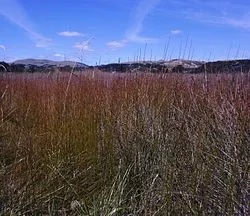
Salt‑tolerant restiad forming dense stands in coastal wetlands; excellent for shoreline stabilization.
Learn more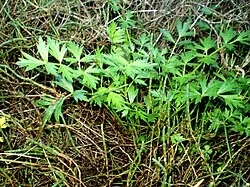
Sea Celery
Apium prostratum
A coastal herb often found growing alongside Carex litorosa in salt marshes and rocky shores.
Learn more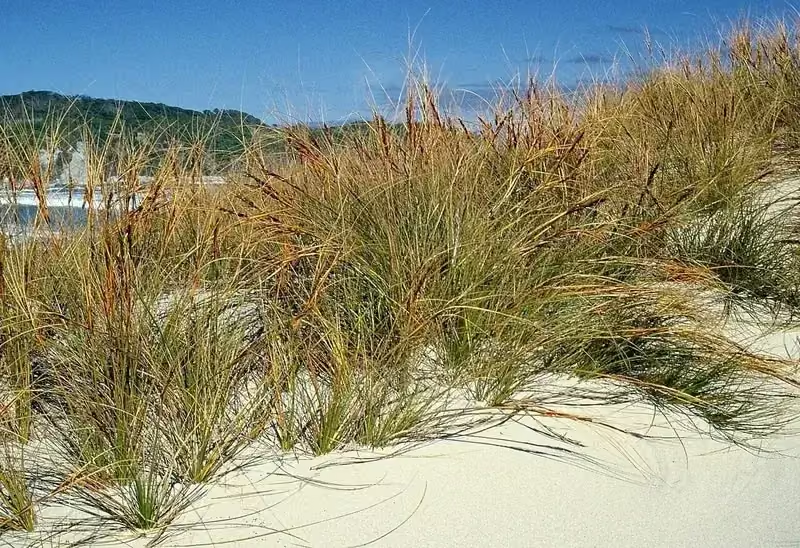
Pīngao
Ficinia spiralis
Golden sand-binding sedge prized for traditional Māori weaving, sharing the coastal dune habitat.
Learn more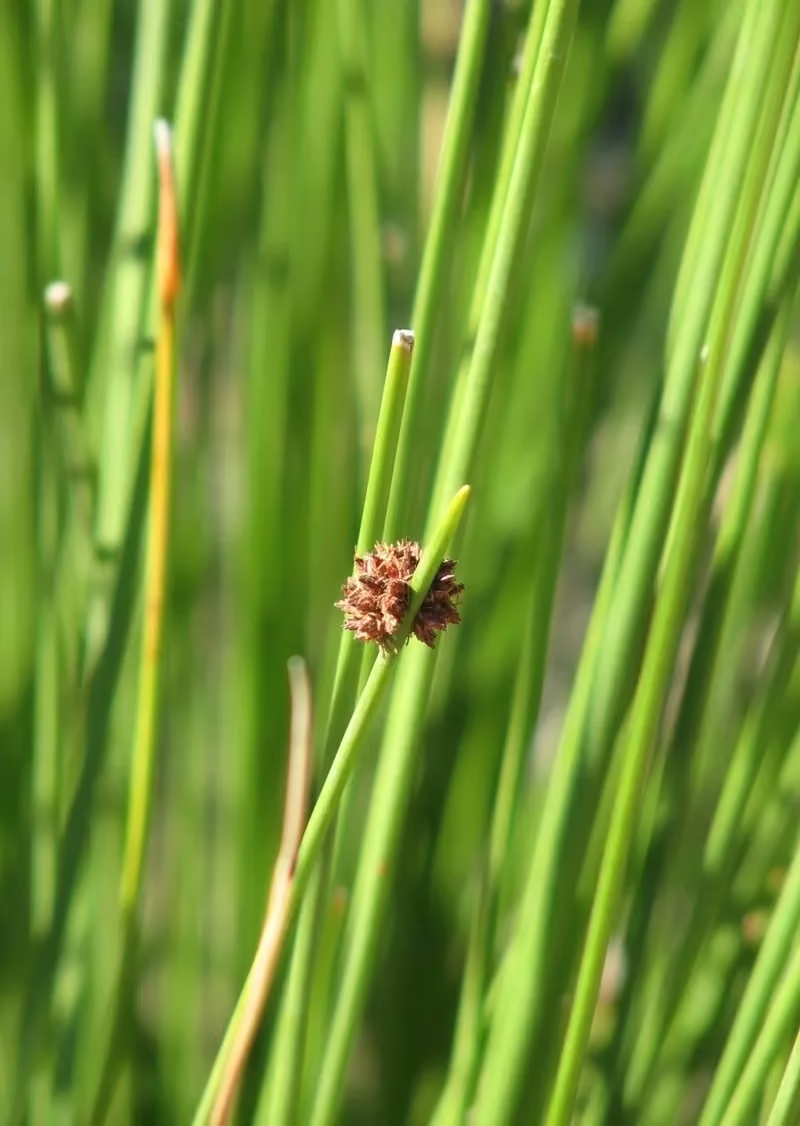
Knobbly Club Rush
Ficinia nodosa
A robust coastal sedge with triangular stems, essential for dune stabilisation and salt marsh restoration.
Learn more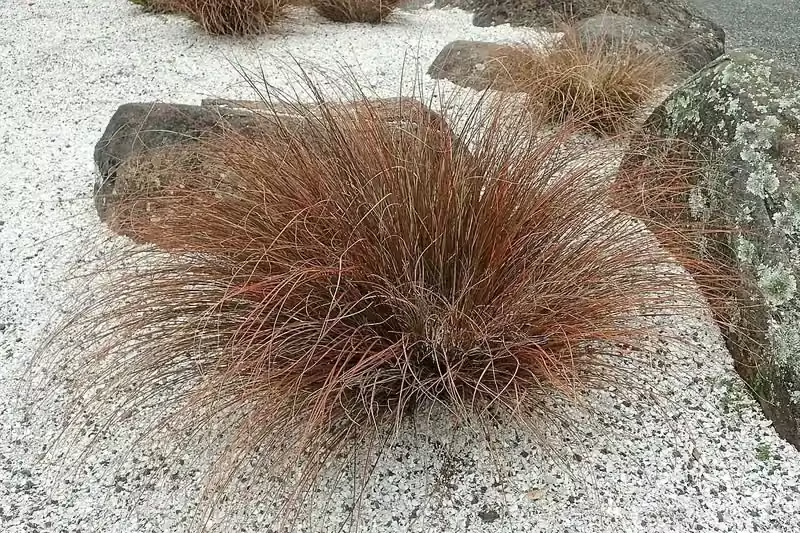
Orange Sedge
Carex testacea
A popular ornamental grass with stunning orange-tinted foliage, often used in similar landscaping themes.
Learn more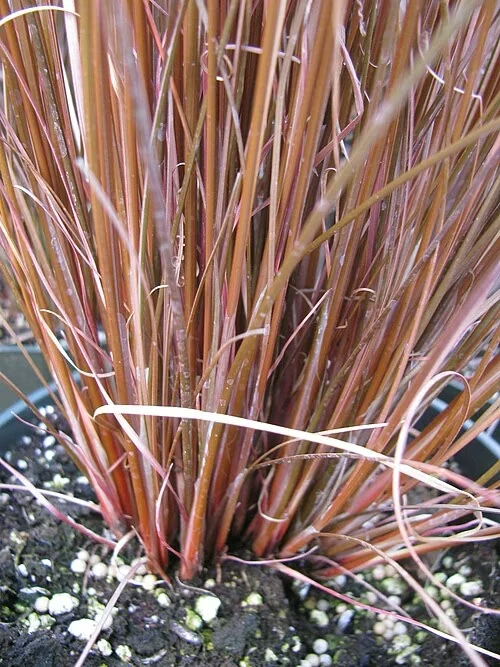
Buchanan's Sedge
Carex buchananii
An upright, reddish-brown sedge that shares the structural appeal of Carex litorosa .
Learn more
Carex Kaloides
Carex kaloides
A distinctive sedge with striking orange-yellow tufts, contrasting with the pale green/red of Sea Sedge.
Learn more
Glen Sedge
Carex flagellifera
A graceful, bronze-toned sedge with arching leaves, frequently used in native garden designs.
Learn morePlant Conservation
Carex litorosa faces threats from habitat loss due to coastal development, reclamation of salt marshes, and competition from invasive weeds. Its classification as "At Risk - Declining" highlights the need for continued monitoring and protection of its remaining natural populations. Gardeners can help by planting this species and raising awareness of its unique coastal niche.
Frequently Asked Questions
How tall does Carex litorosa grow?
Sea Sedge typically grows 60 to 80 cm tall, forming dense, erect clumps.
Is Carex litorosa salt-tolerant?
Yes, it has high salt tolerance and withstands regular inundation by brackish water.
Where does Carex litorosa grow naturally?
It grows on sandy tidal riverbanks, brackish marshes and estuary margins throughout the North, South and Stewart Islands.
What is the conservation status of Carex litorosa?
It is classed as At Risk - Declining, as natural salt-marsh habitats have been lost to development and drainage.
Sources and Further Reading
The botanical, growing, and conservation details for Sea Sedge (Carex litorosa) on this page draw on authoritative New Zealand plant references and citizen-science observation records. Consult the sources below for full technical records and the latest distribution data.