Sea Celery
Apium prostratum
Last updated:
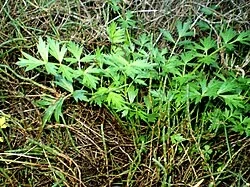
Apium prostratum, commonly known as Sea Celery or Native Sea Parsley, is a highly variable herb native to the coasts of New Zealand and Australia, and also found in southern South America. This biennial to perennial can be prostrate and spreading or upright, ranging from about 5 cm up to 1 metre tall. Its deeply divided, toothed leaves give off a strong celery-like scent, and tiny white to pinkish flowers cluster in spring and summer. Highly salt tolerant, it grows on headlands, dunes, brackish swamp margins and saline riverbanks. It has a long history as an edible plant, valued by Māori, Indigenous Australians and early European settlers for its anti-scurvy properties. Explore more coastal native plants in our native plant guide.
Plant Description
Identification and Physical Characteristics
Apium prostratum , commonly known as Sea Celery or Native Sea Parsley, is a highly variable herbaceous plant native to the coastal regions of Australia and New Zealand, and also found in southern South America. This biennial to perennial species can exhibit a prostrate (spreading) or upright growth habit, reaching heights from 5 cm up to 1 meter. Its distinctive leaves are often deeply divided with toothed leaflets and emit a strong, aromatic celery-like scent. Tiny white to pinkish flowers are produced in clusters during spring and summer, adding a subtle charm to its robust foliage. It is well-adapted to harsh coastal environments, where it plays a significant ecological role.
Quick Facts
| Scientific Name | Apium prostratum |
|---|---|
| Height | 5 cm - 1 meter (variable, prostrate to upright) |
| Spread | Variable, typically 30-100 cm (prostrate to upright) |
| Water Needs | Moderate to high, prefers moist soil, tolerates brackish conditions. |
| Light | Full sun to semi-shade (prefers some shade in hot summers). |
| Frost Tolerance | Moderate |
| Salt Tolerance | High |
| Growth Rate | Moderate |
| Lifespan | Biennial to perennial |
Climate Best Suited to
Apium prostratum is primarily found in coastal and estuarine environments across Australia, New Zealand, and parts of southern South America. It thrives in maritime climates, where it can tolerate salt-laden winds and occasional inundation by brackish water. Its adaptability allows it to grow in a range of temperatures, from temperate to sub-tropical coastal zones.
Regional Suitability
| City | Climate Suitability |
|---|---|
| Auckland | Suitable |
| Wellington | Suitable |
| Christchurch | Suitable (in sheltered coastal areas) |
| Dunedin | Suitable (in sheltered coastal areas) |
| Queenstown | Not suitable (inland, not coastal) |
Plant Habitat
Natural Occurrence and Ecology
Sea Celery is typically found in coastal habitats, including exposed headlands, sandy dunes, the margins of brackish swamps, and along saline river banks and wetlands. It is highly tolerant of salt exposure, making it a common sight in littoral zones. This species can also be found in disturbed coastal sites, showing resilience to various environmental pressures. Its preference is for moist, well-draining soils but it is adaptable to a variety of soil types often found in its coastal range.
Growing Requirements
Soil Requirements
Apium prostratum is adaptable to various soil types found in coastal environments, including sandy, loamy, and clay soils. It thrives in rich, moist, and well-draining conditions but can tolerate saline and even mildly alkaline or acidic soils. The key is consistent moisture without waterlogging.
- Well-drained sandy, loamy, or clay soils
- Moist conditions
- Tolerates saline soils
- Adaptable to mildly acidic, neutral, or mildly alkaline pH
Light Requirements
While Apium prostratum can tolerate full sun, especially in cooler coastal climates or with consistent moisture, it often benefits from semi-shade during the hottest parts of the day or in warmer regions. In its natural habitat, it can be found in full sun on exposed dunes and headlands, as well as in the partial shade of coastal scrub.
- Full sun to semi-shade
- Benefits from afternoon shade in hot climates
Water Requirements
Sea Celery requires consistently moist soil, reflecting its natural occurrence in coastal wetlands and damp areas. While it can tolerate some drought once established, regular watering is essential for vigorous growth, especially if grown in full sun or drier conditions. It is also well-adapted to brackish water conditions.
- Consistently moist soil
- Tolerates brackish water
- Drought tolerant once established
Planting and Establishing
Establishment Guidance
When planting Apium prostratum , select a location that provides rich, moist, and well-draining soil, ideally mimicking its natural coastal habitat. Ensure adequate space for its spreading or upright growth, depending on the variety. Plant in spring after the last frost or in autumn in milder climates. Consider its photosensitivity warning and plant where it won't be regularly brushed against if you are sensitive.
Ecological Role
Biodiversity and Ecosystem Impact
Apium prostratum plays a crucial ecological role in stabilizing coastal ecosystems. Its extensive root system helps bind sand dunes and prevent erosion, which is vital for the health of beachfronts and estuarine areas. It also provides valuable habitat and a food source for various native insects and coastal wildlife, contributing to the biodiversity of these fragile environments.
Uses & Significance
Garden Uses
Sea Celery is an excellent choice for culinary herb gardens, coastal gardens, and edible landscaping due to its celery-like flavor and adaptability to saline conditions. It can be grown in raised beds, containers, or directly in the ground. Its variable habit makes it suitable for groundcover or as a border plant in coastal-themed gardens.
- Culinary herb garden
- Coastal planting
- Edible landscaping
- Groundcover
- Container planting
Ecological Value
The ecological value of Apium prostratum extends beyond erosion control; it supports local biodiversity by offering food and shelter. Its flowers attract pollinators, and its foliage can be a food source for some herbivorous insects and birds in coastal areas. It is an integral part of the ecological succession in dynamic coastal environments.
- Dune stabilization and erosion control
- Food source for wildlife
- Habitat for coastal insects
- Supports coastal ecosystem health
Landscaping Uses
In landscaping, Apium prostratum is highly valued for its resilience in coastal and difficult sites. It can be used as an effective groundcover on banks, a border plant, or to naturalize areas prone to salt spray. Its fresh green foliage provides year-round interest, and its variable growth form offers flexibility in design. It is particularly useful for low-maintenance, ecologically-focused gardens.
Seasonal Care Calendar
Spring
In spring, Apium prostratum will begin active growth. Ensure consistent moisture, especially as temperatures rise. If propagating by division, spring is the ideal time to do so. Fertilize lightly with a balanced organic fertilizer if the soil is poor.
Summer
During summer, maintain consistent soil moisture, particularly if grown in full sun. Provide some afternoon shade in very hot climates to prevent leaf scorch. Harvest leaves regularly for culinary use to encourage fresh growth.
Autumn
As autumn approaches, reduce watering frequency as temperatures cool. The plant may continue to produce edible leaves. Consider collecting seeds if desired for propagation the following spring. Prepare for potential frosts in colder areas.
Winter
In regions with mild winters, Apium prostratum may remain evergreen. In colder areas, it might die back to the ground but will often resprout from its perennial rootstock in spring. Protect from severe frosts with mulch or by bringing container-grown plants indoors.
When to Prune and How Much
Apium prostratum requires minimal pruning, primarily for harvesting leaves for culinary use or to maintain its shape. Regular harvesting encourages bushier growth. Dead or yellowing leaves can be removed as needed to keep the plant tidy and healthy. If the plant becomes leggy, a light trim can promote new growth.
- Regular harvesting of leaves
- Remove dead or yellowing foliage
- Light trim to promote bushiness
Pruning is best done with clean, sharp shears to prevent damage to the plant.
How to Grow Sea Celery
Cultivating Sea Celery ( Apium prostratum ) is a rewarding endeavor for any gardener interested in New Zealand's unique flora. This species can be propagated through several methods, each requiring specific conditions to ensure healthy growth and establishment. Successful propagation depends on mimicking the plant's natural environment and providing consistent care during the early stages of development.
From Seed
Propagation of Apium prostratum from seed is a viable method, though germination can sometimes be slow and erratic. Fresh seeds are generally more successful. Cold stratification (exposing seeds to cold, moist conditions) can improve germination rates, mimicking their natural winter exposure. Seeds should be sown thinly on a well-draining seed-raising mix and kept consistently moist.
- Collect fresh seeds in late summer or autumn.
- Perform cold stratification if desired (mix seeds with moist sand, refrigerate for 4-6 weeks).
- Sow seeds thinly on a fine, well-draining seed-raising mix in spring or early autumn.
- Lightly cover seeds with a thin layer of mix or grit.
- Keep the soil consistently moist but not waterlogged.
- Place in a warm, bright location, ideally with some indirect light.
- Germination can take several weeks to months.
- Once seedlings are robust enough, transplant them into individual pots or garden beds.
Ensure consistent moisture during germination and early growth stages to maximize success.
From Cuttings
For those wishing to replicate specific characteristics of a parent plant, vegetative propagation via cuttings is the preferred method. This technique ensures that the new plants are genetically identical to the source. Semi-hardwood cuttings taken during the appropriate season usually yield the best results for this species.
Propagation from cuttings is less common for Apium prostratum due to its growth habit, but division of established plants is a highly effective method. This allows for the rapid establishment of new plants that are genetically identical to the parent.
Additional Methods
Depending on the growth habit of Sea Celery, other methods such as division or layering might also be viable options. Division is particularly suitable for plants that form dense clumps or have spreading root systems, while layering can be used for species with trailing or flexible stems.
Division of established clumps in spring is an easy and reliable method for propagating Apium prostratum . This also helps invigorate older plants.
- In early spring, carefully dig up a mature plant.
- Gently separate the clump into smaller sections, ensuring each section has roots and several healthy shoots.
- Replant the divisions immediately into prepared soil at the same depth as the original plant.
- Water thoroughly after planting and keep the soil moist until new growth indicates establishment.
Pests & Diseases
Apium prostratum is generally robust and resistant to most common pests and diseases when grown in suitable conditions. Overwatering and poor drainage can lead to root rot. Aphids or slugs might occasionally be an issue, but severe infestations are rare. Maintaining good air circulation and appropriate moisture levels helps prevent most problems.
Cultural Significance
Sea Celery holds cultural significance for both Māori in New Zealand and Indigenous Australian communities, who traditionally used it for culinary and medicinal purposes. Early European settlers also valued it as a food source, particularly for its anti-scurvy properties. Its role in traditional diets and its use in making canoes watertight (Māori) highlight its historical importance.
- Traditional food source (Māori and Indigenous Australians)
- Anti-scurvy properties (early settlers)
- Used to make canoes watertight (Māori)
Bonus Tip
To fully enjoy the unique flavour of Sea Celery, try harvesting the younger, tender leaves for salads, or add them to soups and stir-fries just before serving to retain their fresh, slightly salty, and peppery notes.
Related Plants
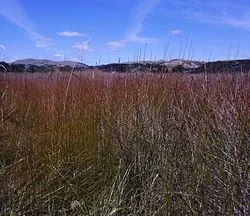
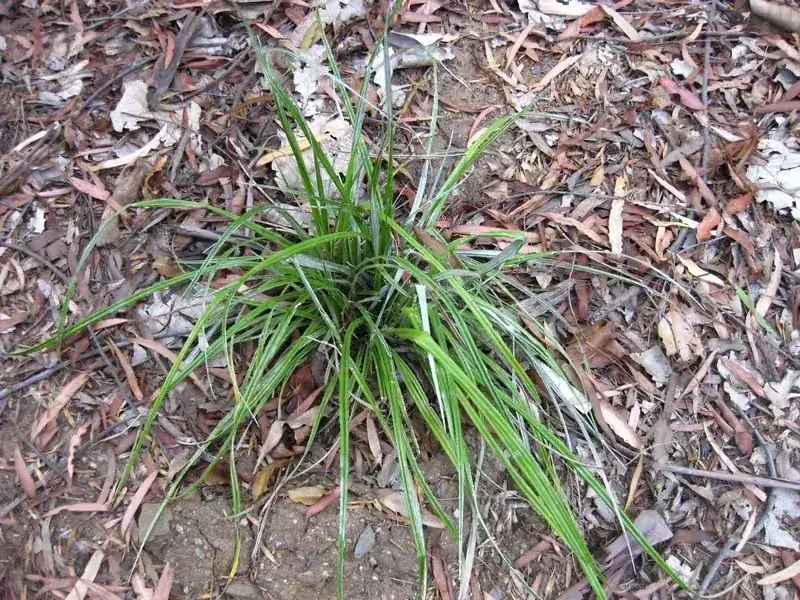
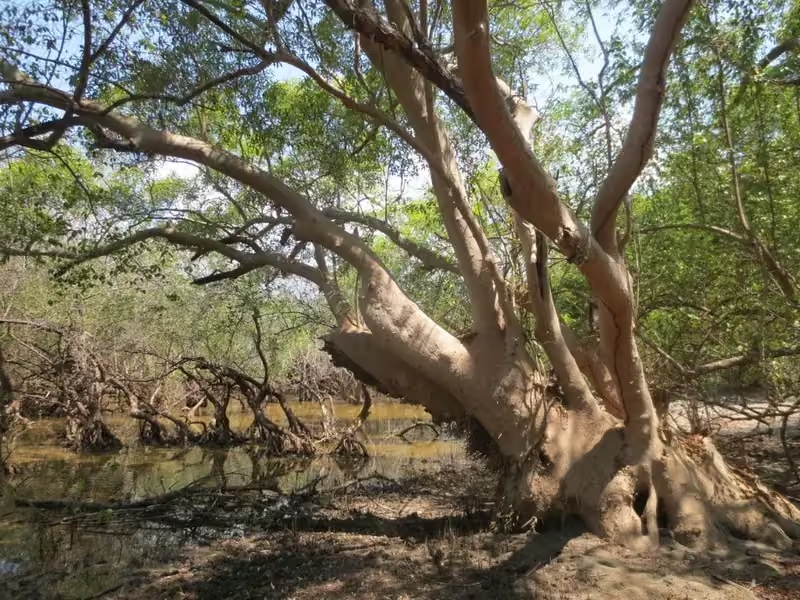
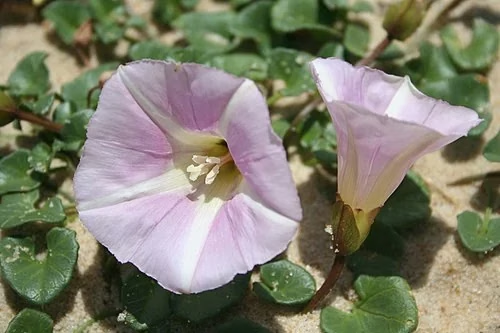
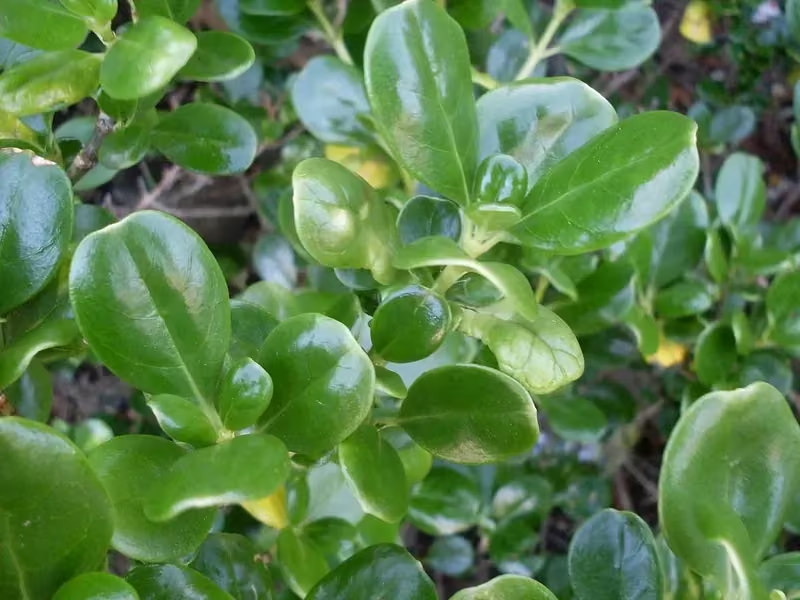
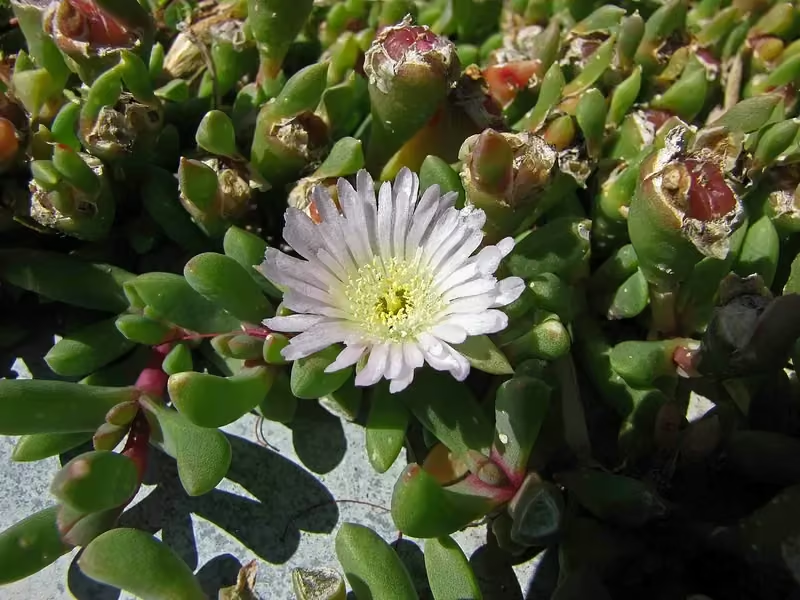
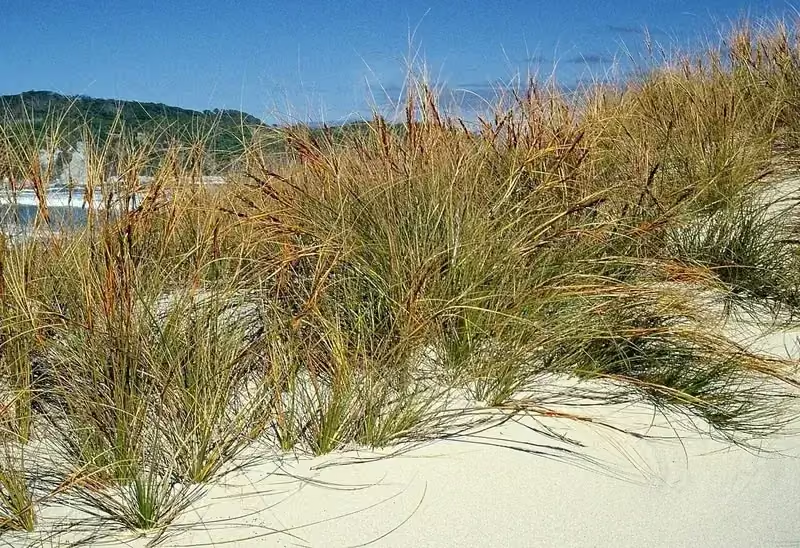
Explore other native plants that share similar characteristics or habitats with Sea Celery ( Apium prostratum ), offering further insights into New Zealand's diverse flora. These related species provide context and opportunities for complementary planting in your garden.

Plant Conservation
Conservation Status and Threats
While Apium prostratum is widespread in its coastal habitats across New Zealand and Australia and is not currently considered threatened, its specific varieties or localized populations may face pressures from habitat degradation due to coastal development and introduced weeds. Conservation efforts focus on protecting coastal ecosystems where it naturally occurs and promoting its use in restoration plantings to help stabilize dunes and prevent erosion.
Frequently Asked Questions
How big does Apium prostratum grow?
It is highly variable, ranging from a low prostrate herb about 5 cm tall to an upright plant up to 1 metre.
Is Sea Celery edible?
Yes, its aromatic celery-scented leaves are edible and were traditionally used as food, valued for their anti-scurvy properties.
Is Sea Celery salt tolerant?
Yes, it has high salt tolerance and grows in coastal and brackish habitats such as dunes and saline riverbanks.
Where does Apium prostratum grow naturally?
It grows in coastal habitats including headlands, sandy dunes, brackish swamp margins and saline wetlands.
Sources and Further Reading
The botanical, growing, and conservation details for Sea Celery (Apium prostratum) on this page draw on authoritative New Zealand plant references and citizen-science observation records. Consult the sources below for full technical records and the latest distribution data.