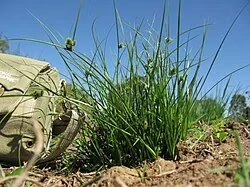
Knob Sedge
Carex inversa
Last updated:
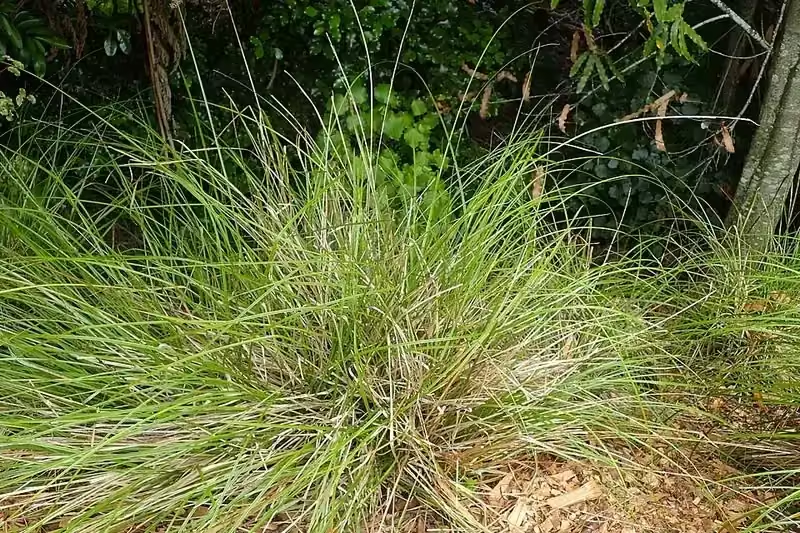
Carex inversa, commonly called Knob Sedge, is a rhizomatous, extensively creeping perennial sedge that forms a dense, matted sward of yellow-green foliage 0.3 to 0.75 m tall. Its soft, grass-like leaves are generally shorter than its culms, which carry a distinctive pale green ovate head of 2 to 5 closely packed spikes. Indigenous but not endemic, it grows in coastal to montane regions of New Zealand in scrub, open forest and grassland, and readily colonises disturbed ground, becoming a common lawn plant in northern areas. It is prized for resilience, tolerating grazing, trampling and mowing. Explore more native grasses and flaxes in our native plant guide.
Plant Description
Knob Sedge ( Carex inversa ) is a rhizomatous, extensively creeping perennial sedge that forms a dense, matted sward of yellow-green to green foliage. It typically grows to a height of 0.3 to 0.75 meters. Its soft, grass-like leaves are generally shorter than its culms (stems). The plant produces a pale green or bright green ovate head inflorescence, consisting of 2-5 closely packed spikes. This species is known for its resilience and ability to tolerate various environmental pressures.
Quick Facts
| Scientific Name | Carex inversa |
|---|---|
| Height | 0.3-0.75 meters |
| Spread | 0.5-1 meter |
| Water Needs | Moderate (Tolerates dry conditions once established) |
| Light | Full Sun to Partial Shade |
| Frost Tolerance | Good (Found in coastal to montane regions) |
| Salt Tolerance | Low to Moderate (Found in coastal regions, but predominantly freshwater) |
| Growth Rate | Fast |
| Lifespan | Perennial |
Climate Best Suited to
Carex inversa is native to New Zealand, Australia, and Norfolk Island, indicating its adaptability to temperate to subtropical climates. In New Zealand, it is found in coastal to montane regions, primarily in coastal to lowland areas, suggesting it thrives in a wide range of conditions from mild coastal to cooler montane environments. Its prevalence as an urban weed in northern New Zealand highlights its resilience to human-modified landscapes.
Regional Suitability
| City | Climate Suitability |
|---|---|
| Auckland | Highly Suitable |
| Wellington | Highly Suitable |
| Christchurch | Suitable |
| Dunedin | Suitable |
| Hamilton | Highly Suitable |
| Tauranga | Highly Suitable |
| Napier | Suitable |
| Queenstown | Moderately Suitable (requires good drainage) |
Plant Habitat
In New Zealand, Carex inversa inhabits coastal to montane regions, predominantly found in coastal to lowland areas within scrub, open forest, and grassland habitats. It has also successfully adapted to disturbed environments, becoming a common urban weed, particularly in northern New Zealand lawns. Its ability to tolerate grazing, trampling, and mowing allows it to persist in a variety of challenging, human-influenced landscapes.
Growing Requirements
Soil Requirements
Carex inversa is highly adaptable and can grow in a wide range of soil types, from disturbed urban soils to those found in open forests and grasslands. While it prefers moist, well-drained conditions, its resilience allows it to tolerate periods of dryness and compaction. Good drainage is beneficial, but its ability to persist in disturbed sites indicates it is not overly particular about soil composition.
- Prefers moist, well-drained
- Tolerates wide range of soil types
- Resilient to compaction
Light Requirements
This sedge thrives in full sun to partial shade. Its natural habitats include open grasslands and forest clearings, where it receives ample light. While it can tolerate some shade, particularly in hotter climates, optimal growth and its characteristic dense sward are best achieved with good light exposure.
- Full Sun to Partial Shade
- Optimal growth in good light
Water Requirements
Carex inversa prefers moist conditions but is notably drought-tolerant once established, thanks to its extensive rhizomatous root system. Although it can be found in damp areas, it is not a true wetland obligate and can withstand periods of reduced moisture. Consistent moisture during establishment is beneficial, but mature plants are quite resilient to drier spells.
- Prefers moist conditions
- Drought-tolerant once established
- Not a wetland obligate
Planting and Establishing
When planting Carex inversa , choose a site that receives full sun to partial shade and has well-drained soil, though it tolerates a range of soil types. Dig a hole slightly larger than the root ball. Place the plant in the hole, ensuring the crown is level with the soil surface. Backfill with soil, gently firming around the base, and water thoroughly to help establishment. Due to its aggressive spreading habit, consider its placement carefully, especially in manicured gardens, or use barriers to restrict its spread if desired.
Ecological Role
Carex inversa plays an ecological role in stabilizing soil, particularly in disturbed areas and grasslands, due to its extensive creeping rhizomes. It provides ground cover that can help suppress other weeds. While often considered an urban weed, in naturalized settings, it can offer habitat and a food source for some insects and small ground-dwelling fauna, contributing to local biodiversity.
Uses & Significance
Garden Uses
Knob Sedge is an excellent groundcover for difficult, disturbed areas where erosion control is needed. Its resilient nature makes it suitable for revegetation projects, and it can tolerate light foot traffic. However, its aggressive spreading habit means it should be used with caution in formal gardens unless contained.
- Groundcover for difficult areas
- Erosion control
- Revegetation projects
- Tolerates light foot traffic
Ecological Value
Beyond its role in soil stabilization, Carex inversa contributes to ecological health by providing protective ground cover. It can support microfauna and some insect species, especially in open, grassy habitats. Its ability to colonize disturbed sites helps in early succession and natural recovery processes.
- Soil stabilization
- Ground cover and weed suppression
- Supports microfauna and insects
- Aids in natural recovery of disturbed sites
Landscaping Uses
This sedge is highly effective for large-scale landscaping where a tough, low-maintenance groundcover is required, such as on embankments, roadside verges, or in naturalistic planting schemes. Its fine texture and green foliage can create a uniform look, but its spreading habit necessitates careful planning.
Seasonal Care Calendar
Spring
As new growth begins, Carex inversa benefits from adequate moisture to support its vigorous spread. This is a good time to assess its growth and consider division if it is becoming too dense or spreading beyond desired areas. Light fertilization can encourage lush foliage.
- Ensure adequate moisture
- Consider division
- Light fertilization (optional)
Summer
During summer, Carex inversa is quite drought-tolerant once established, but occasional deep watering during prolonged dry spells will maintain its vibrant green appearance. It tolerates mowing, so regular trimming can keep it neat if used as a lawn substitute or groundcover.
- Water during prolonged dry spells
- Tolerates mowing
- Trim for neatness
Autumn
In autumn, reduce watering as temperatures cool. This is another good period for division if needed. Allow spent seed heads to remain for self-seeding, or remove them to limit spread. The plant will begin to slow its growth in preparation for winter.
- Reduce watering
- Divide plants (if needed)
- Manage seed heads for spread control
Winter
Carex inversa is generally hardy in winter and requires minimal care. In colder regions, some browning of foliage may occur, but it will typically rebound in spring. Ensure good drainage to prevent root rot in wet winter conditions.
- Minimal care
- Ensure good drainage
- Foliage may brown in cold, but recovers
When to Prune and How Much
Pruning Carex inversa is typically done to manage its spread and maintain a tidy appearance. It tolerates mowing and can be trimmed back hard in late winter or early spring to rejuvenate the plant and remove any winter-damaged foliage. Regular mowing can keep it as a short groundcover or lawn substitute. Excessive pruning of healthy foliage is generally unnecessary.
- Manage spread and appearance
- Tolerates mowing
- Trim back hard in late winter/early spring
- Remove winter-damaged foliage
Regular trimming can help maintain its desired form, especially if used in a groundcover capacity.
How to Grow Knob Sedge
Cultivating Knob Sedge ( Carex inversa ) is a rewarding endeavor for any gardener interested in resilient native flora. This species can be propagated through several methods, each requiring specific conditions to ensure healthy growth and establishment. Successful propagation depends on mimicking the plant's natural environment and providing consistent care during the early stages of development, keeping in mind its vigorous spreading habit.
From Seed
Propagation from seed is an effective method for Carex inversa , which spreads easily by self-seeding. Seeds should be collected when ripe, usually in late summer or autumn. They typically do not require stratification and can be sown directly onto a moist, well-draining seed-raising mix. Lightly cover the seeds and keep the substrate consistently moist until germination. Due to its aggressive nature, seeds often germinate readily and can establish quickly.
- Collect ripe seeds in late summer/autumn.
- Sow directly onto moist, well-draining seed-raising mix.
- Lightly cover seeds.
- Keep consistently moist until germination.
Ensure fresh seeds are used for best viability. Germination rates are generally high, and seedlings establish quickly.
From Cuttings
Propagation from cuttings is not the primary method for Carex inversa , as its rhizomatous nature makes division more straightforward. However, it can be attempted by taking short sections of rhizome with active growth points. Plant these sections horizontally just beneath the soil surface in a moist, well-draining medium. Keep consistently damp and in a warm location to encourage rooting. Success rates are generally lower than with division.
- Take short rhizome sections with growth points.
- Plant horizontally just beneath soil surface.
- Use a moist, well-draining medium.
- Keep damp and warm to encourage rooting.
Additional Methods
The most successful and easiest method for propagating Carex inversa is by division. Mature clumps can be dug up and separated into smaller sections at almost any time of year, though spring or early autumn are ideal. Ensure each division has a healthy root system and some foliage. Replant the divisions immediately into prepared soil and water thoroughly. This method is also effective for controlling its spread and rejuvenating older plants.
- Divide mature clumps in spring or early autumn.
- Separate into sections with healthy roots and foliage.
- Replant immediately into prepared soil.
- Water thoroughly for establishment.
Pests & Diseases
Carex inversa is a very robust and healthy plant, rarely affected by significant pests or diseases. Its resilience to grazing and trampling contributes to its general hardiness. In extremely wet and poorly drained conditions, it might be susceptible to root rot, but this is uncommon. Maintaining good air circulation and appropriate moisture levels will ensure a healthy plant.
Cultural Significance
While Carex inversa might not hold specific traditional Māori cultural uses compared to more prominent native plants, all native flora are considered part of Te Ao Māori (the Māori worldview). Its ability to thrive in and stabilize disturbed areas reflects a form of resilience and adaptation, contributing to the overall ecological tapestry of New Zealand.
- Part of Te Ao Māori (Māori worldview)
- Reflects resilience and adaptation
- Contributes to ecological tapestry
Bonus Tip
Consider using Carex inversa as a tough, low-maintenance alternative to traditional lawns in areas that receive full sun and experience light foot traffic. Its creeping habit will form a dense, green sward that requires minimal care once established.
Related Plants
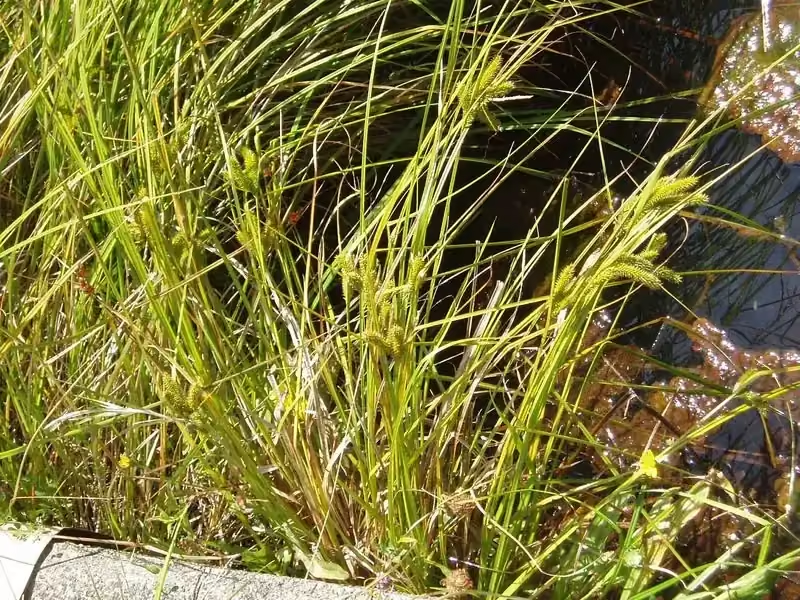
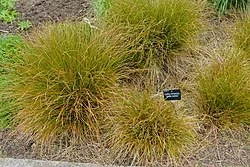
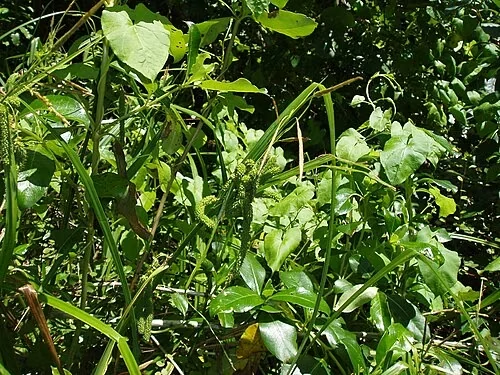
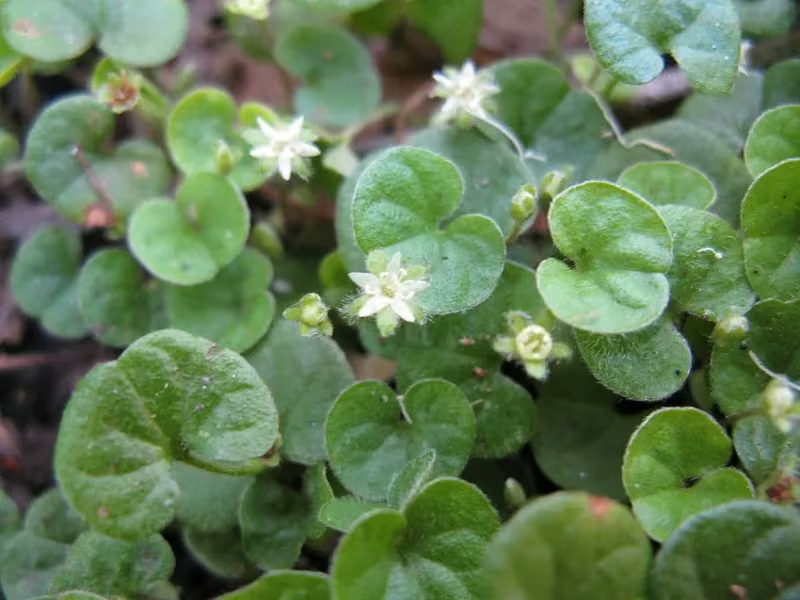
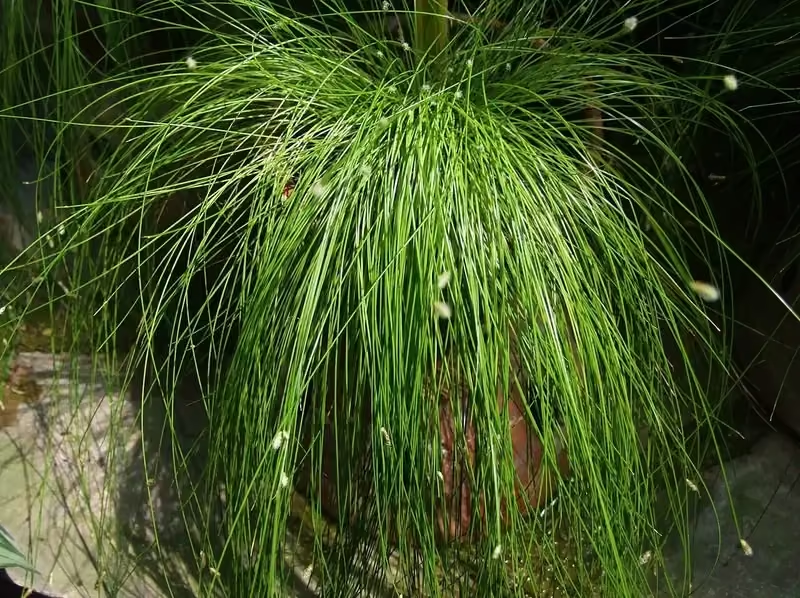
Explore other native plants that share similar characteristics or habitats with Knob Sedge ( Carex inversa ), offering further insights into New Zealand's diverse flora. These related species provide context and opportunities for complementary planting in your garden. For another native grass or sedge, explore Two-Tipped Sedge.

Plant Conservation
Carex inversa is classified as 'Indigenous (Non-endemic)' in New Zealand, meaning it is native to the country but also found elsewhere. Regionally, it is considered 'Not Threatened' in Otago. Its resilience and ability to thrive in disturbed habitats contribute to its stable conservation status. However, continuous monitoring of its interaction with endemic species is important, particularly as it can be an aggressive colonizer in some environments.
Frequently Asked Questions
How tall does Carex inversa grow?
Knob Sedge grows 0.3 to 0.75 m tall and spreads 0.5 to 1 m via creeping rhizomes.
How fast does Carex inversa grow?
It has a fast growth rate and spreads readily through creeping rhizomes.
Does Carex inversa tolerate mowing and dry conditions?
Yes, it tolerates grazing, trampling and mowing, and copes with dry conditions once established.
Where does Carex inversa grow naturally?
It grows in coastal to montane regions of New Zealand in scrub, open forest, grassland and disturbed ground.
Sources and Further Reading
The botanical, growing, and conservation details for Knob Sedge (Carex inversa) on this page draw on authoritative New Zealand plant references and citizen-science observation records. Consult the sources below for full technical records and the latest distribution data.