Climbing Convolvulus
Calystegia tuguriorum
Last updated:
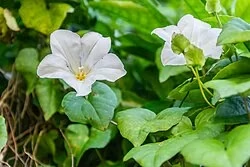
Climbing convolvulus (Calystegia tuguriorum) is a vigorous perennial vine indigenous to New Zealand, found through the North, South, Stewart and Chatham Islands. It scrambles and twines up to 10 metres high on slender, much-branched stems, its heart-shaped leaves forming dense cover over other vegetation and structures. Through the warmer months it produces striking funnel-shaped flowers, usually white but sometimes tinged pink, measuring 25 to 60 mm across, followed by broad capsules holding smooth orange seeds. It grows in coastal and lowland shrubland, forest margins and disturbed sites, thriving in full sun. Fast-growing and salt tolerant, it is known by Māori names including pouwhiwhi. Explore more native vines in our native plant guide.
Plant Description
Calystegia tuguriorum , the Climbing Convolvulus, is a perennial vine or scrambling plant notable for its numerous slender, much-branched, and vigorously twining stems. Its leaves are typically broad-ovate to deltoid or reniform, distinctly heart-shaped, with entire or sinuate margins and a cordate base. The foliage is lush and can form dense cover. The plant produces striking funnel-shaped flowers, usually white but occasionally tinged with pink, measuring between 25-60 mm in diameter. These prominent blooms appear throughout the warmer months. Following flowering, it develops broad-ovoid capsules, 8-12 mm long, which contain smooth, orange seeds. This species is well-adapted to climbing over other vegetation or structures, showcasing its elegant flowers.
Quick Facts
| Scientific Name | Calystegia tuguriorum |
|---|---|
| Height | Up to 10 m (Climbing) |
| Spread | Vigorous (Climbing) |
| Water Needs | Moderate |
| Light | Full Sun |
| Frost Tolerance | Moderate |
| Salt Tolerance | High |
| Growth Rate | Fast (Vigorous) |
| Lifespan | Perennial |
| Flower Colour | White (sometimes pink) |
| Flower Size | 25-60 mm diameter |
| Leaf Shape | Heart-shaped |
Climate Best Suited to
Climbing Convolvulus is indigenous to New Zealand, found across the North, South, Stewart, and Chatham Islands, as well as in Chile and the Juan Fernandez Islands. It thrives in coastal to lowland areas, particularly in shrubland, forest margins, and disturbed sites. It prefers full sun and moist, well-drained soil, showing adaptability to various conditions, including some drought once established and moderate frost.
Regional Suitability
| City | Climate Suitability |
|---|---|
| Well-suited to temperate climates, particularly coastal and lowland regions of New Zealand. Prefers full sun and moist, well-drained soil. | |
Plant Habitat
Calystegia tuguriorum is indigenous to New Zealand, distributed throughout the North, South, Stewart, and Chatham Islands. Its natural habitats include coastal and lowland shrubland, forest margins, and occasionally wetlands. It also colonizes grey scrub, bare lava, and open rock-strewn ground. This vigorous vine is often found climbing over other vegetation or structures, benefiting from full sun exposure and moist, well-drained soils. Its adaptability allows it to thrive in a variety of disturbed and natural settings.
Growing Requirements
Soil Requirements
Climbing Convolvulus prefers moist, well-drained soil. It is adaptable to a range of soil types, from sandy to loamy, as long as drainage is adequate. Enriching the soil with organic matter can support its vigorous growth.
- Moist, well-drained soil
- Adaptable to various soil types
- Benefits from organic matter
Light Requirements
Calystegia tuguriorum thrives in full sun exposure. While it may tolerate very light partial shade, full sun promotes the most vigorous growth and abundant flowering.
- Full Sun (essential for best performance)
Water Requirements
This vine requires moderate watering, preferring consistently moist soil during its active growing season. Once established, it exhibits drought tolerance, but regular watering during prolonged dry spells will support healthier growth and more prolific flowering.
- Moderate watering
- Drought tolerant (once established)
- Consistently moist soil (during growing season)
Planting and Establishing
When planting Climbing Convolvulus, select a site that offers full sun and moist, well-drained soil. Due to its vigorous nature, provide a strong support structure such as a trellis, fence, or allow it to climb through hedges or robust shrubs. Dig a planting hole twice as wide as the root ball and of the same depth. Amend heavy soils with compost to improve drainage and fertility. Water thoroughly after planting and maintain consistent moisture during its establishment phase. It can be easily propagated from seed or rooted pieces. Be mindful of its potential to spread, and site it carefully to prevent it from outcompeting less vigorous plants.
Ecological Role
As an indigenous New Zealand perennial vine, Calystegia tuguriorum plays a role in coastal to lowland ecosystems by providing ground cover and climbing vegetation. Its vigorous growth can help stabilize disturbed soils and provide shelter for small fauna. The large, attractive flowers likely serve as a nectar source for various native insects, contributing to local pollination networks. While its robust growth can be challenging in a garden setting, in its natural habitat, it contributes to the structural diversity of shrubland and forest margins. It forms part of the rich vines and climbers of New Zealand.
Uses & Significance
Garden Uses
Climbing Convolvulus is valued in gardens for its attractive foliage and large, showy white to pink flowers that provide a vibrant display. It is an excellent choice for covering fences, trellises, or unsightly structures. It can be allowed to scramble through robust hedges or larger shrubs, adding floral interest. Its vigorous nature means it can quickly establish and provide extensive coverage.
- Screening & Covering Structures
- Climber for Hedges & Trellises
- Ornamental Vine
- Ground Cover (in suitable areas)
Ecological Value
The ecological value of Calystegia tuguriorum lies in its indigenous status and its contribution to the structural diversity of its native habitats. It offers cover and shelter for wildlife and provides a nectar source for pollinators. Its ability to colonize disturbed areas contributes to ecological succession and soil stabilization.
- Indigenous Species
- Habitat Provider
- Pollinator Food Source
- Soil Stabilizer (in disturbed areas)
Landscaping Uses
Calystegia tuguriorum can be an impactful landscaping plant when its vigorous growth is managed appropriately. It is ideal for naturalizing areas, covering large banks, or as a fast-growing screen. Its large, heart-shaped leaves and showy flowers create a lush, abundant effect. Best used where it has ample space to spread or where its climbing habit can be directed, such as along boundary fences or on large pergolas.
Seasonal Care Calendar
Spring
New growth emerges vigorously. Ensure adequate moisture as the plant actively grows. Provide support if needed. Light fertilization can encourage strong growth.
- Monitor vigorous new growth
- Ensure adequate moisture
- Provide support
- Light fertilization (optional)
Summer
Peak flowering period. Maintain consistent moisture, especially during dry spells. Prune to manage growth and prevent over-smothering of other plants.
- Peak flowering
- Consistent moisture
- Prune to manage growth
Autumn
Growth may slow. Reduce watering as temperatures cool. Perform any significant structural pruning needed before winter dormancy. Collect seeds if desired.
- Reduce watering
- Structural pruning
- Seed collection
Winter
The plant may become dormant or semi-dormant depending on climate. Ensure good drainage. Protect roots from severe frost if in very cold areas.
- Dormancy/Semi-dormancy
- Ensure good drainage
- Protect from severe frost (if applicable)
When to Prune and How Much
Pruning of Calystegia tuguriorum is essential to manage its vigorous growth and prevent it from becoming overly invasive or smothering other plants.
- Light pruning and training can be done throughout the growing season to direct its climbing habit.
- More significant structural pruning or cutting back can be performed in late autumn or early spring when the plant is dormant or just emerging.
- Regularly cut back any unwanted stems or runners that are spreading into undesired areas.
- Remove spent flowers to encourage further blooming, though this plant is typically prolific.
Due to its strong root system, persistent cutting back is often required to control its spread.
How to Grow Climbing Convolvulus
Cultivating Climbing Convolvulus ( Calystegia tuguriorum ) can be a rewarding experience for those who appreciate its vigorous growth and attractive flowers, provided its spreading habit is managed. As an indigenous New Zealand vine, it is well-suited to a variety of temperate climates and can be easily propagated through seeds or rooted pieces. Understanding its growth patterns and providing appropriate support are key to successful cultivation.
From Seed
Propagation from seed is a straightforward method for Calystegia tuguriorum .
- Collect the smooth, orange seeds from mature capsules in autumn.
- Seeds often benefit from scarification (gently scratching the hard seed coat) or soaking in warm water for 24 hours to improve germination rates.
- Sow seeds in spring in a well-draining seed-raising mix. Lightly cover the seeds.
- Keep the soil consistently moist and provide full sun exposure.
- Germination typically occurs within a few weeks.
- Once seedlings are large enough to handle, prick them out into individual pots.
- Grow on in a protected, sunny location until they are robust enough for planting out.
From Cuttings/Rooted Pieces
This is a very effective and easy method due to the plant's natural tendency to spread via rhizomes and root from nodes.
- Take stem cuttings with a few nodes in spring or summer. Insert them into a moist, well-draining potting mix.
- Alternatively, detach rooted sections of existing plants.
- Plant the cuttings or rooted pieces directly into the desired location, ensuring the soil is moist and well-drained.
- Keep consistently watered until new growth is evident and the plant is well-established.
- This method offers quick establishment and ensures genetic identicalness to the parent plant.
Additional Considerations
Due to its vigorous growth, it is crucial to select the planting site for Climbing Convolvulus carefully. Provide strong support for its climbing stems. If left unchecked, it can quickly cover and potentially smother smaller plants. Regular pruning and diligent management of its spread will ensure it remains an attractive feature rather than a nuisance. Consider growing it in a contained space or where its spread can be easily controlled.
Pests & Diseases
Climbing Convolvulus ( Calystegia tuguriorum ) is generally a robust and healthy plant, with good natural resistance to most pests and diseases. When issues do arise, they are often related to environmental stress or specific conditions.
- Aphids: Occasionally, aphids might colonize new growth. These can usually be managed with a strong jet of water or organic insecticidal soaps.
- Fungal Issues: In overly humid or poorly ventilated conditions, some fungal diseases like powdery mildew might appear, especially on dense foliage. Ensuring good air circulation can help prevent this.
- Root Rot: While it prefers moist soil, prolonged waterlogging can lead to root rot. Good drainage is essential.
- Snails and Slugs: Young shoots and leaves might be susceptible to snails and slugs, particularly in damp conditions.
Overall, maintaining healthy growing conditions-full sun, moist well-drained soil, and good air circulation-is the best defense against pests and diseases for Climbing Convolvulus.
Cultural Significance
Climbing Convolvulus ( Calystegia tuguriorum ) holds cultural significance as an indigenous New Zealand plant, known by several Māori names including pōuwhiwhi, pōwhiwhi, and rarotawake. Its widespread distribution across the main islands and its vigorous growth habit likely made it a familiar plant in traditional Māori landscapes. While specific traditional uses are not extensively documented in the same way as some other native plants, its presence contributes to the rich ethnobotanical heritage and biodiversity of Aotearoa. As an indigenous species, it is an integral part of New Zealand's unique natural flora.
- Indigenous to New Zealand
- Known by Māori names (pōuwhiwhi, pōwhiwhi, rarotawake)
- Contributes to ethnobotanical heritage
- Part of unique natural flora
Bonus Tip
To highlight the beauty of Climbing Convolvulus without letting it overtake your garden, grow it on a dedicated trellis or allow it to scramble through a robust, large shrub or small tree that can withstand its vigorous growth. Regular pruning will help maintain its form and prevent unwanted spread.
Related Plants
Explore other native vines and climbers that share similar characteristics or habitats with Climbing Convolvulus ( Calystegia tuguriorum ), offering further insights into New Zealand's diverse flora. These related species provide context and opportunities for complementary planting in your garden. For another native vine, explore Kūmara.


Plant Conservation
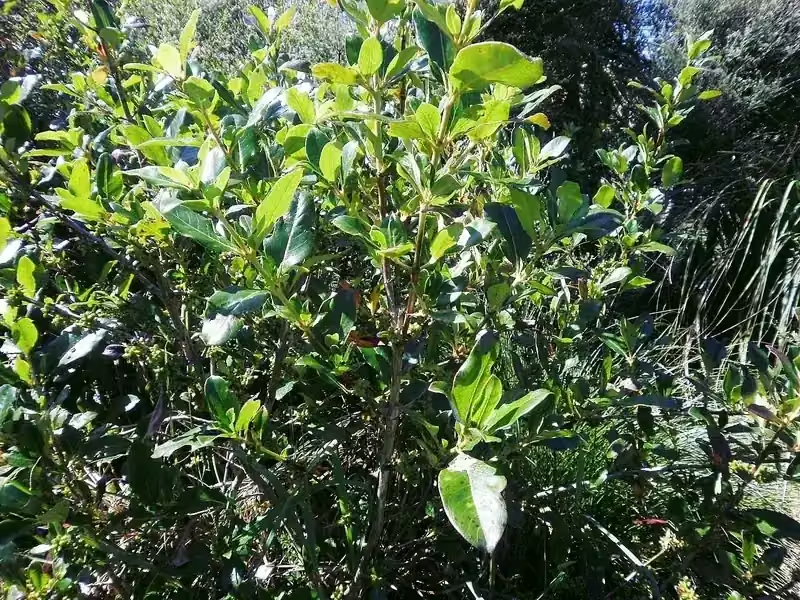
Calystegia tuguriorum is classified as "Not Threatened" under the New Zealand Threat Classification System. This status indicates that the species has a healthy and stable population across its natural range in New Zealand and is not currently facing immediate risks of extinction. Its adaptability and vigorous growth contribute to its resilience in various coastal and lowland habitats, ensuring its continued presence as an indigenous component of New Zealand's unique flora. Ongoing monitoring and responsible land management are key to its sustained success.
Frequently Asked Questions
How high does climbing convolvulus grow?
It is a vigorous twining vine that can climb up to about 10 metres over other vegetation and structures.
What do Calystegia tuguriorum flowers look like?
It bears funnel-shaped flowers, usually white and sometimes tinged pink, measuring 25 to 60 mm in diameter.
Where does climbing convolvulus grow naturally?
It grows across the North, South, Stewart and Chatham Islands in coastal and lowland shrubland, forest margins and disturbed sites.
How fast does climbing convolvulus grow?
It is fast and vigorous, and is salt tolerant with moderate frost tolerance in full sun.
Sources and Further Reading
The botanical, growing, and conservation details for Climbing Convolvulus (Calystegia tuguriorum) on this page draw on authoritative New Zealand plant references and citizen-science observation records. Consult the sources below for full technical records and the latest distribution data.