Moonwort
Botrychium lunaria
Last updated:
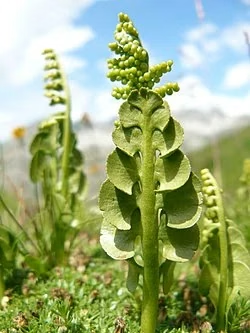
Botrychium lunaria, commonly called Moonwort, is a small, fleshy, hairless deciduous fern usually only 5 to 25 cm tall. Each plant typically produces a single frond divided into two parts: a fleshy sterile blade bearing 4 to 9 pairs of dark green, fan-shaped or half-moon-shaped leaflets, and a taller fertile stalk carrying grape-like clusters of orange-brown spore capsules. Those crescent-shaped leaflets give the fern both its common and scientific names. A circumpolar species, in New Zealand it is confined to specific subalpine and alpine parts of the South Island, favouring open, undisturbed turf on near-neutral to lime-rich soils at roughly 760 to 1500 m. It is ranked Nationally Critical. Explore more native ferns in our native plant guide.
Plant Description
Botrychium lunaria , commonly known as Moonwort, is a small, fleshy, hairless, and deciduous fern that often goes unnoticed due to its diminutive size. It typically produces a single frond per plant, which distinctly divides into two parts: a sterile frond (trophophore) and a fertile frond (sporophore). The sterile frond is fleshy, pinnate, measuring about 3-10 cm long and 1.5-4 cm wide, and bears 4 to 9 pairs of dark green, characteristic fan-shaped or half-moon shaped leaflets (pinnae). The fertile frond is somewhat taller than the sterile part and is responsible for reproduction, bearing grape-like clusters of round, orange-brown sporangia that produce spores. The name Botrychium is derived from Greek, meaning "a bunch of grapes," referencing these spore-sacs. The plant emerges in late spring to early summer, with spores ripening in mid-summer, and the frond yellowing and dying back by late summer, leaving no visible trace during the dormant season.
Quick Facts
| Scientific Name | Botrychium lunaria |
|---|---|
| Height | 5-25 cm (up to 30 cm) |
| Spread | 5-15 cm |
| Water Needs | Consistently Moist, Well-Drained |
| Light | Partial Shade to Full Sun |
| Frost Tolerance | High (Hardy) |
| Salt Tolerance | Moderate |
| Growth Rate | Slow |
| Lifespan | Perennial, visible frond is deciduous (short season) |
Climate Best Suited to
Moonwort is a circumpolar species found across both Northern and Southern Hemispheres, adapting to temperate and subalpine/alpine climates. In New Zealand, it is restricted to specific subalpine and alpine regions of the South Island, thriving in environments with moderate temperatures, cool summers, and distinct winter dormancy. Its successful growth is highly dependent on localized microclimates that provide consistent moisture without waterlogging, and stable soil conditions.
Regional Suitability
| City | Climate Suitability |
|---|---|
| Suitability is highly localized within alpine and subalpine regions of the South Island, not easily generalized by major cities. Requires specific microclimates. | |
Plant Habitat
Botrychium lunaria prefers open, undisturbed habitats, typically growing in short, grassy turf, open fields, meadows, and along wood edges. It has a strong preference for near-neutral to strongly basic (calcareous) soils, making limestone and marble karst systems ideal in its New Zealand distribution. In the South Island, it is found in subalpine or alpine areas, at altitudes ranging from 760-1500 meters. These specific microhabitats provide the cool, moist, and well-drained conditions necessary for its survival, often in areas with minimal competition from taller vegetation.
Growing Requirements
Soil Requirements
Moonwort requires moist, well-drained, loamy soil with moderate nutrient levels. Good drainage is paramount to prevent root rot, which this species is highly susceptible to. It thrives in soils with a pH ranging from near-neutral to strongly basic, often found in calcareous substrates.
- Well-drained
- Loamy
- Calcareous/Neutral pH
- Moderate nutrient levels
Light Requirements
Botrychium lunaria generally prefers indirect bright light or partial shade. While some sources suggest it can tolerate full sun, this is often in cooler, alpine environments where the intensity and heat are less severe. Protection from harsh, direct afternoon sun is often beneficial.
- Indirect Bright Light
- Partial Shade
- Can tolerate Full Sun in cool climates
Water Requirements
This fern requires consistent moisture in its growing medium, but critically, it must also have excellent drainage. It is highly sensitive to waterlogged conditions, which can quickly lead to rot. The soil should be allowed to dry slightly between waterings, mimicking natural conditions where moisture is available but not stagnant.
- Consistent Moisture
- Excellent Drainage
- Avoid Waterlogging
Planting and Establishing
Establishing Botrychium lunaria is notoriously challenging outside of its very specific natural microhabitats, even for experienced cultivators. Success hinges on recreating its unique environmental conditions, particularly regarding soil composition, moisture, and light. Given its obligate symbiotic relationship with mycorrhizal fungi, which are essential for nutrient uptake and gametophyte development, transplanting mature plants is rarely successful. The plant is best left undisturbed in its natural environment due to its critically endangered status. For any attempts at cultivation, creating an artificial environment that precisely mimics its native limestone karst, subalpine, or alpine grassy turf habitat, combined with sterile, spore-based propagation, is necessary. Ensuring minimal disturbance and providing a stable, cool, and consistently moist yet well-drained substrate are key factors for survival.
Ecological Role
As a "Nationally Critical" species in New Zealand, Botrychium lunaria plays a crucial, albeit delicate, role within its subalpine and alpine ecosystems. Its survival is intricately linked to specific soil microorganisms, highlighting the complex interdependencies within these fragile environments. Being a poor competitor, its presence often indicates undisturbed, specialized habitats that support a unique array of biodiversity. Its rarity means that its ecological role is more significant as an indicator of habitat health and uniqueness, rather than a dominant component of the flora. Conservation efforts for this fern contribute to the broader protection of these distinctive high-altitude ecosystems.
Uses & Significance
Garden Uses
Due to its extreme rarity, "Nationally Critical" conservation status in New Zealand, and highly specific growth requirements, Botrychium lunaria is not a plant recommended for general garden use. Its cultivation is limited to specialist botanical collections or dedicated conservation initiatives aimed at its preservation. For enthusiasts, it represents a highly challenging but rewarding subject for cultivation in specialist fern or alpine gardens, provided its precise environmental needs can be met.
- Specialist Fern Gardens
- Alpine Gardens (highly specialized)
- Botanical Collections
- Conservation & Research
Ecological Value
The ecological value of Botrychium lunaria stems primarily from its rarity and its role as an indicator of highly specialized and undisturbed habitats. Its obligate symbiotic relationship with mycorrhizal fungi underscores the delicate balance of its ecosystem. As a component of critically endangered subalpine and alpine flora, its protection is vital for maintaining the unique biodiversity of these New Zealand environments.
- Indicator of Unique Habitats
- Critical Component of Biodiversity
- Symbiotic Relationships with Fungi
Landscaping Uses
Given its critically endangered status, specific environmental needs, and small size, Botrychium lunaria is unsuitable for general landscaping purposes. Its use is strictly confined to highly specialized botanical gardens, conservation projects focusing on native alpine flora restoration, or scientific research where its delicate requirements can be met and its populations monitored.
Seasonal Care Calendar
Spring
As temperatures rise, new fronds begin to emerge from dormancy. Ensure consistent soil moisture, but always prioritize excellent drainage. Protect emerging fronds from late frosts if cultivating outside its natural hardiness zone.
- Monitor for frond emergence
- Ensure consistent moisture
- Protect from late frosts (if applicable)
Summer
The fronds are fully developed, and spore production occurs. Maintain moist, well-drained conditions. Provide protection from intense, direct summer sun, especially in warmer climates, to prevent scorching and desiccation.
- Maintain consistent moisture
- Protect from harsh sun
- Spores ripen in mid-summer
Autumn
The single frond of the Moonwort begins to yellow and senesce, typically dying back completely by late autumn. This marks the plant's entry into dormancy. Reduce watering as the plant prepares for winter.
- Fronds yellow and die back
- Reduce watering
- Prepare for dormancy
Winter
During winter, Botrychium lunaria is dormant, with no visible frond above ground. The underground gametophytes and root system remain active. Protection from extreme wetness and prolonged freezing is important, though it is highly frost-tolerant. Ensure good drainage even during dormancy.
- Dormant period (no visible frond)
- Ensure good drainage
- Protect from excessive winter wetness
When to Prune and How Much
Botrychium lunaria generally does not require any active pruning. As a deciduous fern, its single frond naturally yellows and dies back at the end of its short growing season, typically in late summer or early autumn. This natural senescence is part of its life cycle and should not be interfered with.
- No regular pruning is needed
- Gently remove dead fronds only after they have naturally senesced and detached
It is crucial to avoid disturbing the plant's delicate root system or the associated underground gametophytes and mycorrhizal network at any time, as this can severely set back or kill the plant.
How to Grow Moonwort
Cultivating Moonwort ( Botrychium lunaria ) is an exceptionally challenging undertaking, primarily due to its critically endangered status, its diminutive size, and its obligate symbiotic relationship with specific mycorrhizal fungi. Unlike many other ferns, successful propagation is rarely achieved through conventional gardening methods and typically requires specialist knowledge and controlled environments. The focus should always be on conservation and preventing disturbance to wild populations.
From Spores (Preferred Method)
Propagation from spores is the most viable, albeit difficult, method for Botrychium lunaria . Spores should be collected when fully ripe, typically in mid-summer, indicated by the fertile frond turning orange-brown. Success depends heavily on sterile conditions and mimicking its natural habitat's unique soil microbiome.
- Collect ripe spores in mid-summer.
- Surface-sow spores thinly on a sterile, finely milled, moist, peat-based or specialized fern substrate.
- Cover the propagation tray with a clear lid or plastic to maintain high humidity.
- Place in a cool, indirect light environment (around 15-20°C).
- Maintain consistent moisture, ensuring the substrate never dries out but is not waterlogged.
- Germination can be erratic and slow, with gametophytes developing over 5-8 years underground before the sporophyte emerges.
- Once sporophytes appear, gradually acclimate them to slightly lower humidity.
This method requires immense patience and precise environmental control, often best performed in a laboratory or specialist greenhouse setting. The dependence on mycorrhizal fungi for gametophyte development makes this process even more complex, often requiring the introduction of specific fungal partners.
From Cuttings / Division (Not Recommended)
Unlike many other plants, ferns do not propagate from stem cuttings. While some fern species can be divided, Botrychium lunaria is extremely sensitive to disturbance. Division of its delicate rhizomatous root system is strongly not recommended and is highly likely to result in the death of the plant. Its slow growth rate and reliance on an undisturbed mycorrhizal network mean that any physical disruption to the plant or its root zone is detrimental. Therefore, this method should be avoided entirely in favor of spore propagation if cultivation is attempted.
Additional Methods
No other traditional horticultural methods such as layering or air-layering are suitable or successful for Botrychium lunaria . Its unique morphology and life cycle, especially the extended underground gametophyte stage and fungal symbiosis, preclude these methods. Focus on creating an undisturbed, optimal environment for spore germination and long-term establishment.
Pests & Diseases
Botrychium lunaria is generally robust against common garden pests when grown in ideal conditions, though its rarity means limited data on specific vulnerabilities. In its natural New Zealand habitats, it is highly susceptible to disturbance and predation from browsing animals, which can quickly decimate small populations. Fungal diseases, particularly root rot, can be a significant issue if the plant is subjected to poor drainage or consistently waterlogged soil. Maintaining optimal environmental conditions, especially excellent soil drainage, is the best defense against disease.
Cultural Significance
Historically, Botrychium lunaria , or Moonwort, has been steeped in folklore and mystical beliefs across various cultures. Its unique, crescent-shaped fronds were thought to bestow magical properties, including the ability to unlock locks, unshoe horses, and reveal hidden treasures. These ancient myths reflect a fascination with its distinct appearance and ephemeral nature. Medicinally, it held a reputation as a vulnerary herb, used externally as an ointment and internally for certain ailments. While its practical uses have diminished, its cultural legacy as a plant of mystery and healing persists, adding to its intriguing profile.
- Rich in folklore and mystical beliefs
- Associated with unlocking and treasure finding
- Historically used as a vulnerary (healing) herb
Bonus Tip
Due to its "Nationally Critical" conservation status and highly specific ecological requirements, Botrychium lunaria is best observed and appreciated in its undisturbed natural habitats (where ethical viewing causes no harm) or cultivated solely by experienced fern specialists and conservationists in controlled environments. Any interaction should prioritize its long-term survival.
Related Plants
Explore other native plants that share similar characteristics or habitats with Moonwort ( Botrychium lunaria ), offering further insights into New Zealand's diverse flora. These related species provide context and opportunities for complementary planting in your garden.



Plant Conservation
Botrychium lunaria is listed as "Nationally Critical" in New Zealand, making it one of the country's most vulnerable plant species. This critical status is primarily due to its extremely limited distribution, specialized habitat requirements, and sensitivity to environmental disturbances. Threats include habitat degradation, browsing by animals, competition from invasive weeds, human recreational activities, and illegal collection. Conservation efforts are focused on protecting its remaining small populations, understanding its complex life cycle, and safeguarding its unique alpine and subalpine habitats from further encroachment and change. The long-term survival of Moonwort in New Zealand depends on sustained protective measures and ecological research.
Frequently Asked Questions
How tall does Moonwort grow?
It is a small fern, usually 5 to 25 cm tall and occasionally up to 30 cm.
Where does Botrychium lunaria grow in New Zealand?
It grows in subalpine and alpine parts of the South Island, on calcareous soils at about 760 to 1500 m.
Does Moonwort tolerate frost?
Yes, it is hardy with high frost tolerance and suited to cold subalpine and alpine conditions.
What soil does Botrychium lunaria prefer?
It prefers consistently moist, well-drained, near-neutral to lime-rich soils such as limestone and marble karst.
Sources and Further Reading
The botanical, growing, and conservation details for Moonwort (Botrychium lunaria) on this page draw on authoritative New Zealand plant references and citizen-science observation records. Consult the sources below for full technical records and the latest distribution data.