Sand Piripiri
Acaena pallida
Last updated:
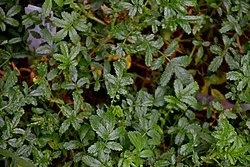
Sand Piripiri (Acaena pallida), also called sand bidibid, is a prostrate, trailing perennial ground cover native to New Zealand's coasts. It reaches 10 to 15 cm tall and forms extensive mats up to 2 metres across. Its pinnate leaves carry 9 to 15 shiny, bluntly toothed leaflets, bright to dark green above and paler, hairy beneath. Globe-shaped white flower heads appear in spring, ripening into golden-brown fruits armed with barbed red spines. A coastal specialist, it colonises fine gravels, rocky shores and sand dunes at the upper tide line. With high salt tolerance and moderate frost hardiness, it is a valuable pioneer that stabilises shifting sand. Explore more native ground covers in our native plant guide.
Plant Description
Identification and Physical Characteristics
Acaena pallida , also commonly known as sand bidibid, is a prostrate, trailing perennial herb that forms extensive mats up to 2 metres in diameter. It typically reaches a height of about 10 to 15 cm. The leaves are pinnate, ranging from 45 to 120 mm in length, and are composed of 9 to 15 oblong to elliptical leaflets. These leaflets are shiny and bright to dark green on the upper surface, with bluntly toothed margins. The underside of the foliage is a paler green and is distinctly hairy, especially along the mid-vein. The plant produces globe-shaped white flower heads in spring. These mature into clusters of dry, golden-brown fruits equipped with barbed, red spines approximately 10-20 mm long, which facilitate seed dispersal by attaching to animals.
Quick Facts
| Scientific Name | Acaena pallida |
|---|---|
| Height | 10-15 cm (Ground Cover) |
| Spread | 1-2 m |
| Water Needs | Low to Moderate |
| Light | Full Sun to Light Shade |
| Frost Tolerance | Moderate |
| Salt Tolerance | High |
| Growth Rate | Fast (Creeping) |
| Lifespan | Perennial |
Climate Best Suited to
Sand Piripiri is exceptionally well-suited to New Zealand's coastal climates. It is naturally distributed from the southern North Island through to the South Island, Stewart Island, and the Chatham Islands. It thrives in exposed sites subjected to salt-laden winds and high light intensity. It prefers temperate conditions but is remarkably hardy, surviving the varied temperatures of New Zealand's southern coastlines.
Regional Suitability
| City | Climate Suitability |
|---|---|
| Auckland | Suitable |
| Wellington | Highly Suitable |
| Christchurch | Highly Suitable |
| Dunedin | Highly Suitable |
| Nelson | Highly Suitable |
| Invercargill | Highly Suitable |
Plant Habitat
Natural Occurrence and Ecology
The natural habitat of Acaena pallida is restricted to the coast. It is a specialist colonizer of fine gravels, rocky shorelines, and sand dunes. It is often found growing at the upper limits of the tide, where it acts as an important pioneer species, stabilizing shifting sands and providing a substrate for other coastal plants to establish. It prefers open, well-drained locations where competition from taller vegetation is minimized by the harsh, salty environment.
Growing Requirements
Soil Requirements
Thrives in very well-drained, sandy, or gravelly soils. It does not tolerate heavy, waterlogged clay.
- Sandy coastal soils
- Fine gravel/scree
- Excellent drainage
Light Requirements
Performs best in full sun. While it can tolerate very light shade, its growth will be less compact and less robust.
- Full sun exposure
- Mostly sun
- High light intensity
Water Requirements
Moderate water needs. Once established, it is relatively drought-tolerant but appreciates occasional deep watering in dry summers.
- Even spring moisture
- Drought resistant
- Occasional watering
Planting and Establishing
Establishment Guidance
Establish Sand Piripiri in early spring or autumn. Choose a site with maximum sun exposure and ensure the soil has excellent drainage. When planting, dig a hole slightly larger than the root ball and backfill with a mix of native soil and sand. Space plants about 50-80 cm apart to allow for their rapid spreading habit. Water well after planting and maintain moisture for the first few weeks. Once established, the plant will quickly form a dense, low-maintenance mat. It is particularly effective for controlling erosion on sandy banks or adding a lush, green carpet to a coastal-themed garden.
Ecological Role
Biodiversity and Ecosystem Impact
Acaena pallida is an essential component of New Zealand's coastal biodiversity. Its primary ecological function is as a sand binder; its sprawling mats trap wind-blown sand and stabilize dune systems. The hooked fruits provide an important method of seed dispersal, relying on native birds and lizards to transport the seeds to new habitats. It also provides ground-level cover for small coastal invertebrates. Its presence helps create a more stable environment for other native coastal species to thrive, making it a key plant for ecological restoration projects along the shoreline.
Uses & Significance
Garden Uses
An excellent, fast-growing groundcover for large, sunny areas. It is particularly valued in coastal gardens where other plants might struggle with salt and wind.
- Dune stabilization
- Coastal groundcover
- Low-maintenance mats
Ecological Value
A key pioneer species for coastal restoration. It supports local insect populations and plays a vital role in the structural integrity of sand dunes.
- Sand binding
- Erosion control
- Habitat provision
Landscaping Uses
In landscaping, it is used to create a broad, uniform green texture over sandy or gravelly areas. It is perfect for modern, minimalist coastal designs or for filling large gaps between established shrubs. Its ability to withstand foot traffic is limited, so it is best used in areas where it will not be trampled frequently.
Seasonal Care Calendar
Spring
Active growth period. Monitor for any invasive weeds that might try to grow through the mat. Flowering begins.
- Light weeding
- Spring mulching
Summer
Fruiting season. The hooked burrs will be most prominent. Ensure consistent moisture if conditions are exceptionally dry.
- Summer watering
- Burr management
Autumn
Ideal time for dividing large clumps or establishing new plantings while the soil is still warm.
- Divide clumps
- Prepare new sites
Winter
Growth slows. The plant is evergreen and will maintain its green presence throughout the colder months.
- Minimal care
- Check drainage
When to Prune and How Much
Sand Piripiri generally requires very little pruning. It can be trimmed along the edges if it begins to grow over paths or into other plants.
- Edge trimming only
- Remove spent flowers
If the hooked seed heads are a nuisance in high-traffic areas, they can be mown or clipped off in early summer before they fully mature and become sticky.
How to Grow Sand Piripiri
Growing Sand Piripiri ( Acaena pallida ) is a straightforward process, as the plant is naturally vigorous and adaptable to many garden situations, provided the drainage is excellent. It is a perfect choice for those looking to establish a native groundcover quickly and effectively. The plant's ability to spread via prostrate stems means that a few small specimens can rapidly cover a large area. Propagation can be achieved through several methods, each with a high success rate. The most important factor for success is ensuring that the young plants are not smothered by more aggressive weeds before they have a chance to form a solid, self-shading mat.
From Cuttings
Cuttings are an easy way to propagate Sand Piripiri, as the creeping stems often produce roots naturally where they touch the soil.
Take semi-hardwood cuttings in late summer or autumn for the best results.
- Select healthy, vigorous stems that show signs of new growth.
- Cut sections approximately 10-15 cm long, ensuring each cutting has several leaf nodes.
- Remove the lower leaves and dip the base in a rooting hormone if desired, though it is often not necessary.
- Plant into a free-draining potting mix of sand and peat.
- Keep in a warm, shaded spot and maintain consistent moisture.
- Roots should establish within a few weeks, after which the plants can be hardened off and moved to their final location.
From Seed
Seed propagation is also effective, especially if you need to produce a large number of plants for a restoration project.
Collect the dry, brown fruit heads in late summer or autumn.
- Rub the fruit heads to separate the seeds from the hooked burrs. Wear gloves to avoid the spines.
- Sow the seeds onto the surface of a sandy seed-raising mix.
- Lightly cover with a fine layer of sand or grit.
- Water gently and place in a cold frame or a protected outdoor spot.
- Germination usually occurs in spring as temperatures begin to rise.
- Prick out the seedlings once they are large enough to handle and grow them on in individual pots until they are ready for planting.
By Division
Division is the fastest method for the home gardener. Simply use a spade to cut a section of an established mat, ensuring you take a good amount of roots and soil. Replant immediately in a prepared site and water well. This can be done almost any time of year, though autumn and spring are optimal to avoid the stress of extreme summer heat or winter cold.
Pests & Diseases
Sand Piripiri is a very healthy plant and rarely suffers from significant pests or diseases. It is remarkably resistant to grazing by deer and rabbits. Occasionally, in very humid or poorly drained conditions, it may develop minor fungal leaf spots, but this is rarely a threat to the plant's overall health. Ensure good air circulation and avoid over-watering to keep the foliage in peak condition.
Cultural Significance
The name 'piripiri' is applied to many Acaena species and refers to the "clinging" nature of the hooked fruits. For Māori, these plants are a familiar part of the coastal landscape. While not used as a primary food source, the plants are recognized for their toughness and their ability to thrive in the harsh 'one' (sand) environments. The burrs are a nostalgic part of the New Zealand childhood experience, well-known for sticking to socks and clothing during walks through the dunes.
- Iconic coastal 'bidibid'
- Pioneer of the sand dunes
Bonus Tip
If you are using Sand Piripiri in a garden with pets, be aware that the hooked burrs will readily attach to fur! To avoid this, simply clip the flower heads off in early summer before they turn into seeds. This will also encourage the plant to put more energy into its lush green foliage.
Related Plants
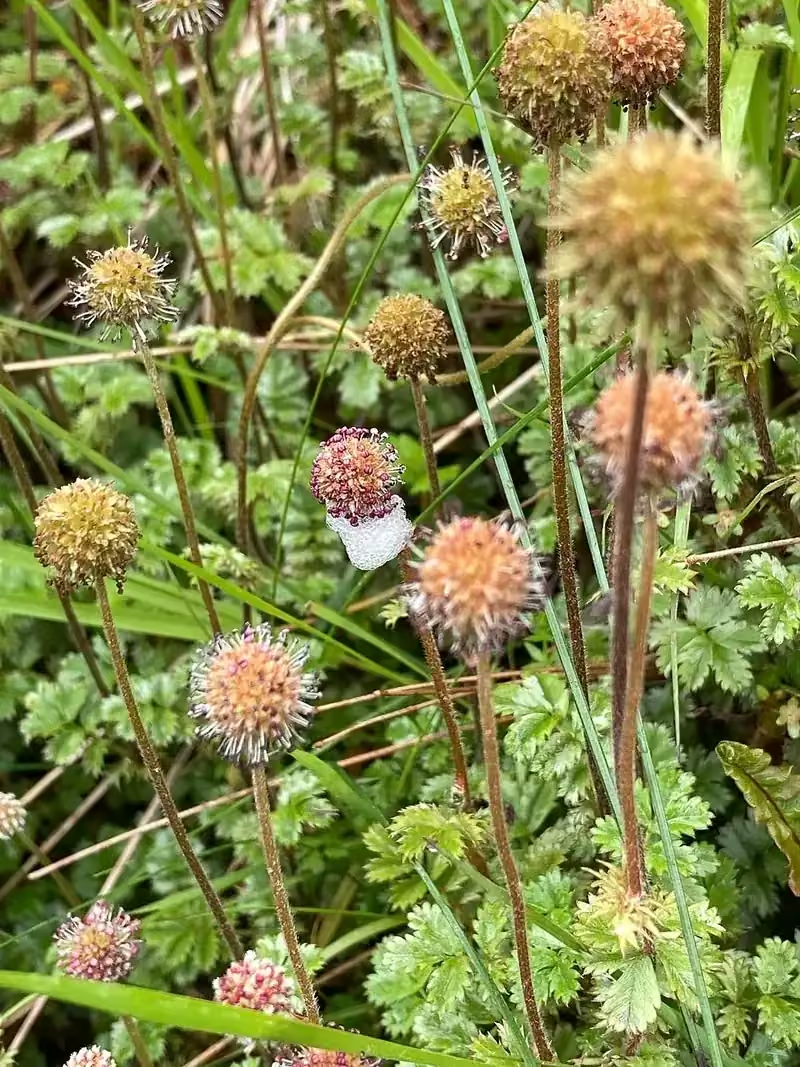
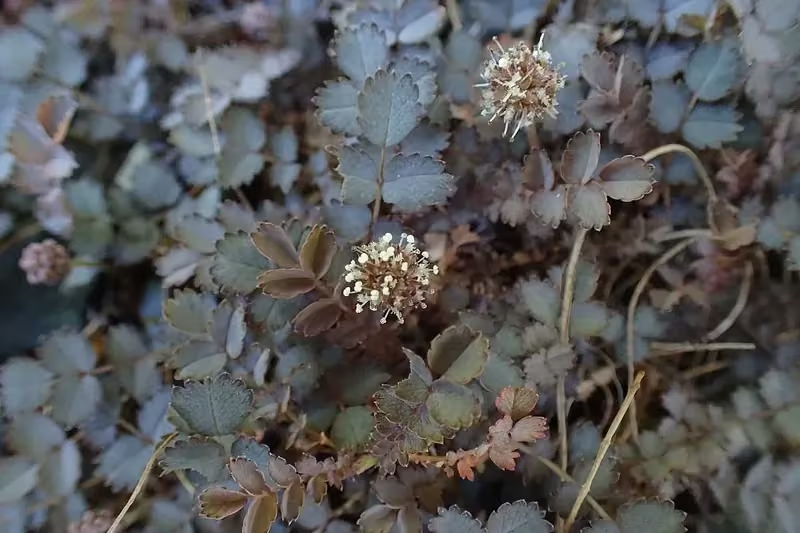
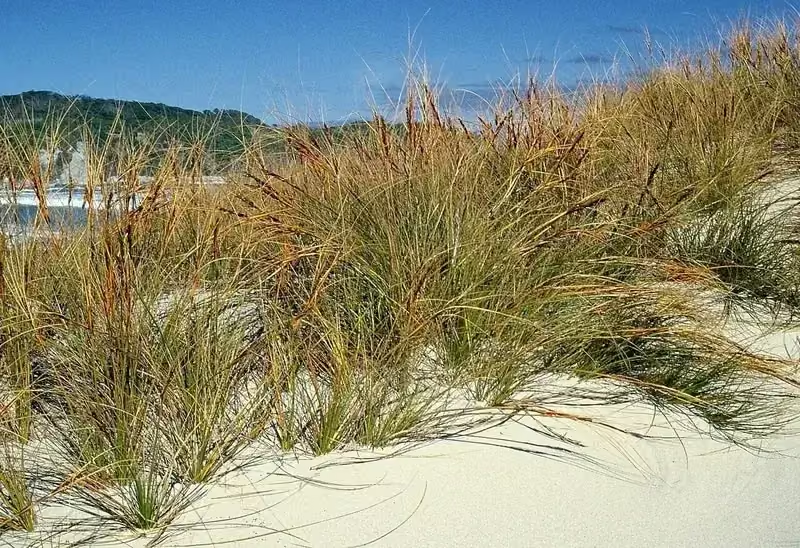
Explore other native plants that share similar characteristics or habitats with Sand Piripiri ( Acaena pallida ), offering further insights into New Zealand's diverse flora. These related species provide context and opportunities for complementary planting in your garden.

Plant Conservation
Conservation Status and Threats
Acaena pallida is currently classified as Not Threatened in New Zealand. It is common and often abundant in suitable coastal habitats. However, its natural range is restricted to the coast, making it vulnerable to large-scale coastal development and the loss of natural dune systems. Protecting our remaining wild shorelines and incorporating Sand Piripiri into coastal restoration and landscaping projects is key to maintaining healthy populations of this vital sand-binding species.
Frequently Asked Questions
How tall does Sand Piripiri grow?
It grows 10 to 15 cm tall and forms mats up to 2 metres across.
Is Sand Piripiri suitable for coastal gardens?
Yes, it is a coastal specialist with high salt tolerance that binds sand and gravel.
Where does Acaena pallida grow naturally?
It grows on coastal sand dunes, fine gravels and rocky shorelines, often near the upper tide line.
Does Sand Piripiri tolerate frost?
It has moderate frost tolerance and is best suited to milder coastal climates.
Sources and Further Reading
The botanical, growing, and conservation details for Sand Piripiri (Acaena pallida) on this page draw on authoritative New Zealand plant references and citizen-science observation records. Consult the sources below for full technical records and the latest distribution data.