Topiary Hebe
Veronica topiaria
Last updated:
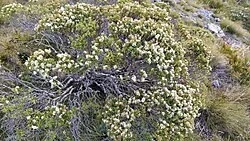
Topiary Hebe (Veronica topiaria), formerly Hebe topiaria, is a distinctive evergreen shrub endemic to the South Island of New Zealand, prized for its naturally tidy, globular growth habit that forms a dense ball without any clipping. Slow growing, it reaches about 1 to 1.2 metres tall and wide, with small oval leaves of soft bluish or grey-green. In early summer it carries short spikes of white flowers. Native to montane and subalpine shrublands, it is highly frost and salt tolerant. Explore more native shrubs in our native plant guide.
Plant Description
Identification and Physical Characteristics
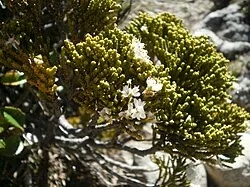
Veronica topiaria , formerly known as Hebe topiaria and commonly called the Topiary Hebe or Topiarist's Hebe, is a highly distinctive evergreen shrub endemic to the South Island of New Zealand. It is celebrated for its remarkably tidy, globular growth habit, which naturally forms a dense, ball-like shape without any intervention from a gardener. This slow-growing shrub typically reaches a height and spread of about 1 to 1.2 meters. Its small, oval leaves are a soft bluish-green or grey-green colour, arranged in opposite pairs along the stems to create a thick, textured canopy. In early summer, the plant is adorned with short, compact spikes of small white flowers that provide a subtle but beautiful contrast against the cool-toned foliage.
Quick Facts
| Scientific Name | Veronica topiaria |
|---|---|
| Height | Up to 1.2 m |
| Spread | Up to 1.2 m |
| Water Needs | Low to moderate; drought-tolerant once mature |
| Light | Full sun to partial shade |
| Frost Tolerance | High |
| Salt Tolerance | High |
| Growth Rate | Slow to moderate |
| Lifespan | Long-lived perennial shrub |
Climate Best Suited to
The Topiary Hebe is extremely hardy and well-adapted to New Zealand's varied climates. It thrives in the cooler, temperate conditions of the South Island where it originates, but it is equally successful in coastal gardens across the country. It is highly resistant to frost and can withstand exposed, windy sites, making it a reliable choice for mountainous or seaside landscapes. It does not perform as well in areas of extreme, stagnant humidity.
Regional Suitability
| City | Climate Suitability |
|---|---|
| Auckland | Medium |
| Wellington | High |
| Christchurch | High |
| Dunedin | High |
| Invercargill | High |
Plant Habitat
Natural Occurrence and Ecology
In its natural state, Veronica topiaria is found in the montane to subalpine regions of the northern South Island. It typically grows in shrublands and tussock grasslands, often on rocky outcrops or well-drained slopes above the treeline. It is particularly prevalent in areas like Boulder Lake, the Poplars Range, and the Richmond Range. Its compact form is an evolutionary adaptation to the harsh, high-wind environments of the New Zealand mountains.
Growing Requirements
Soil Requirements
Requires excellent drainage. It can tolerate poor, stony, or sandy soils but prefers a neutral to slightly alkaline pH.
- Well-drained
- Stony/Sandy
- Neutral to Alkaline
Light Requirements
Performs best in full sun, which helps maintain its tight, compact shape and encourages prolific flowering.
- Full Sun
- Partial Shade
Water Requirements
Needs regular watering while establishing. Once mature, it is remarkably drought-tolerant.
- Low water needs
- Avoid waterlogging
Planting and Establishing
Establishment Guidance
Choose a sunny, well-drained spot for your Topiary Hebe. Dig a hole twice as wide as the root ball and just as deep. If your soil is heavy clay, incorporate some grit or fine gravel to improve drainage. Place the plant in the hole, ensuring the top of the root ball is level with the surrounding ground. Backfill with soil and water deeply. Mulching with a layer of stones or pebbles can help keep the roots cool while preventing the foliage from sitting on damp soil.
Ecological Role
Biodiversity and Ecosystem Impact
The Topiary Hebe provides important habitat and food for native biodiversity. Its flowers are a magnet for bees, butterflies, and hoverflies, which rely on its nectar during the summer months. In its native subalpine habitat, its dense form offers shelter for lizards and small invertebrates from the extreme mountain weather. It is a key component of New Zealand's unique high-altitude shrubland communities.
Uses & Significance
Garden Uses
This plant is a favourite for modern, minimalist, or formal gardens. Its natural architectural form makes it ideal for low hedges, border edging, or as a structural specimen in a rock garden.
- Formal hedging
- Rock gardens
- Structural specimens
Ecological Value
Ecologically, it supports native pollinators and provides year-round ground-level shelter for small New Zealand wildlife.
- Pollinator support
- Wildlife shelter
- Erosion control
Landscaping Uses
Landscape designers frequently use Veronica topiaria as a native alternative to Box (Buxus) for low-hedging and topiary. Its blue-grey foliage provides a sophisticated colour palette that contrasts well with darker green natives. It is also an excellent plant for container gardening on sunny patios or balconies where its slow growth and neat habit are highly valued.
Seasonal Care Calendar
Spring
Apply a slow-release fertilizer high in nitrogen to support the upcoming growth and flowering season.
- Fertilize lightly
- Check for growth
Summer
Deadhead the flower spikes after they have faded to maintain the plant's tidy appearance.
- Prune flowers
- Water in dry spells
Autumn
A good time for planting new specimens while the soil is still warm and rainfall is increasing.
- New planting
- Clear debris
Winter
Topiary Hebe is very frost-hardy. This is the best time for light structural pruning if any branches have strayed.
- Structural pruning
- Monitor drainage
When to Prune and How Much
Due to its naturally compact habit, Topiary Hebe requires very little pruning to maintain its shape.
- Deadhead summer flowers
- Light shaping in winter
Only prune if the plant starts to become leggy or if you want to keep it at a specific size for a formal hedge. Avoid cutting back into old, leafless wood.
How to Grow Topiary Hebe
Growing the Topiary Hebe ( Veronica topiaria ) is a rewarding experience for any gardener, whether you are aiming for a formal landscape or a more relaxed native garden. This species is one of the most reliable and low-maintenance New Zealand shrubs, provided its basic needs for light and drainage are met. Its name, "topiaria," accurately describes its most prized attribute: its ability to look perfectly pruned without any actual work.
The most common and effective way to propagate Topiary Hebe is through semi-hardwood cuttings. This method ensures that the new plants will inherit the exact globular habit of the parent. The best time to take cuttings is in late summer or early autumn, when the current year's growth has begun to firm up. Select healthy, non-flowering tips about 5-10 cm long. Remove the lower leaves and dip the base of the cutting into a rooting hormone powder or gel. Insert the cuttings into a tray filled with a free-draining mix of coarse sand and peat. Place the tray in a warm, bright spot out of direct sunlight and keep the medium moist. Using a plastic cover or a misting system can help maintain the high humidity required for successful rooting.
From Seed
While cuttings are preferred for maintaining the specific shape, Veronica topiaria can also be grown from seed. Collect the small capsules once they have turned brown but before they split open.
Sow the seeds onto the surface of a fine seed-raising mix and cover them very lightly with grit. They require light to germinate, so do not bury them deeply. Keep the tray in a cool, bright position. Germination can take several weeks.
- Collect ripe capsules in late summer.
- Sow on surface of moist mix.
- Provide bright, indirect light.
Once the seedlings are large enough to handle, prick them out into individual pots and grow them on for a season before planting out.
From Cuttings
As mentioned, semi-hardwood cuttings are the standard method. Tip cuttings taken in spring can also work but may be more prone to wilting.
- Take 5-10cm cuttings in autumn.
- Apply rooting hormone.
- Keep in high humidity until rooted.
Pests & Diseases
Topiary Hebe is generally very resilient. However, like many Veronica species, it can occasionally be affected by downy mildew, especially in humid or stagnant air. This presents as fuzzy grey growth on the underside of the leaves. Improving air circulation and avoiding overhead watering can prevent this. Scale insects may also occasionally appear on the stems; these can be managed with organic oil sprays. It is important to ensure the soil is well-drained to avoid root rot issues.
Cultural Significance
While many large trees have prominent roles in Māori tradition, shrubs like the Topiary Hebe are respected for their resilience in the harsh 'maunga' (mountain) environments. In contemporary New Zealand horticulture, Veronica topiaria is significant as a world-renowned ornamental plant, having received the Royal Horticultural Society's Award of Garden Merit. It serves as an excellent example of New Zealand's unique flora being adapted for aesthetic and structural uses in gardens worldwide.
- Renowned ornamental heritage
- Symbol of subalpine resilience
- Award-winning native species
Bonus Tip
For a stunning, low-maintenance formal look, plant Topiary Hebe in a large terracotta pot. Its neat, ball-shaped form looks spectacular as a standalone container plant and provides a sophisticated, year-round focal point for a patio or terrace.
Related Plants
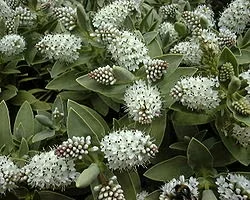
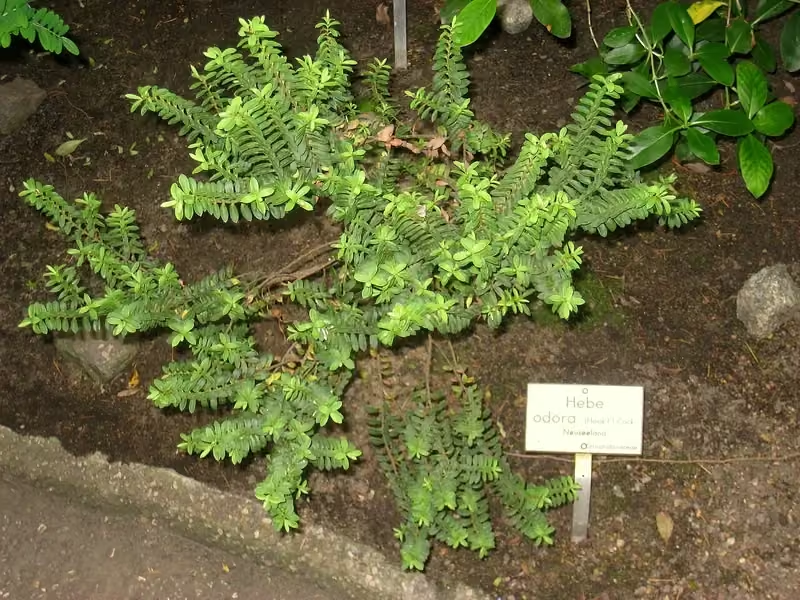
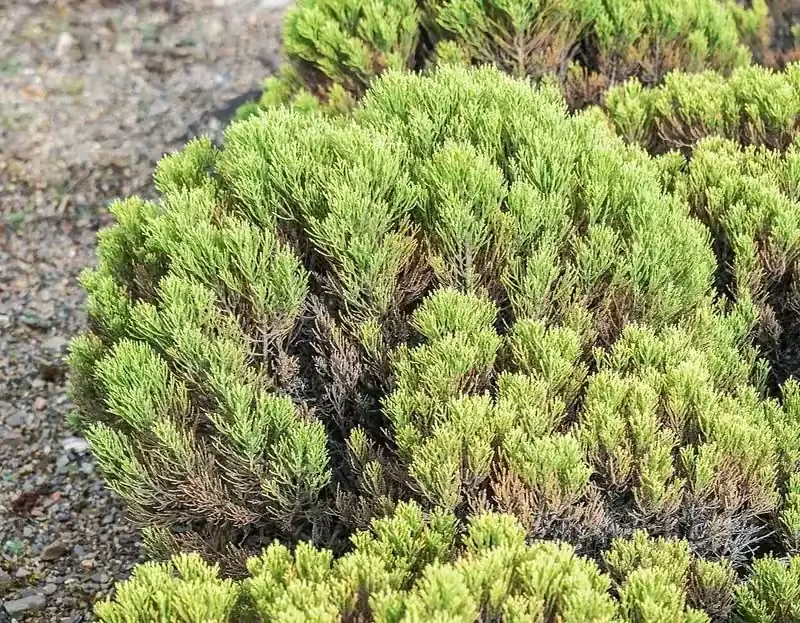
Explore other native plants that share similar characteristics or habitats with Topiary Hebe ( Veronica topiaria ), offering further insights into New Zealand's diverse flora. These related species provide context and opportunities for complementary planting in your garden.


Plant Conservation
Conservation Status and Threats
Currently classified as 'Not Threatened', Veronica topiaria is common in its native range. However, its continued success in the wild depends on the protection of South Island subalpine shrublands from the impacts of climate change and the spread of invasive species. In garden settings, its popularity ensures its long-term survival as a beloved cultivar of the New Zealand flora.
Frequently Asked Questions
How tall does Topiary Hebe grow?
It grows up to about 1.2 m tall and wide.
Does Veronica topiaria need pruning?
Very little, as it naturally forms a dense ball shape.
Is Topiary Hebe suitable for coastal gardens?
Yes, it has high salt tolerance and succeeds in coastal gardens.
Does it tolerate frost?
Yes, it is highly frost resistant and hardy.
Sources and Further Reading
The botanical, growing, and conservation details for Topiary Hebe (Veronica topiaria) on this page draw on authoritative New Zealand plant references and citizen-science observation records. Consult the sources below for full technical records and the latest distribution data.