C. Is. Daisy
Pleurophyllum speciosum
Last updated:
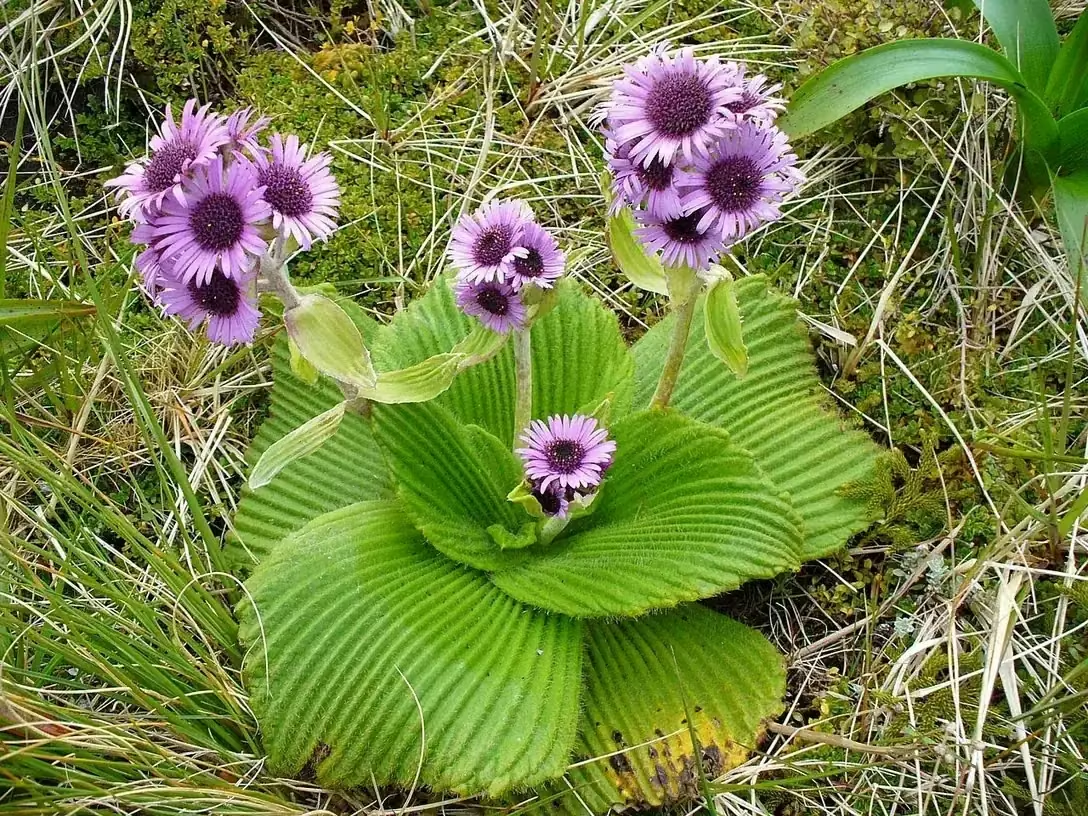
The Campbell Island Daisy (Pleurophyllum speciosum), also called the Great Emperor Daisy, is one of New Zealand's most spectacular megaherbs, endemic to the subantarctic Auckland and Campbell Islands. This slow-growing perennial forms massive rosettes of broad, thick, deeply ribbed leaves up to 60 centimetres long. In early summer it sends up sturdy stalks to about a metre tall, bearing large flower heads up to 6 centimetres across with striking purple disk-florets. It grows in peaty, waterlogged herbfields exposed to extreme wind and salt spray. Classed as At Risk - Naturally Uncommon, it is very frost-hardy but sensitive to heat. Explore more native flowering plants in our native plant guide.
Plant Description
Identification and Physical Characteristics
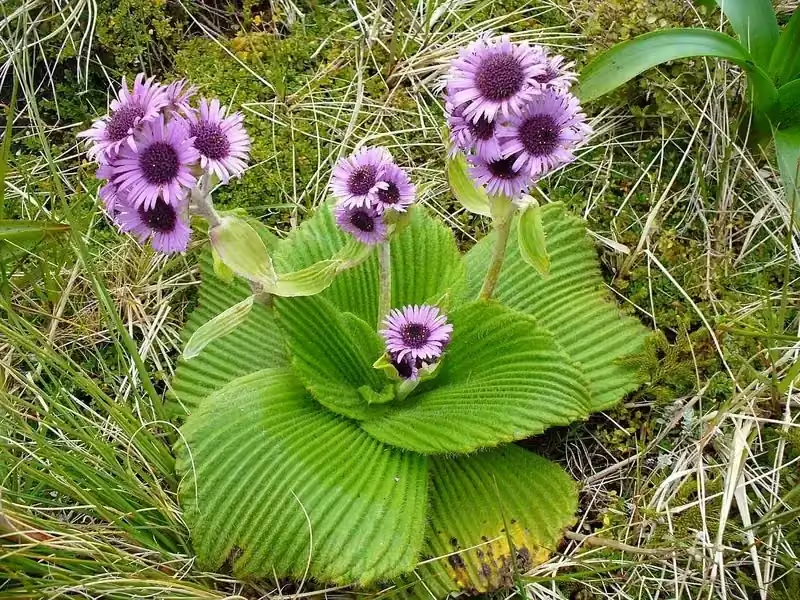
Pleurophyllum speciosum , also known as the Great Emperor Daisy or Campbell Island Daisy, is one of New Zealand's most spectacular "megaherbs." Endemic to the Auckland and Campbell Islands, this perennial herb is a true giant of the subantarctic herbfields. It forms massive rosettes of broadly oval, thick, and leathery leaves that can grow up to 60 cm long. These leaves are a vibrant green and feature deep, longitudinal ribs that give the plant its genus name (meaning "ribbed leaf"). In early summer, it sends up sturdy flowering stalks that can reach a meter in height, bearing multiple large flower heads up to 6 cm across. Each head consists of striking purple disk-florets surrounded by pale purple to white ray-florets, creating a magnificent display that stands out in the often grey and misty subantarctic landscape.
Quick Facts
| Scientific Name | Pleurophyllum speciosum |
|---|---|
| Height | Up to 1 m |
| Spread | Up to 1.2 m |
| Water Needs | High; requires constant moisture |
| Light | Bright indirect light; tolerates full subantarctic sun |
| Frost Tolerance | Very high |
| Salt Tolerance | High |
| Growth Rate | Slow |
| Lifespan | Long-lived perennial |
Climate Best Suited to
The Campbell Island Daisy is a specialist of the cool, cloudy, and wind-swept subantarctic climate. It is adapted to high humidity, high rainfall, and very consistent temperatures that rarely exceed 15°C even in summer. It is extremely frost-hardy but highly sensitive to heat and drought. Cultivating it outside its native range is exceptionally difficult because it requires the unique combination of cool air temperatures and high light levels found in the Southern Ocean islands.
Regional Suitability
| City | Climate Suitability |
|---|---|
| Auckland | Low (Too warm) |
| Wellington | Low (Too dry/warm) |
| Christchurch | Low (Too dry/warm) |
| Dunedin | Medium (Requires careful placement) |
| Invercargill | Medium (Best mainland chance) |
Plant Habitat
Natural Occurrence and Ecology
In its subantarctic home, Pleurophyllum speciosum is a dominant feature of the coastal and montane herbfields. It thrives in peaty, waterlogged soils that are often subjected to extreme winds and salt spray. It is frequently found in "megaherb fields" alongside other large-leaved plants, where its broad rosettes capture the limited solar radiation and create their own sheltered microclimate. These habitats are characterized by high peat content and a constant supply of moisture from the near-perpetual mist and rain of the Auckland and Campbell Islands.
Growing Requirements
Soil Requirements
Requires deep, acidic, and highly organic peaty soil that is constantly moist but not stagnant.
- Peaty
- Acidic
- Humus-rich
Light Requirements
Needs high light levels but must be kept cool. Direct hot sun in mainland New Zealand will quickly kill the plant.
- Bright Light
- Cool Roots
Water Requirements
Extremely high water needs. The soil must never dry out, and high atmospheric humidity is essential for success.
- Constant moisture
- High humidity
Planting and Establishing
Establishment Guidance
Establishing Pleurophyllum speciosum on the mainland is a major horticultural challenge. If attempted, it should be planted in a specialized "subantarctic house" or a very cool, shaded spot with constant misting. Use a planting medium composed primarily of sphagnum peat and fine grit. Ensure the plant is well-mulched with organic matter to keep the root run cool. Because it is an island endemic, it is crucial to only obtain plants from licensed nurseries and never to disturb wild populations in the protected subantarctic reserves.
Ecological Role
Biodiversity and Ecosystem Impact
As a megaherb, the Campbell Island Daisy is a keystone species in its ecosystem. Its large leaves act as a "solar collector," raising the temperature of the plant and the surrounding air significantly above the ambient temperature. This "glasshouse effect" attracts native insects that seek warmth, thereby ensuring pollination in a sparse environment. The plant also provides substantial biomass to the nutrient-limited peaty soils and offers shelter for subantarctic invertebrates and ground-nesting birds.
Uses & Significance
Garden Uses
Due to its extreme climate requirements, it is rarely seen in private gardens but is a highly prized specimen in botanical gardens with specialized cool-climate facilities.
- Specialized alpine houses
- Botanical collections
- Educational displays
Ecological Value
It is a vital component of New Zealand's unique subantarctic biodiversity, representing a remarkable evolutionary response to extreme island conditions.
- Micro-climate creator
- Pollinator host
- Evolutionary wonder
Landscaping Uses
In mainland landscaping, the "megaherb look" is more easily achieved using the Chatham Island Forget-Me-Not, but for those in the far south with the right conditions, Pleurophyllum speciosum is the ultimate statement plant. Its architectural form and history as an icon of the subantarctic make it a subject of great fascination for plant collectors and historians alike.
Seasonal Care Calendar
Spring
Monitor for new leaf growth from the center of the rosette. Ensure moisture levels are consistent as day length increases.
- Consistent moisture
- Check for growth
Summer
The flowering period. On the mainland, this is the most dangerous time; use misting systems to keep the air cool and humid.
- Intensive misting
- Protect from heat
Autumn
Flowering finishes and seeds develop. A good time to apply a light layer of fresh peaty mulch.
- Mulching
- Seed maturation
Winter
The plant is very hardy to cold and snow. Ensure the soil remains damp but not frozen solid for extended periods.
- Cold protection
- Maintain dampness
When to Prune and How Much
Campbell Island Daisy requires minimal pruning.
- Remove dead outer leaves
- Trim spent flower stalks
Only remove leaves that have completely yellowed or died back. The large leaves are essential for the plant's heat-capture mechanism.
How to Grow C. Is. Daisy
Growing the Campbell Island Daisy ( Pleurophyllum speciosum ) is widely considered one of the ultimate tests of a New Zealander gardener's skill. This spectacular megaherb is so finely tuned to the cool, humid, and misty conditions of the Auckland and Campbell Islands that it often struggles to survive the "heat" of a mainland summer. To successfully cultivate this plant, you must aim to replicate its subantarctic home as closely as possible, which usually means focusing on two things: keeping the roots cool and the air saturated with moisture.
The most reliable way to propagate this species is from fresh seed. However, germination can be erratic and often requires a period of cold stratification to mimic the subantarctic winter. Sow the seeds onto a surface of moist, finely chopped sphagnum moss or a peat-based seed-raising mix. Do not bury the seeds, as they may require light to trigger germination. Place the seed tray in a cool, bright spot-ideally in a refrigerated unit set to around 5-10°C if you are in a warm part of the country. Once the seedlings appear, they must be kept in a very humid environment. Many successful growers use a glass cloche or a specialized misting frame to prevent the delicate young leaves from transpiring too quickly.
From Seed
Seed propagation is the only ethical way to obtain this plant, as wild populations are strictly protected.
- Sow fresh seeds on moist peat.
- Cold stratify for 4-6 weeks.
- Provide bright, cool light.
Young plants are very slow-growing and may take several years to reach a size where they can be considered established. During this time, they are extremely vulnerable to any drying out of the growing medium.
Maintenance Tips
If you are fortunate enough to have an established Campbell Island Daisy, your primary task is climate management.
- Use an automated misting system.
- Plant in a south-facing, shaded gully.
- Ensure the soil is deep and peaty.
Pests & Diseases
The most significant threat to Pleurophyllum speciosum on the mainland is root rot caused by warm, stagnant soil. This is why excellent drainage and cool root temperatures are so vital. Slugs and snails find the large, succulent leaves highly attractive and can cause significant damage overnight if not controlled. Aphids may also target the flowering stalks. In its native habitat, it was once threatened by introduced pigs and sheep, but since their removal, the wild populations have made a spectacular recovery.
Cultural Significance
The Campbell Island Daisy is a national treasure of New Zealand. Its striking beauty and unique "megaherb" status have made it an icon of our subantarctic territories. Its significance is reflected in its appearance on the New Zealand five-dollar note, where it is depicted alongside the yellow-eyed penguin (hoiho), another subantarctic specialist. It represents the primeval and extreme nature of the islands at the edge of the Southern Ocean, serving as a powerful symbol of New Zealand's responsibility as a steward of global biodiversity.
- Featured on the NZ $5 banknote
- Icon of the subantarctic islands
- Symbol of subantarctic recovery
Bonus Tip
If you are visiting the subantarctic islands, look for the Campbell Island Daisy in large groups. These megaherb fields are a sight to behold, but remember that the environment is extremely fragile-always stay on the marked tracks to protect the peat and the delicate root systems of these giants.
Related Plants
Explore other native plants that share similar characteristics or habitats with Campbell Island Daisy ( Pleurophyllum speciosum ), offering further insights into New Zealand's diverse flora. These related species provide context and opportunities for complementary planting in your garden. For another flowering native plant, explore Ross's Lily.

Mount Cook Buttercup
Ranunculus lyallii
Mountain Foxglove
Ourisia macrophylla
Dwarf Mountain Gentian
Gentianella bellidifolia
Dolichoglottis lyallii
Dolichoglottis lyallii
Cotton Daisy
Celmisia spectabilis
Leather-leaved Daisy
Celmisia coriacea
Chatham Island Forget-Me-Not
Myosotidium hortensia
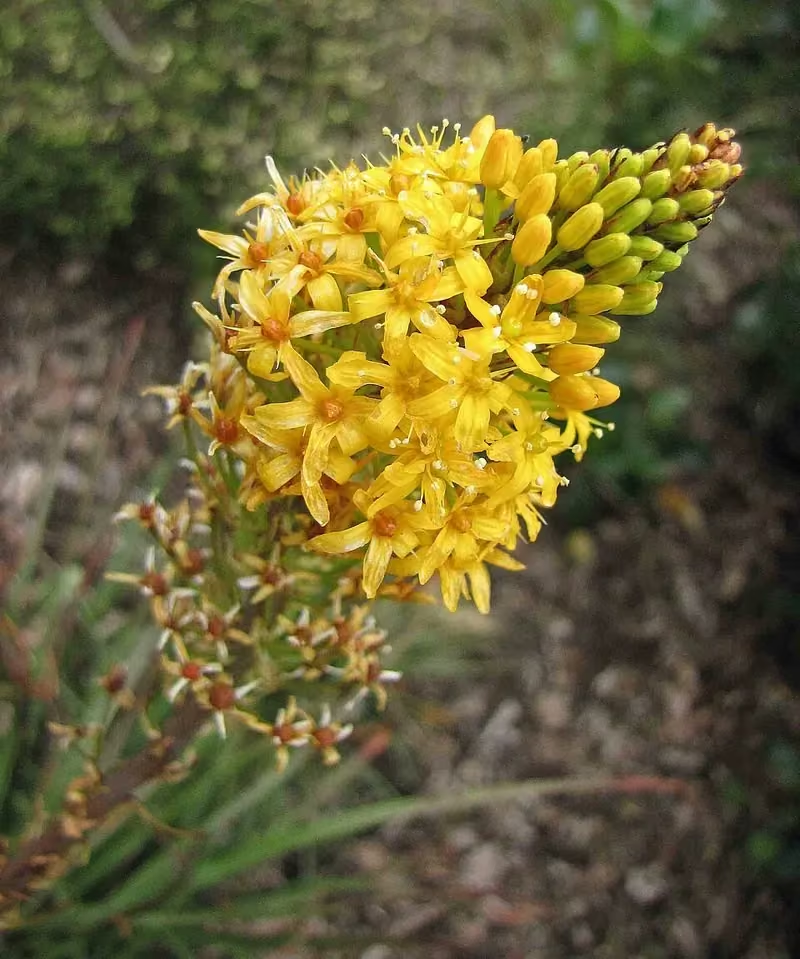
Māori Lily
Bulbinella hookeri
Plant Conservation
Conservation Status and Threats
Currently classified as 'At Risk - Naturally Uncommon' due to its limited geographic range, Pleurophyllum speciosum is a conservation success story. The removal of feral animals from the subantarctic islands has allowed the megaherb fields to flourish once again. However, the long-term threat of climate change remains, as these plants are extremely sensitive to any rise in ambient temperature or decrease in rainfall.
Frequently Asked Questions
How tall does the Campbell Island Daisy grow?
Its flowering stalks reach up to about 1 metre, above rosettes of leaves to 60 centimetres long.
Where does Pleurophyllum speciosum grow naturally?
It is endemic to the subantarctic Auckland and Campbell Islands, growing in coastal and montane herbfields.
Is Pleurophyllum speciosum threatened?
Yes, it is classed as At Risk - Naturally Uncommon in New Zealand.
Does the Campbell Island Daisy tolerate frost?
Yes, it is very frost-hardy but highly sensitive to heat and drought.
Sources and Further Reading
The botanical, growing, and conservation details for C. Is. Daisy (Pleurophyllum speciosum) on this page draw on authoritative New Zealand plant references and citizen-science observation records. Consult the sources below for full technical records and the latest distribution data.