Curved-Leaf Grass Tree
Dracophyllum recurvum
Last updated:
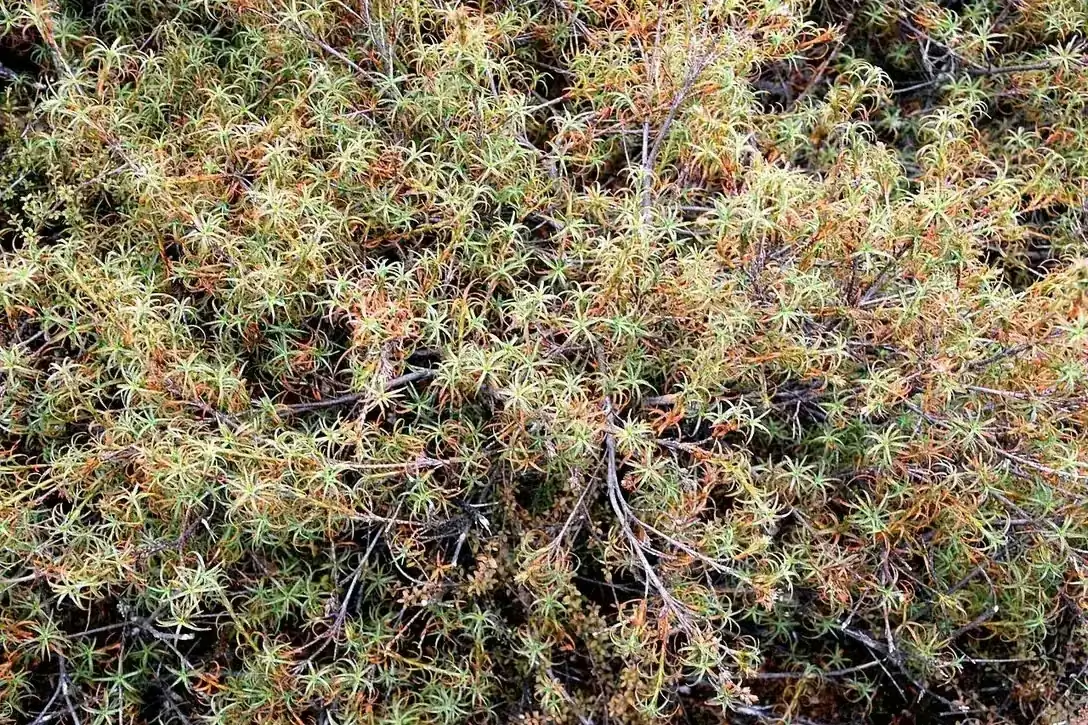
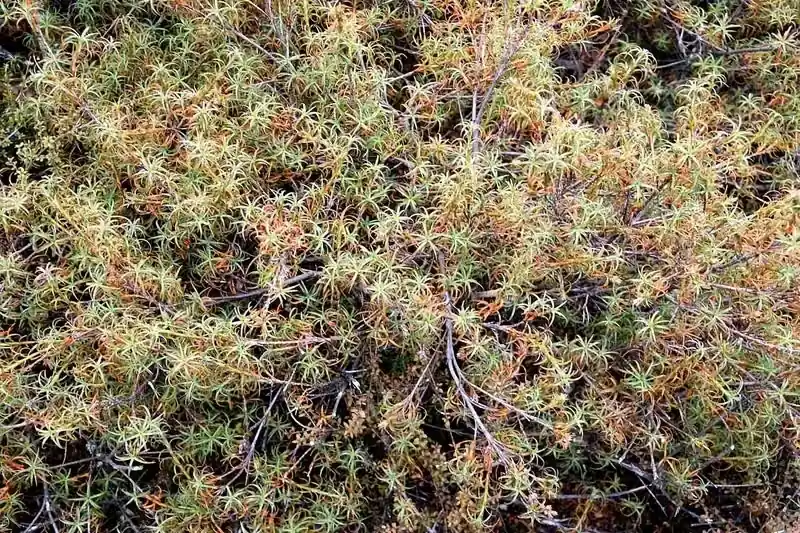
Dracophyllum recurvum, also called curled-leaved neinei or curved-leaf grass tree, is a low, multi-stemmed, prostrate to decumbent shrublet endemic to the North Island mountains. It usually reaches just 0.1 to 0.9 metres, occasionally mounding to about a metre in sheltered spots, and spreads 0.5 to 1.5 metres, its branches often hugging the ground. Its defining feature is the foliage: narrow, linear-triangular leaves that spread or curl backwards, glaucous light green but flushing dark green, red or brownish-yellow with season and altitude. It is a specialist of the volcanic Central Plateau, with its stronghold in Tongariro National Park, growing on subalpine shrubland, fell-fields, ridge lines and tussock grassland, where it endures heavy snow, high wind and severe frost. Explore more native shrubs in our native plant guide.
Plant Description
Identification and Physical Characteristics
Dracophyllum recurvum , also locally known as curled-leaved neinei, is a multi-stemmed, prostrate to decumbent shrublet. It typically reaches heights of 0.1 to 0.9 metres, though it can form dense mounds up to one metre tall in sheltered, lower-altitude sites. Its branches are numerous and spread outwards, often hugging the ground in exposed alpine conditions. The leaves are the plant's most defining feature: they are narrow, linear-triangular, and characteristically spreading or curled backwards (recurved). The foliage colour is typically a glaucous light green but can transition to striking shades of dark green, red, or even brownish-yellow depending on the season and altitude. The upper surface of the leaves is noticeably rough (rugose to scabrid). In summer, the plant produces short, dense clusters of small white to pale pink tube-shaped flowers at the branch tips.
Quick Facts
| Scientific Name | Dracophyllum recurvum |
|---|---|
| Height | 0.1-1 metre (Shrublet) |
| Spread | 0.5-1.5 metres |
| Water Needs | Moderate (Free-draining) |
| Light | Full Sun to Partial Shade |
| Frost Tolerance | High |
| Salt Tolerance | Low |
| Growth Rate | Slow |
| Lifespan | Perennial (Long-lived) |
Climate Best Suited to
Curved-Leaved Grass Tree is a specialist of the subalpine and alpine zones of the central North Island. It is perfectly adapted to the extreme weather of the volcanic Central Plateau, enduring freezing winter temperatures, heavy snow cover, and high winds. It relies on the free-draining volcanic soils and the cool, humid air typical of New Zealand's high-country environments. While it can be grown at lower altitudes in temperate regions, it requires excellent airflow and cool nights to thrive.
Regional Suitability
| City | Climate Suitability |
|---|---|
| Auckland | Not Suitable (Too humid/warm) |
| Wellington | Suitable |
| Christchurch | Suitable |
| Dunedin | Suitable |
| Queenstown | Highly Suitable |
| Invercargill | Suitable |
Plant Habitat
Natural Occurrence and Ecology
This species is endemic to the North Island mountains, with its stronghold in Tongariro National Park. It is a common inhabitant of subalpine shrublands, fell-fields, and tussock grasslands. It thrives on open ground such as ridge lines, cliff faces, and volcanic plateaus where competition from larger forest trees is absent. Its extensive, wide-spreading root system is an adaptation to the thin, unstable volcanic soils, providing the plant with a firm anchor and helping to prevent surface erosion in these high-stress landscapes.
Growing Requirements
Soil Requirements
Must have very free-draining, acidic soil. Volcanic grit, pumice, or a sand-peat mix is ideal for this alpine specialist.
- Sharp drainage
- Acidic pH
- Mineral-rich, low organic
Light Requirements
Thrives in full sun, which maintains the characteristic recurved leaf shape and encourages flowering. Can tolerate very light shade.
- Full sun preferred
- High UV tolerance
- Needs good airflow
Water Requirements
Requires consistent moisture but is extremely sensitive to waterlogging. It possesses moderate drought tolerance once established.
- Regular, light watering
- Never waterlogged
- High humidity benefits
Planting and Establishing
Establishment Guidance
Establishing Dracophyllum recurvum requires careful attention to root health and site selection. This plant is notoriously sensitive to root disturbance, so it should be planted directly from its nursery container into its permanent position with minimal handling of the root ball. Choose a spot with excellent drainage and full sun exposure. In garden settings, incorporating volcanic grit or scoria into the planting hole can help mimic its natural environment. Mulching with fine gravel or crushed rock is preferable to organic mulch, as it keeps the crown dry and prevents rot. Once established, it is a hardy plant that requires very little intervention.
Ecological Role
Biodiversity and Ecosystem Impact
Curved-Leaved Grass Tree is a key species in the alpine ecosystems of the North Island. It provides essential cover and nesting sites for alpine invertebrates and small lizards. Its flowers are an important source of nectar for native insects during the summer months. Furthermore, its ability to grow on loose volcanic substrates means it plays a significant role in soil stabilization, acting as a natural barrier against erosion on steep mountain slopes and recently disturbed volcanic plateaus.
Uses & Significance
Garden Uses
An exceptional choice for alpine or rock gardens where its unique form can be appreciated. Its unusual leaf texture and seasonal colour changes make it a focal point for native plant collectors.
- Alpine rockeries
- Native troughs
- Architectural low shrub
Ecological Value
Vital for the integrity of central North Island alpine zones. It supports a specialized community of alpine fauna and contributes to the natural resilience of the volcanic landscape.
- Erosion prevention
- Alpine biodiversity
- Pollinator nectar source
Landscaping Uses
Used in high-end native landscaping to evoke the rugged beauty of the New Zealand high country. Its prostrate habit makes it an excellent candidate for "living sculpture" on dry, sunny banks or as a textured edge along pathways in cooler regions.
Seasonal Care Calendar
Spring
Growth resumes. Monitor moisture levels as the weather warms. Avoid any heavy fertilization.
- Monitor drainage
- Observation
Summer
Flowering season (Dec-April). Ensure the plant doesn't dry out completely during extended hot periods.
- Water in dry spells
- Deadhead if needed
Autumn
Seeds mature. The foliage often takes on a richer red or bronze hue as the first frosts arrive.
- Seed collection
- Renew gravel mulch
Winter
Dormant period. Well-suited to snow cover, which acts as insulation from extreme freeze-thaw cycles.
- Minimal care
- Ensure no crown rot
When to Prune and How Much
Pruning is generally not required for this slow-growing species. Its naturally branched, spreading form is self-regulating and maintains its shape well.
- No regular pruning
- Remove dead branchlets only
If the plant becomes too leggy, a very light tip prune in early spring can encourage more dense growth, but be careful not to cut back into old, bare wood.
How to Grow Curved-Leaf Grass Tree
Cultivating Dracophyllum recurvum is a test of a gardener's ability to replicate the harsh conditions of the New Zealand alpine zone. This species is highly specialized and does not adapt well to standard "rich" garden environments. Success depends entirely on providing a medium that is low in nutrients but exceptionally high in drainage and aeration. It is a plant for the patient and observant gardener, as its slow growth rate means that any mistakes in care can take a long time to rectify. However, the reward is a beautiful, prehistoric-looking shrublet that is unique to the volcanic heart of the North Island.
From Seed
Seed is the most reliable way to produce new plants, as it ensures the preservation of the plant's delicate root architecture from the beginning.
Fresh seed should be collected in late autumn when the capsules are brown and starting to split.
- Sow seeds onto the surface of a moist, gritty seed-starting mix. A combination of fine pumice and peat works well.
- Do not bury the seeds deeply; a light dusting of fine grit is enough to hold them in place while allowing light to reach them.
- Placing the tray in a refrigerator for 4 weeks (cold stratification) can help synchronize and speed up germination.
- Keep the medium consistently moist but never saturated.
- Place in a bright, cool location with excellent air circulation.
- Germination is typically slow and can be irregular.
- Once the seedlings have several tufts of leaves, move them carefully into individual pots.
From Cuttings
Cuttings are more difficult but can be successful if taken at the right time and provided with high humidity.
Semi-hardwood cuttings should be taken in late summer or early autumn.
- Select healthy, non-flowering tips about 5-8 cm long.
- Use a high-quality rooting hormone to improve the success rate.
- Place in a very free-draining medium such as 70% perlite and 30% peat.
- Provide bottom heat and use a humidity dome or misting system.
- Be patient, as they can take several months to strike roots.
Additional Methods
While layering is possible in the wild where branches touch the ground, it is rarely successful in a pot. The most critical factor across all propagation methods is avoiding root disturbance once the plant has begun to grow. Many experienced growers use air-pots or similar containers that encourage a healthy, non-circling root system, which helps the plant establish much more quickly when moved to its final garden position.
Pests & Diseases
Generally resistant to pests. The biggest disease risk is root rot (Phytophthora) caused by poor drainage or overwatering. Scale insects can occasionally hide in the dense tufts of leaves; these can be treated with a systemic insecticide or horticultural oil.
Cultural Significance
As an alpine neinei , Dracophyllum recurvum is part of the sacred mountain landscapes of the central North Island. It is a symbol of the tenacity of life in the volcanic regions. For Māori, these plants are part of the 'clothing' of the volcanoes, respected for their ability to thrive where others cannot.
- Volcanic heritage symbol
- Alpine resilience icon
Bonus Tip
If you are hiking in Tongariro National Park, look for this plant along the edges of the volcanic tracks. It often turns a beautiful deep red in the autumn, creating a stunning contrast against the grey volcanic ash and white snow.
Related Plants
Explore other native plants that share similar characteristics or habitats with Curved-Leaved Grass Tree ( Dracophyllum recurvum ), offering further insights into New Zealand's diverse flora. These related species provide context and opportunities for complementary planting in your garden. For another native shrub, explore Gumland Grass Tree.



Plant Conservation
Conservation Status and Threats
Dracophyllum recurvum is currently classified as Not Threatened. It is abundant within its natural range, especially within the protected boundaries of Tongariro National Park. However, it remains sensitive to large-scale habitat disturbance and potential impacts from climate change on alpine zones. Preservation of these unique volcanic alpine shrublands is essential for its continued thriving in the wild.
Frequently Asked Questions
How tall does Dracophyllum recurvum grow?
It is a low shrublet, usually 0.1 to 0.9 metres tall, spreading 0.5 to 1.5 metres.
Where does curled-leaved neinei grow naturally?
It is endemic to the North Island mountains, with its stronghold in Tongariro National Park.
Is Dracophyllum recurvum frost hardy?
Yes, it has high frost tolerance and endures heavy snow and freezing winters.
Why are its leaves distinctive?
Its narrow leaves spread or curl backwards, giving the recurved look behind its name.
Sources and Further Reading
The botanical, growing, and conservation details for Curved-Leaf Grass Tree (Dracophyllum recurvum) on this page draw on authoritative New Zealand plant references and citizen-science observation records. Consult the sources below for full technical records and the latest distribution data.