Menzies' Star Moss
Dicranoloma menziesii
Last updated:
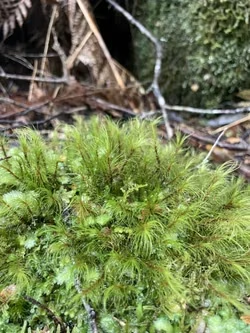
Dicranoloma menziesii, or Menzies' Star Moss, is a medium-sized acrocarpous moss forming loose to dense tufts and cushions 2.5 to 10 cm tall throughout New Zealand's wet forests. Its colour varies from vibrant yellowish-green in bright spots to deep dark green in shade. The long, slender leaves are typically falcate-secund, sickle-shaped and all swept to one side, giving the tufts a bristly appearance, and they regain a glossy sheen quickly after rain. It grows most often as an epiphyte on the trunks and branches of native trees, shrubs and tree ferns, and also on rotting logs and the forest floor. Widespread from sea level to subalpine regions near 1,550 metres, it is slow-growing, frost-tolerant and perennial. Explore more native mosses and lichens in our native plant guide.
Plant Description
Identification and Physical Characteristics
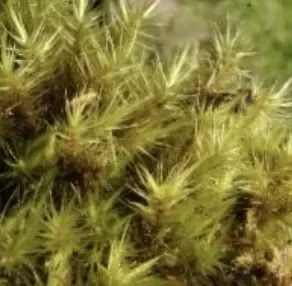
Dicranoloma menziesii is a medium-sized acrocarpous moss that typically forms loose to dense tufts or cushions, ranging from 2.5 to 10 cm in height. Its coloration is variable, appearing as a vibrant yellowish-green in well-lit areas or a deep, rich dark green in shaded forest interiors. The leaves are a key identifying feature: they are long, slender, and often "falcate-secund," meaning they are sickle-shaped and all turned towards one side of the stem. This gives the tips of the tufts a characteristic bristle-like or swept-over appearance. When dry, the leaves may become slightly curled or twisted, but they quickly unfurl and regain their glossy sheen upon rehydration. The capsules (sporophytes) are produced on short stalks that are often partially hidden within the upper leaves of the tuft.
Quick Facts
| Scientific Name | Dicranoloma menziesii |
|---|---|
| Height | 2.5-10 cm (Tufted Moss) |
| Spread | 5-15 cm (Clumping) |
| Water Needs | High (Consistent Humidity) |
| Light | Partial Shade to Deep Shade |
| Frost Tolerance | High |
| Salt Tolerance | Moderate (Coastal forms) |
| Growth Rate | Slow |
| Lifespan | Perennial |
Climate Best Suited to
Menzies' Star Moss thrives in the cool, temperate, and humid climates of New Zealand. It is widespread from coastal sea level up to subalpine regions at approximately 1,550 metres. It is particularly common in high-rainfall areas such as the West Coast of the South Island and the central North Island plateau. It requires a climate that provides consistent moisture through rain, mist, or high ambient humidity, as it lacks the complex water-storage tissues of vascular plants.
Regional Suitability
| City | Climate Suitability |
|---|---|
| Auckland | Suitable |
| Wellington | Highly Suitable |
| Christchurch | Suitable (With shade/humidity) |
| Dunedin | Highly Suitable |
| Queenstown | Suitable |
| Invercargill | Highly Suitable |
Plant Habitat
Natural Occurrence and Ecology
This moss is a versatile inhabitant of New Zealand's wet forests. It is most commonly found as an epiphyte, colonizing the trunks and branches of a wide range of native trees and shrubs, as well as the fibrous trunks of tree ferns. It also frequently grows on the forest floor, particularly on rotting logs, tree stumps, and exposed roots. It prefers shaded, damp environments where competition from taller herbs is low. Its ability to grow on vertical surfaces makes it a key component of the "epiphytic load" in mature podocarp and beech forests.
Growing Requirements
Soil Requirements
Does not require soil in the traditional sense. Grows on bark, rotting wood, or acidic forest floor litter.
- Tree bark
- Decaying wood
- Acidic leaf litter
Light Requirements
Prefers low to moderate light levels. Too much direct sun will bleach the foliage and cause the moss to dry out rapidly.
- Dappled light
- Partial shade
- Deep shade tolerant
Water Requirements
Requires high humidity and regular moisture. It absorbs water directly through its leaves from the surrounding air.
- Consistent humidity
- Regular misting
- Tolerates saturation
Planting and Establishing
Establishment Guidance
Establishing Menzies' Star Moss in a garden or terrarium involves replicating its forest-dwelling lifestyle. The most successful method is to move a small, established clump along with a piece of its substrate (like a fragment of bark or rotting wood). For garden use, choose a shaded, humid spot such as the base of a native tree or a sheltered rock feature. Press the clump firmly onto the new surface. Use fine twine or a mesh to secure the moss to vertical surfaces until its rhizoids (root-like structures) have anchored it. Mist daily with rainwater during the first few months to ensure the moss does not desiccate before it is established.
Ecological Role
Biodiversity and Ecosystem Impact
Dicranoloma menziesii is a foundational species in New Zealand's forest ecosystems. As an epiphyte, it contributes to the forest's ability to intercept and store rainwater, slowing down runoff and maintaining internal humidity. Its dense tufts provide a vital micro-habitat for a vast array of invertebrates, including mites, springtails, and small spiders. Furthermore, these moss cushions act as a "nursery" for the seeds of vascular plants, providing a moist, stable environment that facilitates the germination of certain forest trees and shrubs.
Uses & Significance
Garden Uses
Highly valued for native fernery displays, shaded rock gardens, and indoor terrariums. Its glossy, bristle-like texture adds a sense of "wild New Zealand" to garden features.
- Fernery accents
- Terrarium displays
- Native rockeries
Ecological Value
Essential for water cycling and biodiversity support in native forests. It acts as a pioneer species on bare wood, facilitating forest regeneration.
- Water retention
- Invertebrate habitat
- Seedling nursery
Landscaping Uses
In landscaping, Menzies' Star Moss is used to soften hard features like boulders or retaining walls in shaded areas. It is particularly effective in "moss gardens" or as a ground cover under large specimen trees where grass will not grow. Its ability to clothe vertical surfaces makes it a favorite for creating lush, green focal points in courtyard gardens or protected outdoor rooms.
Seasonal Care Calendar
Spring
Period of active growth. Ensure the moss is kept well-misted as temperatures rise and new growth emerges.
- Increase misting
- Check for sporophytes
Summer
Watch for desiccation during hot, dry spells. The moss may go dormant if it dries out, turning a duller green.
- Provide deep shade
- Maintain humidity
Autumn
Growth resumes with cooler temperatures and increased rainfall. This is an ideal time for transplanting.
- Transplant clumps
- Clear fallen leaves
Winter
Growth slows. The moss is very hardy and can withstand freezing temperatures. Ensure it is not crushed by heavy snow for long.
- Minimal care
- Ensure no disturbance
When to Prune and How Much
Mosses like Dicranoloma menziesii do not require pruning in the traditional sense. They are self-maintaining and regulate their own size based on moisture and space.
- No pruning required
- Self-regulating growth
If a clump becomes too large for its allocated space, simply pull away sections of the moss from the edges. These removed pieces can then be used for propagation in other areas.
How to Grow Menzies' Star Moss
Cultivating Menzies' Star Moss ( Dicranoloma menziesii ) is a specialized task that requires a focus on microclimate rather than soil health. Unlike flowering plants, this moss lacks true roots and instead anchors itself using delicate rhizoids. It relies entirely on the ambient environment for its water and nutrient needs. Success in the garden depends on creating a stable, humid, and shaded environment that mimics the interior of a New Zealand rainforest. This species is particularly rewarding for those with shaded courtyard gardens or for terrarium enthusiasts who appreciate the intricate, glossy texture of native bryophytes.
From Fragmentation
Vegetative propagation through fragmentation is the most effective and commonly used method for increasing your stock of Menzies' Star Moss.
Because every cell in a moss plant has the potential to grow into a new plant, fragments are highly resilient.
- Carefully remove a small piece of a healthy clump. Please ensure you only take a small portion from wild colonies to maintain their health.
- Break the clump into smaller segments (fragments).
- Prepare a surface by moistening it. Some growers use a slurry method where they blend the moss with a little water and a binder like yogurt, then "paint" it onto a rock or log.
- Alternatively, simply press the fragments onto a moist, shaded surface.
- Keep the fragments consistently moist using a fine mist sprayer. Distilled water or rainwater is far superior to tap water.
- Maintain high humidity around the fragments by placing them in a protected spot or under a clear cover.
From Spores
Propagation from spores is much slower but is the natural way the moss colonizes new areas in the forest.
- Look for mature capsules (sporophytes) which appear as small brown cases on stalks above the moss tuft.
- Collect the capsules when they are dry and starting to split.
- Dust the spores onto a sterile, moist medium such as chopped sphagnum moss or a sterilized brick.
- Keep in a high-humidity environment with low, indirect light.
- Germination will appear first as a thin green film (protonema) before the characteristic tufts begin to form.
Additional Methods
Translocation of an entire clump attached to its original substrate (like a fallen branch) is the most reliable method for garden establishment. This avoids the delicate initial growth phase and allows the moss to immediately begin expanding in its new location. Regardless of the method, the most critical factor is ensuring that the moss never dries out completely during its first year of establishment.
Pests & Diseases
Menzies' Star Moss is remarkably free from pests and diseases. However, in indoor terrariums, it can be susceptible to fungal moulds if the air circulation is non-existent and the moss is kept too wet. In the garden, it may be disturbed by foraging birds (like blackbirds) searching for insects within the cushions.
Cultural Significance
Mosses, known generally as 'rimurimu' or 'waewae kōhatu' in Māori, are considered the clothing of the Earth Mother, Papatūānuku. Dicranoloma menziesii is part of the diverse botanical carpet that softens the forest landscape. It represents the quiet resilience and fundamental importance of the smaller life forms that sustain the health of the broader forest ecosystem.
- Forest heritage symbol
- Botanical resilience icon
Bonus Tip
If your moss looks dry and brittle, don't throw it away! Most native mosses are poikilohydric, meaning they can survive significant desiccation. Give it a thorough misting with rainwater, and you will see it "come back to life" and turn green and glossy within minutes.
Related Plants
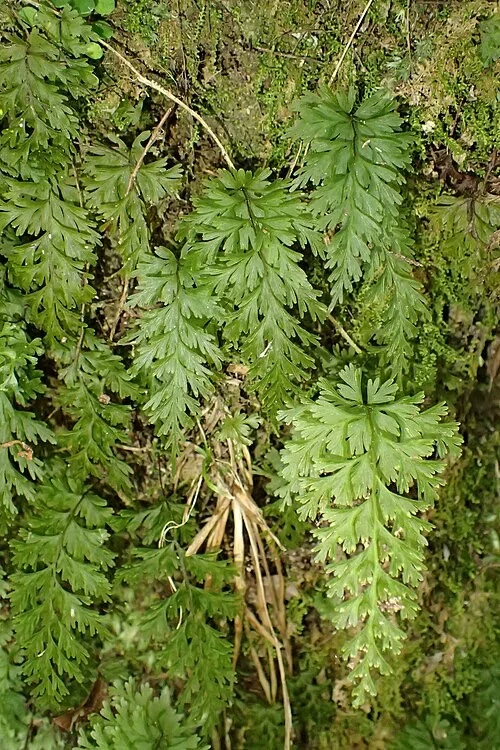
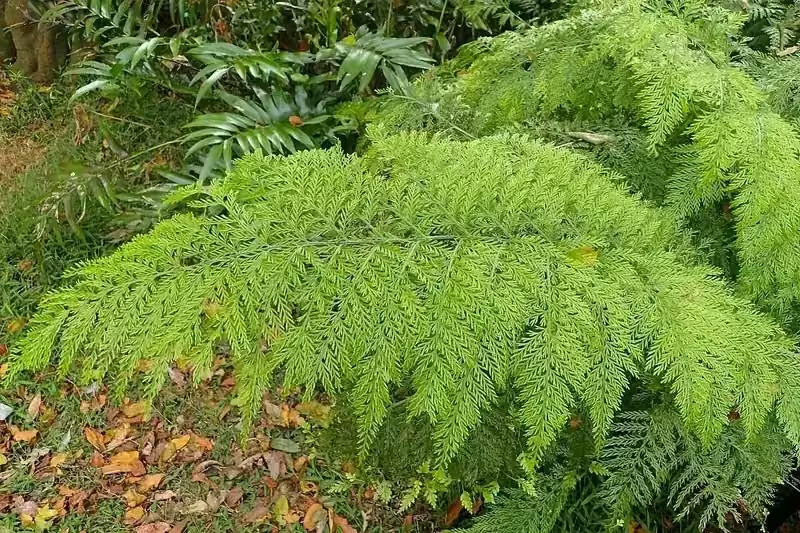
Explore other native plants that share similar characteristics or habitats with Menzies' Star Moss ( Dicranoloma menziesii ), offering further insights into New Zealand's diverse flora. These related species provide context and opportunities for complementary planting in your garden.




Plant Conservation
Conservation Status and Threats
Dicranoloma menziesii is currently classified as Not Threatened in New Zealand. It remains one of our most common and widespread forest mosses. However, it relies heavily on the health of the native forest canopy to provide the humidity and shade it requires. Protecting large tracts of mature forest from clearing and the impacts of grazing pests is essential for ensuring this beautiful moss continues to drape our forest landscapes.
Frequently Asked Questions
How tall does Dicranoloma menziesii grow?
It forms tufts and cushions ranging from 2.5 to 10 cm in height.
Where does Dicranoloma menziesii grow?
It grows mainly as an epiphyte on tree trunks and branches, and also on logs and the forest floor.
How high up is Menzies' Star Moss found?
It occurs from coastal sea level up to subalpine regions at about 1,550 metres, especially in high-rainfall areas.
Does Dicranoloma menziesii tolerate frost?
Yes, it has high frost tolerance and thrives in cool, temperate, humid forest climates.
Sources and Further Reading
The botanical, growing, and conservation details for Menzies' Star Moss (Dicranoloma menziesii) on this page draw on authoritative New Zealand plant references and citizen-science observation records. Consult the sources below for full technical records and the latest distribution data.