Lindsay's Mountain Daisy
Celmisia lindsayi
Last updated:
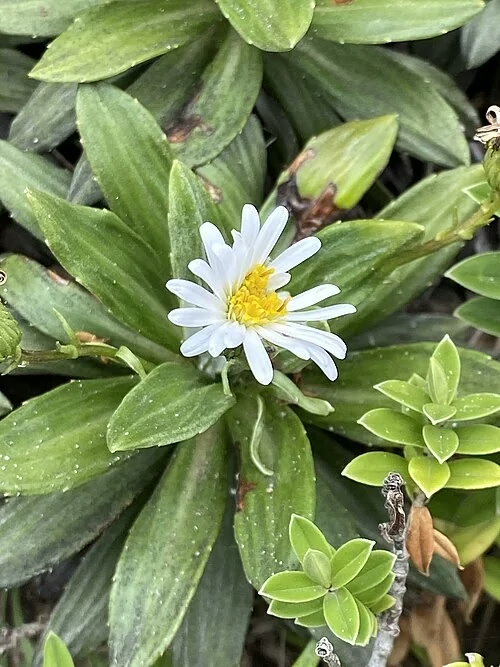
Lindsay's Mountain Daisy (Celmisia lindsayi) is a distinctive, nationally vulnerable subshrub endemic to a small stretch of the southeastern South Island coast, in Otago and Southland. Unusually for a mountain daisy, it is a coastal plant, growing on exposed cliffs, rock outcrops and stable banks battered by salt-laden wind. It forms compact rosettes of broad, spoon-shaped, leathery leaves that are dark green and glossy above with a dense silvery-white tomentum beneath, reaching 0.10 to 0.25 metres tall and 0.30 to 0.60 metres wide. In late spring to early summer it bears white daisy flowers with bright yellow centres, and it is highly salt tolerant. Explore more coastal native plants in our native plant guide.
Plant Description
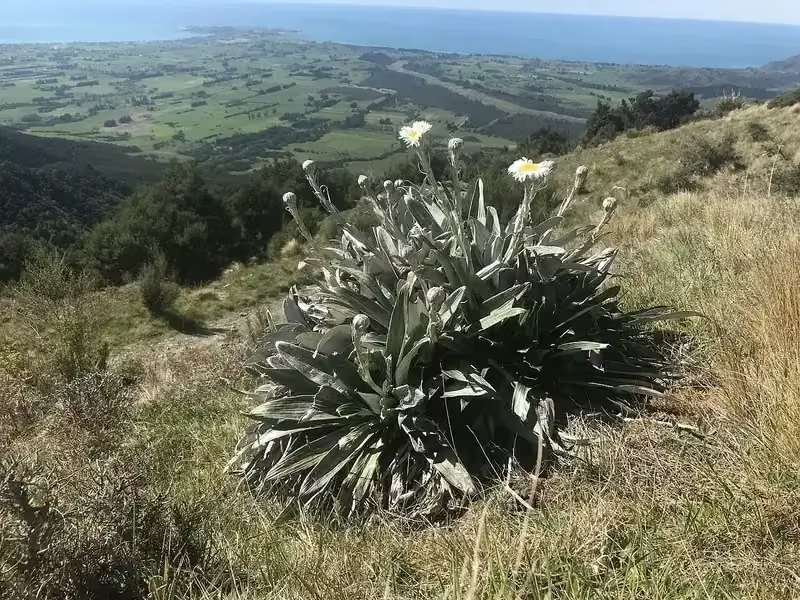
Celmisia lindsayi , commonly known as Lindsay's Mountain Daisy, is a distinctive and nationally vulnerable subshrub endemic to a limited range of coastal South Island, New Zealand. This striking plant forms compact rosettes of broad, leathery leaves that are dark green and glossy on the upper surface, contrasting with a dense, silvery-white tomentum on the underside. The leaves are often spoon-shaped and quite rigid. In late spring to early summer, it produces attractive daisy-like flowers with pure white ray florets and a bright yellow center, held proudly above the foliage on short, sturdy stems. Its robust nature allows it to thrive in exposed, windswept coastal environments.
Quick Facts
| Scientific Name | Celmisia lindsayi |
|---|---|
| Height | 0.10-0.25 metres |
| Spread | 0.30-0.60 metres |
| Water Needs | Moderate; drought tolerant once established |
| Light | Full sun |
| Frost Tolerance | Moderate to High (Coastal hardy) |
| Salt Tolerance | High |
| Growth Rate | Slow |
| Lifespan | 10-25 years |
Climate Best Suited to
Lindsay's Mountain Daisy is adapted to the cool, temperate coastal climates of the southern South Island. It is highly tolerant of strong winds, salt spray, and occasional frosts, making it ideal for coastal gardens. While it can withstand some colder temperatures, it performs best in mild coastal conditions where it can receive ample sunlight and good air circulation. It struggles in hot, humid inland environments.
Regional Suitability
| City | Climate Suitability |
|---|---|
| Auckland | Marginal (needs good air movement) |
| Wellington | Good (if coastal) |
| Christchurch | Excellent (coastal areas) |
| Dunedin | Excellent |
| Invercargill | Excellent |
Plant Habitat
This Celmisia species is restricted to specific coastal habitats along the South Island's southeastern coastline, particularly in Otago and Southland. It is typically found on exposed coastal cliffs, rock outcrops, and steep, stable banks that are subject to constant salt-laden winds. Its ability to anchor itself securely in rocky crevices and withstand harsh maritime conditions makes it a key component of these unique coastal ecosystems.
Growing Requirements
Soil Requirements
Requires very well-drained, often rocky or sandy soil, that can be low in nutrients. It is intolerant of heavy, waterlogged conditions.
- Very well-drained, sandy or rocky soil
- Tolerant of low nutrient levels
- Prefers neutral to slightly alkaline pH
Light Requirements
Demands full sun to maintain its compact growth habit and encourage prolific flowering. It will become leggy and less vigorous in shade.
- Full sun essential
- Avoid shade
- Requires open, bright conditions
Water Requirements
Once established, it is quite drought-tolerant but will benefit from occasional watering during prolonged dry spells, especially in exposed sites.
- Drought tolerant once established
- Occasional watering in dry periods
- Avoid overhead watering to prevent fungal issues
Planting and Establishing
When planting Lindsay's Mountain Daisy, choose a sunny, exposed site with excellent drainage, such as a rock garden or a coastal bank. Ensure the soil is light and gritty. Dig a hole just deep enough for the root ball and position the plant so its crown is at or slightly above ground level. Backfill with a sandy-gritty soil mix. Water in thoroughly but allow the soil to dry out between subsequent waterings. A top-dressing of fine gravel around the base will help keep the foliage dry and mimic its natural habitat.
Ecological Role
Celmisia lindsayi is an ecologically significant species in New Zealand's subalpine and alpine zones, particularly in the Canterbury high country. This mountain daisy provides essential pollination services by attracting native alpine insects with its white, daisy-like flowers during the summer months. Endemic flies, beetles, moths, and native bees rely on these flowers for nectar and pollen when foraging opportunities are limited by altitude and climate.
Beyond supporting pollinators, this species plays a crucial role in maintaining slope stability in alpine grasslands and fellfields. Its robust root system helps bind soil particles in areas subject to frost heave and erosion. The plant's silvery leaves create protective microhabitats that moderate temperature extremes and provide shelter for alpine arthropods. As a pioneer species, it helps colonize disturbed sites and facilitates the establishment of other alpine plants in challenging mountain environments.
Uses & Significance
Garden Uses
An excellent choice for coastal gardens, rock gardens, and exposed sites where a hardy, compact daisy is desired. Its striking foliage provides year-round appeal.
- Coastal gardens
- Rock gardens and raised beds
- Exposed, windy sites
Ecological Value
Its flowers provide nectar for native insects, including moths and butterflies, that are active in coastal environments.
- Nectar source for coastal insects
- Habitat for small invertebrates
- Coastal erosion control
Landscaping Uses
Ideal for specialized coastal landscaping where its hardiness and unique appearance can be showcased. It can be used in mass plantings for dramatic effect on banks or in crevices.
Seasonal Care Calendar
Spring
Remove any dead or damaged leaves from the previous winter. A light application of slow-release native plant fertilizer can be given if growth is sluggish.
- Remove winter-damaged foliage
- Light feeding (low-phosphorus)
- Ensure good air circulation
Summer
Monitor for pests, especially mealybugs in warmer coastal areas. Water deeply but infrequently during prolonged dry periods.
- Deep watering in dry spells
- Check for mealybugs
- Avoid overhead watering
Autumn
After flowering, spent flower stalks can be removed to tidy the plant. Ensure the site is free-draining before winter rains set in.
- Remove spent flower stalks
- Check drainage
- Plant new specimens
Winter
Requires minimal attention. It is naturally hardy to coastal winter conditions but appreciates good drainage to prevent rot.
- Minimal maintenance
- Ensure winter drainage
- Protect from extreme persistent wetness
When to Prune and How Much
Pruning is generally limited to removing spent flower stalks and any dead or discoloured leaves to maintain the plant's tidy appearance and prevent disease.
- Remove spent flower stalks
- Trim dead or yellowing leaves
- Do not cut into old, woody stems
Use clean, sharp secateurs to avoid tearing the leathery leaves. Good air circulation around the base of the plant is crucial.
How to Grow Lindsay's Mountain Daisy
Cultivating Lindsay's Mountain Daisy ( Celmisia lindsayi ) is a rewarding endeavor for any gardener interested in New Zealand's unique flora. This species can be propagated through several methods, each requiring specific conditions to ensure healthy growth and establishment. Successful propagation depends on mimicking the plant's natural environment and providing consistent care during the early stages of development.
From Seed
Propagation from seed is often the most effective way to produce a large number of Lindsay's Mountain Daisy plants. Seeds should be collected when they are fully mature. Freshly collected seeds generally have higher germination rates than those that have been stored for long periods.
Fresh seeds are the most reliable method. Collect seeds when ripe in late summer to autumn.
- Surface sow on a gritty, well-drained seed mix.
- Keep moist and place in a cold frame.
- Germination can be slow and sporadic.
- Grow on in individual pots once large enough.
As a relatively rare species, careful handling of seeds and young seedlings is important for successful propagation.
From Cuttings
For those wishing to replicate specific characteristics of a parent plant, vegetative propagation via cuttings is the preferred method. This technique ensures that the new plants are genetically identical to the source. Semi-hardwood cuttings taken during the appropriate season usually yield the best results for this species.
Semi-hardwood cuttings can be taken, but they can be tricky to root and require careful management of moisture and light.
- Take small, firm cuttings in late spring to early summer.
- Dip in rooting hormone and insert into a very gritty mix.
- Provide high humidity and warmth while ensuring good air circulation.
- Be patient, as rooting can take several weeks or months.
Additional Methods
Depending on the growth habit of Lindsay's Mountain Daisy, other methods such as division or layering might also be viable options. Division is particularly suitable for plants that form dense clumps or have spreading root systems, while layering can be used for species with trailing or flexible stems.
Division of established clumps is possible, but this plant is slow-growing and divisions should be handled with care.
- Carefully lift and divide a mature clump.
- Ensure each division has a healthy root system.
- Replant immediately and keep well-watered until established.
Pests & Diseases
Generally healthy, but can be susceptible to root rot in poorly drained conditions. Mealybugs can occasionally become an issue in sheltered, humid environments. Ensure good air circulation to prevent fungal issues.
Cultural Significance
Lindsay's Mountain Daisy is valued as a rare and beautiful component of New Zealand's unique coastal flora, representing the resilience of native plants in harsh environments.
- Rare and vulnerable coastal species
- Unique beauty in NZ flora
- Endemic to specific South Island coasts
Bonus Tip
The unique texture of its leaves can be highlighted by planting it near plants with fine foliage, such as native grasses or small ferns.
Related Plants
Explore other native plants that share similar characteristics or habitats with Lindsay's Mountain Daisy ( Celmisia lindsayi ), offering further insights into New Zealand's diverse flora. These related species provide context and opportunities for complementary planting in your garden. For another coastal species, explore Neptune's Necklace.
Silver Mountain Daisy
Celmisia coriacea
Mountain Daisy
Celmisia spectabilis

Large Mountain Daisy
Celmisia semicordata
Snow Tussock Daisy
Celmisia sessiliflora

False Spaniard
Celmisia lyallii
Monro's Mountain Daisy
Celmisia monroi
Celmisia verbascifolia
Celmisia verbascifolia

Akaroa Daisy
Celmisia mackaui
Plant Conservation
Celmisia lindsayi is classified as "Threatened - Nationally Vulnerable" under the New Zealand Threat Classification System. Its restricted coastal habitat makes it susceptible to various threats, including habitat degradation from coastal development, competition from invasive weeds, and erosion. Climate change, leading to increased storm intensity and sea-level rise, poses a long-term risk to its limited populations.
Frequently Asked Questions
Where does Celmisia lindsayi grow?
It grows on coastal cliffs and rock outcrops in Otago and Southland, in the southeastern South Island.
What is the conservation status of Lindsay's Mountain Daisy?
It is classified as Threatened - Nationally Vulnerable.
Is Celmisia lindsayi salt tolerant?
Yes, it has high salt tolerance and withstands constant salt-laden coastal winds.
How tall does Lindsay's Mountain Daisy grow?
It grows 0.10 to 0.25 metres tall and spreads 0.30 to 0.60 metres wide.
Sources and Further Reading
The botanical, growing, and conservation details for Lindsay's Mountain Daisy (Celmisia lindsayi) on this page draw on authoritative New Zealand plant references and citizen-science observation records. Consult the sources below for full technical records and the latest distribution data.