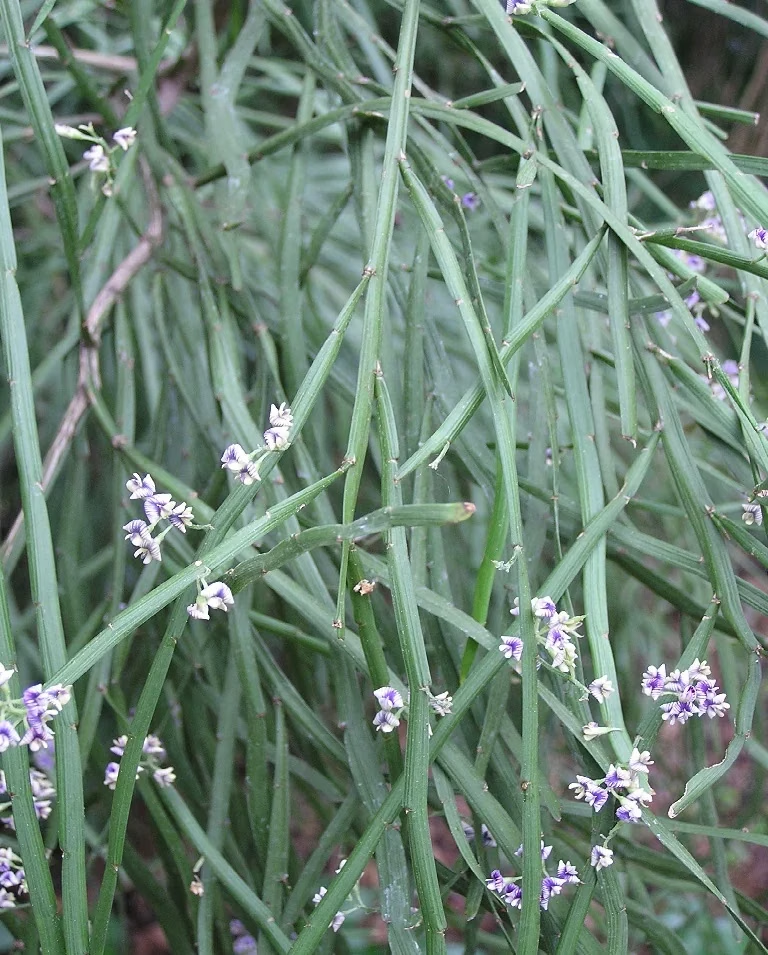
Whip Broom
Carmichaelia flagelliformis
Last updated:
Carmichaelia flagelliformis, commonly called Whip Broom, is an erect, stiff native shrub growing 1 to 2 metres tall. Its name describes its many slender, whip-like green branches, which are largely leafless on mature plants and photosynthesise through their stems. From late spring into summer it bears clusters of small, fragrant, purplish-lilac pea-like flowers, followed by beaked pods holding red seeds mottled with black. Native to the North Island from East Cape southwards, it ranges from the coast to montane areas, growing on river terraces, stream banks, rock outcrops and tussock grassland. A hardy nitrogen-fixing legume, it is a pioneer of poor, stony soils and is grown in dry, open, sunny gardens. Explore more native shrubs in our native plant guide.

Plant Description
Carmichaelia flagelliformis is an erect, stiff shrub typically growing to a height of 1-2 metres. Its name "Whip Broom" aptly describes its numerous slender, green branches which are often leafless or have tiny, inconspicuous leaves, particularly on mature plants. The branchlets are flattened or convex when young, becoming rounder as they age. In late spring to summer, it produces small, fragrant, purplish-lilac pea-like flowers in clusters (racemes) along the stems. These are followed by small, beaked seed pods containing red seeds mottled with black.
Quick Facts
| Scientific Name | Carmichaelia flagelliformis |
|---|---|
| Height | 1 - 2 m |
| Spread | 1 - 1.5 m |
| Water Needs | Low |
| Light | Full Sun |
| Frost Tolerance | Hardy |
| Salt Tolerance | Moderate |
| Growth Rate | Medium |
| Lifespan | Perennial |
Climate Best Suited to
Carmichaelia flagelliformis is well-suited to a wide range of climates across New Zealand but naturally occurs in the North Island from East Cape southwards. It is hardy to frost and tolerant of dry conditions once established. It prefers open, airy environments and thrives in full sun. While it can tolerate some coastal exposure, it performs best in sheltered spots in extremely windy coastal zones.
Regional Suitability
| City | Climate Suitability |
|---|---|
| Auckland | Suitable |
| Wellington | Very Suitable |
| Christchurch | Very Suitable |
| Dunedin | Suitable |
| Queenstown | Suitable |
| Invercargill | Suitable |
| Hamilton | Suitable |
Plant Habitat
Native to the North Island, Carmichaelia flagelliformis is found from the coast to montane areas. Its natural habitats include river terraces, stream banks, rock outcrops, tussock grasslands, and the edges of forests and swamps. It is a pioneer species that often establishes in disturbed ground with shallow, poor, or stony alluvial soils, demonstrating its ability to thrive in challenging conditions.
Growing Requirements
Soil Requirements
Requires free-draining soil; tolerant of poor, stony, or sandy soils.
- Sandy loam
- Stony alluvium
- Intolerant of waterlogging
Light Requirements
Demands full sun for best growth and flowering.
- Full Sun
- Light Shade
Water Requirements
Drought tolerant once established; water during dry spells in early years.
- Low to Moderate
- Avoid overwatering
Planting and Establishing
Plant Whip Broom in a sunny location with well-drained soil. It is particularly suitable for rockeries, banks, or mixed native borders. When planting, dig a hole slightly larger than the root ball and loosen the soil at the bottom. If the soil is heavy clay, incorporate grit or pumice to improve drainage or plant on a raised mound. Water well after planting and during the first summer. Avoid mulching heavily right up to the stem to prevent collar rot.
Ecological Role
As a member of the legume family (Fabaceae), Carmichaelia flagelliformis plays a beneficial role in the ecosystem by fixing nitrogen in the soil, which helps support surrounding plant growth. Its flowers provide nectar for native bees and butterflies, while the seed pods offer a food source for birds and insects. Its open, branching structure can also provide shelter for small fauna.
Uses & Significance
Garden Uses
Valued for its unique texture and form in native gardens.
- Architectural specimen
- Rock gardens
- Dry, stony banks
- Mixed borders
Ecological Value
Nitrogen fixer and pollinator support.
- Soil improvement
- Biodiversity support
Landscaping Uses
Carmichaelia flagelliformis offers a unique structural element to landscaping with its vertical, broom-like habit. It contrasts beautifully with broad-leaved shrubs like Hebe or Griselinia . It is an excellent choice for dry, difficult sites where other plants might struggle, such as steep banks or exposed, stony areas. Its delicate purple flowers add a subtle splash of colour in summer.
Seasonal Care Calendar
Spring
Inspect and feed.
- Check for pests
- Light prune if needed
Summer
Enjoy flowers.
- Water young plants
- Monitor for seed pods
Autumn
Planting season.
- Plant new specimens
- Collect seed
Winter
Dormancy.
- Protect from waterlogging
- Frost hardy
When to Prune and How Much
Carmichaelia flagelliformis requires minimal pruning. If the plant becomes straggly or too large, it can be lightly pruned after flowering to encourage bushier growth.
- Prune after flowering
- Avoid cutting into old wood
Removing dead or damaged branches improves the plant's appearance. Regular tip pruning of young plants can help establish a more compact habit.
How to Grow Whip Broom
Growing Carmichaelia flagelliformis is a rewarding experience for gardeners looking to add a unique, structural element to their native planting. This species is relatively easy to propagate and grow, provided its basic requirements for sun and drainage are met. It is a resilient plant that, once established, requires little maintenance. Propagation is most commonly achieved through seed, which is produced in abundance, or via semi-hardwood cuttings. Its ability to fix nitrogen makes it a self-sufficient feeder, often thriving in soils where other shrubs would fail.
From Seed
Seed propagation is the most natural and effective method. Seeds are housed in small pods that ripen in late summer to autumn.
Sowing fresh or scarified seed improves germination.
- Collect the seed pods when they turn brown and dry. Open them to remove the small, mottled seeds.
- To speed up germination, lightly scarify the seeds by rubbing them with sandpaper or soaking them in warm water overnight. This helps moisture penetrate the hard seed coat.
- Sow the treated seeds in a tray of free-draining seed-raising mix. Cover lightly with mix or grit.
- Keep the tray moist and in a warm, bright spot. Germination usually occurs within a few weeks.
- Prick out seedlings into individual pots once they have developed their first true leaves (which may be small leaflets) and are large enough to handle.
Grow the seedlings on in a sheltered nursery spot for their first winter before planting out in spring.
From Cuttings
Semi-hardwood cuttings can be taken in late summer or autumn. This method ensures the new plant is a clone of the parent, useful if propagating a particular form.
Cuttings require care to strike.
- Select healthy, semi-ripe stems about 10-15cm long.
- Remove any lower leaves (if present) and dip the cut end in rooting hormone powder or gel.
- Insert the cuttings into a pot containing a mix of sand and peat or perlite.
- Place in a warm, humid environment, such as a propagator or under a plastic cover, out of direct sunlight.
- Mist regularly to maintain humidity until roots develop, which can take several months.
Additional Methods
While seed and cuttings are the primary methods, ensuring the right planting site is the best "method" for long-term success.
Site selection tips:
- Choose a spot with maximum sun exposure.
- Verify drainage; dig a test hole and fill with water to see how fast it drains. If it sits, improve the soil or mound up.
- Allow space for the plant's upright, spreading habit.
Pests & Diseases
Carmichaelia flagelliformis is generally robust but can be susceptible to the lemon tree borer (Oemona hirta), the larvae of which tunnel into stems causing dieback. Pruning off affected branches is the best control. Scale insects and aphids may occasionally infest new growth; these can be treated with neem oil or simply blasted off with a hose. Root rot can occur in heavy, waterlogged soils, emphasizing the need for good drainage.
Cultural Significance
The genus Carmichaelia is named after Dugald Carmichael, a Scottish botanist who collected plants in New Zealand. While specific traditional Māori uses for this exact species are not widely documented compared to other plants like Harakeke, the brooms as a group are a characteristic component of the New Zealand landscape, particularly in open, dry areas.
- Characteristic NZ flora
- Ecological pioneer
Bonus Tip
Plant Whip Broom near a pathway where you can brush past it; the stiff stems make a pleasing rustling sound, and the small flowers release a sweet scent on warm days.
Related Plants
Explore other native plants that share similar characteristics or habitats with Whip Broom ( Carmichaelia flagelliformis ), offering further insights into New Zealand's diverse flora. These related species provide context and opportunities for complementary planting in your garden.
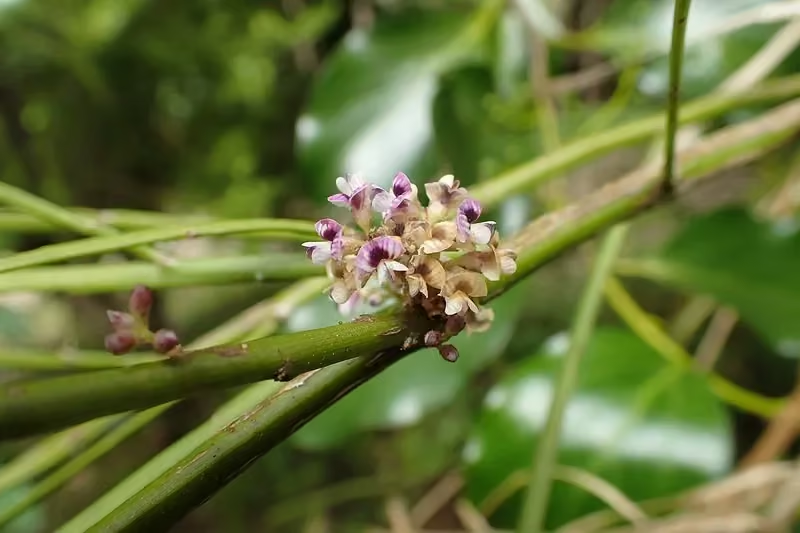
Common Broom
Carmichaelia australis
The most widespread native broom, featuring flattened green stems and small white-purple flowers.
Learn more
Scented Broom
Carmichaelia odorata
A leafy broom noted for its highly fragrant, profuse sprays of mauve flowers.
Learn more
Williams' Broom
Carmichaelia williamsii
A rare coastal broom with distinctively large, creamy-yellow flowers.
Learn more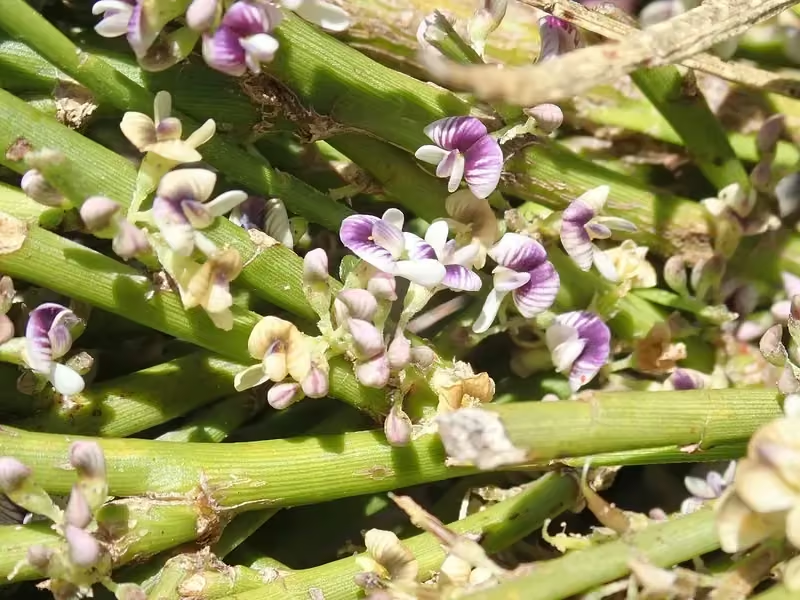
Prostrate Broom
Carmichaelia appressa
A specialized broom that grows flat along the ground, adapted to stony coastal sites.
Learn more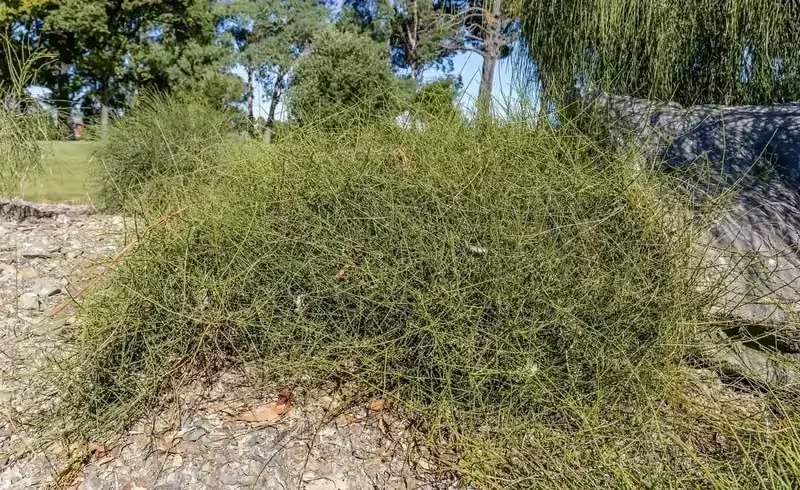
Climbing Broom
Carmichaelia kirkii
A scrambling or climbing broom species found in dry eastern areas.
Learn more
Kōwhai
Sophora microphylla
Another iconic New Zealand legume with golden yellow flowers, sharing similar nitrogen-fixing traits.
Learn more
Kākābeak
Clianthus puniceus
A striking native legume with red, beak-like flowers, often grown as an ornamental shrub.
Learn more
Mānuka
Leptospermum scoparium
A common pioneer shrub that often grows in similar dry, scrubby habitats to Carmichaelia.
Learn morePlant Conservation
Carmichaelia flagelliformis is currently classified as "Not Threatened" under the New Zealand Threat Classification System. However, like many native plants, it faces pressures from habitat modification and introduced pests. Protecting its natural habitat from clearance and maintaining healthy populations in the wild ensures its continued survival.
Frequently Asked Questions
How tall does Carmichaelia flagelliformis grow?
Whip Broom usually grows 1 to 2 metres tall with a spread of around 1 to 1.5 metres.
Where is Carmichaelia flagelliformis found naturally?
It is native to the North Island, from East Cape southwards, from the coast to montane areas.
Is Carmichaelia flagelliformis frost hardy?
Yes, it is hardy to frost and tolerant of dry conditions once established.
Does Carmichaelia flagelliformis tolerate coastal conditions?
It has moderate salt tolerance, so it can cope with some exposure in coastal gardens.
Sources and Further Reading
The botanical, growing, and conservation details for Whip Broom (Carmichaelia flagelliformis) on this page draw on authoritative New Zealand plant references and citizen-science observation records. Consult the sources below for full technical records and the latest distribution data.