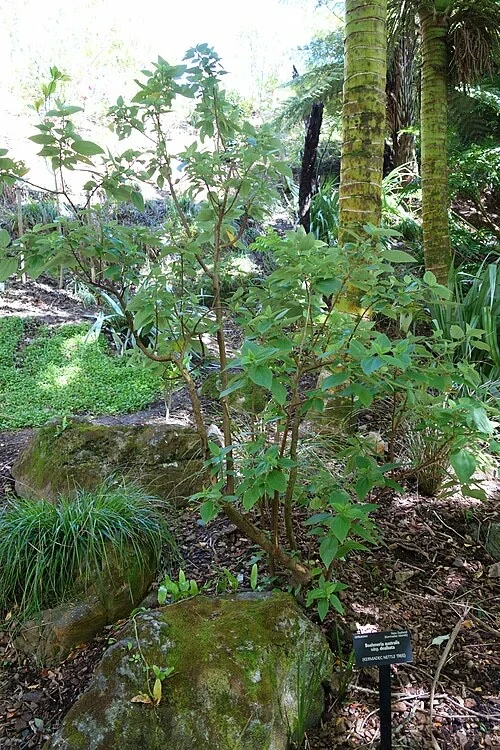
Kermadec Nettle-Tree
Boehmeria australis (syn. Pouzolzia australis )
Last updated:
Boehmeria australis, known as the Kermadec Nettle-Tree, is a fast-growing evergreen shrub or small tree reaching 1 to 8 metres tall with a spreading crown. Its oval, sharply serrated leaves grow up to 15 cm long and are strikingly bicoloured: deep green above and densely white-haired beneath, so the foliage flashes pale in the wind. Endemic to the Kermadec Islands of Raoul and Macauley, it colonises coastal cliffs, landslips and rocky banks in warm, salt-laden conditions. Nationally Endangered, it tolerates high salt and coastal wind but is frost-tender, making it a subtropical specialist grown for its bold, contrasting foliage. Explore more coastal native plants in our native plant guide.
Plant Description
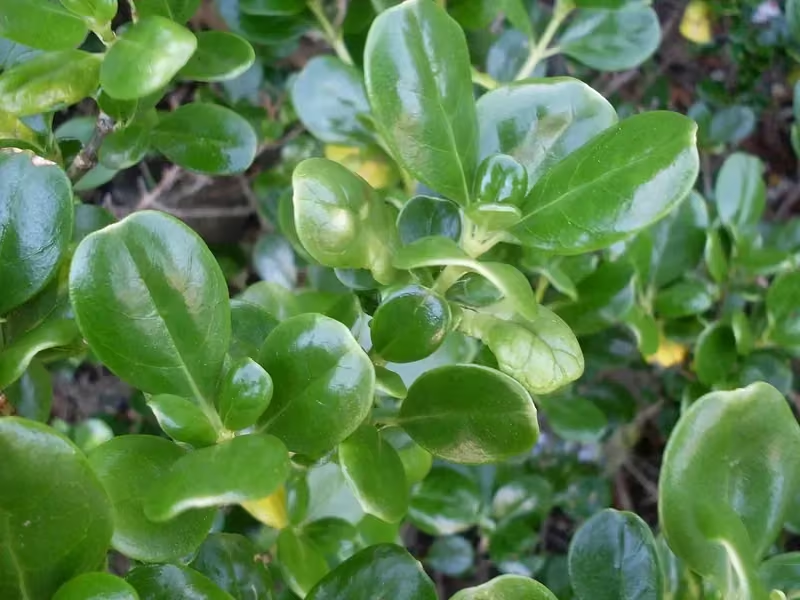
Boehmeria australis is a fast-growing, evergreen large shrub or small tree that typically reaches heights of 1 to 8 meters. It features a robust, upright growth habit with a spreading crown of dense foliage. The leaves are alternate, oval to broadly ovate, and can measure up to 15 cm in length. They are characterized by their pointed tips and prominently serrated edges. The upper surface of the leaf is a vibrant, deep green and can be smooth or slightly wrinkled (bullate), while the underside is densely covered in fine, white or grayish hairs, giving it a striking bicoloured appearance that is particularly noticeable when caught in the wind.
Throughout the year, the Kermadec Nettle-Tree produces clusters of tiny, relatively inconspicuous flowers that range from white to pale brown. These flowers are arranged in small bunches within the leaf axils. Following pollination, small, dry fruits develop, which are also produced year-round. Despite belonging to the Urticaceae (nettle) family, this species does not possess stinging hairs, making it a "soft" or "smooth" nettle tree that is safe to handle. Its bark is typically smooth and gray, maturing to a more textured appearance in older specimens. The overall form is one of lush, tropical-looking greenery, a reflection of its volcanic island origins.
Quick Facts
| Scientific Name | Boehmeria australis |
|---|---|
| Height | 1 - 8 meters |
| Spread | 2 - 4 meters |
| Water Needs | Moderate (Requires consistent moisture) |
| Light | Full sun to semi-shade |
| Frost Tolerance | Low (Tender, subtropical specialist) |
| Salt Tolerance | High (Thrives in coastal environments) |
| Growth Rate | Fast |
| Lifespan | Perennial (Small tree) |
Climate Best Suited to
Kermadec Nettle-Tree is specialized for the subtropical and maritime climates of the northern islands of New Zealand. It flourishes in areas with high ambient humidity, consistent rainfall, and warm temperatures throughout the year. It is highly resilient to coastal winds and salt spray, a necessity for its shoreline habitats on Raoul and Macauley Islands. However, it is very tender and has extremely low frost tolerance, meaning it is only suitable for outdoor cultivation in the warmest, most frost-free regions of the upper North Island, such as Northland and protected parts of Auckland. In cooler regions, it must be grown in a large container and moved to a sheltered or indoor position during the winter months.
Regional Suitability
| City | Climate Suitability |
|---|---|
| Auckland | Suitable (In very sheltered, frost-free sites) |
| Whangārei | Highly Suitable (Enjoys the warmth and humidity) |
| Wellington | Poor (Too cold and prone to frost) |
| Christchurch | Poor (Requires greenhouse protection) |
| Nelson | Marginal (Only in exceptionally sheltered microclimates) |
Plant Habitat
The natural habitat of Boehmeria australis is restricted to the Kermadec Islands, specifically Raoul Island and Macauley Island. It is a prominent member of the coastal forest communities, where it often occupies areas of recent or semi-stable landslips, cliff faces, and rocky banks. It thrives in the fertile, volcanic soils of these islands and is frequently found growing in low scrub or along forest margins where light levels are higher. Its ability to colonize disturbed coastal ground makes it an important pioneer species in the Kermadec ecosystem. Its specialization for these isolated, maritime-volcanic environments underscores its unique evolutionary path and its vulnerability to localized environmental changes.
Growing Requirements
Soil Requirements
Thrives in fertile, organic-rich, and well-drained volcanic or loamy soils.
- High organic matter (compost, leaf mold)
- Must be free-draining but moisture-retentive
- Tolerates slightly acidic to neutral pH
- Benefits from fertile volcanic-type substrates
Light Requirements
Performs best in full sun to light semi-shade. Requires high light for dense growth.
- Full sun for maximum leaf bicolouration
- Adaptable to bright, filtered light
- Shelter from intense midday sun in very hot sites
Water Requirements
Moderate to high water needs. Requires consistent moisture to maintain its lush foliage.
- Regular watering during dry spells
- Sensitive to prolonged soil dryness
- Appreciates high ambient humidity
- Avoid waterlogged conditions
Planting and Establishing
Choose a warm, frost-free location that is protected from strong winds but receives plenty of sunlight. Enrich the soil with a generous amount of well-rotted compost or aged manure to ensure high fertility. Dig a hole twice the width of the root ball and backfill with a mix of native soil and organic matter. Position the tree so the crown is level with the soil surface and firm in gently. Water thoroughly after planting and maintain a rigorous watering schedule during the first year of establishment. A thick layer of organic mulch around the base is essential to retain soil moisture and maintain the stable root environment it requires. Because it is fast-growing, ensure it has enough space to expand its spreading crown. In cooler regions, it is best planted in a large, well-drained container that can be easily moved to a protected spot during winter.
Ecological Role
Kermadec Nettle-Tree is a foundational species in the isolated ecosystems of the Kermadec Islands. As a pioneer tree, it plays a vital role in stabilizing volcanic slopes and initiating forest regeneration after landslips or volcanic activity. Its dense foliage provides essential nesting and foraging habitat for the unique bird species of the Kermadecs, such as the Kermadec Red-crowned Parakeet. The year-round production of tiny flowers and fruits provides a consistent resource for native pollinators and seed dispersers. Its bicoloured leaves contribute to the complex light dynamics of the coastal forest understory. Furthermore, as an endangered species, its presence is a critical measure of the overall health and resilience of our northern island biodiversity.
Uses & Significance
Garden & Landscape Uses
In frost-free gardens, Boehmeria australis is valued for its lush, tropical appearance and striking foliage. It is an ideal choice for creating architectural interest in coastal landscapes or for adding textural depth to a native subtropical garden. Its fast growth rate makes it a useful screening plant in warm, sheltered sites.
- Architectural bicoloured foliage feature
- Lush subtropical screening
- Coastal forest restoration
- Large structural container specimen
- Adds tropical texture to native designs
Scientific & Conservation Significance
A critically endangered species that represents the unique evolutionary history of New Zealand's northern volcanic islands.
- Nationally Endangered status
- Endemic to the isolated Kermadec Islands
- Focus of active conservation and monitoring
- Example of island-specific evolution
Landscaping Uses
Professional landscapers in the upper North Island use Boehmeria australis to bring a sense of exotic, volcanic beauty to high-end coastal designs. Its vibrant green and white foliage provides a dramatic backdrop for lower-growing flowering natives. It is an excellent tool for defining the boundaries of sheltered coastal properties or for creating lush, green focal points in urban "island-themed" gardens. Its fast growth and resilience to salt spray offer landscape designers a robust and attractive solution for creating established privacy screens in warm maritime regions. In more challenging climates, it is frequently used as a spectacular container specimen for protected courtyards or large conservatories, where its unique leaf texture can be appreciated up close.
Seasonal Care Calendar
Spring
Growth will accelerate as temperatures rise. This is the best time for light maintenance pruning and applying a high-quality organic fertilizer to support its rapid development.
- Monitor for new spring growth
- Apply balanced organic fertilizer
- Light shaping if necessary
Summer
The most critical time for moisture management. Provide regular, deep irrigation, especially during dry spells. Ensure the tree is not suffering from heat stress.
- Regular deep irrigation
- Maintain high ambient humidity
- Check for any pests on new foliage
Autumn
Growth will slow as the weather cools. This is an ideal time for collecting mature fruits if propagation is desired. Continue to maintain soil moisture levels.
- Reduce watering frequency slightly
- Optional seed collection
- Apply a fresh layer of organic mulch
Winter
The tree is tender and requires protection from all frosts. If grown in a container, move to a sheltered, frost-free position. Minimal watering is required during this period.
- Protect from all frost events
- Avoid winter fertilization
- Maintain barely moist soil
When to Prune and How Much
Pruning for Boehmeria australis is primarily for maintenance and to encourage a dense, compact crown. The best time to prune is in early spring, just as the new growth commences. You can prune the shrub quite firmly if it has become too leggy or sprawling, as it responds well to being cut back. Focus on removing any dead or damaged stems and thinning out the center of the crown to ensure excellent air circulation. Regular light tip-pruning during the growing season will also help maintain its symmetrical form and prevent it from becoming too top-heavy. Use sharp, clean tools to ensure healthy cuts and prevent the introduction of pathogens.
- Prune in early spring for shape
- Remove dead or damaged wood
- Tip-prune regularly for density
- Use clean, sharp shears
Avoid pruning during excessively cold or damp weather, as the soft stems can be more vulnerable to decay in such conditions.
How to Grow Kermadec Nettle-Tree
Propagating the Kermadec Nettle-Tree ( Boehmeria australis ) is a straightforward and rewarding process, essential for increasing the population of this "Nationally Endangered" New Zealand native. Whether you choose to grow it from seed or from cuttings, providing conditions that replicate its warm, humid, volcanic island home is the key to success. This fast-growing tree is an excellent addition to any frost-free coastal or native garden.
From Cuttings
Propagation from cuttings is the most common and efficient method for home gardeners. Take 10-15 cm semi-hardwood cuttings in late summer or early autumn. Choose healthy, non-flowering stems and remove the lower leaves. Dip the base of each cutting into a rooting hormone to encourage rapid development. Insert the cuttings into a free-draining propagating mix, such as a combination of peat and perlite or river sand. Place the cuttings in a warm, bright location with very high humidity, but protect them from direct afternoon sun. Mist regularly to keep the large foliage hydrated. Roots usually establish within 4 to 8 weeks. Once a robust root system has formed, gradually acclimate the young plants to higher light levels before transplanting them to their permanent sheltered location.
- Take semi-hardwood cuttings in late summer.
- Use rooting hormone on the prepared stems.
- Insert into a warm, humid, gritty mix.
- Maintain consistent moisture and bright indirect light.
- Wait for roots to establish (4-8 weeks).
- Harden off before final planting.
From Seed
Growing Boehmeria australis from seed is also possible and provides genetically diverse plants. Collect mature fruits year-round when they appear brown and dry. Extract the tiny seeds and sow them immediately onto the surface of a moist, fertile seed-raising mix. Do not cover the seeds deeply, as light can aid their germination. Place the tray in a warm, bright greenhouse or a protected outdoor spot and maintain high humidity by covering with a clear lid or plastic bag. Germination usually occurs within a few weeks. Once the seedlings have reached a manageable size and have several true leaves, carefully transplant them into individual small pots. Ensure they receive consistent warmth and moisture during their early development.
- Collect mature fruits and extract the seeds.
- Sow on the surface of a fertile, moist mix.
- Provide warm, bright, and high-humidity conditions.
- Maintain consistent surface moisture.
- Transplant young seedlings into individual containers.
Consistency in providing warmth and high moisture levels is the most critical factor for success with either propagation method. Patient care during the initial establishment phase will result in a lush, healthy specimen that will quickly become a striking feature in your garden.
Additional Methods
While cuttings and seeds are the standard methods, some success can be achieved through air-layering on mature branches. Always prioritize using sterile equipment and media to ensure the health of your new plants. Providing a stable, humid environment for young plants is crucial for their successful establishment and long-term vitality. Sourcing plants from nurseries that promote ethical and sustainable propagation is highly recommended.
Pests & Diseases
Boehmeria australis is generally a robust species, but its large, soft foliage can be attractive to common garden pests such as aphids, mealybugs, and scale insects, especially if the plant is stressed or grown in stagnant air. These can usually be managed with a strong jet of water or by using horticultural soap or oil. Its primary vulnerability is frost, which can cause severe leaf damage or death. Occasionally, in excessively wet and poorly ventilated conditions, fungal leaf spot or root rot may occur; ensuring a well-drained soil and good air circulation around the crown is the best prevention. Providing the correct environmental conditions-warmth, humidity, and consistent moisture-is the most effective way to ensure this rare native remains healthy.
Cultural Significance
As a "Nationally Endangered" endemic species of the Kermadec Islands, Boehmeria australis holds profound scientific and conservation importance for Aotearoa New Zealand. It represents the unique evolutionary path of life on our isolated northern volcanic territories. While its distance from the mainland means it may not have as many documented traditional Māori uses as local species, it is a vital part of the ecological heritage of Raoul and Macauley Islands. Protecting its specialized habitats is essential for maintaining the full spectrum of New Zealand's biological identity. Its presence serves as a symbol of the rare and resilient life that thrives in the most remote corners of our natural world, emphasizing our duty of kaitiakitanga (guardianship) for all our native flora.
Bonus Tip
To truly accentuate the bicoloured nature of the Kermadec Nettle-Tree, plant it in a position where the setting sun can illuminate the white hairy undersides of the leaves. The contrast between the deep green upper surface and the glowing white lower surface creates a spectacular and dynamic visual effect. Remember to provide a sturdy stake for young plants to help them establish their upright habit in windy coastal sites.
Related Plants
Explore other native New Zealand plants that share characteristics or habitats with the Kermadec Nettle-Tree ( Boehmeria australis ), offering further insights into our diverse and specialized northern island flora. These related species can provide inspiration for creating a cohesive and beautiful subtropical garden. For another coastal species, explore Mutton-Bird Scrub.



Plant Conservation
Boehmeria australis is currently classified as "Nationally Endangered" in the New Zealand Threat Classification System. Its extremely restricted natural range on the Kermadec Islands makes it highly vulnerable to environmental fluctuations and potential localized catastrophic events. While Raoul Island is a protected nature reserve, the long-term survival of this species depends on continued monitoring and habitat protection. Threats include competition from invasive exotic weeds and the potential impact of climate-induced changes in storm frequency and intensity. Gardeners in suitable warm regions can contribute to its preservation by cultivating the Kermadec Nettle-Tree, thereby expanding its footprint and raising awareness for the specialized biodiversity of our northern islands. Sourcing plants from ethical nurseries that promote sustainable propagation is essential for long-term conservation goals.
Frequently Asked Questions
How tall does Boehmeria australis grow?
It grows as a shrub or small tree from 1 to 8 metres tall, with a spread of 2 to 4 metres.
Where does the Kermadec Nettle-Tree grow naturally?
It is endemic to the Kermadec Islands, mainly Raoul and Macauley, on coastal cliffs, landslips and rocky banks.
Is Boehmeria australis frost tolerant?
No, it has low frost tolerance and is a tender subtropical specialist, though it tolerates high salt and coastal wind.
How fast does the Kermadec Nettle-Tree grow?
It is a fast-growing species with a robust, upright habit and dense evergreen foliage.
Sources and Further Reading
The botanical, growing, and conservation details for Kermadec Nettle-Tree (Boehmeria australis) on this page draw on authoritative New Zealand plant references and citizen-science observation records. Consult the sources below for full technical records and the latest distribution data.