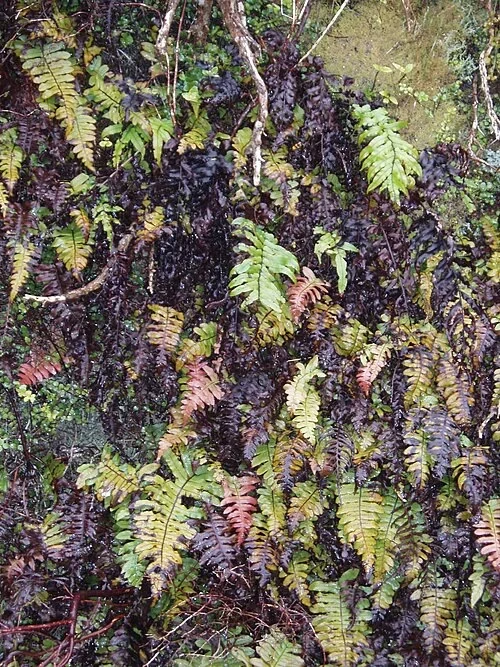
Mountain Hard Fern
Blechnum vulcanicum (syn. Cranfillia deltoides )
Last updated:
Mountain Hard Fern (Blechnum vulcanicum) is a small to medium tufted perennial fern native to New Zealand, forming compact clumps of leathery foliage 15 to 40 cm tall. Its sterile fronds are notably triangular (deltoid), dull deep green, and once-pinnate, with the lowest pair of leaflets curving distinctively downward, while the fertile fronds stand upright in the centre of the clump. Growing from a short-creeping to erect rhizome, it is a specialist of rocky and vertical habitats, colonising coastal cliffs, montane forest faces, rocky outcrops, shaded roadside banks, and boulders along stream beds. It is widespread through New Zealand from the upper North Island to the South, Stewart, and Chatham Islands, and is very frost-hardy in alpine and montane conditions. Explore more native ferns in our native plant guide.
Plant Description
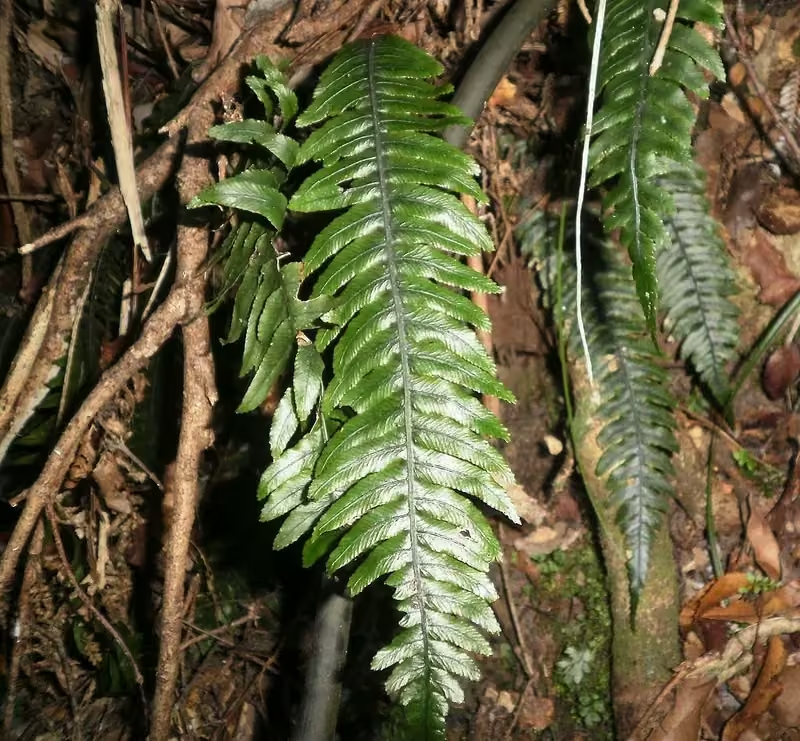
Blechnum vulcanicum is a small to medium-sized, tufted perennial fern that forms compact clumps of leathery foliage. It possesses a short-creeping to erect rhizome, which allows it to colonize steep banks and rocky crevices effectively. The species exhibits pronounced dimorphism between its sterile and fertile fronds. The sterile fronds are notably triangular (deltoid) in shape, typically ranging from 15 to 40 cm in length. These fronds are a dull, deep green, once-pinnate, and often have a slightly crinkly or hairy texture on the underside. A distinctive feature is the lower pair of pinnae (leaflets), which usually curve significantly downward.
The fertile fronds are held upright in the center of the plant and are approximately equal in length to the sterile ones. They feature much narrower, linear pinnae that are almost entirely covered by the sori (spore clusters) on their undersides. Flowering (spore production) occurs throughout the year, with peak maturity reached in the summer months. This fern is perfectly adapted to the harsh conditions of rock outcrops and cliff faces, where its thick-textured foliage and secure rhizome enable it to withstand both exposure and low light. Its pendulous habit makes it a particularly attractive species for vertical garden features.
Quick Facts
| Scientific Name | Blechnum vulcanicum |
|---|---|
| Height | 15 - 40 cm |
| Spread | 30 - 50 cm (clump-forming) |
| Water Needs | Moderate (Requires consistently moist, well-drained) |
| Light | Semi-shade to full shade |
| Frost Tolerance | High (Hardy alpine and montane specialist) |
| Salt Tolerance | Moderate (Found in coastal zones) |
| Growth Rate | Slow to Moderate |
| Lifespan | Perennial (Long-lived) |
Climate Best Suited to
Mountain Hard Fern is exceptionally well-suited to the temperate and montane climates of New Zealand, found from the upper North Island down to the South, Stewart, and Chatham Islands. It flourishes in areas with high rainfall and consistent ambient humidity. Its natural distribution includes subalpine forests in the North Island and coastal sea-level sites in the South Island, indicating an extreme level of frost tolerance. It performs best in cool, shaded microclimates where it is protected from drying winds and intense midday sun. It requires stable moisture levels but is highly resilient to the cooler temperatures of New Zealand's southern and high-country regions.
Regional Suitability
| City | Climate Suitability |
|---|---|
| Auckland | Suitable (In localized cool, damp spots) |
| Wellington | Highly Suitable (Temperate, humid, good for hillsides) |
| Nelson | Highly Suitable (Flourishes in damp coastal forests) |
| Christchurch | Highly Suitable (Extremely frost-hardy) |
| Dunedin | Highly Suitable (Enjoys the cooler, moist conditions) |
Plant Habitat
Blechnum vulcanicum is a specialist of rocky and vertical environments. It is widespread throughout New Zealand, although it becomes more localized north of Auckland. Its primary habitats include coastal cliffs, montane forest faces, and rocky outcrops. It is also a common component of shaded roadside banks and can be found growing directly on boulders and rocks along stream beds and in open forest. It thrives in the cool, shaded microclimates of deep gullies and forest interiors, where its ability to anchor itself into crevices and thin soil allows it to occupy niches that many other ferns cannot.
Growing Requirements
Soil Requirements
Requires rich, consistently moist, and exceptionally free-draining soil. Adaptable to rocky substrates.
- High organic matter (leaf mold, compost)
- Must have excellent drainage
- Tolerates thin, stony soils in crevices
- Neutral to slightly acidic pH
Light Requirements
Requires semi-shade to full shade. Dislikes intense, direct solar radiation.
- Avoid all direct afternoon sun
- Thrives in deep shade of forest interiors
- Ideal for south-facing rock walls
Water Requirements
Moderate to high water needs. Root zone should remain consistently damp.
- Regular watering during dry spells
- Appreciates high ambient humidity
- Ideal for proximity to shaded water features
- Maintain dampness around the rhizome base
Planting and Establishing
To successfully establish Mountain Hard Fern, choose a sheltered, fully shaded location with soil that remains naturally moist but drains very quickly. It is an ideal plant for a rockery, a shaded retaining wall, or a "crevice garden" where the roots can be tucked into gaps between stones. Enrich the planting area with well-rotted compost or leaf mold. Dig a hole twice the size of the root ball, position the fern so the crown is level with the soil surface, and backfill, firming gently. Water thoroughly immediately after planting and maintain high moisture levels during the first year. A layer of inorganic mulch, such as stones or gravel, can help keep the root zone cool and replicate its natural rocky habitat. For the most dramatic effect, plant on a slope where its triangular sterile fronds can hang down naturally.
Ecological Role
Mountain Hard Fern plays a critical role in stabilizing soil and initiating vegetation cover on exposed rocky banks and cliffs. Its mat-forming rhizomes are highly effective at anchoring loose material in riparian and montane zones. The dense, triangular fronds provide a specialized, high-humidity micro-habitat for a diverse array of small forest invertebrates and lizards. As part of the unique understory community, it contributes to the overall biodiversity and resilience of New Zealand's temperate rainforests. Its presence is often a key indicator of a healthy, stable forest or coastal environment with undisturbed hydrological and mineral cycles.
Uses & Significance
Garden & Landscape Uses
In garden design, Blechnum vulcanicum is prized for its bold architectural form and pendulous habit. It is an ideal choice for shaded rockeries, vertical wall planters, and as a striking feature on cool, moist embankments. Its compact size and distinctive triangular fronds provide excellent textural interest in specialized native plant collections.
- Shaded rockeries and crevices
- Vertical wall planters and hanging baskets
- Softening the edges of shaded retaining walls
- Underplanting for larger native trees
- Native forest floor simulation
Ecological Value
A key species for stabilizing rocky environments and supporting specialized understory biodiversity across New Zealand.
- Primary soil stabilizer for shaded banks
- Refuge for specialized native fauna
- Indicator of healthy montane and coastal forests
- Enhances regional forest floor biodiversity
Landscaping Uses
Professional landscapers use Blechnum vulcanicum to create dramatic vertical interest and naturalistic mountain scenes in shaded projects. It is an excellent choice for naturalizing steep embankments or for cascading over the edges of stone walls. Its broadly triangular, dull green fronds provide a unique texture that contrasts beautifully with darker green ferns or structural native shrubs. In urban shaded gardens, it offers a robust and attractive solution for stabilizing difficult banks while providing year-round aesthetic appeal. Its extreme frost tolerance and specialization for rocky soils allow landscape designers to create authentic and sustainable designs that celebrate New Zealand's unique geological and botanical heritage.
Seasonal Care Calendar
Spring
As new fronds begin to emerge, ensure consistent soil moisture. Apply a light dusting of leaf mold or balanced organic fertilizer to support healthy growth.
- Monitor for new frond emergence
- Maintain soil moisture
- Check for initial growth cycles
Summer
This is the most critical time for moisture management. Provide regular, deep irrigation, especially in drier regions. Maintain high humidity around the plant if possible.
- Regular deep irrigation
- Protect from extreme midday heat
- Ensure protection from drying winds
Autumn
Gradually reduce watering frequency as temperatures cool. Remove any yellowing fronds to keep the plant tidy. Prepare the site for winter dormancy.
- Reduce watering
- Tidy old or damaged fronds
- Allow natural leaf litter to collect
Winter
The plant is naturally frost-hardy but benefits from being undisturbed. Minimal watering is required. Protect the crown from excessive debris buildup.
- Minimal care needed (extremely hardy)
- Avoid excessive winter fertilization
- Maintain barely moist soil
When to Prune and How Much
Pruning for Blechnum vulcanicum is minimal and primarily for maintenance and aesthetic appeal. The best time to tidy the plant is in late winter or early spring, just before the new growth commences. Use sharp, clean shears to remove any old, dead, or yellowing sterile fronds by cutting them as close to the rhizome as possible without damaging the central crown. This encourages a healthy new growth cycle and improves air circulation through the clump. Fertile fronds that have completed their spore dispersal can also be removed if desired. Avoid heavy pruning of healthy green foliage, as this can stress the plant and reduce its overall vigor.
- Remove dead or damaged outer fronds
- Prune in late winter or early spring
- Tidy spent fertile fronds in autumn
Regularly clearing the center of the rosette of large fallen leaves and debris will help prevent moisture-related rot in the crown and maintain its clean, symmetrical appearance.
How to Grow Mountain Hard Fern
Propagating Mountain Hard Fern ( Blechnum vulcanicum ) is a rewarding process that allows you to expand this robust native fern within your garden or restoration project. Given its specialized environmental needs and clumping habit, successful propagation can be achieved through both spore culture and, for established specimens, careful division of the rhizome. Providing the consistently moist and shaded conditions it loves is the primary requirement for developing healthy and resilient new plants.
From Division
Division is the simplest and fastest method for propagating Blechnum vulcanicum . This is best performed in spring when the plant is beginning its active growth phase. Carefully dig up a large, healthy clump and use a sharp knife or spade to separate the rhizome into sections, ensuring each new division has its own healthy root system and at least one or two fronds. Replant the divisions immediately into moist, organic-rich soil in a sheltered, shaded location. If possible, add a small amount of fine gravel to the soil to mimic its native substrate. Water thoroughly and maintain high moisture levels until the new divisions show signs of active growth and establishment. This method ensures that the new plants are genetically identical to the parent.
- Gently dig up a portion of a healthy mature clump in spring.
- Identify robust rhizome sections with roots and fronds.
- Separate carefully using a sharp, clean tool.
- Replant immediately into moist, humus-rich soil.
- Keep saturated and in shade until established.
From Spores
Propagation from spores is a slower but fascinating method that can yield a large number of plants. Spores are found on the undersides of the narrow fertile fronds. To collect them, place a mature fertile frond in a paper envelope and leave it in a warm, dry place for several days until the fine spores are released. Sow the spores onto the surface of a moist, sterile seed-raising mix that is high in organic matter. Do not cover the spores with soil. Place the tray in a warm, bright greenhouse or a shaded outdoor spot and maintain high humidity by covering with a clear lid or plastic bag. Keep the surface consistently damp with a fine mist. Germination will eventually form a green film called a prothallus, followed by tiny fern plantlets. This entire process can take 6-12 months. Once the plantlets are robust enough to handle, carefully transplant them into individual small pots.
- Collect mature spores from fertile fronds.
- Sow on the surface of a moist, sterile mix.
- Maintain high humidity and consistent moisture.
- Provide warm, shaded conditions.
- Wait for prothalli and then plantlets to develop.
- Transplant young ferns once they are large enough.
Patience and consistent focus on moisture and appropriate mineral levels are the most critical factors for success with either propagation method. Providing a stable environment for young plants will result in healthy, resilient specimens that will thrive in your garden for many years.
Additional Methods
While seed and division are the primary methods, some success can be achieved through tissue culture in commercial nurseries. Always ensure strict hygiene by using clean tools and sterile media to prevent the introduction of pathogens. Providing a stable, humid environment for young plants is crucial for their successful establishment and long-term vitality in the garden or natural landscape.
Pests & Diseases
Mountain Hard Fern is a naturally robust species with few major pest or disease issues, particularly when grown in its ideal cool, damp forest environment. Occasionally, scale insects or mealybugs may appear on the underside of the fronds; these can be managed with a gentle application of horticultural oil. Fungal leaf spot can sometimes occur in very stagnant, humid air; improving air circulation around the plant will usually prevent this. Excessive soil dryness or high heat can lead to rapid frond wilting and death. Providing the correct environmental conditions-consistent moisture and appropriate shade-is the most effective way to ensure this specialized native remains healthy and pest-free.
Cultural Significance
As an endemic New Zealand species, Blechnum vulcanicum is an integral part of the ecological and cultural narrative of our forests. While it may not have as many documented traditional uses as larger species, it forms part of the intricate tapestry of the native bush that has sustained Māori for centuries. Its resilience in the damp gloom of cliffs and rock outcrops reflects the specialized and enduring nature of New Zealand's indigenous flora. Protecting its forest habitats ensures that the full botanical complexity of Aotearoa is preserved for future generations to appreciate and learn from. Its presence serves as a subtle reminder of the intricate beauty and specialization found in the most sheltered corners of our natural world.
Bonus Tip
To truly showcase the architectural form of Mountain Hard Fern, plant it in a hanging basket or an elevated wall planter in a shaded patio. This allows the triangular sterile fronds to drape over the sides, creating a lush, green waterfall effect that highlights its natural pendulous habit. Remember to line the container with plenty of moisture-retentive material to keep the roots cool and damp.
Related Plants
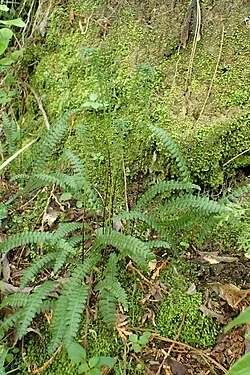
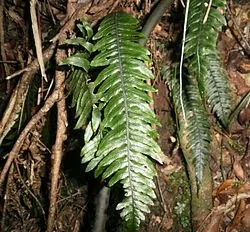
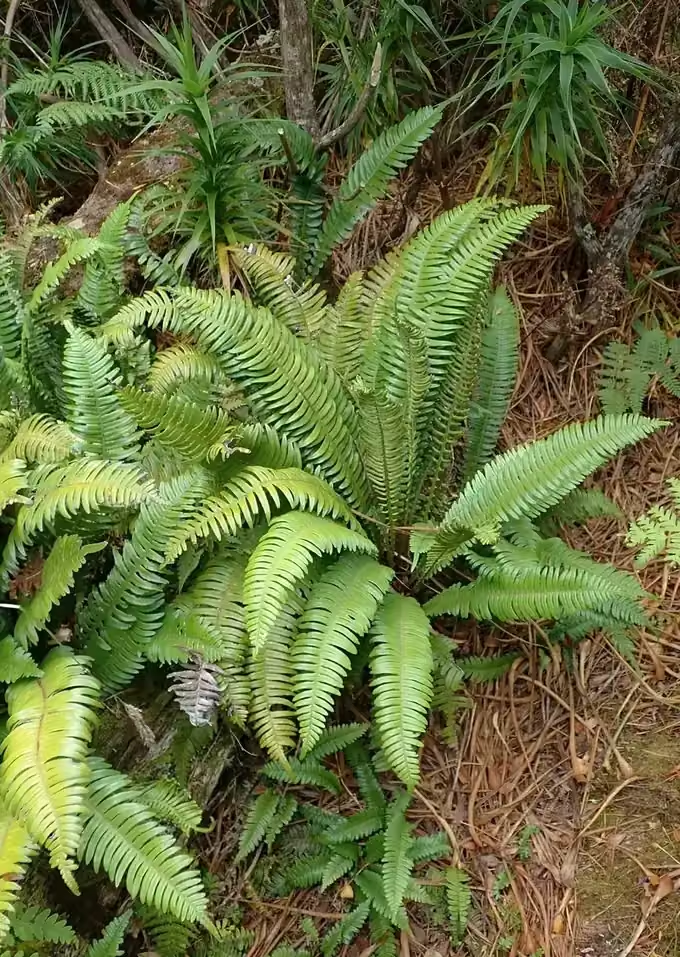
Explore other native New Zealand ferns that share characteristics or habitats with Mountain Hard Fern ( Blechnum vulcanicum ), offering further insights into our remarkably diverse forest understory. These related species can provide inspiration for creating a cohesive and beautiful shade garden. For another native fern, explore Royal Fern.

Plant Conservation
Blechnum vulcanicum is classified as "Not Threatened" in the New Zealand Threat Classification System. This indicates that it currently maintains stable populations throughout its natural range. However, the preservation of its specialized rocky and forest habitats is essential for its continued success. Protecting these environments from land development, quarrying, and the impacts of invasive weeds is vital. Gardeners can contribute to its conservation by using Mountain Hard Fern in shaded rockeries and restoration projects, thereby providing essential micro-habitats for native forest fauna. Sourcing plants from ethical nurseries that prioritize sustainable propagation ensures that this resilient and beautiful fern remains a vibrant part of Aotearoa's natural heritage.
Frequently Asked Questions
How tall does Blechnum vulcanicum grow?
Mountain Hard Fern grows 15 to 40 cm tall, forming clumps 30 to 50 cm across.
Where does Mountain Hard Fern grow?
It grows on rocky and vertical sites such as coastal cliffs, montane forest faces, rocky outcrops, and shaded banks across most of New Zealand.
Is Blechnum vulcanicum frost tolerant?
Yes, it has high frost tolerance and is a hardy alpine and montane specialist.
What conditions does Mountain Hard Fern need?
It prefers semi to full shade with consistently moist, well-drained soil, and tolerates moderate coastal salt.
Sources and Further Reading
The botanical, growing, and conservation details for Mountain Hard Fern (Blechnum vulcanicum) on this page draw on authoritative New Zealand plant references and citizen-science observation records. Consult the sources below for full technical records and the latest distribution data.