Lyall's Carrot
Anisotome lyallii
Last updated:
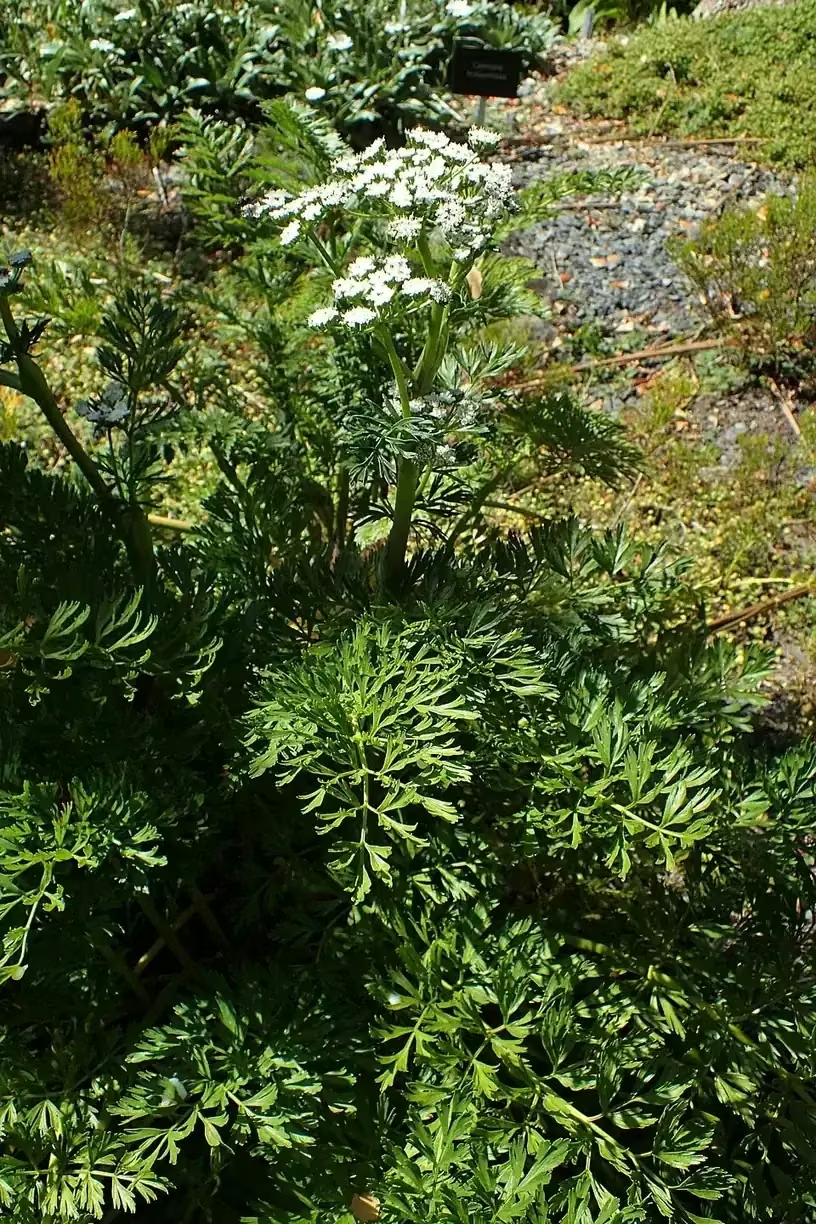
Anisotome lyallii, commonly known as Lyall's Carrot, is a striking perennial megaherb in the carrot family, native to New Zealand's South Island, Stewart Island/Rakiura and Solander Island/Hautere. It forms wide clumps sometimes over a metre across, with large, finely divided basal leaves up to 0.45 metres long. From November to January it lifts dirty white to white flower heads on stout stems that can top a metre. A true coastal plant, it grows on steep, south-facing cliffs, coastal turf and damp peaty ledges. Highly tolerant of frost, wind and salt, it favours cool, exposed, sunny sites and dislikes hot, humid weather. Explore more New Zealand alpine plants in our native plant guide.

Plant Description
Identification and Physical Characteristics
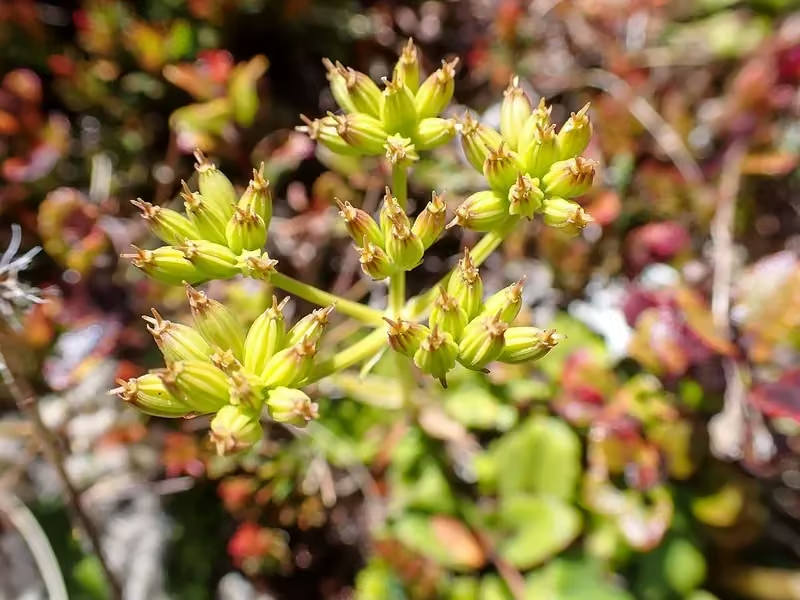
Anisotome lyallii , commonly known as Lyall's Carrot, is a striking perennial megaherb native to New Zealand's South Island, Stewart Island/Rakiura, and Solander Island/Hautere. It is distinguished by its robust growth, large, finely divided basal leaves (up to 0.45 meters long), and dramatic flower heads. The leaves are oblanceolate to oblong, 2-3-pinnate, and contribute to a wide clump, sometimes exceeding a meter in diameter. Its flowers, which appear from November to January, are typically dirty white to white, forming conspicuous clusters on tall stems that can reach over a meter. These are followed by narrowly elliptic to ovate mericarps, 4.0-7.5 mm long, strongly 5-ribbed, and usually distinctly winged, aiding in wind dispersal.
Quick Facts
| Scientific Name | Anisotome lyallii |
|---|---|
| Height | Up to 0.8 m (flowering stems over 1 m) |
| Spread | Forms clumps over 1 m across |
| Water Needs | High |
| Light | Full sun |
| Frost Tolerance | High |
| Salt Tolerance | High |
| Growth Rate | Moderate |
| Lifespan | Perennial |
Climate Best Suited to
Lyall's Carrot is best suited to cool, temperate climates, particularly coastal and subalpine regions of New Zealand's South Island. It is highly tolerant of frost, wind, and coastal conditions, thriving in exposed, sunny environments. It does not tolerate hot, humid weather and requires consistent moisture.
Regional Suitability
| City | Climate Suitability |
|---|---|
| Auckland | Unsuitable |
| Wellington | Challenging (requires specific coastal/cool site) |
| Christchurch | Suitable (if given coastal/cool site) |
| Dunedin | Suitable |
| Hamilton | Unsuitable |
| Tauranga | Unsuitable |
Plant Habitat
Natural Occurrence and Ecology
Anisotome lyallii is endemic to New Zealand, primarily found in the South Island (Fiordland coast, Nugget Point to South Head), Stewart Island/Rakiura (common along western and southern coastline), and Solander Island/Hautere. It is a true coastal plant, thriving on steep, south-facing, sparsely vegetated cliffs, in coastal turf, herbfields, damp peaty ledges, coastal grasslands, boulder falls, and even sand dunes and beaches. It is always found near the sea, often within the spray zone, indicating its high tolerance for salt and exposed conditions.
Growing Requirements
Soil Requirements
Prefers deep, permanently moist, peaty, and very well-drained soil. Can be susceptible to root rot in overly moist sites if drainage is poor.
- Peaty, rich soil
- Excellent drainage is crucial
- Layer of small stones around crown beneficial
Light Requirements
Thrives in full sun for most of the day, particularly in cool, coastal/alpine settings. Requires protection from hot, intense sun in warmer climates.
- Full sun is preferred
- Prefers cool, exposed sites
Water Requirements
High water needs, requiring consistently moist soil. Does not tolerate drying out.
- Regular watering in dry periods
- Ensure consistent moisture
- Does not tolerate hot, humid conditions
Planting and Establishing
Establishment Guidance
When planting Lyall's Carrot, choose a site that offers full sun exposure, mimicking its natural coastal and alpine cliff habitats. The soil should be deep, rich in organic matter (peaty), and most importantly, very well-drained to prevent root rot. Ensure the root ball is well hydrated before planting, and backfill with a gritty soil mix if necessary. Water thoroughly after planting and keep consistently moist until established. A layer of small stones or gravel around the crown can help with drainage and prevent rot.
Ecological Role
Biodiversity and Ecosystem Impact
As a prominent megaherb, Anisotome lyallii plays a vital ecological role in New Zealand's coastal and subalpine ecosystems. Its large form provides shelter and microhabitats for a variety of endemic invertebrates and small birds. Its flowering stems offer a significant nectar source for native insects, contributing to the pollination and biodiversity of these unique environments. Furthermore, its root systems help stabilize fragile coastal cliffs and sand dunes.
Uses & Significance
Garden Uses
Valued for its striking architectural form and toughness in challenging coastal and alpine environments. Ideal for specialized gardens.
- Alpine gardens
- Coastal gardens
- Rock gardens
- Specimen plant
Ecological Value
Crucial component of coastal and subalpine ecosystems, providing habitat and stabilizing fragile soils.
- Soil stabilization
- Habitat for invertebrates
- Pollinator support
Landscaping Uses
In landscaping, Lyall's Carrot is an exceptional specimen for specialized coastal or alpine gardens, particularly in cooler regions of New Zealand. Its bold foliage and impressive flowering stalks create a dramatic focal point. Its natural hardiness makes it suitable for exposed sites, but it is critical to replicate its preferred growing conditions of cool temperatures, consistent moisture, and excellent drainage to ensure success.
Seasonal Care Calendar
Spring
New growth emerges. Begin regular watering. This is a good time for propagation from fresh seeds or divisions.
- Begin regular watering
- Propagate from seed or division
Summer
Flowering period (November to January). Ensure consistent moisture and protect from excessive heat and humidity.
- Ensure consistent moisture
- Protect from hot, humid conditions
Autumn
Fruiting occurs (January to March). Collect seeds for propagation if desired. Reduce watering slightly as temperatures drop.
- Collect seeds
- Reduce watering
Winter
Dormant period. High frost tolerance. Ensure excellent drainage to prevent rot in wet conditions.
- Ensure excellent drainage
- Protect from waterlogging
When to Prune and How Much
Pruning for Anisotome lyallii is generally limited to removing spent flower stalks after the fruiting period and any old or damaged basal leaves. This helps to maintain plant vigor and aesthetics.
- Remove spent flower stalks.
- Trim old or damaged leaves as needed.
- Avoid heavy pruning.
Use sharp, sterile tools to prevent disease. Due to its slow to moderate growth rate, extensive pruning is rarely necessary.
How to Grow Lyall's Carrot
Cultivating Lyall's Carrot ( Anisotome lyallii ) is an endeavor that rewards careful attention to its specific environmental preferences, mirroring its native coastal and subalpine New Zealand habitats. This majestic megaherb, with its impressive stature and finely divided foliage, can be a dramatic focal point in a specialized garden, especially in cooler regions. Success hinges on replicating the cool, moist, and well-drained conditions it naturally experiences.
From Seed
Choosing the right location is paramount. Anisotome lyallii thrives in full sun exposure, but it demands cool temperatures and high humidity, making it intolerant of hot, dry, or humid climates. In areas with warmer summers, a south-facing slope or a cool, semi-shady site that still receives ample light is preferable. Good air circulation is essential to prevent fungal issues, particularly in damper conditions. If growing in containers, ensure they are large to accommodate its extensive root system and can be moved to protect the plant from adverse weather.
Additional Methods
The ideal soil for Lyall's Carrot is deep, rich in organic matter (peaty), and consistently moist yet exceptionally well-drained. Its natural habitat includes peaty ledges and coastal grasslands, suggesting a preference for acidic to neutral soil. To achieve this, incorporate generous amounts of sphagnum moss, high-quality peat, or well-rotted leaf mold into the planting mix. Critically, add plenty of coarse grit, pumice, or gravel to ensure sharp drainage, as the plant is highly susceptible to root rot if the soil becomes waterlogged. A protective layer of small stones around the plant's crown can further help prevent rot.
Planting Instructions
When planting, prepare a large and deep hole to accommodate its robust root system. Carefully remove the plant from its container, minimizing root disturbance. Position the plant so that the crown sits at soil level. Backfill with your prepared peaty, gritty soil mix, gently firming it around the base to eliminate air pockets. Water thoroughly immediately after planting. For establishing new plants from seed, direct sowing of fresh seeds in a consistently moist and cool environment is recommended.
Watering and Ongoing Care
Consistent moisture is vital for Anisotome lyallii ; the soil should never be allowed to dry out completely. However, overwatering in poorly draining conditions will lead to root rot. Balance is key. During dry spells, especially in exposed sites, ensure regular and deep watering. Protection from browsing animals, such as deer, is necessary in areas where they are present, as they pose a significant threat to accessible populations. Regular monitoring for pests and diseases is recommended, although it is generally a robust plant when grown in suitable conditions.
Propagation
Propagation is best achieved from fresh seeds or by carefully dividing established clumps.
- Seed Propagation: Collect fresh seeds immediately after the fruiting season (January to March). Sow them onto a moist, well-draining seed-raising mix, covering lightly with grit. Maintain cool, moist conditions. Germination can be slow and may require a period of cold stratification.
- Division: Mature clumps can sometimes be carefully divided in early spring as new growth begins. Ensure each division has a healthy root system and a portion of the crown. Replant immediately and keep well-watered until established. This method carries a higher risk due to the plant's sensitivity to root disturbance.
Pests & Diseases
Anisotome lyallii is generally resilient to most pests and diseases when its specific environmental requirements are met. The primary concern is root rot, which can occur in poorly drained or overly saturated conditions, especially if coupled with warm temperatures. Slugs and snails may occasionally target young plants or tender new growth. Protecting plants from browsing animals (e.g., deer) is crucial in its natural habitats.
Cultural Significance
As an endemic megaherb of New Zealand's South Island, Stewart Island/Rakiura, and Solander Island/Hautere, Anisotome lyallii holds significant scientific and ecological value. Its impressive presence is a testament to the unique adaptations of flora in exposed coastal and subalpine environments. While specific traditional Māori cultural uses are not widely documented for this particular species, it contributes to the broader natural heritage of Aotearoa, symbolizing resilience in harsh conditions. Conservation efforts are vital to protect its populations, particularly from browsing animals, ensuring its survival within its specialized ecosystems.
Bonus Tip
For gardeners attempting to grow Lyall's Carrot, focus on providing a consistently cool root run. Consider planting in raised beds or pots with a very gritty, peaty mix to ensure excellent drainage and insulation. In milder climates, aim for a site with morning sun and afternoon shade, mimicking the filtered light it might receive on south-facing cliffs.
Related Plants
Explore other native plants that share similar characteristics or habitats with Lyall's Carrot ( Anisotome lyallii ), offering further insights into New Zealand's diverse flora. These related species provide context and opportunities for complementary planting in your garden. For another alpine plant, explore Woolly Anisotome.

Plant Conservation
Conservation Status and Threats
Anisotome lyallii is currently classified as 'At Risk - Declining' in New Zealand. This status is primarily due to browsing pressure from introduced deer in its accessible populations on Stewart Island/Rakiura and parts of Fiordland. Conservation efforts focus on managing these threats, protecting its unique coastal and subalpine habitats, and promoting awareness of its vulnerable status. Its continued survival is crucial for the ecological integrity of these distinct New Zealand environments.
Frequently Asked Questions
How tall does Anisotome lyallii grow?
The plant reaches up to about 0.8 m, with flowering stems that can exceed a metre in height.
Where does Lyall's Carrot grow naturally?
It grows on coastal cliffs and turf of the South Island, Stewart Island/Rakiura and Solander Island/Hautere.
Is Lyall's Carrot suitable for coastal gardens?
Yes, it is a true coastal plant with high salt tolerance, thriving in exposed, sunny seaside conditions.
Does Anisotome lyallii tolerate frost?
Yes, it has high frost tolerance and suits cool, temperate coastal and subalpine sites.
Sources and Further Reading
The botanical, growing, and conservation details for Lyall's Carrot (Anisotome lyallii) on this page draw on authoritative New Zealand plant references and citizen-science observation records. Consult the sources below for full technical records and the latest distribution data.