Mueller's Bent Grass
Agrostis muelleriana
Last updated:
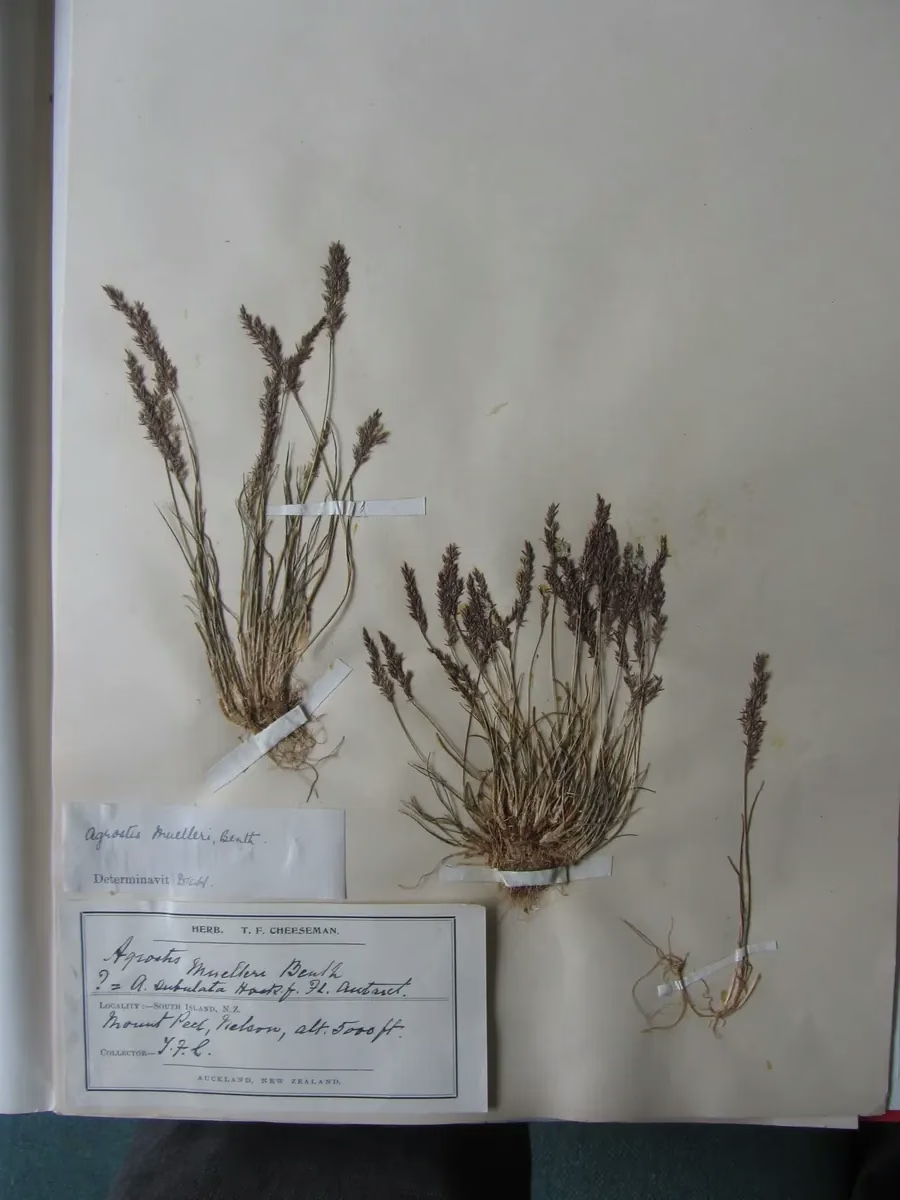
Mueller's bent grass (Agrostis muelleriana) is a small, tufted native perennial grass of New Zealand's mountains, generally under 50 cm tall and forming dense, dull green clumps. Its mostly basal leaves have smooth sheaths often flushed a striking purple, and the narrow blades may be flat, folded or inrolled. In summer it produces contracted panicles whose spikelets are frequently tinged deep reddish-purple. It is a mountain specialist of montane to high-alpine zones, very localised in the central North Island around Mt Ruapehu but widespread through the South Island ranges, growing on rocky ground, stable fellfields and mobile scree. It is highly frost hardy and named after the botanist Ferdinand von Mueller. Explore more native plants such as Dyer's Bentgrass.

Plant Description
Identification and Physical Characteristics
Agrostis muelleriana is a small herbaceous perennial that typically forms dense, dull green tufts ranging from 3 to 30 cm in height. Its leaves are primarily basal, featuring smooth or slightly rough sheaths that often display a striking purple tint. The leaf blades are narrow, linear, and can be flat, folded, or inward-curving (involute), measuring between 3 and 10 cm long. Flowering occurs during the summer months, producing contracted panicles that range from 1 to 10 cm in length, often exhibiting beautiful purplish or straw-coloured hues. The individual spikelets are solitary and 1-flowered, with glumes that are frequently tinged a deep reddish-purple. Its compact habit and specialized leaf structure are perfectly adapted to the high-light and wind-exposed alpine environment.
Quick Facts
| Scientific Name | Agrostis muelleriana |
|---|---|
| Height | 30-50 cm |
| Spread | Clump-forming to 40-60 cm |
| Water Needs | Low to moderate; free-draining soils |
| Light | Full sun |
| Frost Tolerance | High - tolerant of severe freezes |
| Salt Tolerance | Low to moderate |
| Growth Rate | Fast |
| Lifespan | Long-lived perennial |
Climate Best Suited to
Agrostis muelleriana is well adapted to various New Zealand regions.
Regional Suitability
| City | Climate Suitability |
|---|---|
| Auckland | High |
| Wellington | High |
| Christchurch | Medium |
Plant Habitat
Natural Occurrence and Ecology
Mueller's Bent Grass is a mountain specialist, flourishing in the montane to high-alpine regions of New Zealand. While very localized in the central North Island mountains like Mt Ruapehu, it is widespread and common throughout the mountain ranges of the South Island. Its natural habitat includes rocky ground, stable fellfields, and mobile alpine scree where drainage is rapid. It is also frequently associated with alpine seepages and moist depressions, where its root system can access consistent meltwater. The species occupies an ecological niche that experiences intense summer radiation, gale-force winds, and severe winter frosts, demonstrating remarkable resilience to the extreme conditions of the Southern Alps.
Growing Requirements
Soil Requirements
Prefers well-draining soil rich in organic matter.
- Well-drained
- Loamy
Light Requirements
Grows best in partial to full sun.
- Full Sun
- Partial Shade
Water Requirements
Requires regular watering during dry periods.
- Regular
- Drought tolerant once established
Planting and Establishing
Establishment Guidance
Establishing Mueller's Bent Grass in a garden requires replicating its cool, high-light sub-alpine habitat. It must be planted in an extremely well-drained, gritty or sandy soil mix to prevent root and crown rot, which is its primary vulnerability in cultivation at lower altitudes. Choose an open, sunny position with excellent airflow to maintain its tidy, compact form. Dig a hole slightly larger than the root ball and plant at the same depth as it was in its container. Provide regular watering during its first summer to help establish its fibrous root system, after which it becomes very hardy. It is an ideal candidate for native rockeries, alpine troughs, or as an informal edging plant in mountain-themed garden designs.
Ecological Role
Biodiversity and Ecosystem Impact
In its native mountain ecosystems, Agrostis muelleriana plays a vital role as a structural component of the alpine ground layer. Its dense, tufted growth habit helps stabilize thin soils on exposed slopes and can assist in binding the margins of mobile scree. The plant provides essential micro-habitats for specialized soil invertebrates and creates sheltered spaces where smaller, more delicate native herbs can establish. During its summer flowering period, its fine pollen and seeds provide resources for specialized alpine insects. The wind and water-dispersed florets allow the species to efficiently colonize new areas of suitable habitat, contributing to the overall biological richness and resilience of New Zealand's subalpine plant communities.
Uses & Significance
Garden Uses
Mueller's Bent Grass is a superb choice for specialized rock gardens and alpine trough displays due to its compact size and attractive tufted form. Its fine-textured foliage and elegant, purplish flower spikes provide an excellent textural contrast to larger-leaved native plants like Celmisia or small Scleranthus cushions. It is a highly desirable specimen for collectors of New Zealand's unique mountain flora, offering a piece of the high country in a very manageable garden scale. Because it is naturally well-behaved and relatively slow-growing in cultivation, it is an excellent native ground cover for filling small gaps or for use as a fine-textured accent along garden paths.
- Specialized rock gardens
- Native trough accents
Ecological Value
Ecologically, it is a valuable species for high-altitude restoration projects and for stabilizing riparian margins in subalpine zones. It supports local biodiversity by providing habitat for specialized invertebrates and contributes to the overall stability and health of the alpine herbfield and fellfield communities where it naturally occurs.
- Invertebrate habitat
- Soil stabilization
Landscaping Uses
In contemporary landscape design, Mueller's Bent Grass provides a sophisticated and understated sculptural element. Its fine, radiating habit and greyish-green foliage provide a sense of structure and authenticity in mountain-themed or minimalist native garden designs. It is most effective when planted in small, irregular groups among large natural boulders or mass-planted on well-drained banks to create a naturalistic high-country look. The play of light through its delicate, purplish flower panicles in summer adds a dynamic and airy element to the landscape. Its reliable performance and tidy habit make it a low-maintenance and highly effective choice for high-quality native landscaping.
Seasonal Care Calendar
Spring
The start of the active growth phase. Check for any winter debris or fallen leaves caught in the tufts and gently remove them. This is an ideal time to apply a very light dressing of slow-release organic native fertilizer around the base to encourage fresh growth.
- Fertilize
- Mulch
Summer
Produces elegant flower panicles from mid-summer. Provide deep, occasional watering during extreme heatwaves to maintain foliage density, ensuring the crown remains well-ventilated to prevent any risk of rot from humidity.
- Water
- Check for pests
Autumn
The winged seeds mature and are dispersed by the wind and water in autumn. This is a good time to tidy the surrounding rock mulch and ensure the site remains free-draining before the onset of the alpine winter rains and snow.
- Prune lightly
- Plant new specimens
Winter
Naturally very frost-hardy and adapted to snow cover. Requires minimal care during the winter months; simply avoid heavy foot traffic or disturbance to the root zone while the ground is frozen to protect the dormant crown.
- Frost protection
When to Prune and How Much
Mueller's Bent Grass requires almost no conventional pruning to stay healthy. Maintenance is generally limited to the occasional removal of old, dead leaf blades from the previous season to keep the tufts looking fresh and to allow more light to reach the new growth in the center. This should be done in early spring using sharp scissors to cut the foliage back lightly if it has become overly untidy. Avoid cutting back into the base of the tuft, as this can damage the growing points. Always use clean tools to prevent the introduction of pathogens to the plant and to ensure quick recovery.
- Remove dead branches
Always use clean, sharp tools.
How to Grow Mueller's Bent Grass
Cultivating Mueller's Bent Grass ( Agrostis muelleriana ) is a rewarding process for the patient native gardener. This specialized species is primarily propagated from seed, taking advantage of its natural reproductive cycle. Success depends on providing the cool, high-light, and perfectly drained conditions it thrives in throughout its native Southern Alps and central North Island range home.
From Seed
Propagation from seed is straightforward using fresh material collected from mature panicles in late summer. The fine seeds should be sown onto the surface of a gritty, free-draining seed-raising mix. They benefit from a period of cold stratification to trigger uniform germination. Placing the sown trays in a cool, bright outdoor position over winter is often the most effective method for home gardeners to trigger germination in the spring. Germination is usually reliable if the seeds are fresh.
Sow fresh seeds in a seed-raising mix.
- Collect seeds
- Sow in trays
Keep moist until germination.
From Cuttings
The fastest method for home gardeners to increase their stock is the careful division of established tufts. In early spring, gently lift a mature clump and divide it into smaller sections, ensuring each piece has a healthy portion of the fibrous root system. Replant these immediately into a gritty, moist potting mix and keep in a sheltered, humid position until new growth is evident and the plant is established.
Take semi-hardwood cuttings in late summer.
- Take cuttings
- Use rooting hormone
Additional Methods
Depending on the growth habit of Agrostis muelleriana , other methods such as division or layering might also be viable options. Division is particularly suitable for plants that form dense clumps or have spreading root systems, while layering can be used for species with trailing or flexible stems.
Young grasses are sensitive to drying out and must be kept in a consistently moist environment during their first few seasons. They are best established in a site free from aggressive competition from larger weeds. A top-dressing of fine gravel or crushed rock around the base will help regulate soil moisture and provide the well-drained conditions the delicate tufts require to thrive and spread naturally.
- Divide clumps
- Replant immediately
Pests & Diseases
Mueller's Bent Grass is remarkably resistant to most major garden pests. Occasionally, aphids may target the succulent new growth in spring. The most significant threat is root and crown rot, caused by poor drainage, overwatering, or excessive humidity in lowland garden environments. Choosing a well-ventilated, sunny position with perfect drainage is the best way to ensure the long-term health of your grass and to prevent any physiological issues from developing.
Cultural Significance
Mueller's Bent Grass represents the unique evolutionary specialization of New Zealand's indigenous alpine flora. Its graceful form and ability to thrive in extreme mountain environments have long been noted by botanists and native plant enthusiasts. Named after the legendary botanist Ferdinand von Mueller, it is a significant component of our national botanical heritage. Today, it is valued by conservationists and native plant enthusiasts alike for its resilience and the exquisite vertical detail it brings to our native mountain landscapes.
- Traditional medicine
- Crafts
Bonus Tip
To really showcase the beauty of Mueller's Bent Grass, plant it where its delicate, purplish flower panicles will be backlit by the early morning or late afternoon sun. The light will highlight the fine structure of the flower spikes, making the grass stand out as a shimmering highlight in the alpine rock garden.
Related Plants
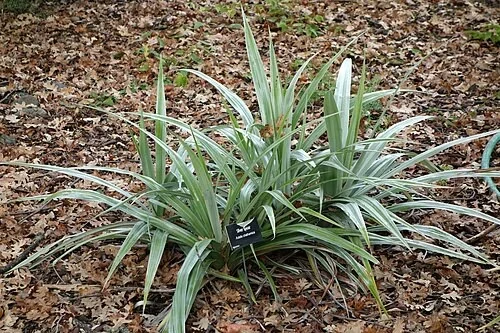
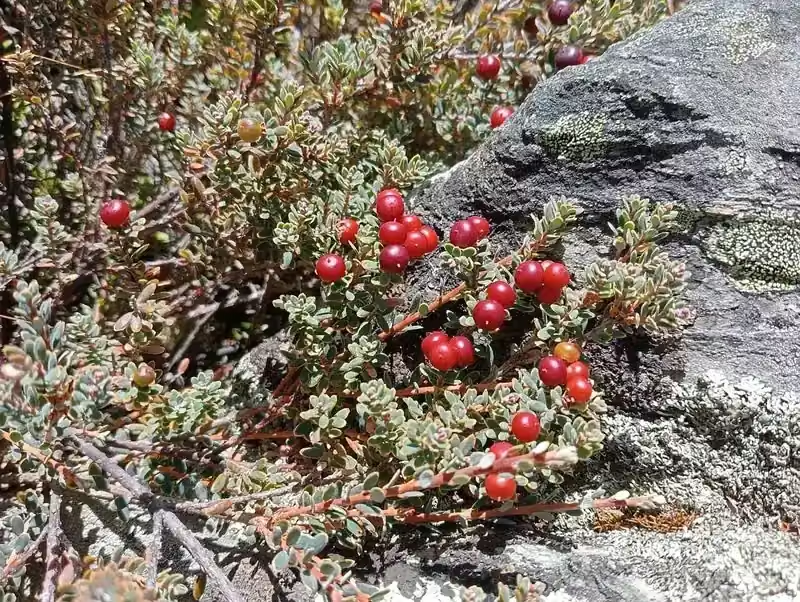
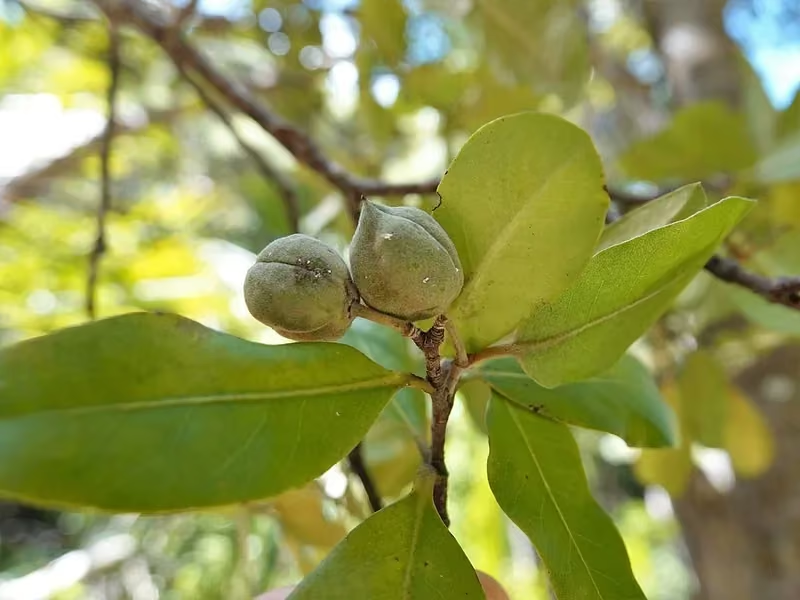
Explore other native plants that share similar characteristics or habitats with Agrostis Muelleriana ( Agrostis muelleriana ), offering further insights into New Zealand's diverse flora. These related species provide context and opportunities for complementary planting in your garden.


Plant Conservation
Conservation Status
Currently classified as 'Not Threatened' nationally, Mueller's Bent Grass remains a stable component of New Zealand's alpine flora across its natural range. However, its long-term survival is linked to the preservation of specialized high-country habitats and mountain seepages, which are vulnerable to climate change and the potential spread of invasive weeds into the subalpine zone. Protecting these unique mountain environments and maintaining the integrity of alpine hydrological regimes are key strategies for ensuring this delicate grass continues to thrive across its natural range.
Frequently Asked Questions
Where does Mueller's bent grass grow?
It grows in montane to high-alpine sites, localised around Mt Ruapehu and widespread in the South Island mountains.
Is Agrostis muelleriana frost hardy?
Yes, it is highly frost hardy and tolerates severe alpine freezes.
What does Mueller's bent grass look like?
It is a small tufted grass with purple-tinged foliage and contracted summer flower panicles.
What conditions does Mueller's bent grass prefer?
It prefers full sun and free-draining, rocky mountain soils.
Sources and Further Reading
The botanical, growing, and conservation details for Mueller's Bent Grass (Agrostis muelleriana) on this page draw on authoritative New Zealand plant references and citizen-science observation records. Consult the sources below for full technical records and the latest distribution data.