Colenso's Mingimingi
Acrothamnus colensoi
Last updated:
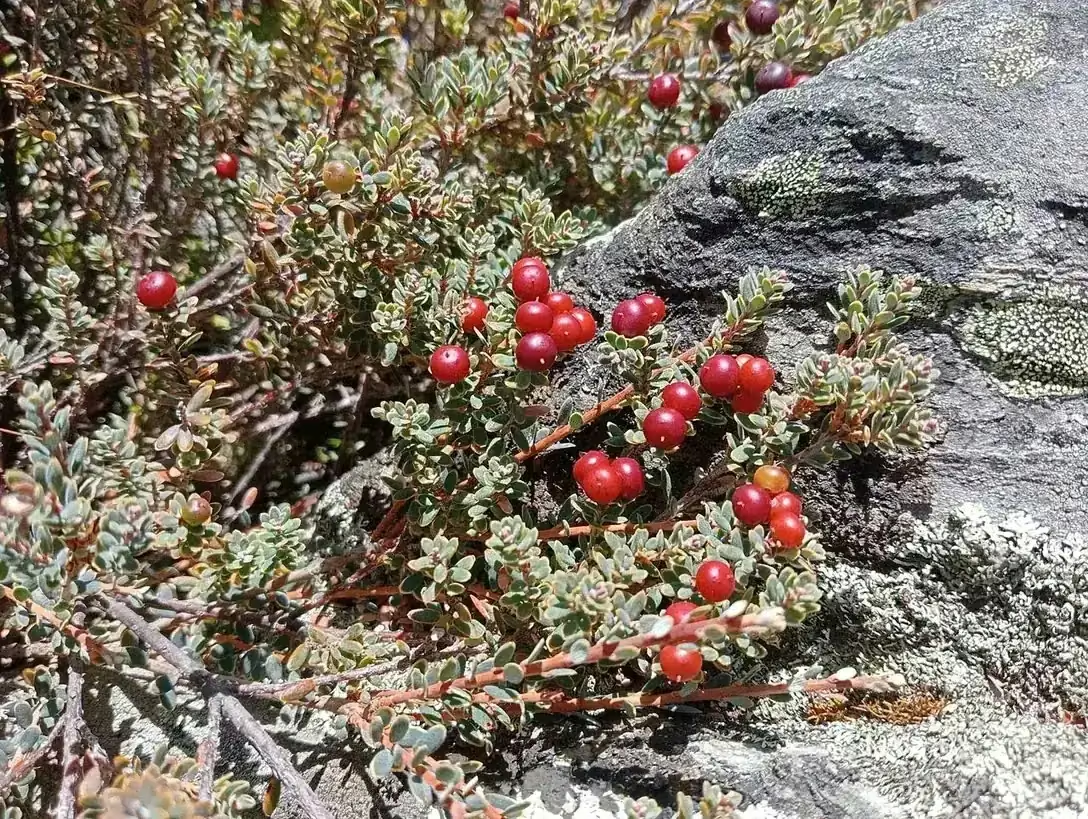
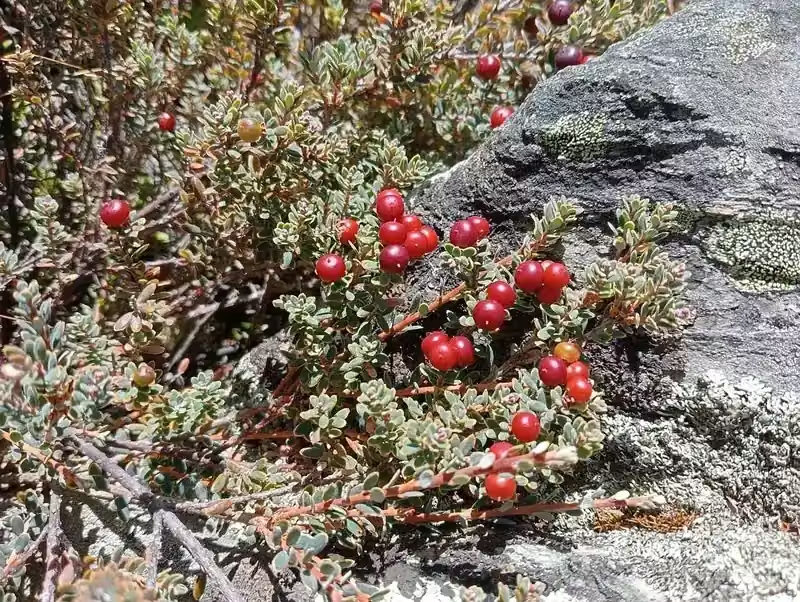
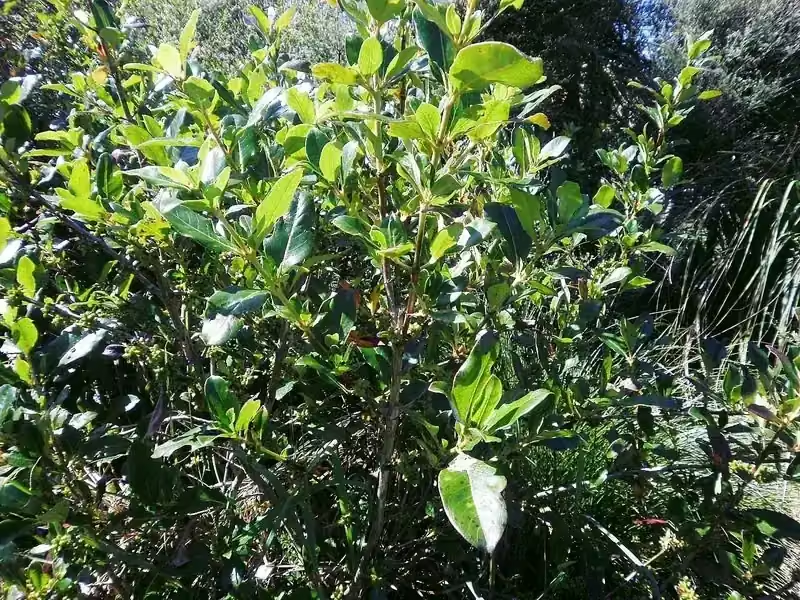
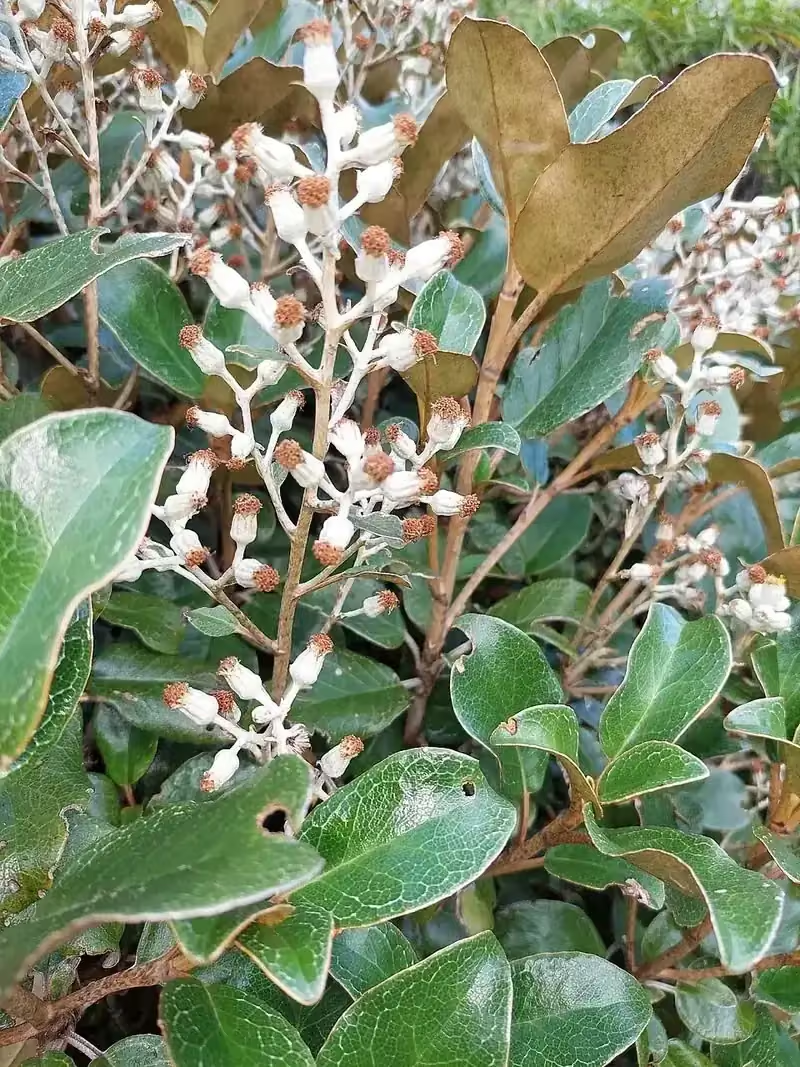
Colenso's mingimingi (Acrothamnus colensoi) is a dense, finely branched evergreen shrub of the New Zealand high country, usually 0.3 to 2 metres tall. Its leaves are minute and leathery, and their colour is highly variable, ranging from bronze-green to rich dark red-brown, often with a white stripe beneath. From spring to late summer it produces small, honey-scented white to yellowish bell-shaped flowers, followed by glossy, fleshy berries about 4 to 5 mm across. It grows on exposed subalpine slopes, fellfields, stable screes and peat bogs between roughly 600 and 1600 metres, where it is highly frost hardy. It is named for the pioneering colonial botanist William Colenso. Explore more New Zealand alpine plants in our native plant guide.
Plant Description
Identification and Physical Characteristics
Acrothamnus colensoi is a dense, finely branched subshrub typically growing between 0.2 and 0.5 meters tall, though it can spread up to 2 meters wide in sheltered spots. Its leaves are minute, leathery, and arranged in an alternating pattern. The foliage colour is highly variable, ranging from bronze-green to a rich dark red-brown, often with a distinctive white stripe on the lower surface. Flowering occurs from spring through to late summer, producing clusters of small, bell-shaped white or yellowish flowers that emit a faint honey-like scent. These are followed by glossy, fleshy berries that are approximately 4-5 mm in diameter. The fruit colour is exceptionally diverse, with individual plants producing berries that can be white, pink, bright red, or even almost black.
Quick Facts
| Scientific Name | Acrothamnus colensoi |
|---|---|
| Height | 0.3-2 m (compact shrub) |
| Spread | 40-120 cm across |
| Water Needs | Low to moderate; free-draining soils |
| Light | Full sun to high bright light |
| Frost Tolerance | High - tolerant of severe freezes |
| Salt Tolerance | Low to moderate |
| Growth Rate | Fast |
| Lifespan | Long-lived perennial |
Climate Best Suited to
Acrothamnus colensoi is well adapted to various New Zealand regions.
Regional Suitability
| City | Climate Suitability |
|---|---|
| Auckland | High |
| Wellington | High |
| Christchurch | Medium |
Plant Habitat
Natural Occurrence and Ecology
Colenso's Mingimingi is a specialist of the New Zealand high-country, inhabiting a variety of stressful environments between 600 and 1600 meters. It is a defining feature of exposed subalpine slopes, fellfields, and stable screes where drainage is rapid and light is intense. It also occurs frequently in high-country peat bogs and among rocky outcrops where it can find shelter in crevices. The species is highly adapted to the extreme conditions of its mountain home, including gale-force winds, high UV radiation, and severe winter frosts. It prefers cool-summer districts with high airflow, reflecting its evolution in the wind-swept landscapes of the South Island and the central North Island volcanic plateau.
Growing Requirements
Soil Requirements
Prefers well-draining soil rich in organic matter.
- Well-drained
- Loamy
Light Requirements
Grows best in partial to full sun.
- Full Sun
- Partial Shade
Water Requirements
Requires regular watering during dry periods.
- Regular
- Drought tolerant once established
Planting and Establishing
Establishment Guidance
Successfully establishing Colenso's Mingimingi in a garden requires creating an environment that mimics its cool, well-drained mountain habitat. It must be planted in a gritty, slightly acidic mineral soil mix to prevent root rot, which is its primary weakness in cultivation. Choose a position in full sun, though in warmer lowland gardens it may benefit from some afternoon shade to keep its root zone cool. Dig a hole slightly larger than the root ball and ensure the plant is not buried too deeply. Regular watering during its first summer is essential to help it establish its fine root system, after which it becomes very hardy and tolerant of drought and wind.
Ecological Role
Biodiversity and Ecosystem Impact
In its native mountain ecosystems, Acrothamnus colensoi plays a vital role as a structural component of subalpine shrublands. Its dense, sprawling habit helps stabilize loose soils on steep banks and ridgelines, protecting them from erosion. The plant is a valuable food source for a wide range of native fauna; its fragrant flowers attract native bees and flies, while its colourful, fleshy berries are eagerly consumed by lizards and forest birds. By tolerating harsh environmental conditions where few other shrubs can thrive, it provides essential shelter and resources that enhance the overall biodiversity and resilience of the New Zealand alpine and subalpine plant communities.
Uses & Significance
Garden Uses
Colenso's Mingimingi is an excellent choice for specialized rock gardens, alpine troughs, and raised beds where its fine texture and colourful berries can be appreciated up close. Its slow-growing, compact habit makes it a perfect 'bonsai' style shrub for miniature landscapes. The bronze and reddish tones of its foliage provide year-round visual interest, especially when contrasted with silvery alpines or grey stone mulch. It is a highly desirable plant for those wishing to create an authentic mountain-themed garden display that represents the unique flora of New Zealand's high-country heathlands.
- Specialized alpine troughs
- Rock garden textures
Ecological Value
Ecologically, it is increasingly used in high-altitude restoration projects and for stabilizing riparian margins in subalpine zones. It supports local biodiversity by providing seasonal food resources for native pollinators and fruit-eating fauna, contributing to the health of restored native ecosystems.
- Native bird food source
- Lizard habitat support
Landscaping Uses
In professional landscape design, Colenso's Mingimingi offers a sophisticated ground-level texture that is both durable and aesthetically pleasing. Its ability to create low, dense mats makes it an ideal choice for mass planting on exposed banks or as a fine-textured edging plant along paths in mountain-themed designs. The seasonal highlights of colourful berries and the deepening of foliage tints during the winter months provide a dynamic element to the garden. It is particularly effective when used in minimalist designs where its structural form and subtle colour palette can be used to create a sense of rugged, natural permanence.
Seasonal Care Calendar
Spring
The primary growth phase begins. Check for any winter damage or lifting from frost heave and gently firm the soil around the base. This is a good time to apply a very light dressing of organic native fertilizer.
- Fertilize
- Mulch
Summer
Honey-scented flowers appear through the summer. Provide regular deep watering during prolonged dry spells to maintain foliage density, ensuring the root zone stays cool and moist while avoiding waterlogging.
- Water
- Check for pests
Autumn
The vibrant berries mature and provide a feast for local birds and lizards. Clear any heavy fallen leaves from neighboring shrubs that might accumulate in the dense branches and encourage fungal issues.
- Prune lightly
- Plant new specimens
Winter
Naturally very frost-hardy and adapted to severe mountain winters. Requires minimal care; simply avoid heavy foot traffic or disturbance to the root zone while the ground is frozen to protect the dormant plant.
- Frost protection
When to Prune and How Much
Colenso's Mingimingi requires very little conventional pruning due to its naturally compact and slow-growing habit. Maintenance is generally limited to removing any dead or diseased stems using sharp, sterilized snips to maintain the health of the plant. If used as an edging or in a confined space, it can be lightly trimmed in early spring to maintain its desired shape and footprint. Avoid cutting back into old, woody growth as it may be slow to regenerate. Always use clean tools to prevent the introduction of rot to the dense shrubby mat.
- Remove dead branches
Always use clean, sharp tools.
How to Grow Colenso's Mingimingi
Growing Colenso's Mingimingi ( Acrothamnus colensoi ) is a rewarding process for the patient native gardener. This hardy shrub can be propagated through several methods, taking advantage of its natural sprawling habit. Success depends on providing the cool, high-light, and perfectly drained conditions it experiences in its native Southern Alps home. Cultivating this species allows gardeners to preserve a unique part of our national high-country botanical heritage.
From Seed
Propagation from seed is effective using fresh material collected from mature berries in late summer. The seeds should be cleaned of fruit pulp and sown onto the surface of a gritty, free-draining seed-raising mix. They often require a long period of cold stratification to trigger germination, which can sometimes take more than a year. Placing the sown trays in a cool, bright outdoor position over winter is the most reliable method for home gardeners.
Sow fresh seeds in a seed-raising mix.
- Collect seeds
- Sow in trays
Keep moist until germination.
From Cuttings
Vegetative propagation via semi-hardwood cuttings is also possible, though results can be variable. Take cuttings in late summer and use a rooting hormone to encourage establishment. Alternatively, because the plant naturally sprawls, established mats can sometimes be carefully divided in early spring. However, the risk of root damage is significant, so focusing on seed or cuttings is generally preferred for creating healthy new specimens.
Take semi-hardwood cuttings in late summer.
- Take cuttings
- Use rooting hormone
Additional Methods
Depending on the growth habit of Acrothamnus colensoi , other methods such as division or layering might also be viable options. Division is particularly suitable for plants that form dense clumps or have spreading root systems, while layering can be used for species with trailing or flexible stems.
Young Mingimingi plants are slow-growing and should be established in a site free from aggressive perennial weeds. They are highly resilient once their root system is established but must be protected from drying out during their first few summers. A top-dressing of crushed rock or gravel around the base of the plant will help keep the crown dry and provide a naturalistic mountain appearance that complements the plant's unique heath-like form.
- Divide clumps
- Replant immediately
Pests & Diseases
Colenso's Mingimingi is remarkably resistant to most common garden pests and diseases. Its leathery, small leaves are rarely targeted by insects. The primary health concern is root and crown rot, caused by poor drainage, stagnant water, or excessive humidity in lowland garden settings. Choosing a well-ventilated, sunny position with perfect mineral drainage is the best way to ensure the long-term health of this specialized alpine native.
Cultural Significance
The Colenso's Mingimingi is named in honour of William Colenso, one of New Zealand's most prolific and important early botanists. It represents the specialized evolutionary path of New Zealand's mountain flora, adapted to an isolated and extreme environment. As a key component of our high-country 'mingimingi' vegetation, it is a symbol of the resilience and unique beauty of the Southern Alps, valued by conservationists and native plant enthusiasts alike for its botanical heritage.
- Traditional medicine
- Crafts
Bonus Tip
To truly appreciate the multi-coloured berries of Colenso's Mingimingi, plant a few specimens together. Because berry colour varies between individual plants, a grouping can provide a stunning display of white, pink, and red fruit, creating a beautiful and authentic native highlight in the garden.
Related Plants
Explore other native plants that share similar characteristics or habitats with Acrothamnus Colensoi ( Acrothamnus colensoi ), offering further insights into New Zealand's diverse flora. These related species provide context and opportunities for complementary planting in your garden.



Plant Conservation
Conservation Status
Currently classified as 'Not Threatened' nationally, Colenso's Mingimingi remains a stable component of New Zealand's mountain flora. However, its long-term persistence is tied to the health of subalpine shrublands, which are increasingly threatened by land-use changes, browsing by introduced mammals, and the spread of invasive weeds. Protecting intact high-country habitat mosaics and using this species in restoration projects are key strategies for ensuring this important native shrub continues to thrive across its natural range.
Frequently Asked Questions
How tall does Colenso's mingimingi grow?
It typically grows between 0.3 and 2 metres tall, forming a compact, densely branched shrub.
Does Acrothamnus colensoi tolerate frost?
Yes, it is highly frost hardy and tolerates severe freezes in its high-country habitat.
Where does Colenso's mingimingi grow naturally?
It grows on exposed subalpine slopes, fellfields, screes and peat bogs between about 600 and 1600 metres.
What conditions does Colenso's mingimingi prefer?
It prefers full sun and free-draining soils, and grows quickly once established.
Sources and Further Reading
The botanical, growing, and conservation details for Colenso's Mingimingi (Acrothamnus colensoi) on this page draw on authoritative New Zealand plant references and citizen-science observation records. Consult the sources below for full technical records and the latest distribution data.