Small Cushion Daisy
Abrotanella pusilla
Last updated:
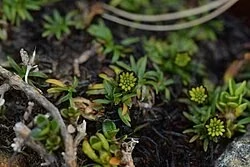
Small Cushion Daisy (Abrotanella pusilla) represents the extreme end of alpine dwarfism among New Zealand's flowering plants. Whole plants are often smaller than a coin, forming extraordinarily dense cushions just 1 to 3 cm tall that spread slowly into tight green mounds. Its minute, fleshy leaves are only 1 to 3 mm long and so tightly packed the surface looks almost continuous, like a green pebble. It colonises the highest, most exposed fellfields, summit plateaus and rock crevices, where it endures fierce winds and severe cold. Extremely frost hardy and adapted to full sun, it is a specialist pioneer of New Zealand's harshest mountain environments. Explore more native plants such as Cushion Daisy.
Plant Description
Identification and Physical Characteristics
Abrotanella pusilla represents the extreme end of alpine dwarfism, with entire plants often smaller than a ten-cent coin Discover more about native grasses. The cushions are extraordinarily dense and compact, typically only 5-20 millimeters tall, spreading slowly to form tight mounds rarely exceeding 10 centimeters diameter. Individual shoots are so tightly packed that the cushion surface appears almost continuous, resembling a green pebble more than a conventional plant.The leaves are the smallest in the genus, typically just 1-3 millimeters long and less than 0.5 millimeters wide, densely imbricate and appressed to the stem. They are thick and somewhat fleshy, with a pronounced keel and minutely hairy margins. This extreme reduction in leaf size minimizes surface area exposed to desiccating winds while the thick cuticle and dense pubescence provide additional protection against water loss and UV radiation.Flowering, when it occurs, is easily overlooked even by careful observers. The minute capitula, only 2-3 millimeters diameter, sit embedded within the cushion surface. They lack ray florets entirely, consisting of just a few disc florets that are pale yellow to almost white. The species appears to flower irregularly, perhaps only in favorable years, and seed production is correspondingly sporadic. This reproductive strategy - investing primarily in persistence rather than reproduction - is common among extreme alpine plants where seedling establishment is exceptionally rare.
Quick Facts
| Scientific Name | Abrotanella pusilla |
|---|---|
| Height | 1-3 cm |
| Spread | 30-60 cm |
| Water Needs | Low to moderate |
| Light | Full sun; exposed sites |
| Frost Tolerance | High - tolerant of severe freezes |
| Salt Tolerance | Low to moderate |
| Growth Rate | Fast |
| Lifespan | Annual |
Climate Best Suited to
Small Cushion Daisy is well adapted to various New Zealand regions.
Regional Suitability
| City | Climate Suitability |
|---|---|
| Auckland | High |
| Wellington | High |
| Christchurch | Medium |
Plant Habitat
Natural Occurrence and Ecology
Abrotanella pusilla occupies the most extreme habitats available to flowering plants in New Zealand, growing in sites where even other cushion plants struggle to survive. It specializes in the highest, most exposed fellfields, summit plateaus, and rock crevices where snow-free conditions alternate with extreme cold. These sites experience the full force of alpine weather, with winds regularly exceeding 200 km/h and temperature fluctuations of 40°C or more within a single day.The species shows strong substrate preferences, most commonly occurring on stable, fine-textured substrates derived from schist, argillite, or highly weathered greywacke. It avoids coarse, unstable screes and areas with prolonged snow cover. The microscale topography is crucial - plants typically establish in small depressions or crevices that provide minimal shelter while still maintaining the excellent drainage essential for survival.Soil development is minimal in these extreme sites. The substrate typically consists of 95% or more mineral particles with organic matter content below 0.5%. Despite this apparent sterility, these soils are often rich in essential minerals released by ongoing weathering. The pH typically ranges from 5.5 to 6.5, though the species tolerates broader ranges where other factors are favorable.Associated species are few, reflecting the extreme conditions. Where present, companions may includeRaoulia bryoides,Haastia pulvinaris, and highly reduced forms ofDracophyllum muscoides. More often, A. pusilla grows in pure stands or as isolated cushions in otherwise barren fellfield.
Growing Requirements
Soil Requirements
Prefers well-draining soil rich in organic matter.
- Well-drained
- Loamy
Light Requirements
Grows best in partial to full sun.
- Full Sun
- Partial Shade
Water Requirements
Requires regular watering during dry periods.
- Regular
- Drought tolerant once established
Planting and Establishing
Establishment Guidance
Planting the Small Cushion Daisy requires careful consideration of its specialized needs. It should be placed in a hole slightly larger than its delicate root system, ensuring the substrate is a very well-draining, grit-heavy mix that mimics its native subalpine fellfields. In a garden or trough setting, positioning it in a small depression or crevice between rocks can provide essential micro-shelter from desiccating winds while ensuring perfect drainage. Avoid heavy, waterlogged soils at all costs, as the fine roots are highly susceptible to rot if they remain too wet for extended periods.
Ecological Role
Biodiversity and Ecosystem Impact
Abrotanella pusilla plays a subtle but vital role in New Zealand's high-altitude ecosystems. By forming dense, low-growing mats, it helps to consolidate fine-textured alpine substrates, acting as a pioneer species in harsh fellfield environments. Interestingly, this species is known to host several types of specialized fungi, contributing to the complex subterranean biodiversity of alpine herbfields. Its minute flowers provide a nectar source for specialized high-country invertebrates, and its seeds, though small and irregularly produced, are an important part of the wind-dispersed alpine seed rain.
Uses & Significance
Garden Uses
The Small Cushion Daisy is a perfect candidate for specialized alpine troughs, crevice gardens, and miniature rockeries. Its extreme compact form and slow growth make it ideal for very small-scale plantings where it won't be overwhelmed by larger, more aggressive species. It is particularly valued by alpine plant collectors for its exquisite, fine-textured foliage and its ability to represent the 'bonsai' nature of New Zealand's mountain flora.
- Crevice gardens
- Alpine troughs
- Miniature rockeries
Ecological Value
As an indicator species for pristine subalpine environments, it supports local biodiversity through its relationships with fungi and invertebrates. Its presence contributes to the overall resilience of the alpine cushion field community.
- Fungal host
- Soil consolidation
Landscaping Uses
While too small for conventional broad-scale landscaping, the Small Cushion Daisy adds incredible detail and texture to modern high-country or xeriscape designs. It can be used to fill the smallest gaps in stone paving or rock walls, adding a sense of established age and naturalness to the hardscaping. Its leathery, dark green foliage provides a beautiful contrast when planted among lighter-coloured gravels or larger silvery-leaved alpines like Celmisia.
Seasonal Care Calendar
Spring
Check for any lifting caused by winter frost heave and gently firm the soil around the base. This is the best time for careful division if the plant has become large enough.
- Firm soil
- Optional division
Summer
Maintain consistent but light moisture during the warmest months. The minute flowers may appear mid-summer, though they are often inconspicuous and irregular.
- Light watering
- Monitor flowering
Autumn
Clear away any fallen debris from neighboring plants that could smother the small cushions. Ensure the surrounding grit or gravel is clean to prevent fungal issues.
- Debris removal
- Maintain drainage
Winter
Naturally adapted to severe cold and snow cover. Ensure the plant is not in a position where water can pool and freeze solidly around the crown for long periods.
- Avoid ice-pooling
- Frost hardy
When to Prune and How Much
Due to its extreme dwarfism and slow growth rate, the Small Cushion Daisy requires no conventional pruning. Maintenance is limited to using fine tweezers or small scissors to remove any individual dead rosettes or debris caught in the dense mat. It is important to leave the living cushion as undisturbed as possible, as it recovers very slowly from physical damage or over-enthusiastic cleaning.
- No pruning required
- Gentle debris removal
Always use clean, sterilized tools if any maintenance is necessary to avoid introducing rot.
How to Grow Small Cushion Daisy
Cultivating Small Cushion Daisy ( Abrotanella pusilla ) is a delicate but rewarding process for the patient gardener. This species can be propagated through several specialized methods, each requiring careful attention to its alpine origins. Successful propagation depends on providing the cool, high-light, and well-drained conditions the plant experiences in its native New Zealand mountains.
From Seed
Seeds of the Small Cushion Daisy are minute and should be collected as soon as the small heads turn brown and firm. For best results, sow them immediately onto the surface of a sterilized, grit-rich seed-raising mix. They require a period of cold stratification to trigger germination, so placing the sown trays in a cool, protected outdoor position over winter is often successful. Germination is typically sporadic and requires patience.
Surface sow seeds and do not cover deeply.
- Collect mature seeds
- Surface sow on grit mix
Keep the mix moist but never saturated during the germination period.
From Cuttings and Division
The Small Cushion Daisy naturally roots along its creeping branches, making division of established mats the most reliable method of propagation. In early spring, small rooted sections (offsets) can be carefully teased away from the parent plant and replanted into a gritty potting medium. Use a very fine pumice or sand-based mix to encourage the delicate roots to establish.
Take divisions during cool, overcast weather to minimize transplant shock.
- Carefully separate rooted offsets
- Pot into gritty mix
Establishing New Plants
Once new plants have established a healthy root system, they can be moved to their permanent positions. Given their slow growth, they should be placed where they won't be overshadowed by faster-growing neighbors. A top-dressing of fine gravel helps maintain moisture levels and provides a naturalistic look.
Ensure permanent sites offer excellent drainage.
- Select permanent site
- Plant at soil level
- Apply gravel mulch
Pests & Diseases
The Small Cushion Daisy is generally very healthy in its preferred environment. The primary threat in cultivation is fungal rot, usually caused by stagnant air or overly wet conditions. Crown rot can quickly destroy an entire cushion if the drainage is inadequate. While largely resistant to insects, slugs or snails may occasionally be attracted to the succulent rosettes in damper, lowland garden environments. Ensuring good airflow around the plant is the best preventative measure.
Cultural Significance
Small Cushion Daisy represents the remarkable adaptation of New Zealand's alpine flora to extreme environments. While not specifically used by Māori due to its remote high-altitude habitat, these cushion plants embody the resilience and specialized evolution found throughout New Zealand's mountain ecosystems. They serve as indicators of pristine alpine environments and are valued by botanists and conservationists as examples of unique island biogeography. For modern New Zealanders, these plants symbolize the fragile beauty of our alpine heritage and the importance of protecting high-country ecosystems from climate change and human impact. Their role as fungal hosts adds another layer to their botanical importance.
- Alpine resilience
- Scientific value
Bonus Tip
A gravel mulch is highly recommended for this species. Not only does it mimic its native habitat, but it also helps keep the tiny leaves away from damp soil surfaces, significantly reducing the risk of rot.
Related Plants
Explore other native plants that share similar characteristics or habitats with Small Cushion Daisy ( Abrotanella pusilla ), offering further insights into New Zealand's diverse flora. These related species provide context and opportunities for complementary planting in your garden.




Plant Conservation
Conservation Status
Although not currently threatened, Abrotanella pusilla is naturally rare due to its extremely specialized habitat requirements. Climate change poses a significant long-term threat as the species already occupies many of the highest available sites in its range. Warmer temperatures are enabling more competitive species to establish at increasingly high elevations, potentially outcompeting these slow-growing specialists. Additionally, changes in the timing and duration of snow cover disrupt the environmental cues these plants rely on for their annual cycles. Protecting these pristine alpine environments from disturbance and the spread of invasive species is critical for the long-term persistence of the Small Cushion Daisy.
Frequently Asked Questions
How tall does Small Cushion Daisy grow?
It grows just 1 to 3 cm tall, forming a very dense, compact cushion.
Where does Abrotanella pusilla grow naturally?
It grows on the highest, most exposed alpine fellfields, summit plateaus and rock crevices in New Zealand.
Does Small Cushion Daisy tolerate frost?
Yes, it is highly frost tolerant and withstands severe alpine freezes.
How does Small Cushion Daisy spread?
It is a slow-spreading, mat-forming species that stays very low to the ground.
Sources and Further Reading
The botanical, growing, and conservation details for Small Cushion Daisy (Abrotanella pusilla) on this page draw on authoritative New Zealand plant references and citizen-science observation records. Consult the sources below for full technical records and the latest distribution data.