Tūpare
Olearia colensoi
Last updated:
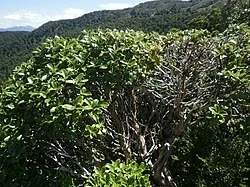
Tūpare (Olearia colensoi), also known as leatherwood, is an endemic tree daisy that grows as a robust shrub or small tree from 3 to 10 metres tall. Its large, leathery leaves, 8 to 20 centimetres long, are dark glossy green above and permanently clothed in dense white to buff wool beneath, with irregularly serrated margins. It dominates montane to subalpine areas, forming impenetrable thickets along the South Island Main Divide, and is very hardy in cold mountain conditions. Explore more native shrubs in our native plant guide.
Plant Description
Olearia colensoi , known by the Māori names Tūpare, Kūmarahou, and Kūmararaunui, is an impressive endemic shrub that can grow into a small tree reaching heights of 3-10 meters. The bark is distinctively light brown and papery, with branches covered in woolly hairs. The leaves are the plant's most striking feature, measuring 8-20 cm long and 3-6 cm wide, with an obovate to obovate-oblong shape. They display a beautiful dark shining green upper surface when mature, while the undersides are permanently clothed in dense white to buff woolly tomentum. The leaf margins are irregularly serrated, often doubly so, and the leaves have a distinctive leathery (coriaceous) texture. During flowering season from November to January, the plant produces racemes up to 20 cm long bearing capitula 2-3 cm in diameter with dark red or yellow flowers. The species shows considerable variation across its range, from compact subalpine forms to larger coastal varieties that can reach tree-like proportions on Stewart Island.
Quick Facts
| Scientific Name | Olearia colensoi |
|---|---|
| Height | 3-10 meters |
| Spread | 2-4 meters |
| Water Needs | Moderate to high |
| Light | Full sun to partial shade |
| Frost Tolerance | High (mountain forms), low (coastal forms) |
| Salt Tolerance | High (coastal forms) |
| Growth Rate | Moderate |
| Lifespan | 50+ years |
Climate Best Suited to
Olearia colensoi demonstrates remarkable adaptability across New Zealand's diverse climates, from sea level on Stewart Island to subalpine zones up to 1,500 meters elevation. The species thrives in high-rainfall areas, particularly on the westernmost ranges of the South Island and axial ranges of the North Island. Mountain forms display excellent frost hardiness, while coastal varieties prefer milder conditions but can tolerate salt spray and maritime exposure.
Regional Suitability
| City | Climate Suitability |
|---|---|
| Auckland | Moderate |
| Wellington | High |
| Christchurch | Moderate |
| Dunedin | High |
| Queenstown | High |
| Invercargill | Very High |
Plant Habitat
Olearia colensoi occupies a diverse range of habitats across New Zealand, displaying remarkable ecological plasticity. In montane to subalpine areas (400-1,210 meters), it forms impenetrable thickets and is extensively dominant in the subalpine belt of high-rainfall areas. The species occurs predominantly on the Main Divide of the South Island from Jackson's Bay to Arthur's Pass, throughout the axial ranges of the North Island, and extensively on Stewart Island where it reaches sea level and forms an important component of coastal vegetation. In its natural habitat, it associates with other subalpine shrubs and can be found in forest margins, scrublands, and exposed ridgelines where its tough, leathery leaves provide excellent adaptation to harsh conditions including strong winds and temperature extremes.
Growing Requirements
Soil Requirements
Thrives in well-draining soils ranging from sandy loam to heavier clay types, provided drainage is adequate. Prefers slightly acidic to neutral pH (6.0-7.0) but tolerates alkaline conditions.
- Well-drained sandy loam ideal
- Tolerates clay if well-drained
- pH 6.0-7.0 optimal
- Benefits from organic matter
Light Requirements
Performs best in full sun but tolerates partial shade, particularly in hotter regions. Mountain forms are more sun-tolerant than coastal varieties.
- Full sun preferred
- Tolerates partial shade
- Needs 6+ hours direct light for best flowering
- Protection from hot afternoon sun in warm climates
Water Requirements
Prefers consistently moist but not waterlogged soil. Once established, mountain forms show good drought tolerance while coastal forms need regular moisture.
- Regular watering during establishment
- Maintain consistent moisture
- Drought tolerant once established (mountain forms)
- Avoid waterlogging
Planting and Establishing
When planting Olearia colensoi , select a site that matches the form you're growing - coastal varieties need shelter from cold winds while mountain forms require good air circulation. Prepare a planting hole twice the width of the root ball and the same depth. Mix the excavated soil with compost or well-rotted organic matter to improve drainage and fertility. Position the plant at the same depth it was growing in its container, backfill carefully, and water thoroughly. Apply a 5-10cm layer of mulch around the base, keeping it away from the trunk to prevent rot. For the first year, maintain consistent moisture levels and protect from extreme weather. In exposed sites, stake young plants until the root system establishes. The species responds well to planting in groups where it can form its characteristic thickets, providing mutual wind protection and creating an impressive display when flowering.
Ecological Role
Olearia colensoi plays a crucial ecological role in New Zealand's subalpine and coastal ecosystems. As a dominant shrub in the subalpine belt, it provides essential habitat structure and shelter for native fauna including birds, insects, and lizards. The dense thickets offer secure nesting sites for endemic birds, while the flowers provide nectar for native bees, flies, and moths during the summer flowering period. The woolly leaf undersides trap moisture and create humid microclimates that support epiphytic mosses and lichens. In succession dynamics, it acts as a nurse plant for forest regeneration, providing shelter for seedlings of canopy trees. The plant's extensive root system helps stabilize slopes and prevent erosion in steep montane terrain. Its seeds, produced from December to February, are dispersed by wind and provide food for native birds, contributing to the complex food web of New Zealand's unique ecosystems.
Uses & Significance
Garden Uses
Tūpare makes an outstanding specimen plant for larger gardens, particularly those seeking to create authentic New Zealand native landscapes. Its architectural form and distinctive foliage provide year-round interest.
- Specimen planting in native gardens
- Wind-resistant hedging and shelter belts
- Subalpine and rock garden features
- Coastal gardens (using appropriate forms)
- Erosion control on slopes
Ecological Value
The species provides multiple ecosystem services and supports biodiversity through its role as a keystone species in subalpine communities.
- Nectar source for native pollinators
- Nesting habitat for endemic birds
- Food source through seeds
- Shelter for small fauna and invertebrates
- Nurse plant for forest regeneration
Landscaping Uses
In landscape design, Olearia colensoi offers exceptional versatility and visual impact. Its bold foliage creates striking textural contrasts when paired with fine-leaved natives like Coprosma species or grasses such as Chionochloa. The white woolly leaf undersides are revealed beautifully in wind, adding dynamic movement to plantings. For coastal properties, it serves as an excellent windbreak and salt-tolerant screen. In larger landscapes, mass plantings recreate the impressive thickets found in nature, particularly effective on slopes or as backdrop plantings. The species works well in mixed native shrub borders, providing structure and seasonal flowering interest. Its tolerance of pruning makes it suitable for formal hedging, though this sacrifices the natural character. Consider using mountain forms for alpine-style rock gardens or coastal forms for seaside plantings where their greater size and salt tolerance are advantageous.
Seasonal Care Calendar
Spring
New growth emerges with fresh woolly shoots. Apply balanced slow-release fertilizer and refresh mulch layer. Monitor for pest activity on tender new growth.
- Apply slow-release fertilizer
- Refresh organic mulch
- Light pruning if needed
- Check for aphids on new growth
Summer
Peak flowering period from November to January. Maintain consistent moisture during dry spells and deadhead spent flowers to encourage extended blooming.
- Water deeply during dry periods
- Deadhead spent flowers
- Take semi-hardwood cuttings
- Monitor for scale insects
Autumn
Seed development and dispersal occurs. Collect seeds for propagation if desired. Reduce watering as growth slows and prepare plants for winter.
- Collect ripe seeds
- Reduce watering frequency
- Plant new specimens
- Apply lime if soil is too acidic
Winter
Dormant period with minimal growth. Protect coastal forms from severe frosts. Avoid pruning to prevent frost damage to new growth.
- Protect young plants from frost
- Minimal watering required
- Plan major pruning for late winter
- Check for wind damage after storms
When to Prune and How Much
Olearia colensoi responds well to pruning but timing is crucial for maintaining plant health and flowering. The best time for major pruning is late winter to early spring, just before new growth begins. This allows the plant to heal quickly and produce new flowering wood for the coming season.
- Remove dead, damaged, or crossing branches anytime
- Shape pruning in late winter before growth starts
- Light tip pruning after flowering to maintain density
- Rejuvenation pruning of old plants over 2-3 years
- Never remove more than one-third of growth annually
When pruning for shape, maintain the plant's natural form rather than creating formal shapes, as this suits its wild character. For rejuvenating old or overgrown specimens, spread hard pruning over several years, removing one-third of the oldest stems each year. Always use clean, sharp tools and make cuts just above a growth node or branch junction. The woolly coating on young stems can harbor moisture, so ensure good air circulation after pruning to prevent fungal issues.
How to Grow Tūpare
Cultivating Tūpare ( Olearia colensoi ) is a rewarding endeavor for any gardener interested in New Zealand's unique flora. This species can be propagated through several methods, each requiring specific conditions to ensure healthy growth and establishment. Successful propagation depends on mimicking the plant's natural environment and providing consistent care during the early stages of development. The most reliable method is through semi-hardwood cuttings, though seed propagation offers genetic diversity and is useful for larger-scale production.
From Seed
Propagation from seed is often the most effective way to produce a large number of Tūpare plants. Seeds should be collected when they are fully mature from December to February, identifiable by their dry, papery appearance. Freshly collected seeds generally have higher germination rates than those that have been stored for long periods. The small seeds require light for germination, making surface sowing essential.
Sow seeds on the surface of a well-draining seed-raising mix in late summer to early autumn. Maintain temperatures between 18-24°C for optimal germination, which typically occurs within 2-4 weeks. Use a fine mist spray to keep the medium moist without disturbing the seeds.
- Collect ripe seeds from December to February when papery and dry
- Prepare seed trays with fine, well-draining seed-raising mix
- Surface sow seeds and press gently into medium without covering
- Mist regularly to maintain moisture without waterlogging
- Place in warm, bright location but avoid direct sunlight
- Transplant seedlings when 5-10cm tall with several true leaves
Seedlings grow slowly initially and benefit from weekly diluted liquid fertilizer once true leaves appear. Harden off gradually before planting out in their second spring.
From Cuttings
For those wishing to replicate specific characteristics of a parent plant, vegetative propagation via cuttings is the preferred method. This technique ensures that the new plants are genetically identical to the source. Semi-hardwood cuttings taken during late summer to early autumn usually yield the best results for this species.
Select healthy, non-flowering shoots from the current season's growth. Cuttings should be 10-15cm long with at least three nodes. The woolly coating on stems can retain excess moisture, so careful preparation is essential.
- Take 10-15cm cuttings from semi-hardwood growth in late summer
- Remove lower leaves and reduce remaining leaves by half
- Dip base in rooting hormone powder or gel
- Insert into free-draining propagation mix (pumice/perlite/peat)
- Place in propagation house with bottom heat at 20-22°C
- Maintain high humidity with misting system or plastic cover
- Roots develop in 6-10 weeks with 70% shade cloth coverage
Additional Methods
Depending on the growth habit of Tūpare, other methods such as division or layering might also be viable options. Division is particularly suitable for plants that form dense clumps or have spreading root systems, while layering can be used for species with trailing or flexible stems.
Layering works well for lower branches that can be bent to ground level. This method produces larger plants more quickly than cuttings and maintains connection to the parent plant during root development.
- Select flexible lower branches in spring
- Wound the underside of the branch where it will touch soil
- Peg down wounded section and cover with soil/compost mix
- Keep layered section moist throughout growing season
- Check for root development after 6-12 months
- Sever from parent plant once well-rooted and transplant
Pests & Diseases
Olearia colensoi is generally robust and resistant to major pests and diseases when grown in appropriate conditions. However, stressed plants or those in suboptimal environments may occasionally encounter problems. The woolly leaf undersides can trap moisture in humid conditions, potentially leading to fungal issues if air circulation is poor. Scale insects occasionally infest stems and leaves, appearing as brown or white bumps that can be controlled with horticultural oil sprays. Aphids may attack new growth in spring, causing leaf distortion but rarely causing serious damage. Root rot can occur in poorly drained soils, emphasizing the importance of good drainage. Leaf spot diseases may appear during prolonged wet periods but are usually cosmetic. The best defense is maintaining plant vigor through appropriate siting, good drainage, adequate spacing for air circulation, and avoiding overhead watering. Regular monitoring allows early intervention if problems arise.
Cultural Significance
Olearia colensoi holds cultural and historical significance in New Zealand, bearing several Māori names including Tūpare, Kūmarahou, and Kūmararaunui. The species was first collected for Western science by William Colenso on Mt Hikurangi, and it bears his name in recognition of his extensive botanical work in New Zealand. While specific traditional uses are not extensively documented, the plant's membership in the daisy family (Asteraceae) and its prominent place in the subalpine landscape would have made it a familiar sight to Māori traversing mountain passes. The durable wood from larger specimens may have been used for implements. In contemporary times, it has become valued in restoration projects for its ability to quickly establish and provide shelter for regenerating native forest. The species represents one of New Zealand's most handsome endemic tree daisies and exemplifies the unique evolutionary path of our isolated flora.
- Named after botanist William Colenso
- Multiple Māori names indicating cultural recognition
- Important in ecological restoration projects
- Representative of New Zealand's endemic tree daisy radiation
- Valued for traditional knowledge of subalpine plants
Bonus Tip
For spectacular foliage contrast, position Olearia colensoi where afternoon breezes will reveal the silvery-white undersides of its leaves. This creates a shimmering effect that adds dynamic visual interest to the garden. Additionally, collect and press a few of the distinctive leaves - their leathery texture and woolly undersides make beautiful botanical specimens that preserve well and showcase this remarkable plant's unique adaptations to New Zealand's challenging mountain environments.
Related Plants
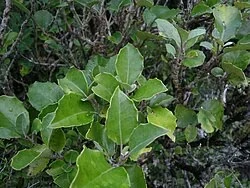
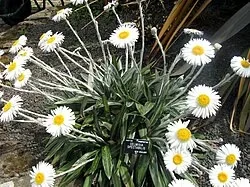
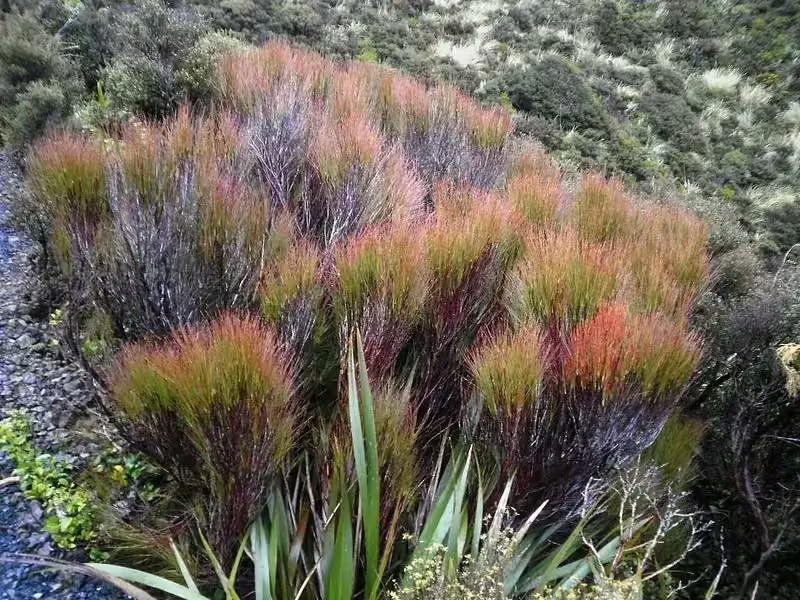
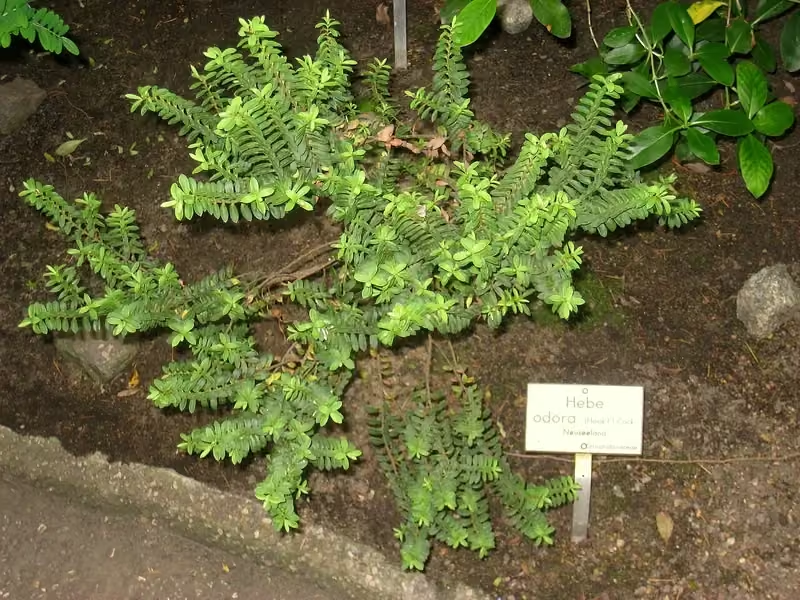
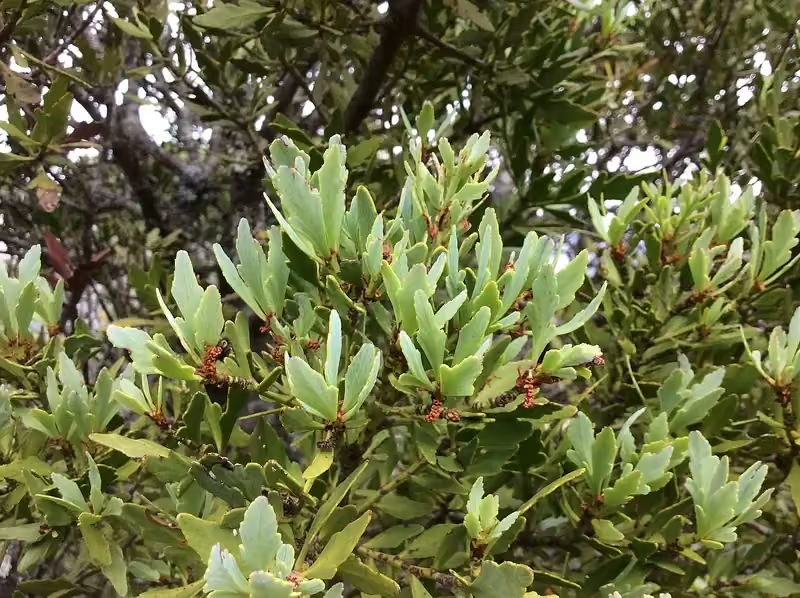
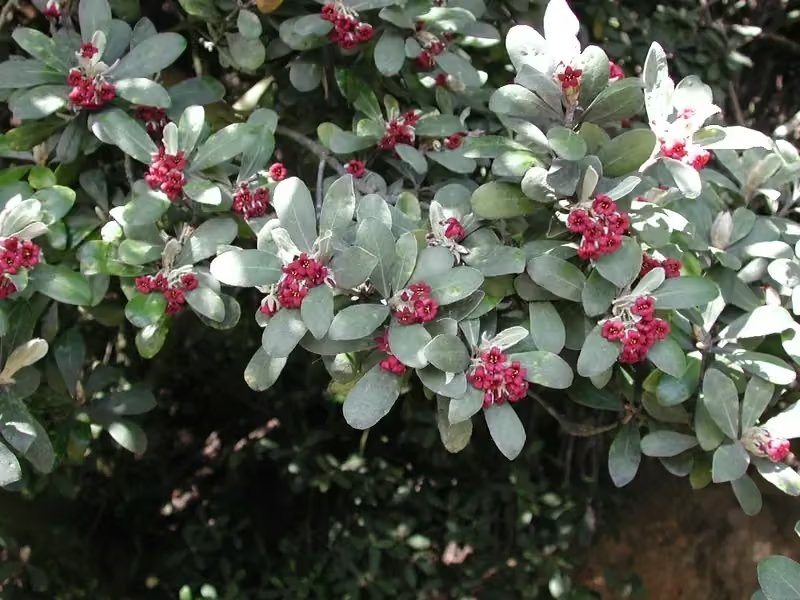
Explore other native plants that share similar characteristics or habitats with Tūpare ( Olearia colensoi ), offering further insights into New Zealand's diverse flora. These related species provide context and opportunities for complementary planting in your garden.


Plant Conservation
Olearia colensoi is currently classified as "Not Threatened" in New Zealand, reflecting its widespread distribution and abundance in suitable habitats. The species remains extensively dominant in the subalpine belt across high-rainfall areas of both main islands and Stewart Island, where it forms characteristic dense thickets. However, like all native species, it faces potential threats from habitat modification, invasive species competition, and climate change impacts. The altitudinal and latitudinal range of the species provides some resilience to climate warming, as populations can potentially migrate upward or southward. Browsing pressure from introduced mammals like deer and goats can impact regeneration in some areas. Conservation efforts focus on maintaining intact subalpine ecosystems and controlling invasive species. The species' ability to rapidly colonize disturbed sites makes it valuable for restoration projects, and it is commonly cultivated in nurseries for revegetation programs. Its robust nature and wide ecological amplitude suggest it will remain secure in the wild for the foreseeable future.
Frequently Asked Questions
How tall does tūpare grow?
It grows as a shrub or small tree from about 3 to 10 metres tall.
Where does tūpare grow naturally?
It forms dense thickets in montane to subalpine areas along the South Island Main Divide.
Does tūpare tolerate frost and salt?
Mountain forms are very frost-hardy, while coastal forms tolerate salt well.
How long does tūpare live?
It is a long-lived shrub, living 50 years or more.
Sources and Further Reading
The botanical, growing, and conservation details for Tūpare (Olearia colensoi) on this page draw on authoritative New Zealand plant references and citizen-science observation records. Consult the sources below for full technical records and the latest distribution data.