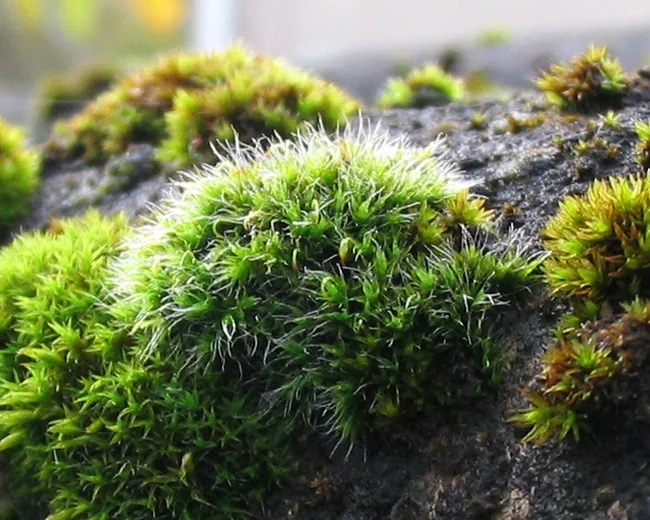
Grey-Cushioned Grimmia
Grimmia pulvinata
Last updated:
Grimmia pulvinata, the Grey-Cushioned Grimmia, is a tough, widespread moss that forms neat, hemispherical cushions about 1 to 2 cm high. The cushions look grey-green to orange-yellow and often appear silvery or hoary thanks to long, glass-like hair-points on the leaf tips. In New Zealand it grows on exposed rocks such as limestone, basalt and sandstone, and is a familiar urban coloniser of concrete walls, old mortar and roof tiles. A drought-tolerant pioneer species, it survives dry, exposed places where few other plants can, ranging from the coast to high alpine zones. Explore more native mosses and lichens in our native plant guide.

Plant Description
Identification and Physical Characteristics
Grimmia pulvinata forms neat, dense, hemispherical cushions typically 1-2 cm high. The plants vary in colour from grey-green to orange-yellow, often appearing hoary or silvery due to the long, hyaline (glass-like) hair points extending from the tips of the leaves. The leaves are lanceolate, broad at the base and tapering to a point, and are closely overlapping. A distinctive feature is the oval-shaped capsules which bend back into the foliage on curved stalks (setae) when immature or dry, but become erect and prominent when moist and mature. The capsules have a wide mouth and visible ribs or furrows.
Quick Facts
| Scientific Name | Grimmia pulvinata |
|---|---|
| Height | 1-2 cm |
| Spread | 2-5 cm (clumps) |
| Water Needs | Low |
| Light | Full Sun |
| Frost Tolerance | High |
| Salt Tolerance | Moderate |
| Growth Rate | Slow |
| Lifespan | Perennial |
Climate Best Suited to
Grimmia pulvinata is a highly adaptable species found in temperate regions worldwide. In New Zealand, it thrives in a wide range of climates, from coastal areas to high alpine zones. It is particularly well-suited to dry, exposed environments where many other plants cannot survive. It tolerates extreme desiccation, reviving quickly upon rehydration.
Regional Suitability
| City | Climate Suitability |
|---|---|
| Auckland | Suitable |
| Wellington | Suitable |
| Christchurch | Suitable |
| Dunedin | Suitable |
| Queenstown | Suitable |
Plant Habitat
Natural Occurrence and Ecology
In New Zealand, this moss is a common sight on exposed rocks, including limestone, basalt, and sandstone. It is also a frequent urban dweller, colonizing concrete walls, old mortar, roof tiles, and tarmac. It acts as a pioneer species, establishing on bare surfaces and slowly accumulating organic matter. While primarily growing on rock (saxicolous), it can occasionally be found on tree trunks.
Growing Requirements
Soil Requirements
Grows directly on rock or concrete surfaces.
- No soil required
- Attaches to porous rock
- Concrete and mortar
- Requires stable substrate
Light Requirements
Thrives in high light environments.
- Full sun exposure
- Tolerates intense UV
- Avoid deep shade
Water Requirements
Poikilohydric; tolerates drying out completely.
- Relies on rain and dew
- Drought tolerant
- Do not overwater in cultivation
Planting and Establishing
Establishment Guidance
Cultivating Grimmia pulvinata is typically done by encouraging natural colonization or by transplanting small fragments onto suitable rock surfaces. To establish it, place small clumps of the moss onto a porous rock or concrete surface in a sunny location. misting it initially can help adhesion, but once established, it requires little intervention. It prefers alkaline substrates like concrete or limestone.
Ecological Role
Biodiversity and Ecosystem Impact
As a pioneer species, Grimmia pulvinata plays a crucial role in primary succession. It colonizes bare rock, initiating the process of soil formation by trapping dust and organic debris. This creates microhabitats for microscopic organisms and eventually allows larger plants to establish. It also provides a habitat for invertebrates such as tardigrades and mites.
Uses & Significance
Garden Uses
Valued for rock gardens, stumperies, and Japanese-style gardens.
- Rock gardens
- Stone walls
- Concrete aesthetics (aging)
- Miniature landscapes
Ecological Value
Important for urban biodiversity.
- Pioneer colonizer
- Soil formation
- Micro-habitat provider
The versatility of this plant makes it a valuable addition to many New Zealand gardens. Beyond its aesthetic appeal, it offers practical benefits such as soil stabilization and shelter for smaller plants. Its historical and modern uses highlight its enduring importance in both traditional practices and contemporary landscape design, making it a thoughtful choice for any restoration or gardening project.
Landscaping Uses
This moss is excellent for adding an established, aged look to new stone or concrete features in a garden. Its neat, cushion-like habit makes it attractive in rockeries or on the tops of dry stone walls. It requires no maintenance once established and adds texture and year-round interest, changing colour from greyish-silver when dry to vibrant green when wet.
Seasonal Care Calendar
Spring
Active growth period with moisture.
- Enjoy fresh green colour
- Watch for capsule formation
Summer
Dormant during dry spells.
- Will appear grey and dry
- Do not force water
Autumn
Revives with rains.
- Good time to transplant
- Clear fallen leaves off cushions
Winter
Remains active if not frozen.
- Tolerates frost well
- Requires no protection
When to Prune and How Much
No pruning is required for mosses like Grimmia pulvinata .
- Self-maintaining
- Remove weeds growing through it
Simply keeping the cushions free of larger debris such as leaves or twigs is sufficient to maintain their health and appearance.
How to Grow Grey-Cushioned Grimmia
Propagating and growing Grey-cushioned Grimmia ( Grimmia pulvinata ) differs significantly from cultivating vascular plants. As a bryophyte, it does not produce flowers or seeds but reproduces via spores and vegetative fragmentation. For the home gardener, the most practical method is vegetative propagation, which essentially involves moving small pieces of the moss to a new location. Success depends on providing the right substrate and environmental conditions rather than intensive care.
Vegetative Propagation
This is the most reliable way to establish new colonies. It involves taking small clumps or fragments from an existing healthy patch.
Transplant fragments to a similar surface.
- Identify a suitable location. Grimmia pulvinata prefers porous rock, concrete, or mortar in a sunny or semi-exposed position. Ideally, the surface should be rough to allow attachment.
- Collect small tufts of the moss. Do not strip a whole area; take small pieces from the edge of a colony to minimize impact.
- Moisten the target surface and the moss fragments.
- Press the moss firmly onto the new surface. You can use a small amount of clay-based soil or even plain yogurt (a traditional moss gardening trick) as a temporary adhesive to help it stick until rhizoids attach.
- Mist the area regularly with water, especially during dry spells, for the first few months. However, allow the moss to dry out periodically as is its natural cycle; constant saturation can encourage algae or rot.
Spore Propagation
Propagation from spores is a natural process that happens without intervention. The capsules produce thousands of microscopic spores that are dispersed by the wind.
Encourage natural spread.
- Ensure you have mature colonies with visible capsules.
- Provide nearby surfaces that are bare and suitable for colonization (e.g., weathered concrete, limestone rocks).
- Keep the environment relatively free of pollutants and competitive weeds to allow spores to germinate and form the protonema (the initial stage of moss growth).
Maintenance
Once established, Grimmia pulvinata is incredibly low maintenance. It does not need fertilizer. The most important care is to ensure it is not smothered by vascular weeds or heavy leaf litter. If the moss cushion becomes loose, simply press it back into place.
Pests & Diseases
Grimmia pulvinata is virtually pest and disease-free. Birds may sometimes dislodge cushions while foraging for insects. Its main threat comes from being outcompeted by faster-growing plants or being smothered by mosses that prefer wetter, shadier conditions if the environment changes.
Cultural Significance
While there are no specific traditional Māori uses recorded for this individual species, mosses (collectively known as rimurimu) were used traditionally for bedding and absorbent materials. Grimmia pulvinata is significant for its resilience and ability to thrive in human-modified environments.
- Component of urban ecology
- Example of plant resilience
Bonus Tip
To encourage Grimmia on a new stone trough or wall, paint the surface with a mixture of buttermilk or yogurt and crumbled moss fragments. This provides nutrients and adhesion to kickstart the colonization process.
Related Plants
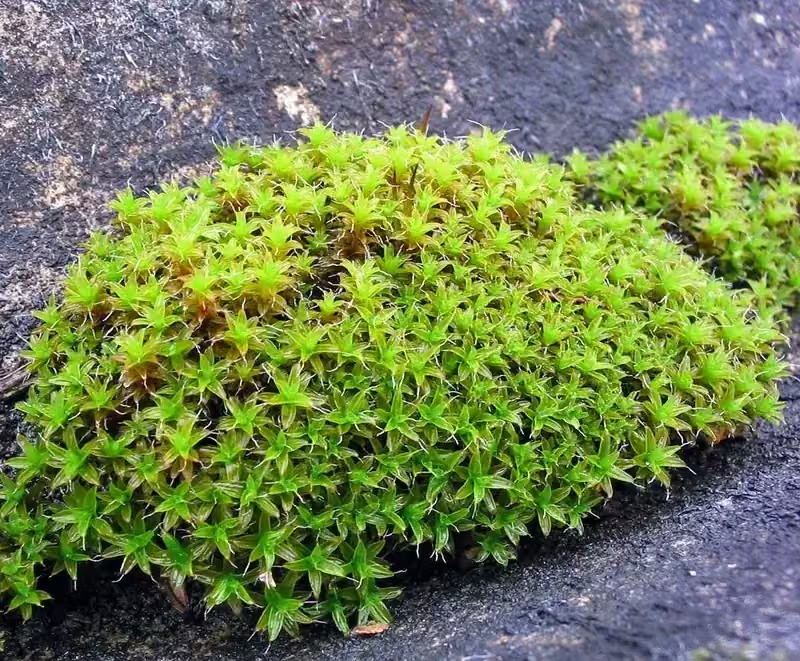
Explore other native plants that share similar characteristics or habitats with Grey-cushioned Grimmia ( Grimmia pulvinata ), offering further insights into New Zealand's diverse flora. These related species provide context and opportunities for complementary planting in your garden.


Plant Conservation
Conservation Status and Threats
Grimmia pulvinata is abundant and widespread, classified as Not Threatened. Its ability to adapt to human-made structures ensures its survival even in urbanized areas. It is an excellent example of a native species that has successfully integrated into the modern landscape.
Frequently Asked Questions
How big is Grey-Cushioned Grimmia?
It forms dense cushions about 1 to 2 cm high and 2 to 5 cm across.
Where does Grey-Cushioned Grimmia grow?
It grows on exposed rocks and man-made surfaces like walls, mortar and roof tiles.
Is Grey-Cushioned Grimmia drought-tolerant?
Yes, it has low water needs and thrives in dry, exposed sites.
Is Grey-Cushioned Grimmia frost-hardy?
Yes, it has high frost tolerance and grows from the coast to alpine zones.
Sources and Further Reading
The botanical, growing, and conservation details for Grey-Cushioned Grimmia (Grimmia pulvinata) on this page draw on authoritative New Zealand plant references and citizen-science observation records. Consult the sources below for full technical records and the latest distribution data.