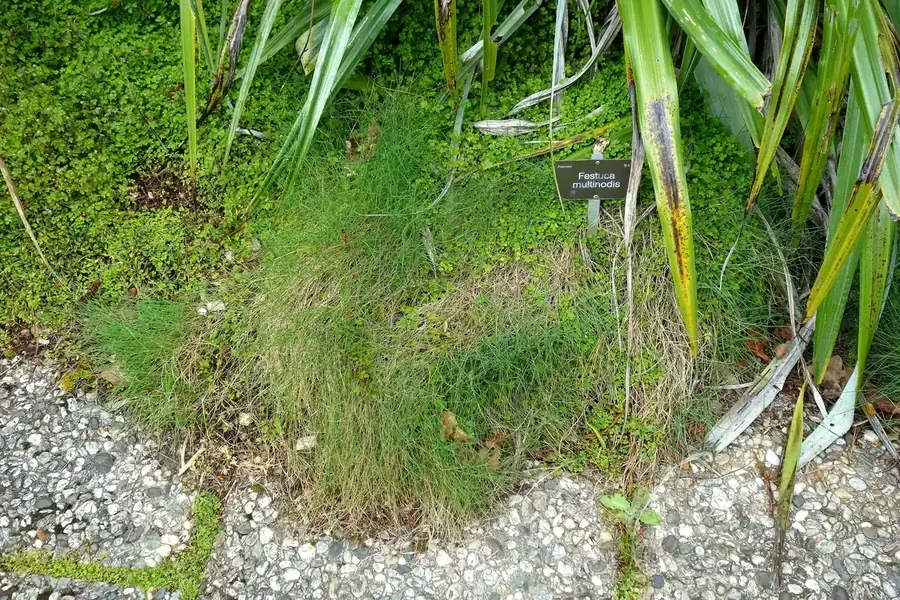
Creeping Fescue
Festuca multinodis
Last updated:
Creeping Fescue (Festuca multinodis) is a perennial New Zealand grass that grows either as a dense tussock or, more often, as a scrambling, prostrate plant whose stems trail along the ground or hang from cliffs. Its culms reach up to 50 cm long with distinctive brown to purple-brown nodes, and its fine, needle-like blue-green to grey-green leaves are 5 to 25 cm long. From spring into summer it lifts flower heads that mature from green to straw. A rock-dwelling species, it favours limestone bluffs, greywacke cliffs and rocky outcrops from the southern North Island to North Canterbury. It is highly frost and salt tolerant, thriving on exposed coastal and montane sites. Explore more native grasses and flaxes in our native plant guide.

Plant Description
Identification and Physical Characteristics
Festuca multinodis is a perennial grass that can grow either as a dense tussock or, more commonly, as a scrambling, prostrate plant with stems that trail along the ground or hang from cliffs. The culms (stems) can reach up to 50 cm in length and are distinguished by their brown to purple-brown nodes (joints). The fine, needle-like leaf blades are 5-25 cm long and have a beautiful blue-green or grey-green colour. During late spring and summer (September to December), it produces flower heads that rise above the foliage, maturing from green to straw-coloured.
Quick Facts
| Scientific Name | Festuca multinodis |
|---|---|
| Height | 20-50 cm |
| Spread | 50-100 cm |
| Water Needs | Low to Moderate |
| Light | Full Sun to Partial Shade |
| Frost Tolerance | High |
| Salt Tolerance | High |
| Growth Rate | Medium |
| Lifespan | Perennial |
Climate Best Suited to
This hardy grass is found naturally from the southern North Island (Cook Strait region) to North Canterbury in the South Island. It is well-adapted to windy, exposed coastal sites as well as montane environments. It tolerates cold winters and dry summers but dislikes high humidity combined with heat.
Regional Suitability
| City | Climate Suitability |
|---|---|
| Auckland | Suitable (in open spots) |
| Wellington | Ideal |
| Christchurch | Ideal |
| Dunedin | Suitable |
| Queenstown | Suitable |
Plant Habitat
Natural Occurrence and Ecology
Festuca multinodis is typically a rock-dwelling species (rupestral). It frequents limestone bluffs, greywacke cliffs, and rocky outcrops from sea level up to alpine zones. It is often found growing in crevices where its trailing stems can cascade down the rock face. It also grows in open scrub and tussock grassland near the coast.
Growing Requirements
Soil Requirements
Prefers free-draining, rocky soil.
- Excellent drainage is essential
- Tolerates low fertility
- Limestone or gritty mix
- Thrives in rock crevices
Light Requirements
Versatile, tolerating sun or shade.
- Full sun for best blue colour
- Tolerates dry shade
- Good air circulation needed
Water Requirements
Drought tolerant once established.
- Water to establish
- Avoid waterlogging
- Tolerates dry periods
Planting and Establishing
Establishment Guidance
Plant Creeping Fescue in a raised bed, rock garden, or at the top of a retaining wall where it can spill over the edge. Dig in some compost and grit to improve drainage if planting in heavy soil. Water regularly during the first summer to help the roots penetrate deep into the soil or rock fissures.
Ecological Role
Biodiversity and Ecosystem Impact
As a native grass, it provides habitat for invertebrates and lizards, particularly skinks that favor rocky environments. Its seed heads offer a food source for seed-eating birds. It also plays a role in stabilizing loose soil on steep banks and cliffs.
Uses & Significance
Garden Uses
Excellent for architectural landscaping and low-maintenance gardens.
- Rock gardens
- Retaining walls
- Container planting
- Coastal gardens
Ecological Value
Supports specialized rock-dwelling fauna.
- Lizard habitat
- Soil stabilization
The versatility of this plant makes it a valuable addition to many New Zealand gardens. Beyond its aesthetic appeal, it offers practical benefits such as soil stabilization and shelter for smaller plants. Its historical and modern uses highlight its enduring importance in both traditional practices and contemporary landscape design, making it a thoughtful choice for any restoration or gardening project.
Landscaping Uses
Festuca multinodis is undervalued in landscaping. Its soft, spilling habit softens hard edges of concrete walls or stone features. The blue-grey foliage contrasts beautifully with dark rocks or the rich greens of broadleaf shrubs like Griselinia or Coprosma . It is perfect for "dry" gardens or xeriscaping.
Seasonal Care Calendar
Spring
New growth and flowering.
- Remove dead thatch
- Divide if needed
Summer
Main growing season.
- Water during drought
- Enjoy the flowers
Autumn
Seed ripening.
- Collect seed
- Tidy up
Winter
Dormancy.
- Evergreen but slower growth
- No special care needed
When to Prune and How Much
Minimal pruning is required.
- Comb out dead leaves (grooming)
- Trim back untidy stems in spring
Avoid cutting back hard into the base as grasses can be slow to recover. "Combing" with a rake or gloved hand to remove old foliage is often better than cutting.
How to Grow Creeping Fescue
Creeping Fescue ( Festuca multinodis ) is a relatively easy grass to propagate and grow, making it accessible for home gardeners. It can be propagated either by seed or by division of established clumps. Both methods are effective, but division provides an instant plant of significant size.
From Seed
Growing from seed is a good way to produce large numbers of plants for mass planting. Fresh seed germinates readily.
Sow in spring or autumn.
- Collect seeds when the flower heads turn straw-coloured and the seeds begin to fall easily (late summer/autumn).
- Prepare a seed tray with a standard seed-raising mix.
- Sow the seeds thinly on the surface and cover with a light layer of mix or fine grit.
- Keep the tray moist and in a warm, light place but out of direct scorching sun.
- Germination usually occurs within a few weeks.
- Once seedlings are large enough to handle (about 5-10 cm high), prick them out into individual pots.
From Division
Division is the fastest way to get new plants and is best done in autumn or early spring.
Divide healthy, established clumps.
- Dig up a mature clump, being careful to retain as much of the root system as possible.
- Using two garden forks back-to-back or a sharp spade, gently tease or cut the clump into smaller sections.
- Ensure each section has a good portion of roots and healthy shoots.
- Trim the top foliage back by about a third to reduce water loss while the roots re-establish.
- Replant the divisions immediately into their new positions or into pots.
- Water well and keep moist until you see new growth appearing.
Pests & Diseases
This grass is generally robust and healthy. In humid conditions, rust (a fungal disease) can sometimes affect the leaves, appearing as orange or brown spots. Ensuring good air circulation and planting in an open spot usually prevents this. Aphids may occasionally cluster on flower stems but are rarely a serious problem.
Cultural Significance
While specific Māori uses for Festuca multinodis are not widely documented compared to larger tussocks like Chionochloa , native grasses collectively hold significance in the landscape and ecology of Aotearoa.
- Endemic biodiversity
- Part of coastal and alpine heritage
Bonus Tip
Plant Creeping Fescue at the top of a sunny bank or retaining wall and let it do its thing. It will naturally cascade downwards, softening the hard lines and suppressing weeds on the vertical face where few other plants can grow.
Related Plants
Explore other native plants that share similar characteristics or habitats with Creeping Fescue ( Festuca multinodis ), offering further insights into New Zealand's diverse flora. These related species provide context and opportunities for complementary planting in your garden. For another native grass or sedge, explore Chatham Sedge.


Plant Conservation
Conservation Status and Threats
Festuca multinodis is abundant within its range and is classified as Not Threatened. It is a resilient species that often persists in rocky refuges even when surrounding areas are grazed or modified.
Frequently Asked Questions
How tall does Creeping Fescue grow?
Its stems reach 20 to 50 cm long, often trailing or cascading rather than standing upright.
Where does Festuca multinodis grow naturally?
It grows on limestone bluffs, greywacke cliffs and rocky outcrops from the southern North Island to North Canterbury.
Is Creeping Fescue frost and salt tolerant?
Yes, it has high frost tolerance and high salt tolerance, suiting exposed coastal and montane sites.
Does Creeping Fescue need much water?
No, it needs only low to moderate water and copes with dry summers.
Sources and Further Reading
The botanical, growing, and conservation details for Creeping Fescue (Festuca multinodis) on this page draw on authoritative New Zealand plant references and citizen-science observation records. Consult the sources below for full technical records and the latest distribution data.