Dwarf Cherry
Exocarpos bidwillii
Last updated:
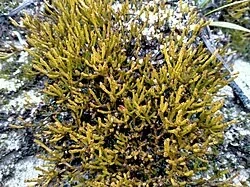
Dwarf Cherry (Exocarpos bidwillii) is a much-branched evergreen shrub endemic to the South Island of New Zealand. It sprawls to about 60 cm high and 1 m wide, and is remarkable for having almost no true leaves; photosynthesis happens in its rigid, yellowish-green to bronze twigs, which carry tiny triangular scale-leaves. A hemiparasite, it draws some nutrients from host plants such as snow totara. It grows in montane to subalpine fellfields, rocky places and scree slopes where drainage is sharp and light is intense. Growth is slow, frost tolerance is high, and it is long-lived, making it a curiosity of harsh high-country habitats. Explore more native shrubs in our native plant guide.
Plant Description
Identification and Physical Characteristics
Exocarpos bidwillii , commonly known as Dwarf Cherry, is a fascinating and highly specialized native shrub endemic to the South Island of New Zealand. This member of the Santalaceae family is a much-branched, evergreen shrub that typically exhibits a sprawling or procumbent growth habit. One of its most striking features is its almost complete lack of true leaves; instead, the plant's photosynthesis is carried out by its rigid, yellowish-green to bronze-coloured twigs. These twigs are marked by fine longitudinal grooves and small, dark triangular scales that represent the vestigial leaves. During the summer months, it produces tiny, inconspicuous flowers that are pale green-yellow. These are followed by small, reddish, oval fruits that are technically arillate nutlets, each topped with a hard, dark seed.
Quick Facts
| Scientific Name | Exocarpos bidwillii |
|---|---|
| Height | Up to 60 cm (sprawling) |
| Spread | Up to 1 m |
| Water Needs | Low to moderate; well-drained |
| Light | Full sun to open subalpine light |
| Frost Tolerance | High |
| Salt Tolerance | Low |
| Growth Rate | Slow |
| Lifespan | Long-lived perennial |
Climate Best Suited to
Dwarf Cherry is ideally suited to the cooler, more temperate climates of New Zealand's South Island. It excels in regions with distinct seasonal changes and is particularly well-adapted to the high-light, high-wind environments found in subalpine zones. It does not perform well in high humidity or subtropical conditions.
Regional Suitability
| City | Climate Suitability |
|---|---|
| Auckland | Low |
| Wellington | Medium |
| Christchurch | High |
| Dunedin | High |
| Invercargill | High |
Plant Habitat
Natural Occurrence and Ecology
Dwarf Cherry is primarily distributed across the South Island of New Zealand, where it thrives in montane to subalpine environments. It is most commonly found in open, rocky areas, fellfields, and scree slopes where drainage is exceptional and light levels are high. The species is well-adapted to the harsh conditions of high-altitude habitats, including intense UV radiation, low nutrient availability, and extreme wind exposure.
Growing Requirements
Soil Requirements
Requires very free-draining, gritty or rocky soil. It is adapted to low-nutrient environments.
- Gritty
- Free-draining
- Rocky
Light Requirements
Thrives in full sun. High light levels are necessary to maintain its unique twig colouration.
- Full Sun
- Open Exposure
Water Requirements
Needs consistent moisture while establishing but is remarkably drought-tolerant once mature.
- Low once established
- Avoid waterlogging
Planting and Establishing
Establishment Guidance
Establishing Exocarpos bidwillii requires careful planning due to its semi-parasitic nature. It should be planted alongside a compatible host species to ensure long-term health. Prepare a wide, shallow planting hole in a sunny, well-drained spot. If using a nursery-raised plant, ensure the host plant's roots are in contact with the Dwarf Cherry's roots during the planting process. Water deeply during the first few months to encourage the development of the parasitic haustoria.
Ecological Role
Biodiversity and Ecosystem Impact
The Dwarf Cherry plays a unique role in New Zealand's subalpine ecosystems as a hemiparasite. By drawing a portion of its nutrients from host plants like Snow Tōtara, it participates in a complex web of nutrient exchange. Its small fruits provide a food source for native lizards and invertebrates, which in turn help disperse its seeds across the rocky landscape. Its sprawling habit also helps stabilize thin soils in high-altitude environments.
Uses & Significance
Garden Uses
Dwarf Cherry is a striking addition to rock gardens, alpine troughs, and specialized native displays. Its architectural, leafless form provides year-round interest and a unique texture that contrasts well with broader-leaved alpine plants.
- Rock gardens
- Alpine troughs
- Structural interest
Ecological Value
Ecologically, it is highly valued for its contribution to subalpine biodiversity. It supports a range of specialized insects and provides a fascinating example of evolutionary adaptation in New Zealand's flora.
- Biodiversity support
- Soil stabilization
- Invertebrate habitat
Landscaping Uses
In landscape design, the Dwarf Cherry is utilized for its unusual form and bronze-tinted winter colour. It is effective when mass-planted in rockeries or used as a low-growing specimen in minimalist, gravel-based garden designs. Its slow growth rate makes it a low-maintenance option for those who can provide its specific host requirements.
Seasonal Care Calendar
Spring
Monitor for new growth and ensure the host plant is healthy. Check for any damage caused by winter frosts.
- Check host health
- Monitor growth
Summer
The primary flowering and fruiting period. Provide occasional deep watering during extended dry spells to support fruit development.
- Occasional deep water
- Observe fruiting
Autumn
Collect ripe seeds for propagation. Ensure the plant is not smothered by fallen leaves from larger neighbouring trees.
- Seed collection
- Clear debris
Winter
Dwarf Cherry is very frost-hardy. The twigs often intensify in colour during the coldest months, providing excellent winter interest.
- Frost protection (if needed)
- Enjoy winter colour
When to Prune and How Much
Dwarf Cherry generally requires very little pruning due to its slow growth and naturally compact habit.
- Remove dead twigs
- Light shaping only
Only prune to remove dead or diseased wood. Avoid heavy pruning as the plant grows slowly and takes time to recover.
How to Grow Dwarf Cherry
Cultivating Dwarf Cherry ( Exocarpos bidwillii ) is a rewarding endeavor for any gardener interested in New Zealand's unique flora. This species can be propagated through several methods, each requiring specific conditions to ensure healthy growth and establishment. Successful propagation depends on mimicking the plant's natural environment and providing consistent care during the early stages of development.
The most significant hurdle in growing Dwarf Cherry is its semi-parasitic nature. Unlike most common garden plants, Exocarpos bidwillii draws a portion of its water and mineral requirements from the roots of a compatible host plant. This means that you cannot simply plant it in isolation and expect it to thrive. Ideal hosts include native species such as Podocarpus nivalis , Kunzea ericoides , and Leptospermum scoparium . When planning your garden layout, ensure that the Dwarf Cherry is situated within the root zone of one of these hosts.
From Seed
Propagation from seed is often the most effective way to produce a large number of Dwarf Cherry plants. Seeds should be collected when they are fully mature, typically in late summer or autumn. Freshly collected seeds generally have higher germination rates than those that have been stored for long periods.
Sow the seeds directly onto a gritty, free-draining seed-raising mix. They require a period of cold stratification to break dormancy, which can be achieved by placing the sown trays in a cool, sheltered outdoor spot over winter.
- Collect ripe red fruits in autumn.
- Sow directly near a potential host plant.
- Maintain consistent but low moisture.
Seedlings must be established near a host very early in their life cycle to survive beyond the first year.
From Cuttings
For those wishing to replicate specific characteristics of a parent plant, vegetative propagation via cuttings is the preferred method. This technique ensures that the new plants are genetically identical to the source. Semi-hardwood cuttings taken during the appropriate season usually yield the best results for this species.
Take cuttings in late summer or early autumn. Use a very free-draining medium, such as a mix of coarse sand and perlite.
- Take 5-10cm semi-hardwood cuttings.
- Use a rooting hormone to encourage haustoria.
- Place in a mist unit or covered frame.
Additional Methods
Depending on the growth habit of Dwarf Cherry, other methods such as division or layering might also be viable options. Division is particularly suitable for plants that form dense clumps or have spreading root systems, while layering can be used for species with trailing or flexible stems.
Layering can be done by pinning a healthy, low-growing twig to the ground and covering it with a gritty soil mix. Once roots and a parasitic connection have formed, the new plant can be carefully separated.
- Select a healthy procumbent branch.
- Pin to the ground near a host.
- Wait for strong root development.
Pests & Diseases
Dwarf Cherry is generally very resilient and suffers from few pests or diseases. The most common issue is root rot, which is invariably caused by poor drainage or overwatering. Maintaining a gritty, open soil structure is the best preventative measure. Occasionally, scale insects may be found on the twigs, but these rarely cause significant damage to established plants.
Cultural Significance
The Dwarf Cherry is a significant part of New Zealand's botanical heritage, representing the unique evolutionary paths taken by the nation's flora. While not as widely used in traditional Māori medicine as some other shrubs, it is respected for its resilience and ability to survive in the harshest mountain environments. It serves as a botanical curiosity that highlights the complex interconnectedness of native ecosystems.
- Botanical curiosity
- Alpine resilience symbol
- Endemic heritage
Bonus Tip
To achieve the most vibrant bronze colouration in your Dwarf Cherry, ensure it is planted in a position that receives full sun throughout the day. The intensity of the light directly impacts the concentration of pigments in the twigs.
Related Plants
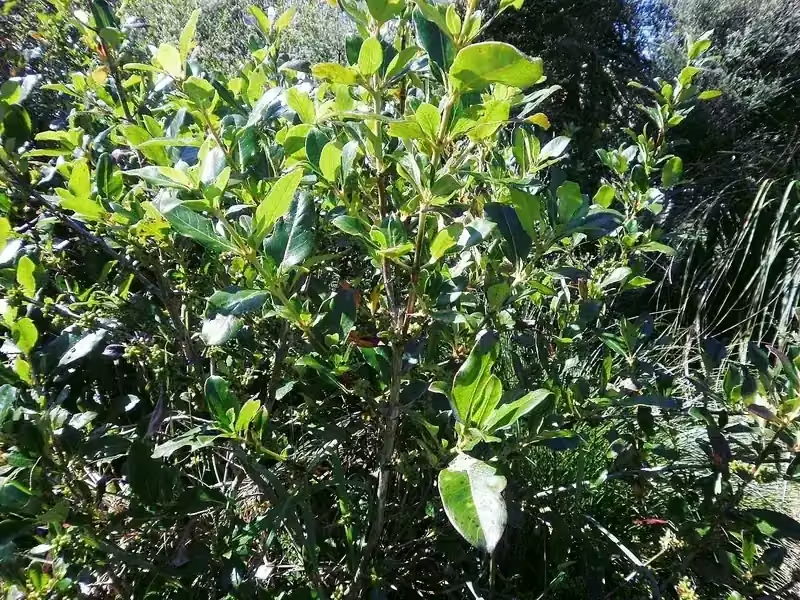
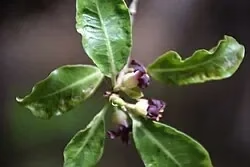
Explore other native plants that share similar characteristics or habitats with Dwarf Cherry ( Exocarpos bidwillii ), offering further insights into New Zealand's diverse flora. These related species provide context and opportunities for complementary planting in your garden. For another native shrub, explore Shrub Haloragis.




Plant Conservation
Conservation Status and Threats
Currently classified as 'Not Threatened', the Dwarf Cherry remains a stable component of New Zealand's South Island flora. However, its long-term survival is inextricably linked to the preservation of montane and subalpine ecosystems from the encroaching impacts of climate change and potential competition from invasive weeds moving into higher altitude zones.
Frequently Asked Questions
How tall does Dwarf Cherry grow?
Dwarf Cherry is a sprawling shrub reaching up to 60 cm high and around 1 m wide.
Where does Exocarpos bidwillii grow naturally?
It is endemic to the South Island, growing in montane to subalpine fellfields, rocky areas and scree slopes.
Is Dwarf Cherry frost hardy?
Yes, it has high frost tolerance and is well suited to cold subalpine conditions.
How fast does Dwarf Cherry grow?
It grows slowly and is long-lived, needing very little pruning.
Sources and Further Reading
The botanical, growing, and conservation details for Dwarf Cherry (Exocarpos bidwillii) on this page draw on authoritative New Zealand plant references and citizen-science observation records. Consult the sources below for full technical records and the latest distribution data.