Gumland Grass Tree
Dracophyllum sinclairii
Last updated:
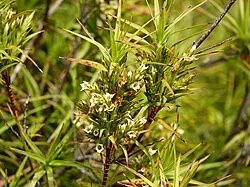
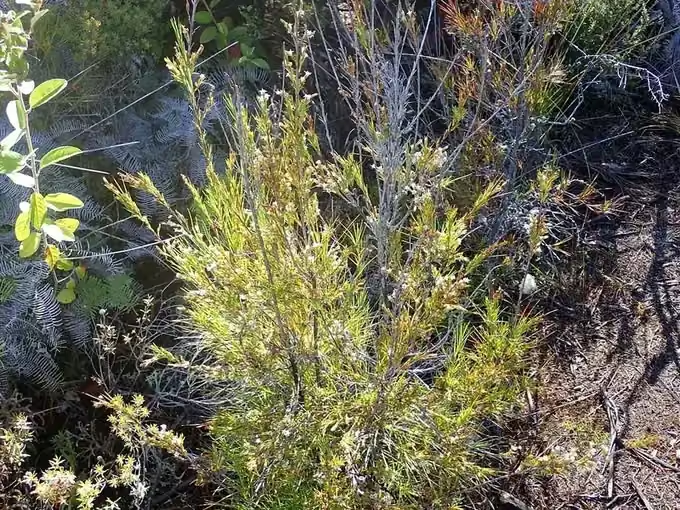
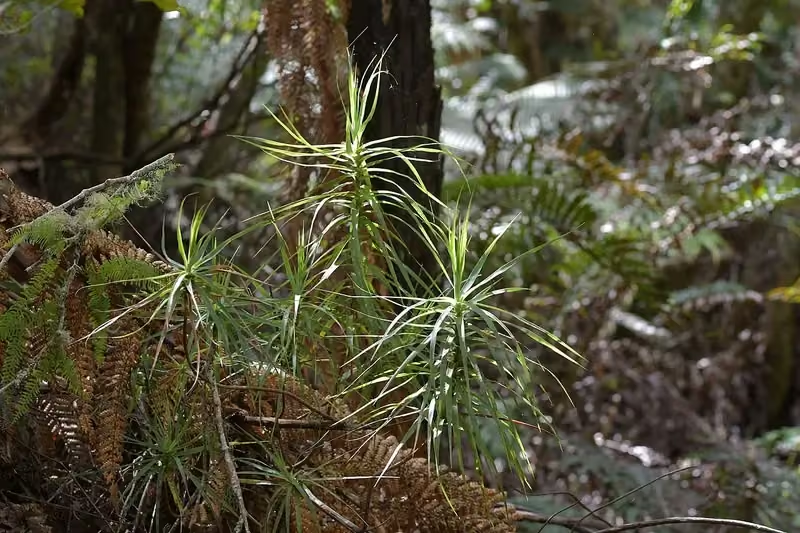
Dracophyllum sinclairii, one of the plants known as gumland grass tree, is a single-stemmed small tree or large shrub endemic to northern New Zealand. It grows 1 to 7.6 metres tall with a 1.5 to 3 metre spread, its older branches clad in dark grey to blackish-brown, deeply fissured bark and young stems a smooth reddish-brown. The leaves are strikingly dimorphic, with larger, broader juvenile foliage giving way to linear-triangular, glaucous adult leaves arranged in terminal tufts that create the classic grass-tree look. Small clusters of white, tube-shaped flowers appear among the foliage. It grows on northern coastal cliffs and gumland scrub, in kauri forest and regrowth, tolerating salt-laden wind, and has a moderate growth rate and high salt tolerance. Explore more native shrubs in our native plant guide.
Plant Description
Identification and Physical Characteristics
Dracophyllum sinclairii typically grows as a single-stemmed small tree or large shrub, reaching heights between 1 and 7.6 metres. The older branches are clad in dark grey to blackish-brown bark that becomes finely to deeply fissured with age, while the young stems are a smooth reddish-brown. The leaves are strikingly dimorphic; juvenile leaves are significantly larger and broader than the adult leaves. Adult leaves are linear-triangular, glaucous to light green, and slightly striated, with very finely serrated margins. They are arranged in terminal tufts at the ends of the branches, giving the plant its "grass tree" appearance. The flowers are white, tube-shaped, and occur in small clusters of 4 to 9 on short side branches, usually blooming from spring into early summer.
Quick Facts
| Scientific Name | Dracophyllum sinclairii |
|---|---|
| Height | 1-7.6 metres (Small Tree) |
| Spread | 1.5-3 metres |
| Water Needs | Moderate |
| Light | Full Sun to Partial Shade |
| Frost Tolerance | Moderate |
| Salt Tolerance | High |
| Growth Rate | Moderate |
| Lifespan | Perennial (Long-lived) |
Climate Best Suited to
Gumland Grass Tree is a specialist of the northern North Island climate. It is most prevalent north of Auckland and the Thames region. It thrives in temperate conditions and is well-adapted to coastal environments where it faces salt-laden winds and high UV intensity. While it can tolerate light frosts, it is not suited to the severe cold of the southern South Island. It prefers areas with high humidity and reliable, but well-drained, rainfall.
Regional Suitability
| City | Climate Suitability |
|---|---|
| Auckland | Highly Suitable |
| Wellington | Suitable |
| Christchurch | Marginal |
| Dunedin | Not Suitable |
| Queenstown | Not Suitable |
| Invercargill | Not Suitable |
Plant Habitat
Natural Occurrence and Ecology
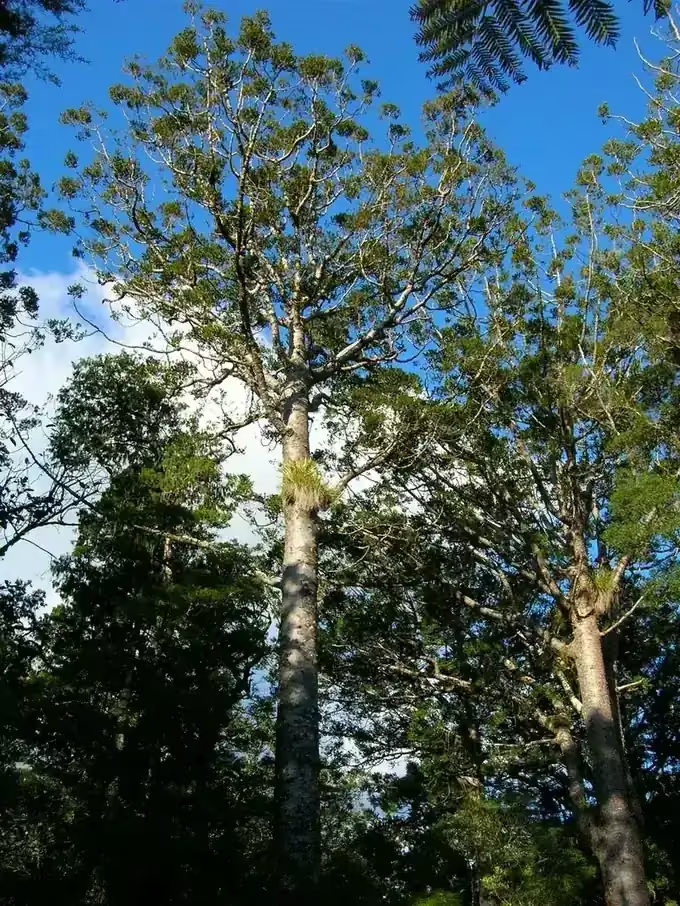
In the wild, Dracophyllum sinclairii is commonly found on northern coastal cliffs and in gumland scrublands. It is a frequent colonizer of secondary regrowth areas and ridgelines. It also inhabits forested slopes, particularly within Kauri ( Agathis australis ) forests. It thrives in nutrient-poor, acidic soils that are often seasonally wet but dry out in summer. Its ability to tolerate exposed, windy situations makes it a dominant feature of many northern New Zealand shrubland landscapes.
Growing Requirements
Soil Requirements
Requires well-drained, acidic soil. It is well-adapted to poor, leached soils such as those found in gumlands.
- Well-drained soil
- Acidic pH
- Tolerates low nutrients
Light Requirements
Performs best in full sun, which encourages a compact growth habit and more abundant flowering. Can tolerate partial shade.
- Full sun preferred
- Partial shade tolerant
- High UV tolerance
Water Requirements
Once established, it is relatively drought-tolerant. However, it requires consistent moisture during the establishment phase.
- Moderate watering
- Drought tolerant once established
- Needs drainage
Planting and Establishing
Establishment Guidance
Establishing Gumland Grass Trees can be challenging as they do not like root disturbance. When planting from a pot, be extremely careful to keep the root ball intact. Plant in autumn or spring when the soil is naturally moist. Dig a hole twice the width of the root ball but no deeper. If the soil is heavy clay, planting on a slight mound can improve drainage. Mulch well with acidic mulch (like bark or leaf litter) to keep the roots cool and moist. Avoid over-fertilizing, as this species is adapted to lean conditions.
Ecological Role
Biodiversity and Ecosystem Impact
Dracophyllum sinclairii is a vital component of the northern shrubland ecosystem. It provides structure and shelter for a variety of smaller native plants and invertebrates. The flowers are a significant nectar source for native bees, flies, and birds like the tūī and bellbird. As a pioneer species, it often leads the way in the natural restoration of degraded gumlands, creating conditions that eventually allow for the return of Kauri forest species.
Uses & Significance
Garden Uses
Valued for its striking, architectural form and grass-like foliage. It makes an excellent feature plant in native or "pre-historic" themed gardens.
- Architectural feature
- Coastal gardens
- Native shrubberies
Ecological Value
Essential for the health of northern gumlands and coastal cliffs. It supports native pollinators and aids in the natural succession of northern forests.
- Pollinator support
- Soil stabilization
- Restoration pioneer
Landscaping Uses
Used in landscaping to provide vertical interest and a sense of "New Zealand character." Its glaucous leaves and unique texture contrast beautifully with broader-leaved shrubs like Griselinia or Coprosma. It is particularly effective when planted in groups or as a sentinel plant on banks or rocky outcrops.
Seasonal Care Calendar
Spring
Growth flush and flowering begins. Monitor moisture levels as the weather warms up.
- Water if dry
- Observation
Summer
Flowering continues into early summer. Ensure young plants are not stressed by extreme drought.
- Deep watering if established
- Check mulch
Autumn
Growth slows. This is an ideal time for planting or applying a fresh layer of mulch.
- Planting
- Renew mulch
Winter
Dormant period. Protect from heavy frosts if the plant is still young and establishing.
- Minimal care
- Frost protection
When to Prune and How Much
Gumland Grass Trees require very little pruning. Their naturally upright and branched habit is self-maintaining.
- Remove dead wood only
- Avoid heavy trimming
If you need to shape the plant, do so very lightly in early spring. Avoid cutting back into old wood that does not have visible leaf tufts, as it may not sprout new growth easily.
How to Grow Gumland Grass Tree
Cultivating Dracophyllum sinclairii is a rewarding challenge for the dedicated native plant gardener. This species, like many members of its genus, is notoriously sensitive to root disturbance and has specific requirements for soil chemistry and drainage. Successful cultivation starts with understanding that this is a plant of lean, acidic environments. Replicating these conditions in a garden setting is essential. Once established, however, the Gumland Grass Tree is a hardy and long-lived addition to the landscape, providing a unique architectural element that captures the essence of the northern New Zealand wilderness.
From Seed
Propagation from seed is the most reliable method, although it requires patience. The seeds are very small and should be collected when the capsules are brown and dry.
Fresh seeds generally have better germination rates than stored seeds.
- Sow seeds onto the surface of a moist, acidic seed-raising mix (peat and sand are often used).
- Do not cover the seeds deeply; a very fine dusting of sand is sufficient.
- Keep the tray in a humid, shaded environment.
- Germination can be slow and uneven, sometimes taking several months.
- Once seedlings are large enough to handle, prick them out into individual pots with extreme care for the roots.
- Grow them on in a sheltered spot until they are at least 20-30 cm tall before planting out.
Many growers find that using some "forest floor" soil from near an established Dracophyllum can help introduce beneficial mycorrhizal fungi.
From Cuttings
Vegetative propagation via cuttings is difficult with Dracophyllum species and is generally less successful than seed.
If you wish to try, take semi-hardwood cuttings in late summer.
- Use current season's growth that has begun to firm up.
- Dip the ends in a rooting hormone specifically for hardwood.
- Place in a well-drained, sterile propagation medium.
- Provide bottom heat and consistent misting.
- Be prepared for a high failure rate, as they are slow to root.
Additional Methods
Layering is another potential method for smaller specimens, although it is rarely practiced commercially. Most success comes from mimicking the natural germination cycle of the plant in a controlled nursery environment. Once the plant has reached a certain size, it becomes much more resilient, provided its roots are never allowed to dry out or become waterlogged for extended periods.
Pests & Diseases
Generally resistant to most common pests. Like many Ericaceae, it can be susceptible to Phytophthora root rot if drainage is poor. Scale insects may occasionally appear on the stems; these can be controlled with horticultural oil.
Cultural Significance
Known as inanga by Māori, Dracophyllum species were valued for their tough, straight-grained wood and distinctive appearance. They are seen as significant components of the northern landscape heritage. The name "Dracophyllum" (dragon-leaf) reflects the early European botanists' fascination with their unique, prehistoric-looking form.
- Northern heritage plant
- Prehistoric appearance
Bonus Tip
Look closely at the leaves! The name sinclairii honors Andrew Sinclair, a colonial surgeon and botanist. The dimorphic leaves are a great conversation starter-juvenile plants look almost like a completely different species!
Related Plants
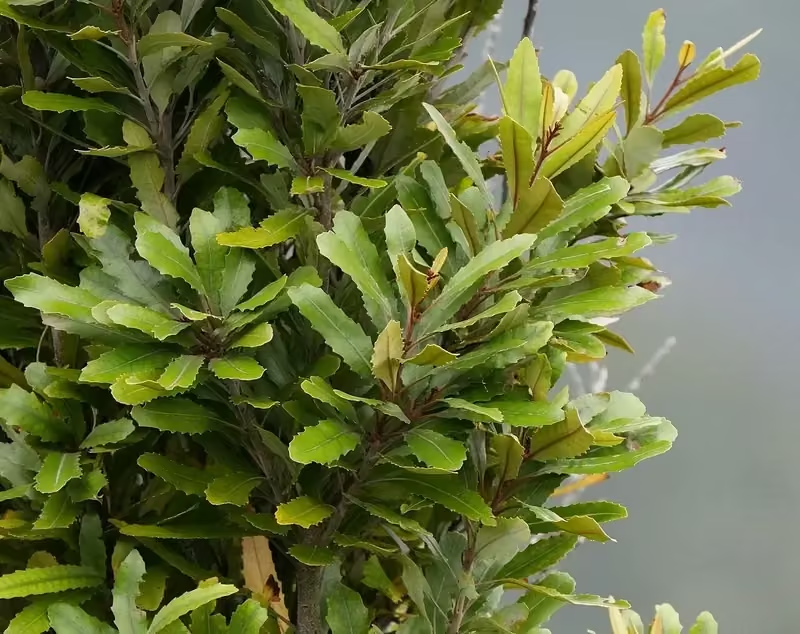
Explore other native plants that share similar characteristics or habitats with Gumland Grass Tree ( Dracophyllum sinclairii ), offering further insights into New Zealand's diverse flora. These related species provide context and opportunities for complementary planting in your garden. For another native shrub, explore Monoao.




Plant Conservation
Conservation Status and Threats
Dracophyllum sinclairii is currently listed as Not Threatened nationally. However, it is recognized as "At Risk - Regionally Declining" in the Auckland region. The primary threats are habitat loss due to development and the invasion of gumlands by exotic weeds. Protecting large tracts of northern shrubland and Kauri forest is essential for maintaining the population of this striking native "dragon leaf."
Frequently Asked Questions
How tall does Dracophyllum sinclairii grow?
It grows 1 to 7.6 metres tall with a 1.5 to 3 metre spread.
Is Dracophyllum sinclairii suitable for coastal gardens?
Yes, it has high salt tolerance and grows naturally on northern coastal cliffs.
Where does the gumland grass tree grow naturally?
It grows on northern coastal cliffs, gumland scrub and in kauri forests north of Auckland.
How fast does it grow?
It has a moderate growth rate and is long-lived.
Sources and Further Reading
The botanical, growing, and conservation details for Gumland Grass Tree (Dracophyllum sinclairii) on this page draw on authoritative New Zealand plant references and citizen-science observation records. Consult the sources below for full technical records and the latest distribution data.