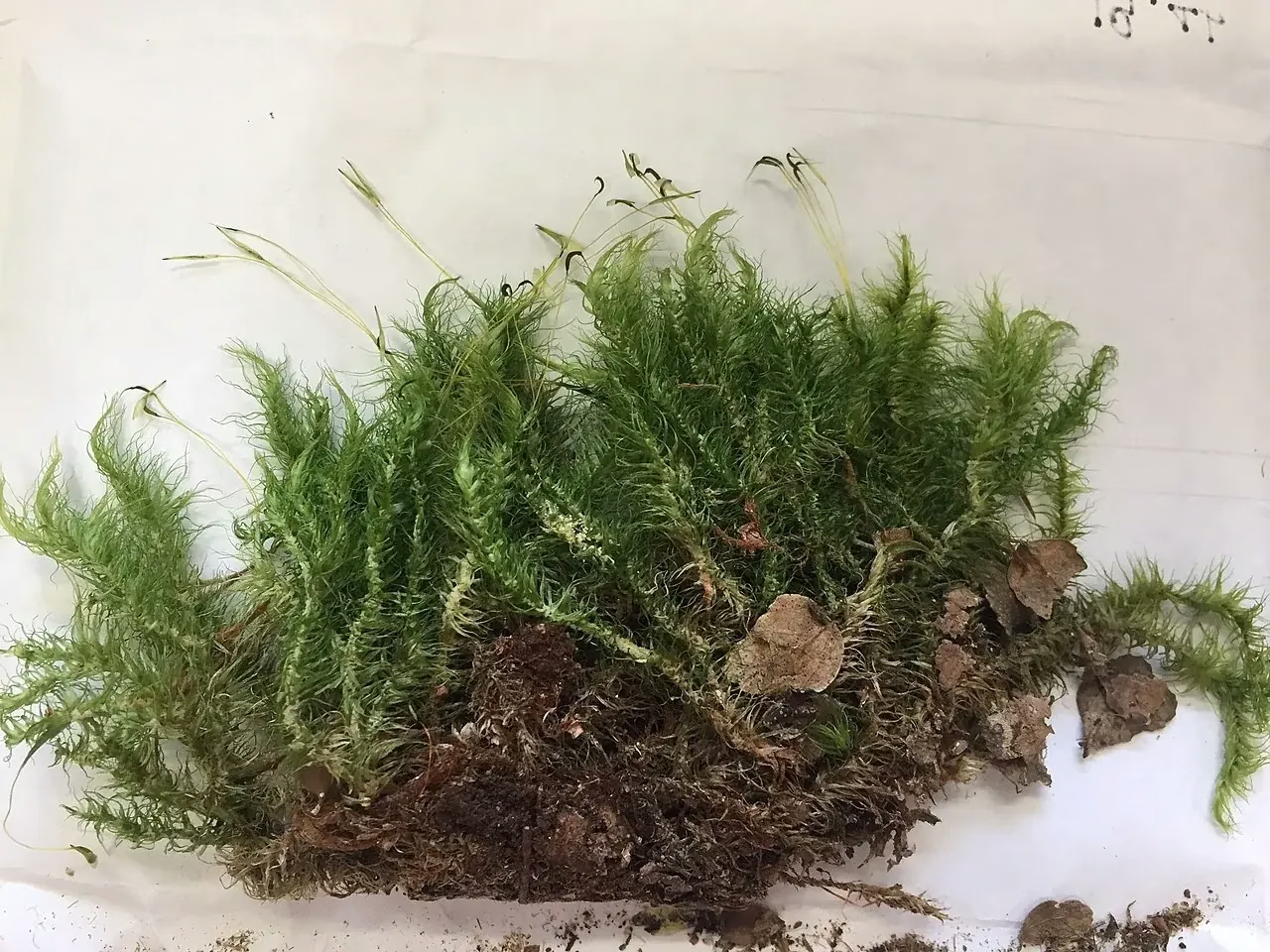
Serrated Star Moss
Dicranoloma dicarpum
Last updated:
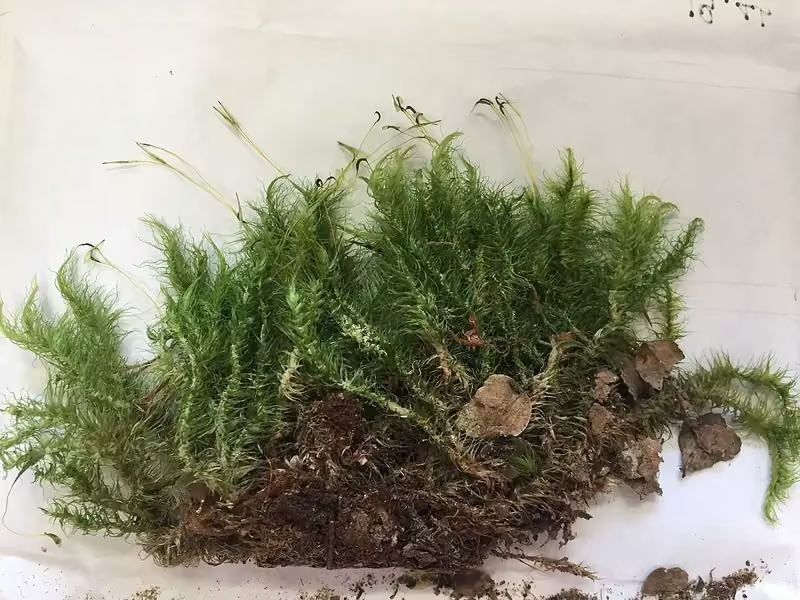
Dicranoloma dicarpum, known as Serrated Star Moss, is a medium-sized moss that forms loose to dense, dull or bright green cushions and tufts across New Zealand forests. Its branched stems grow between 0.5 and 7.5 cm long, carrying long, sickle-shaped leaves 3 to 12 mm long that spiral and twist when dry. Under magnification the leaf tips are strongly serrated, giving the moss its common name, and each leaf has strong pleats beside its central nerve. It grows on the forest floor, leaf litter, rotting logs, tree bases and shaded rocks, and is especially prominent in drier eastern beech forests, from the coast up to about 1,550 metres. It is slow-growing, frost-tolerant and perennial. Explore more native mosses and lichens in our native plant guide.
Plant Description
Identification and Physical Characteristics
Dicranoloma dicarpum is a medium-sized moss that typically forms loose to dense, dull or bright green cushions or tufts. The individual stems can grow between 0.5 and 7.5 cm in length and are often branched. The leaves are a key identifying feature: they are relatively long (3-12 mm), sickle-shaped (falcate), and frequently spirally twisted when dry. Under magnification, the leaf margins near the tip are strongly serrated, giving the moss its common name. Another distinctive characteristic is the presence of strong pleats or folds along either side of the leaf's central nerve. In New Zealand forests, it often forms a prominent part of the botanical carpet, particularly in drier beech forest environments where its yellowish-green patches are easily spotted.
Quick Facts
| Scientific Name | Dicranoloma dicarpum |
|---|---|
| Height | 0.5-7.5 cm (Tufted Moss) |
| Spread | 10-30 cm (Colonizing) |
| Water Needs | High (Constant Humidity) |
| Light | Partial Shade to Deep Shade |
| Frost Tolerance | High |
| Salt Tolerance | Low |
| Growth Rate | Slow |
| Lifespan | Perennial |
Climate Best Suited to
Serrated Star Moss is perfectly adapted to New Zealand's cool, humid, and temperate climate. It is found throughout the country, from coastal areas up to subalpine regions at altitudes of 1550 metres. It is particularly abundant in the drier Fuscospora solandri (Black Beech) forests of the eastern South Island, although it requires high ambient humidity to remain active. Like most mosses, it lack vascular tissue and relies on consistent moisture through precipitation or heavy mist to survive.
Regional Suitability
| City | Climate Suitability |
|---|---|
| Auckland | Suitable |
| Wellington | Highly Suitable |
| Christchurch | Highly Suitable |
| Dunedin | Highly Suitable |
| Queenstown | Suitable |
| Invercargill | Highly Suitable |
Plant Habitat
Natural Occurrence and Ecology
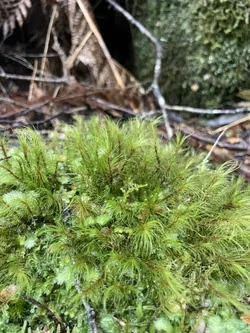
In New Zealand, Dicranoloma dicarpum is a versatile moss of wet and semi-dry forests. It is most frequently found growing on the forest floor, often colonizing leaf litter, soil, and rotting logs. It also grows on the bases of large trees, tree stumps, and shaded rocks. It has a strong preference for stable, shaded substrates where competition from faster-growing vascular herbs is limited. In mature beech and podocarp forests, it often forms a large part of the "bryophyte carpet," contributing significantly to the forest's ability to retain water.
Growing Requirements
Soil Requirements
Grows on forest floor litter, decaying wood, or acidic mineral soils. It does not require traditional garden soil.
- Decaying organic matter
- Bark or wood substrate
- Acidic mineral soil
Light Requirements
Thrives in shaded conditions. Direct sunlight will dry out the leaves and may cause bleaching of the green pigments.
- Full shade
- Dappled light
- Indoor indirect light
Water Requirements
Requires high humidity. While it can survive dry spells by entering dormancy, it needs regular moisture to actively grow.
- Regular misting
- High humidity
- Rainwater preferred
Planting and Establishing
Establishment Guidance
Establishing Serrated Star Moss in a garden or terrarium environment is best done by moving established cushions. If you have a shaded, humid spot in your garden, you can place clumps of the moss directly onto moistened forest litter or a decaying log. Ensure the clumps make firm contact with the surface. For vertical surfaces like tree bases, fine mesh or string can be used to hold the moss in place until its rhizoids anchor it naturally. Constant moisture is critical during the first few months of establishment. It is best moved in late autumn or winter when natural humidity is at its highest.
Ecological Role
Biodiversity and Ecosystem Impact
Dicranoloma dicarpum plays a fundamental role in forest hydrology. Its thick cushions act as a biological sponge, absorbing large volumes of rainwater and slowly releasing it back into the ecosystem through evaporation and runoff. This process helps maintain the humid microclimate necessary for many other forest species. Additionally, these moss mats provide a critical habitat for millions of microscopic invertebrates, forming the base of the forest floor food web.
Uses & Significance
Garden Uses
Primarily used in native ferneries, moss gardens, and indoor terrariums. Its distinctive "star-tipped" tufts provide a beautiful texture that contrasts well with broader fern fronds.
- Moss gardens
- Terrarium displays
- Fernery ground cover
Ecological Value
Essential for water conservation and soil stabilization in native forests. It creates a "nursery" environment for the germination of many native tree and shrub seeds.
- Water retention
- Micro-habitat support
- Forest floor protection
Landscaping Uses
Used in specialized landscaping to create a sense of age and established maturity in shaded gardens. It can be established on weathered rocks or logs to provide a lush, green "primeval" look. Its tolerance for drier forest conditions makes it a good choice for naturalizing areas under large beech or podocarp trees where lawn grasses would fail.
Seasonal Care Calendar
Spring
Period of potentially rapid growth if moisture is abundant. Capsules (sporophytes) may be visible on short stalks.
- Monitor humidity
- Observation
Summer
The most challenging season. Protect from direct sun and maintain humidity through misting during dry winds.
- Maintain misting
- Provide deep shade
Autumn
Growth resumes as rains return and temperatures drop. This is the best time for transplanting clumps.
- Transplanting
- Clear heavy leaf litter
Winter
Dormant phase. The moss is very frost-hardy. Ensure it is not physically disturbed or trampled during the wet months.
- Minimal care
- Avoid disturbance
When to Prune and How Much
Mosses do not require pruning. They are naturally self-limiting. The only maintenance required is the removal of any brown or dead parts if they appear in a controlled environment like a terrarium.
- No regular pruning
- Remove dead patches
In the garden, if the moss becomes too widespread, it can simply be pulled back by hand. These fragments can be re-used elsewhere or left to decompose.
How to Grow Serrated Star Moss
Cultivating Serrated Star Moss ( Dicranoloma dicarpum ) is a rewarding pursuit for those who appreciate the subtle beauty of New Zealand's non-vascular flora. Success in growing this moss depends more on managing the environmental conditions than on standard gardening techniques. Mosses lack true roots and instead utilize rhizoids to anchor themselves to a surface. They absorb all their moisture and nutrients through their leaves directly from the atmosphere. Therefore, the key to successful cultivation is providing a consistent micro-environment that remains humid, cool, and shaded. This moss is particularly well-suited to shaded courtyard gardens or as a textured base in native-themed terrariums.
From Fragmentation
Vegetative propagation through fragmentation is the most efficient way to establish or expand a colony of Serrated Star Moss.
Because every cell in a moss plant is totipotent, even small fragments can generate entirely new tufts.
- Gently lift a small section of a healthy, green moss cushion. Please do this ethically and sparingly if collecting from the wild.
- Break the cushion into smaller pieces or individual tufts.
- Prepare your target surface (like a log or a damp patch of soil) by moistening it thoroughly with rainwater.
- Press the moss fragments firmly onto the surface. For vertical surfaces, you can use a slurry method: blend the moss with a little yogurt or buttermilk and paint it on.
- Place the setup in a shaded, humid area.
- Mist the fragments daily with mineral-free water (rainwater or distilled). Tap water often contains chlorine and minerals that can harm moss.
- Keep the area protected from strong winds that can quickly dry out the delicate fragments.
From Spores
Reproduction via spores is the natural method of dispersal but is significantly slower for the home gardener.
- Look for mature sporophytes-small brown capsules on short stalks rising from the moss.
- When the capsules are dry and begin to open, collect them and crush them gently over a moist, sterile medium like chopped sphagnum or a damp brick.
- Maintain high humidity and indirect light.
- A green film (the protonema) will appear first, eventually giving rise to the characteristic tufted star moss.
Additional Methods
Translocation of an entire clump attached to its original substrate (like a piece of bark or a small stone) is the most successful method for outdoor establishment. This minimizes shock and provides the moss with a stable base. Once established, the moss will naturally spread into suitable adjacent areas provided the humidity remains high.
Pests & Diseases
Serrated Star Moss is generally free from pests. In very wet, stagnant conditions (especially in terrariums), it can succumb to fungal rots or algae overgrowth. Foraging birds may occasionally tear apart cushions while looking for insects, but the moss usually recovers quickly from such disturbances.
Cultural Significance
Known collectively as 'rimurimu' in Māori, mosses like Dicranoloma dicarpum are an essential part of the forest's 'clothing'. They represent the intricate connection between land and water. The soft, absorbent nature of mosses was historically used for various practical purposes, and they remain symbols of the lush, temperate beauty of the New Zealand wilderness.
- Forest floor heritage
- Resilience symbol
Bonus Tip
To truly appreciate this moss, view it through a 10x hand lens. The intricate serrations along the leaf tips and the glossy, pleated texture are a marvel of nature's engineering that is often invisible to the naked eye.
Related Plants
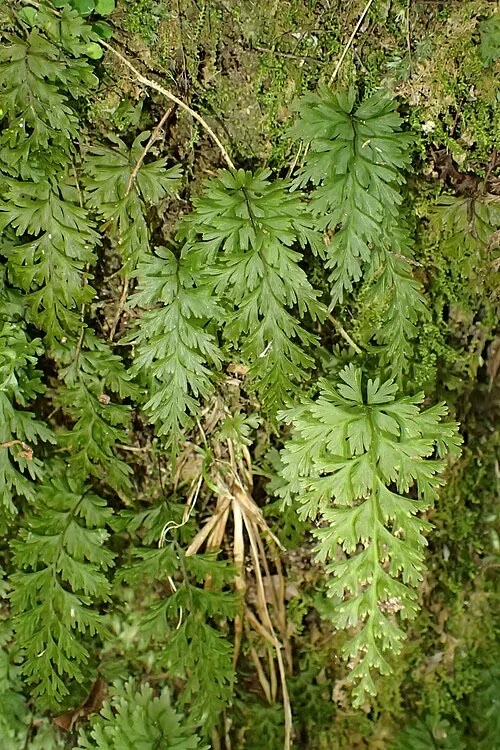
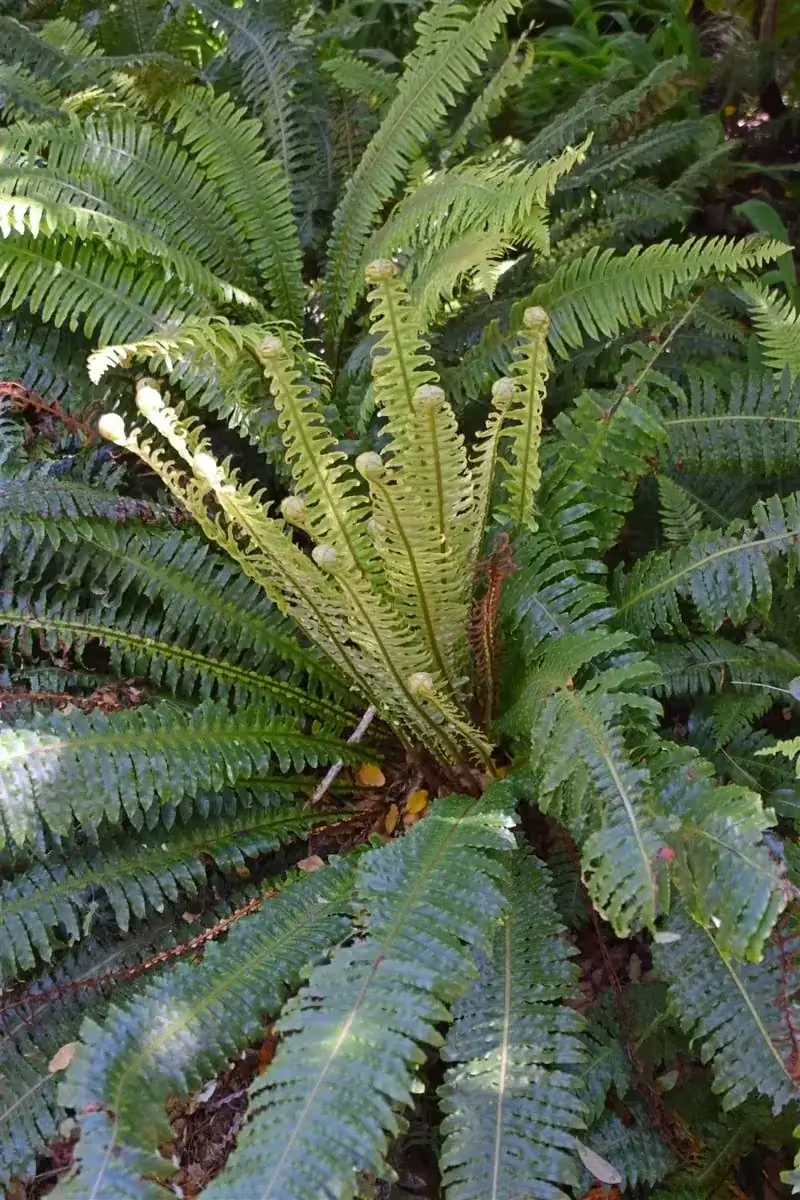
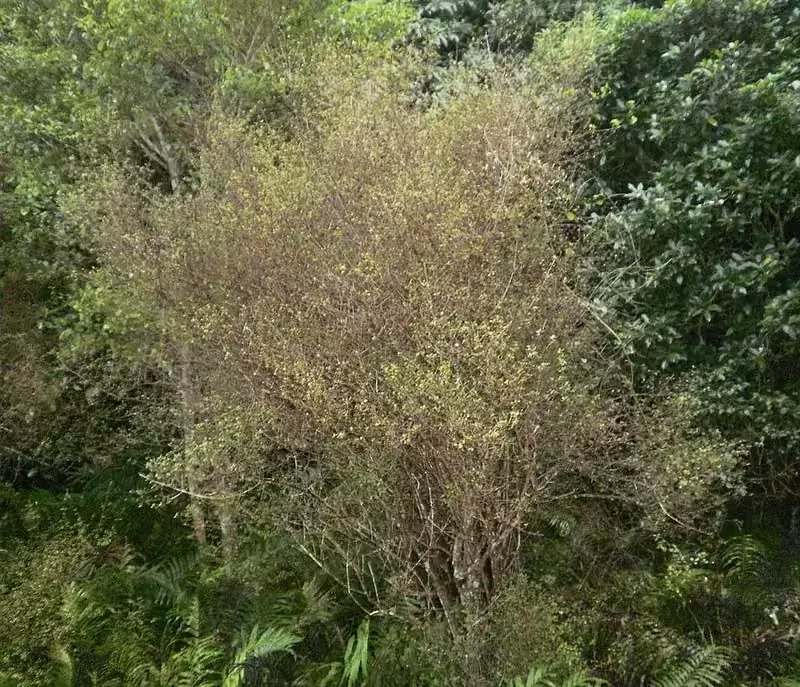
Explore other native plants that share similar characteristics or habitats with Serrated Star Moss ( Dicranoloma dicarpum ), offering further insights into New Zealand's diverse flora. These related species provide context and opportunities for complementary planting in your garden.



Plant Conservation
Conservation Status and Threats
Dicranoloma dicarpum is currently listed as Not Threatened in New Zealand. It is a common and resilient species in many native forests. However, its survival depends on the preservation of mature forest canopies that maintain the humidity and shade it requires. Continued forest conservation and the control of invasive species are essential for the protection of New Zealand's rich bryophyte diversity.
Frequently Asked Questions
How big does Dicranoloma dicarpum grow?
Its stems grow between 0.5 and 7.5 cm long, forming cushions that spread around 10 to 30 cm.
Why is it called Serrated Star Moss?
Its sickle-shaped leaves have strongly serrated margins near the tips, visible under magnification.
Where does Dicranoloma dicarpum grow?
It grows on forest floors, logs, tree bases and shaded rocks, notably in drier eastern beech forests.
How high up does Dicranoloma dicarpum grow?
It occurs from the coast up to subalpine regions at altitudes of about 1,550 metres.
Sources and Further Reading
The botanical, growing, and conservation details for Serrated Star Moss (Dicranoloma dicarpum) on this page draw on authoritative New Zealand plant references and citizen-science observation records. Consult the sources below for full technical records and the latest distribution data.