Strand Sedge
Carex pumila
Last updated:
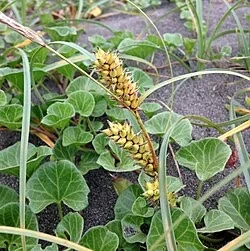
Carex pumila, commonly known as Strand Sedge, is a distinctive deep blue-green to glaucous coastal sedge that forms tufts and spreads via long, wiry, creeping rhizomes. It reaches up to 40 cm tall, with rigid, channelled leaves that taper to a fine point, and culms often partly buried in sand. Indigenous to New Zealand, it grows on mobile sand dunes, sand flats and dune slacks around the North, South and Chatham Islands, rarely far inland. Exceptionally salt- and frost-tolerant, its robust root system makes it a highly effective sand binder for stabilising dunes and preventing coastal erosion. Explore more native grasses and flaxes in our native plant guide.
Plant Description
Carex pumila , commonly known as Strand Sedge, is a distinctive, deep blue-green to glaucous sedge that forms tufts and spreads via long, wiry, creeping rhizomes. It typically reaches a height of up to 40 cm. Its culms (stems), often partially buried in sand, are smooth, cylindrical, and usually cream or light green, mostly enclosed by pale leaf-sheaths. The leaves are longer than the culms, up to 40 cm long and 1.5-3 mm wide, rigid, channeled, and taper to a fine point, giving the plant its characteristic glaucous appearance. This rhizomatous perennial is monoecious, meaning it bears both male and female flowers on the same plant. Its robust root system and tough foliage make it highly adapted to harsh coastal environments.
Quick Facts
| Scientific Name | Carex pumila |
|---|---|
| Height | Up to 40 cm |
| Spread | Low mats (several meters wide) |
| Water Needs | Low to Moderate |
| Light | Full Sun |
| Frost Tolerance | High |
| Salt Tolerance | High |
| Growth Rate | Moderate to Fast |
| Lifespan | Perennial |
| Common Names | Strand Sedge, Sand Sedge, Blue Dune Sedge |
| Foliage Colour | Deep blue-green to glaucous |
Climate Best Suited to
Strand Sedge is indigenous to New Zealand, thriving in coastal climates across the North, South, and Chatham Islands. It is exceptionally well-adapted to exposed, windy, and salty coastal environments, including mobile sand dunes, sand flats, and dune slacks. It prefers full sun and freely draining soils. Its tolerance for frost and drought makes it a hardy species suitable for a range of temperate coastal regions.
Regional Suitability
| City | Climate Suitability |
|---|---|
| Best suited to coastal regions throughout New Zealand, particularly those with sandy, freely draining soils and full sun exposure. Not suitable for shaded or consistently wet (non-draining) environments. | |
Plant Habitat
Carex pumila is an indigenous New Zealand sedge, found primarily in coastal areas of the North, South, and Chatham Islands, although it is less common in some parts of the South Island. It rarely extends far inland. Its preferred habitats include mobile sand dunes, sand flats, and dune slacks (swales), and it can also be found fringing the sandy margins of coastal rivers and lagoons. This species is highly adapted to sandy, freely draining soils and exposed coastal conditions, playing a crucial role in dune stabilization.
Growing Requirements
Soil Requirements
Strand Sedge thrives in freely draining soil conditions, characteristic of its natural sandy coastal habitats. It can tolerate most soil types but performs best in sandy or light soils. While it tolerates a range of pH, good drainage is paramount. It is also well-adapted to nutrient-poor soils.
- Freely draining soil (essential)
- Prefers sandy or light soils
- Tolerates a range of soil types and pH
Light Requirements
Carex pumila requires full sun exposure to thrive. Its natural coastal habitat is typically open and unshaded, indicating its strong preference and need for direct sunlight for optimal growth.
- Full Sun (essential)
Water Requirements
This sedge is highly drought-tolerant once established, reflecting its adaptation to often dry coastal dune environments. During establishment, moderate watering is beneficial. Mature plants require minimal care, tolerating dry conditions well, but ensuring freely draining soil is always crucial to prevent waterlogging.
- Low to Moderate (drought-tolerant once established)
- Freely draining soil
- Minimal watering needed for established plants
Planting and Establishing
When planting Strand Sedge, select a site that provides full sun and freely draining soil, ideally mimicking its natural coastal sandy habitats. It is an excellent choice for coastal gardens, dune restoration projects, or any area requiring a hardy groundcover in exposed conditions. Dig a planting hole that accommodates the root ball comfortably. Ensure the top of the root ball is level with the surrounding soil. Water moderately after planting and maintain consistent moisture for the first few weeks to encourage establishment. Once established, it requires minimal care, making it a low-maintenance option.
Ecological Role
As an indigenous New Zealand sedge, Carex pumila plays a critical ecological role in coastal ecosystems, particularly in sand dune environments. It is a highly effective sand binder, with its creeping rhizomes and dense root system stabilizing mobile sands and preventing wind and water erosion. This makes it invaluable for dune restoration and protection. It also provides habitat and food resources for various coastal invertebrates and contributes to the biodiversity of these often harsh but vital environments. Being classified as "Not Threatened," it represents a healthy and functioning component of New Zealand's native sedges .
Uses & Significance
Garden & Landscape Uses
Strand Sedge is a highly valuable plant for coastal landscaping and native gardens. Its deep blue-green, glaucous foliage provides year-round colour and texture. It is ideal for groundcover in exposed, sunny, and sandy locations, performing exceptionally well in dune gardens, rockeries, and as an erosion control plant on slopes. Its low-maintenance nature and resilience make it a popular choice for challenging coastal sites.
- Coastal Groundcover
- Dune Stabilization & Restoration
- Erosion Control
- Rock Gardens
- Low-Maintenance Landscaping
Ecological Value
The ecological value of Carex pumila is immense, especially in coastal protection and biodiversity. Its primary function is as a natural sand binder, preventing erosion and facilitating the establishment of other coastal vegetation. It creates microhabitats and provides food for coastal invertebrates, supporting the delicate food webs of dune ecosystems. Its widespread distribution and "Not Threatened" status highlight its vital role in maintaining the ecological integrity of New Zealand's coastlines.
- Sand Binder & Dune Stabilizer
- Erosion Control
- Habitat Provider
- Coastal Ecosystem Contributor
Landscaping Uses
Carex pumila is an outstanding choice for landscaping projects in coastal or dry, sunny environments. It can be used effectively in mass plantings to create a durable, attractive groundcover, especially where soil erosion is a concern. Its unique blue-green colour provides a striking visual element. It is also suitable for low-maintenance areas, roadside plantings in coastal zones, or as a hardy alternative to traditional lawns in sandy soils.
Seasonal Care Calendar
Spring
New growth emerges. Ensure consistent, but not excessive, moisture during establishment. Division of established clumps can be done now.
- Establishment watering
- Division (if desired)
Summer
Established plants are highly drought-tolerant. Minimal watering required, perhaps occasional deep watering during extreme dry spells.
- Drought tolerant
- Occasional deep watering (if needed)
Autumn
Growth slows. Reduce watering as temperatures cool and natural rainfall increases. Minimal care needed.
- Reduced watering
Winter
Highly frost-tolerant. Ensure freely draining soil to prevent waterlogging. Remains evergreen, providing year-round interest.
- Frost-tolerant
- Avoid waterlogging
When to Maintain and How Much
Maintenance for Strand Sedge is minimal due to its hardy and low-growing nature.
- Remove any dead or yellowing foliage as needed to maintain a tidy appearance.
- No regular pruning is generally required.
- If desired, established clumps can be divided in spring to propagate new plants or to manage spread.
This plant is valued for its low-maintenance characteristics once established.
How to Grow Strand Sedge
Cultivating Strand Sedge ( Carex pumila ) is relatively easy due to its hardiness and adaptability to coastal environments. This indigenous New Zealand sedge is an excellent choice for dry, sunny, and exposed locations, making it particularly useful for dune stabilization and erosion control. Propagation can be readily achieved from fresh seeds or by dividing established plants, offering reliable methods for gardeners to introduce this valuable native into appropriate landscapes.
From Seed
Propagating Carex pumila from fresh seed is a straightforward and effective method.
- Collect fresh seeds from mature plants after they have ripened.
- Sow seeds thinly on the surface of a freely draining seed-raising mix, ideally containing a good proportion of sand, in spring. Lightly cover the seeds with a fine layer of mix or grit.
- Maintain consistent moisture in the seed tray, ensuring the mix remains damp but never waterlogged. Good drainage is crucial.
- Keep the seed tray in a bright, warm location with full sun exposure.
- Germination typically occurs within a few weeks to a couple of months.
- Once seedlings have developed a few true leaves and are large enough to handle, prick them out carefully into individual pots containing a freely draining, sandy potting mix.
- Grow on in a sunny, protected location, gradually acclimating them to outdoor conditions before final planting in a coastal garden or dune environment.
From Division
Division of established plants is a very reliable and often faster method for propagating Carex pumila .
- In spring, carefully dig up an established clump, taking care not to damage the long, creeping rhizomes too much.
- Gently separate the clump into smaller sections, ensuring each division has a healthy portion of roots and foliage.
- Plant these divisions into prepared sites that offer full sun and freely draining soil, maintaining the same planting depth as the original plant.
- Water moderately after planting and maintain consistent moisture for the first few weeks until the divisions are well-established and showing new growth.
- This method quickly produces robust new plants that are genetically identical to the parent.
Additional Considerations
Due to its natural habitat, Carex pumila is highly tolerant of sun, wind, and salt spray. It requires minimal fertilizer and is very low-maintenance once established. It is an excellent choice for erosion control on sandy banks or for creating a natural, hardy groundcover in coastal gardens. Ensure that its planting location provides ample sunlight and excellent drainage.
Pests & Diseases
Strand Sedge ( Carex pumila ) is a very hardy and resilient plant, and typically suffers from few pests or diseases when grown in suitable conditions. Its primary vulnerabilities are usually environmental rather than biological.
- Waterlogging: Despite requiring some moisture during establishment, prolonged waterlogging in poorly draining soils is the most significant threat, leading to root rot and decline. Freely draining soil is crucial.
- Shade: It requires full sun and will not thrive in shaded conditions, becoming leggy and weak.
- Over-fertilization: As a plant adapted to nutrient-poor sandy soils, excessive fertilization can be detrimental.
- Physical Damage: While tolerant of wind and salt, extreme physical disturbance can still damage plants.
Overall, maintaining its ideal growing conditions-full sun, freely draining sandy soil, and minimal intervention-is the best defense against potential problems for Strand Sedge.
Cultural Significance
Strand Sedge ( Carex pumila ) holds cultural significance as an indigenous New Zealand plant, integral to coastal ecosystems across the North, South, and Chatham Islands. Its role in stabilizing mobile sand dunes is ecologically vital and contributes to the preservation of coastal landscapes. While specific traditional Māori uses for this particular sedge are not extensively documented, the genus Carex (often referred to as kāretu) was traditionally important for various purposes, including weaving and as ground cover. Its resilience and presence in such a prominent coastal habitat make it an enduring part of New Zealand's natural heritage.
- Indigenous to New Zealand
- Crucial for coastal ecosystem stability (dune stabilization)
- Genus has traditional Māori uses (kāretu)
- Part of unique coastal flora
Bonus Tip
For effective dune restoration or a resilient coastal garden, plant Strand Sedge in large drifts. Its deep blue-green foliage provides excellent textural contrast and a calming aesthetic, while its robust root system will actively contribute to erosion control.
Related Plants
Explore other native sedges and coastal plants that share similar characteristics or habitats with Strand Sedge ( Carex pumila ), offering further insights into New Zealand's diverse flora. These related species provide context and opportunities for complementary planting in your garden.



Plant Conservation
Carex pumila is classified as "Not Threatened" under the New Zealand Threat Classification System. This status indicates that the species has a healthy and stable population across its natural range in coastal areas of the North, South, and Chatham Islands. Its ecological importance in dune stabilization and its adaptability to harsh coastal conditions contribute to its resilience. Ongoing monitoring and responsible coastal management are essential to ensure the continued success of this indigenous sedge and its vital role within New Zealand's unique coastal flora.
Frequently Asked Questions
How tall does Carex pumila grow?
Strand Sedge grows up to 40 cm tall and spreads into low mats several metres wide via creeping rhizomes.
Is Carex pumila salt-tolerant?
Yes, it has high salt tolerance and is well adapted to exposed, salty coastal dune environments.
Where does Carex pumila grow naturally?
It grows on coastal sand dunes, sand flats and dune slacks around the North, South and Chatham Islands.
Is Carex pumila good for stabilising sand dunes?
Yes, its creeping rhizomes and dense root system make it a highly effective sand binder against erosion.
Sources and Further Reading
The botanical, growing, and conservation details for Strand Sedge (Carex pumila) on this page draw on authoritative New Zealand plant references and citizen-science observation records. Consult the sources below for full technical records and the latest distribution data.