Billard's Bryum Moss
Bryum billardieri (syn. Rosulabryum billardierei )
Last updated:
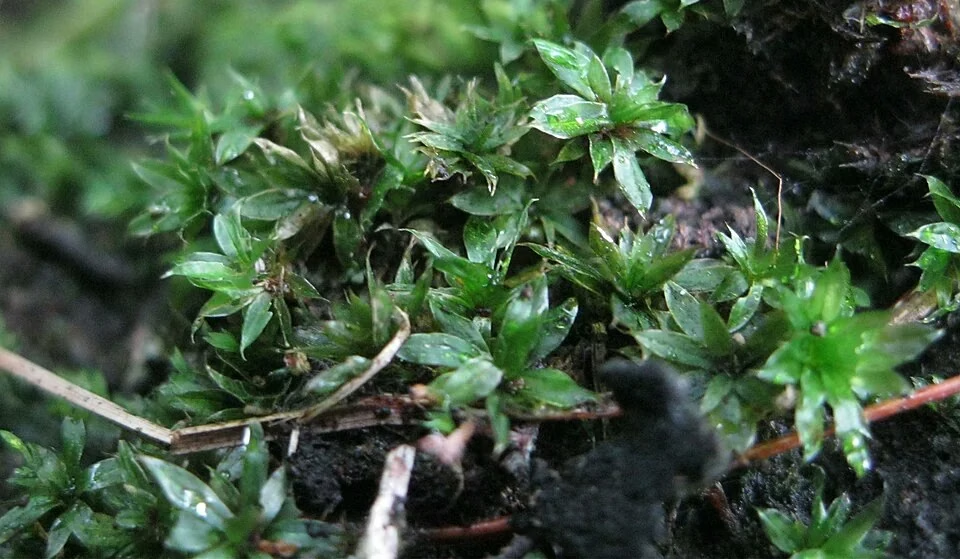
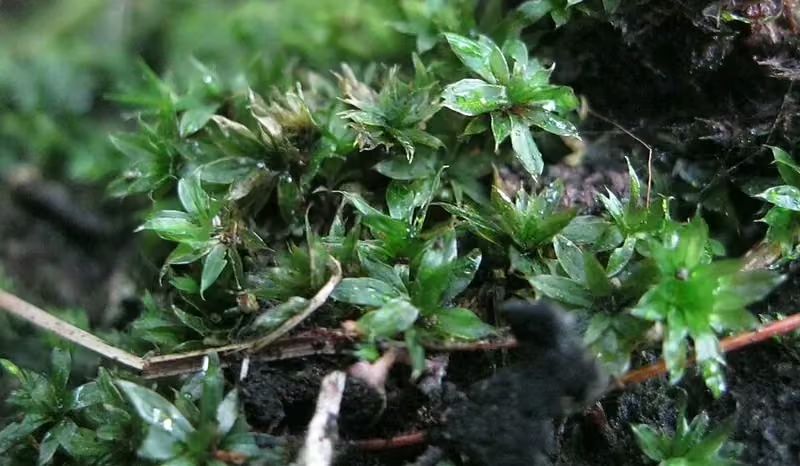
Billard's bryum moss (Bryum billardieri, syn. Rosulabryum billardierei) is a small, clump-forming moss that grows up to about 6 cm tall and is common throughout New Zealand. It has sturdy, unbranched reddish stems topped with a dense rosette of larger leaves, with smaller leaves lower down. When moist the leaves spread to show toothed tips and a prominent central vein, or costa, that extends beyond the leaf tip; when dry they close up and twist. It grows on soil, decaying wood and rock in shaded, humid places, from sand dunes and beech forests to boggy grasslands. This dioicous moss helps bind soil and retain moisture in the ecosystems it inhabits. Explore more native mosses and lichens in our native plant guide.
Plant Description
Bryum billardieri is a small, visually appealing moss that typically forms small clumps, reaching up to 6 cm in height. It is characterized by sturdy, unbranched, reddish stems, topped with a dense tuft of larger leaves, while smaller leaves are arranged further down the stem. When moist, its leaves spread widely, showcasing their toothed tips and a prominent central vein (costa) that extends beyond the leaf tip, often bending slightly backward. When dry, the leaves tend to close up and may twist. A distinguishing feature is the border of several rows of long cells found along the leaf margins. This moss is dioicous, with separate male and female plants. Small, dark red or orange, potato-like underground tubers can sometimes be found, which are useful for identification. It is known by the preferred scientific name Rosulabryum billardierei .
Quick Facts
| Scientific Name | Bryum billardieri (syn. Rosulabryum billardierei ) |
|---|---|
| Height | Up to 6 cm |
| Spread | Clump-forming |
| Water Needs | High humidity, consistently moist |
| Light | Shaded areas |
| Frost Tolerance | High |
| Salt Tolerance | Low to Moderate |
| Growth Rate | Slow to Moderate |
| Lifespan | Perennial |
| Substrate | Soil, wood, rocks |
| Distribution | Common throughout New Zealand |
| Reproduction | Dioicous (male and female plants separate) |
| Special Features | Reddish stems, toothed leaves with prominent costa, underground tubers |
Climate Best Suited to
Billard's Bryum Moss is highly adaptable and common throughout New Zealand, thriving in a wide range of habitats from sand dunes and beech forests to boggy, snow-tussock grasslands. It prefers environments with high humidity and is typically found in shaded areas, though it can tolerate some sun in consistently moist conditions. It is an indigenous species, non-endemic, but a significant component of New Zealand's bryophyte flora.
Regional Suitability
| City | Climate Suitability |
|---|---|
| Well-suited to most New Zealand climates, especially those with high humidity and shaded, moist environments. Adaptable to coastal, forest, and alpine conditions. | |
Plant Habitat
Bryum billardieri is a common and indigenous moss found throughout New Zealand. Its adaptability allows it to inhabit diverse environments, including sand dunes, beech forests, and boggy, snow-tussock grasslands. It typically grows on soil, decaying wood, or soil covering rocks, and is particularly prevalent in shaded areas. It can be found from near sea level up to approximately 400 meters, frequently in sandy coastal locations. In New Zealand, two subspecies, platyloma and billardierei, are recognized.
Growing Requirements
Substrate Requirements
Billard's Bryum Moss is not particular about its substrate, growing on soil, decaying wood, or soil covering rocks. The key requirement is a consistently moist surface with good drainage to prevent water stagnation.
- Soil, wood, or rocks
- Consistently moist surface
- Good drainage (no standing water)
Light Requirements
Bryum billardieri thrives in shaded areas, which helps maintain the high humidity it prefers. While it can tolerate some indirect light, direct harsh sunlight should be avoided as it can cause the moss to dry out rapidly.
- Shaded areas (preferred)
- Avoid direct harsh sunlight
Water & Humidity Requirements
High humidity and consistent moisture are crucial for the health and growth of Billard's Bryum Moss. It requires regular moisture, either from rainfall, mist, or surface water, but does not tolerate prolonged submersion or standing water.
- High humidity
- Consistently moist (but not waterlogged)
- Regular misting or natural moisture
Cultivating and Establishing
To cultivate Billard's Bryum Moss, aim to replicate its natural moist, shaded environment. Choose a location that receives ample shade and maintains high humidity, such as under trees, in rock crevices, or along the edges of ponds or streams. Prepare the substrate (soil, wood, or rock) by ensuring it is clean and can retain moisture without becoming waterlogged. Gently place clumps of moss onto the desired surface, ensuring good contact. Regular misting or watering, especially during dry periods, is essential for establishment. Avoid disturbing the moss as it attaches to its new substrate. It can be a slow process, but once established, it forms attractive, resilient mats.
Ecological Role
As a common and indigenous moss, Bryum billardieri plays a vital ecological role in various New Zealand ecosystems. Mosses contribute significantly to ground cover, preventing soil erosion, especially in shaded and moist areas. They help retain moisture in the environment, creating microclimates that support other small plants and invertebrates. Mosses like Bryum billardieri are primary colonizers of disturbed areas and contribute to nutrient cycling. Its widespread distribution across diverse habitats underscores its importance in the foundational layers of many terrestrial and semi-aquatic communities in New Zealand. It is part of the broader group of mosses and liverworts .
Uses & Significance
Garden & Landscape Uses
Billard's Bryum Moss can be utilized in garden and landscape designs to create naturalistic, lush, and low-maintenance ground cover in shaded, moist areas. It is excellent for rock gardens, terrariums, alongside water features, or as a living carpet under trees. Its ability to grow on various substrates makes it versatile for adding texture and greenery to otherwise barren or hard-to-plant spots.
- Ground Cover
- Rock Gardens
- Terrariums
- Moist, Shaded Areas
- Ecological Landscaping
Ecological Value
The ecological value of Bryum billardieri is substantial. It contributes to soil stabilization, moisture retention, and provides microhabitats for a variety of small organisms. As a non-vascular plant, it plays a critical role in the initial stages of ecological succession and nutrient cycling in many ecosystems. Its wide distribution indicates its resilience and fundamental importance to the overall health and biodiversity of New Zealand's natural landscapes.
- Soil Stabilization
- Moisture Retention
- Microhabitat Provision
- Pioneer Species
Landscaping Uses
Bryum billardieri can be effectively used in landscaping to create serene, natural-looking areas. It is particularly valuable in moss gardens, Japanese-style gardens, or any design aiming for a lush, green, and low-maintenance aesthetic in shaded conditions. Its ability to grow on different surfaces makes it suitable for covering bare soil, enhancing the appearance of rocks, or creating living art on wood. It's an excellent choice for areas where traditional ground covers struggle due to lack of light or high humidity.
Seasonal Care Calendar
Spring
Ensure consistent moisture as temperatures rise. Protect from strong, direct sun if conditions are becoming drier.
- Ensure consistent moisture
- Protect from strong sun
Summer
Maintain high humidity and consistent moisture through regular misting or watering, especially during dry spells. Avoid allowing the moss to dry out completely.
- Maintain high humidity
- Consistent moisture (misting)
- Avoid drying out
Autumn
Ensure adequate moisture as temperatures cool. Natural rainfall often provides sufficient hydration. Clear any falling debris that might smother the moss.
- Ensure adequate moisture
- Clear debris
Winter
Mosses are generally tolerant of cold. Ensure protection from extreme freezing if planted in exposed positions, but typically requires minimal intervention. Keep clear of heavy snow or ice accumulation.
- Tolerant of cold
- Minimal intervention
- Clear heavy snow/ice
When to Maintain and How Much
Mosses generally do not require pruning in the traditional sense. Maintenance primarily involves ensuring optimal environmental conditions and occasional tidying.
- Remove falling leaves or debris that might smother the moss.
- Gently clear away any competing weeds or unwanted growth.
- If the moss spreads beyond desired areas, it can be carefully peeled back or trimmed.
- Avoid walking on moss, as it can be easily damaged.
The goal is to maintain a clean, moist, and shaded environment for healthy growth.
How to Grow Billard's Bryum Moss
Cultivating Billard's Bryum Moss ( Bryum billardieri ) is less about traditional gardening techniques and more about replicating its preferred moist, shaded, and humid natural environment. As a non-vascular plant, mosses propagate differently from flowering plants, primarily through spores, fragmentation, or specialized reproductive structures. Understanding these methods is key to successfully establishing and encouraging its growth.
From Spores
While challenging for the amateur, mosses reproduce sexually via spores.
- Mature moss plants produce sporophytes (stalks with capsules) that release microscopic spores.
- These spores, when they land in suitable moist and shaded conditions, can germinate to form a filamentous protonema.
- The protonema then develops into new moss plants. This process is largely dependent on environmental factors and is often observed naturally rather than through controlled cultivation by hobbyists.
From Fragmentation
Fragmentation is the most common and easiest method for propagating mosses.
- Gently collect existing clumps of Bryum billardieri from a healthy source, ensuring minimal disturbance to the original patch.
- Break the collected moss into smaller pieces (fragments) of varying sizes.
- Prepare the desired substrate by ensuring it is moist and clean (soil, rock, wood).
- Press the moss fragments firmly onto the substrate. You can use a fine mesh or netting to hold the fragments in place initially, especially on vertical surfaces.
- Keep the area consistently moist through regular misting or gentle watering, particularly during the first few weeks of establishment. High humidity is crucial.
- Over time, the moss fragments will adhere to the substrate and begin to grow, spreading to form a continuous mat.
Using Slurry Method
A moss slurry can be used for larger areas or to encourage faster coverage.
- Blend moss fragments with buttermilk, yogurt, or a sugar-water solution in a blender. The organic matter provides nutrients and helps the moss adhere.
- Paint or spread the slurry onto the desired surface.
- Keep the area consistently moist and shaded, misting frequently.
- This method helps distribute the moss evenly and can lead to quicker establishment, though success rates can vary.
Additional Considerations
Success in growing Billard's Bryum Moss relies heavily on maintaining a consistently moist environment and providing adequate shade. It is not a plant that benefits from traditional fertilization; instead, focus on creating the right microclimatic conditions. Ensure the chosen site mimics its natural preferences for high humidity and protection from direct sunlight.
Pests & Diseases
Mosses, including Bryum billardieri , are generally very resilient and do not suffer from the typical pests and diseases that affect vascular plants. Their primary vulnerabilities are environmental:
- Drying Out: The most significant threat is desiccation. Prolonged periods of dryness will cause the moss to shrivel and potentially die back. Consistent moisture is key.
- Excessive Sunlight: Direct, intense sunlight can also lead to drying and bleaching of the moss. Shaded environments are preferred.
- Pollution: Mosses are sensitive to air pollution, which can inhibit their growth and health.
- Smothering: Falling leaves, heavy debris, or aggressive weeds can smother moss, blocking light and airflow, and eventually causing it to die. Regular gentle clearing is beneficial.
- Fungal Issues: While rare, prolonged water stagnation without air circulation can potentially lead to fungal growth, though good drainage typically prevents this.
Overall, maintaining the ideal environmental conditions is the best defense against issues for Billard's Bryum Moss.
Cultural Significance
Billard's Bryum Moss ( Bryum billardieri ) holds significance as a common and indigenous component of New Zealand's diverse bryophyte flora. The scientific epithet "billardierei" honours J.J.H. de la Billardière, a French botanist who explored New Zealand in the late 18th century, linking the moss to early European scientific discovery in the region. Ecologically, it contributes to the foundational layers of many ecosystems, playing a role in soil stabilization, moisture retention, and providing microhabitats. While specific traditional Māori cultural uses are not widely documented for this particular moss, its widespread presence and ecological function make it an integral part of the natural heritage and biodiversity of Aotearoa.
- Indigenous to New Zealand
- Named after early French botanist J.J.H. de la Billardière
- Ecologically important for soil stabilization and moisture retention
- Part of New Zealand's unique bryophyte flora
Bonus Tip
To create a thriving moss garden with Billard's Bryum Moss, focus on maintaining consistent moisture and providing ample shade. Consider creating a "moss milkshake" (blending moss fragments with a liquid) to easily spread and establish moss over larger areas or uneven surfaces.
Related Plants
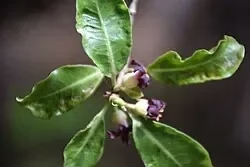
Explore other native mosses and liverworts that share similar characteristics or habitats with Billard's Bryum Moss ( Bryum billardieri ), offering further insights into New Zealand's diverse lower plant flora. These related species provide context and opportunities for complementary planting in your garden. For another native moss, explore Donn's Grimmia.


Plant Conservation
Bryum billardieri is classified as "Not Threatened" under the New Zealand Threat Classification System. This status indicates that the species maintains a healthy and stable population across its extensive range in New Zealand. As a common and adaptable moss, it plays a resilient role in various ecosystems, contributing to soil health, moisture regulation, and providing microhabitats. Its continued widespread presence underscores its ecological robustness and ongoing contribution to the biodiversity of New Zealand's natural landscapes.
Frequently Asked Questions
How tall does Billard's bryum moss grow?
It is a small moss, reaching up to about 6 cm tall.
Where does Bryum billardieri grow?
It is common throughout New Zealand on soil, wood and rock in shaded, moist places.
What conditions does Billard's bryum moss prefer?
It prefers high humidity, consistent moisture and shade, though it tolerates some sun.
Is Bryum billardieri frost tolerant?
Yes, its frost tolerance is high.
Sources and Further Reading
The botanical, growing, and conservation details for Billard's Bryum Moss (Bryum billardieri) on this page draw on authoritative New Zealand plant references and citizen-science observation records. Consult the sources below for full technical records and the latest distribution data.