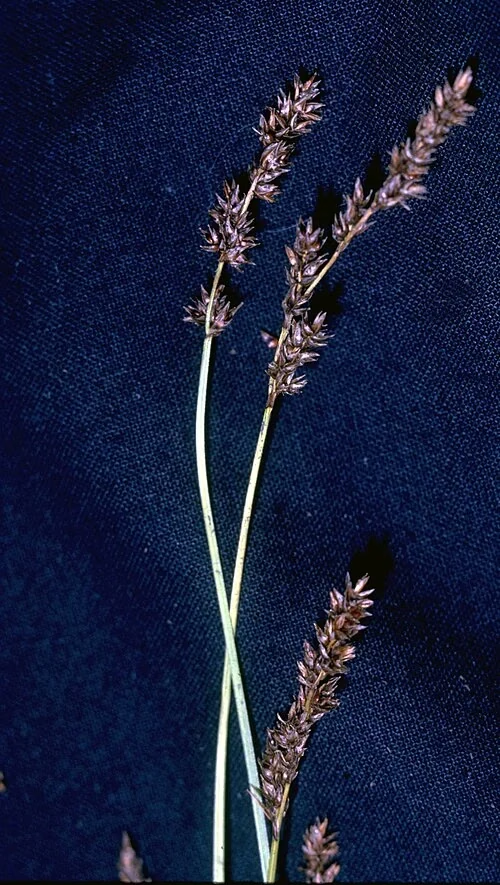
Lesser Tussock Sedge
Carex diandra
Last updated:
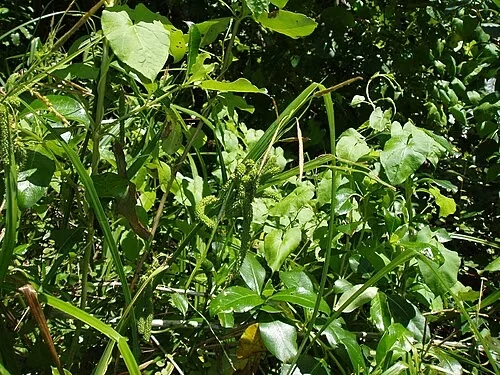
The Lesser Tussock Sedge (Carex diandra) is a loosely tufted, rhizomatous native sedge that grows around 0.5-0.9 m tall. Rather than forming massive raised tussocks, it produces wiry, triangular flowering stems and narrow bright-green to pale-green leaves that give it a refined, airy look, topped by compound greenish-brown spikes. It is an obligate wetland species found in swamps, marshes, bogs, fens and floating peat mats at lake and pond margins, ranging from coastal lowlands to subalpine elevations and most common in the South Island. Frost hardy and moisture-loving, it stabilises wet soils and supports wetland wildlife, making it useful for restoration plantings. Explore more native plants such as Carex secta.
Plant Description
Carex diandra is a distinctive sedge characterized by its rhizomatous, loosely tufted growth habit. Unlike some of its larger cousins, it does not typically form massive, elevated tussocks. Its culms (flowering stems) are wiry and triangular in cross-section (trigonous), usually reaching lengths between 150 mm and 550 mm, though they can occasionally grow taller in sheltered, nutrient-rich environments. The leaves are narrow, typically 1.5-3.0 mm wide, and are often shorter than the flowering stems. They are bright green to pale green and slightly channelled, giving the plant a refined, airy appearance. The inflorescence is a compound spike, 15-50 mm long, featuring greenish-brown spikes that contain both male and female flowers. The fruit (utricles) are small, dark brown, and shining, with a characteristic swollen shape and a distinct beak.
Quick Facts
| Scientific Name | Carex diandra |
|---|---|
| Height | 0.5-0.9 metres |
| Spread | 0.4-0.6 metres |
| Water Needs | High / Consistently Moist |
| Light | Full Sun to Partial Shade |
| Frost Tolerance | High |
| Salt Tolerance | Moderate (found in brackish margins) |
| Growth Rate | Moderate |
| Lifespan | Perennial |
Climate Best Suited to
Carex diandra is highly adaptable and can be found from coastal lowlands up to subalpine elevations of nearly 2,800 metres. It thrives in cool to temperate climates where moisture is consistent throughout the year. While it is widespread in the South Island, it is much less common in the North Island, primarily restricted to regions south of the Central Volcanic Plateau. It is very cold-hardy and can withstand significant winter frosts.
Regional Suitability
| City | Climate Suitability |
|---|---|
| Auckland | Moderate (needs consistent moisture) |
| Hamilton | Good |
| Wellington | Excellent |
| Christchurch | Excellent |
| Dunedin | Excellent |
| Invercargill | Excellent |
Plant Habitat
In the wild, Carex diandra is an obligate wetland species, meaning it is almost exclusively found in permanently or seasonally wet environments. Its natural habitats include swamps, marshes, bogs, fens, and the floating mats of peat that form on the margins of lakes and ponds. It prefers open, moderately fertile to mid-nutrient (oligotrophic) areas. It is often found growing in river flats, within wet openings in forests, and in short or tall-tussock grasslands that experience frequent waterlogging.
Growing Requirements
Soil Requirements
This sedge prefers soils that are rich in organic matter and permanently moist. It is well-suited to peaty or marly substrates.
- Peat / Muck
- Loam with high organic content
- Poorly drained soils
- Acidic to neutral pH
Light Requirements
While it thrives best in full sun, where its foliage remains dense and vibrant, it is also tolerant of partial shade.
- Full Sun (Preferred)
- Partial Shade
- Light Shade
Water Requirements
High water use. This plant must never be allowed to dry out completely, as it is adapted to constant hydration.
- Permanently moist soil
- Periodic inundation tolerant
- High humidity preference
Planting and Establishing
When planting Carex diandra , choose a site that remains damp even during the summer months. If planting near a pond, place it at the water's edge or in a shallow marginal shelf. Dig a hole twice the size of the root ball and incorporate compost or peat moss if the soil is not naturally boggy. Ensure the crown of the plant is level with the soil surface. Firm the soil around the base and water in thoroughly. In garden settings, using a pond liner or a container without drainage holes can help maintain the required moisture levels.
Ecological Role
Carex diandra plays a significant role in wetland ecosystems by stabilizing soil and providing habitat for aquatic and semi-aquatic organisms. Its dense root system helps filter water and prevent erosion along lake and stream margins. The seeds provide a food source for native birds and insects, while the foliage offers cover for small fauna like frogs and lizards. It is an essential component of diverse wetland communities, contributing to the overall biodiversity of New Zealand's freshwater habitats.
Uses & Significance
Garden Uses
Ideal for water gardens, bog gardens, and rain gardens. Its slender form makes it an excellent texture plant when massed together.
- Pond margins
- Rain garden filtration
- Container planting for wet areas
- Native restoration
Ecological Value
Provides vital ecosystem services in wetland areas, supporting a range of native biodiversity.
- Water filtration
- Soil stabilization
- Bird and insect food source
- Habitat for wetland fauna
Landscaping Uses
In landscaping, Carex diandra is used primarily for its fine texture and ability to thrive in wet spots where other plants might fail. It is often massed at the edges of water features to create a soft, natural transition between land and water. Its bright green foliage provides a refreshing splash of colour throughout the year. It works well when planted in groups to create a lush, meadow-like effect in damp hollows or alongside boardwalks in native-themed gardens.
Seasonal Care Calendar
Spring
Watch for new growth and ensure the soil remains moist as temperatures rise.
- Apply organic mulch
- Divide large clumps
- Monitor water levels
Summer
This is the most critical time for watering. Do not let the soil dry out.
- Daily watering if needed
- Check for leaf scorch
- Collect mature seeds
Autumn
Planting and restoration work can begin as the weather cools and moisture increases.
- Sow fresh seeds
- Prepare new planting sites
- Reduce watering frequency
Winter
The plant may go semi-dormant in very cold regions but remains evergreen in most.
- Clean up dead foliage
- Protect very young plants
- Maintain natural moisture
When to Prune and How Much
Carex diandra requires very little pruning. It is generally a "low maintenance" plant once established in the correct environment.
- Remove dead or brown leaves in early spring
- Trim back flowered stems after seed dispersal if a tidier look is desired
- Avoid hard cutting back unless the plant is very old and cluttered
Light grooming with the fingers to pull away dead leaves is often all that is needed to keep the plant looking its best.
How to Grow Lesser Tussock Sedge
Cultivating Lesser Tussock Sedge ( Carex diandra ) is a rewarding endeavor for any gardener interested in New Zealand's unique flora. This species can be propagated through several methods, each requiring specific conditions to ensure healthy growth and establishment. Successful propagation depends on mimicking the plant's natural environment and providing consistent care during the early stages of development. Because this is an obligate wetland species, the most important factor in its growth is the maintenance of high soil moisture levels.
From Seed
Propagation from seed is often the most effective way to produce a large number of Lesser Tussock Sedge plants. Seeds should be collected when they are fully mature, typically turning dark brown and detaching easily from the spike. Freshly collected seeds generally have higher germination rates than those that have been stored for long periods.
Seeds of Carex diandra exhibit conditional dormancy. To achieve the best results, sow them immediately after collection onto a tray of high-quality seed raising mix that has been pre-moistened. The tray should be placed in a semi-shaded position and kept constantly wet-some growers even place the seed tray in a shallow tray of water to ensure it never dries out.
- Collect mature dark brown seeds in late summer or autumn.
- Sow onto the surface of a fine, moist peat-based mix.
- Cover very lightly with a thin layer of sand or vermiculite.
- Place in a cool, bright spot away from direct midday sun.
- Expect germination in 4 to 8 weeks, though it can be irregular.
Once seedlings are large enough to handle, prick them out into individual pots using a potting mix that retains moisture well. Keep them well-watered as they grow.
From Cuttings
While sedges are not typically grown from stem cuttings like woody shrubs, Carex diandra can be successfully propagated through division of its rhizomatous clumps. This is the fastest way to get a mature-sized plant.
The best time for division is in early spring just as the new growth begins. Carefully lift a healthy clump and use a sharp spade or knife to divide it into smaller sections, ensuring each piece has a good portion of roots and several healthy green shoots. Re-plant these divisions immediately into their permanent location or into large pots.
- Lift the parent clump in early spring.
- Divide with a sharp blade to minimize root damage.
- Ensure each division has a significant root mass.
- Keep the divisions shaded and very wet for the first few weeks.
Additional Methods
Layering is not a common practice for this species due to its upright, tufted habit. However, ensuring that the rhizomes have space to spread into moist, soft soil will encourage the plant to expand naturally. In a garden pond, you can simply place a pot of the sedge at the correct depth and let it naturalize into the surrounding substrate if conditions allow.
Consistent care during the first year after planting is essential. Even though the plant is hardy, it needs time to establish its root system in the wet environment. Avoid the use of high-nitrogen fertilizers which can lead to soft, weak growth that is prone to pests.
Pests & Diseases
Carex diandra is remarkably resistant to most common garden pests and diseases. Its primary requirement is water; if it dries out, it will quickly turn brown and may not recover. In overly stagnant or crowded conditions, some fungal rusts may appear on the leaves, but this is rarely a serious issue. Aphids can occasionally be found on new spring growth, but these are usually managed by natural predators like ladybirds. Ensure good air circulation around the clumps to prevent any minor issues from becoming widespread.
Cultural Significance
While not as widely documented in traditional use as the larger Carex secta (Pūrei), all native sedges hold ecological importance in the Māori worldview (Te Ao Māori) as part of the interconnected web of life in wetlands. They are seen as protectors of the water's edge.
- Guardian of freshwater health
- Indicator of wetland ecosystem status
- Traditional role in habitat for mahinga kai (food gathering)
Bonus Tip
If you don't have a pond, you can still grow this beautiful sedge! Use a large ceramic pot without a drainage hole (or plug the hole with waterproof putty). Fill it with a mix of potting soil and peat, plant your Carex diandra , and keep the water level just at or slightly above the soil surface. It makes a stunning "mini-wetland" for a patio or balcony.
Related Plants
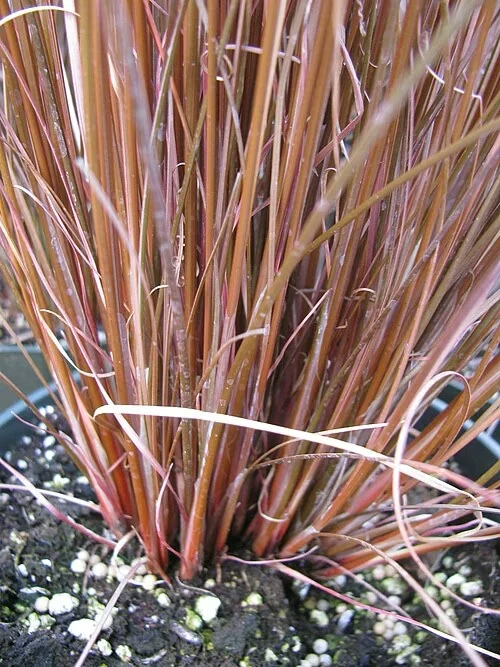
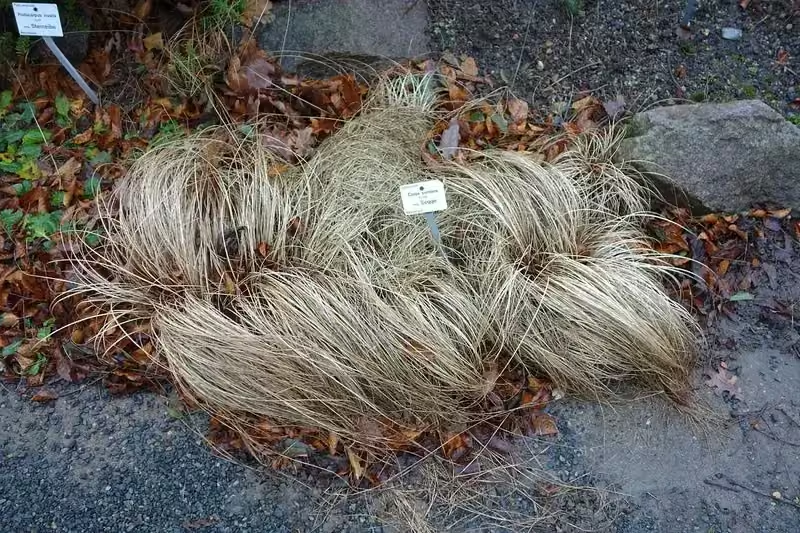
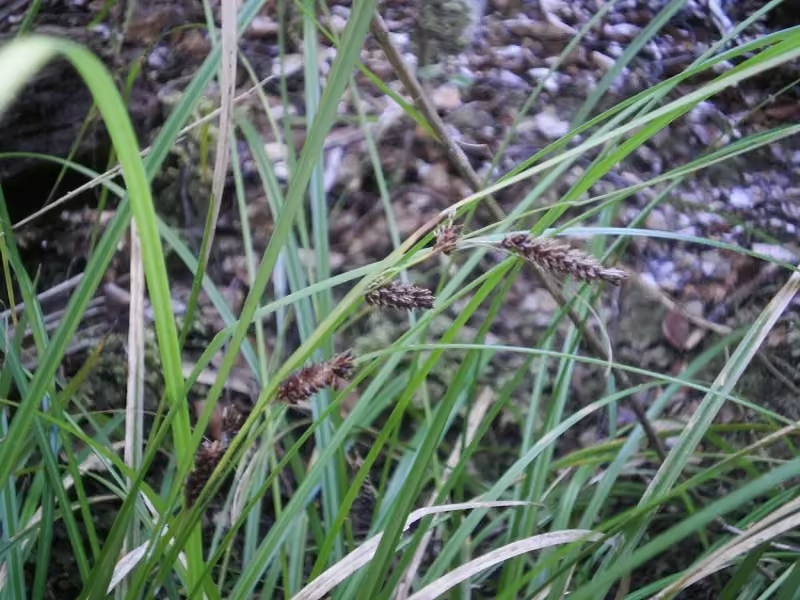
Explore other native plants that share similar characteristics or habitats with Lesser Tussock Sedge ( Carex diandra ), offering further insights into New Zealand's diverse flora. These related species provide context and opportunities for complementary planting in your garden.




Plant Conservation
While Carex diandra is currently classified as "Not Threatened" in New Zealand, its populations are susceptible to the general loss of wetland habitats through drainage and land development. Maintaining and restoring wetlands is crucial for the long-term survival of this species and the many other organisms that depend on these fragile ecosystems. In the North Island, its comparative rarity makes local populations particularly important for conservation efforts.
Frequently Asked Questions
How tall does Carex diandra grow?
The Lesser Tussock Sedge grows about 0.5-0.9 m tall with a spread of 0.4-0.6 m.
Where does the Lesser Tussock Sedge grow naturally?
It grows in swamps, marshes, bogs, fens and peaty lake margins, most commonly in the South Island.
Does Carex diandra tolerate frost?
Yes, it has high frost tolerance and thrives in cool to temperate wetland conditions.
What conditions does Carex diandra need?
It is an obligate wetland plant needing consistently wet soil in full sun to partial shade.
Sources and Further Reading
The botanical, growing, and conservation details for Lesser Tussock Sedge (Carex diandra) on this page draw on authoritative New Zealand plant references and citizen-science observation records. Consult the sources below for full technical records and the latest distribution data.