Small Toropapa
Alseuosmia pusilla
Last updated:
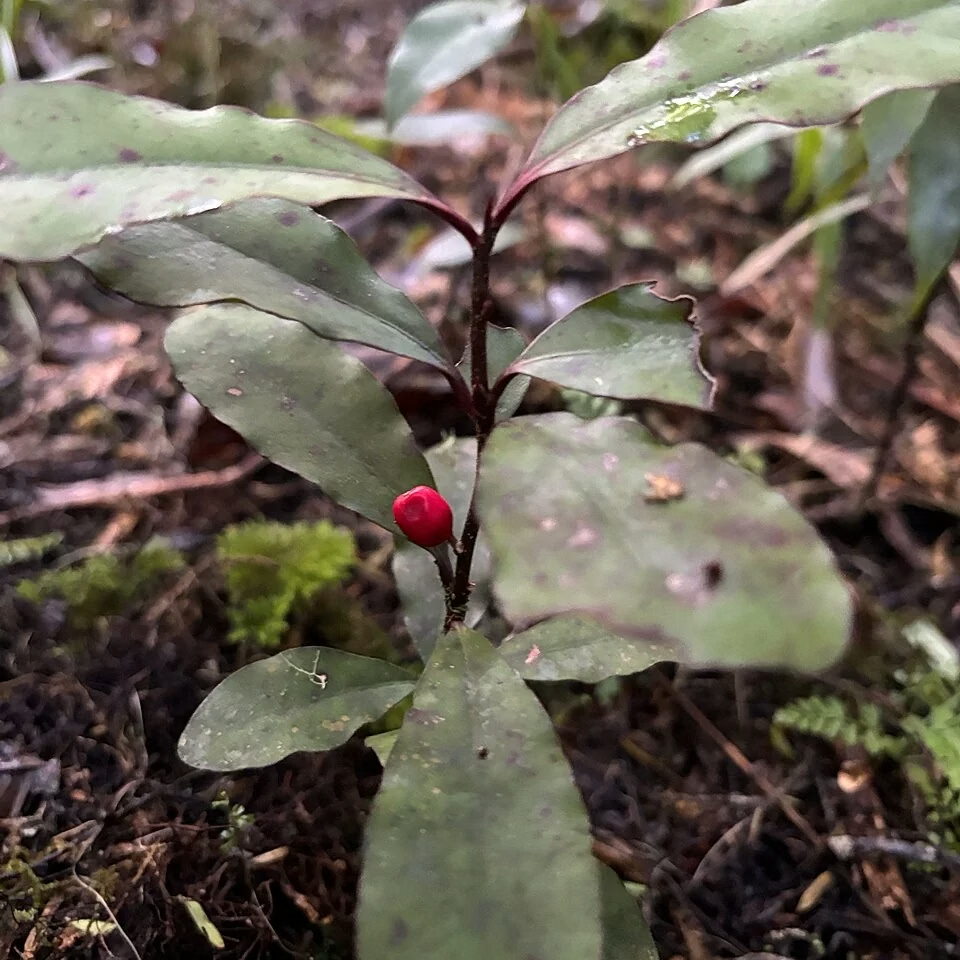
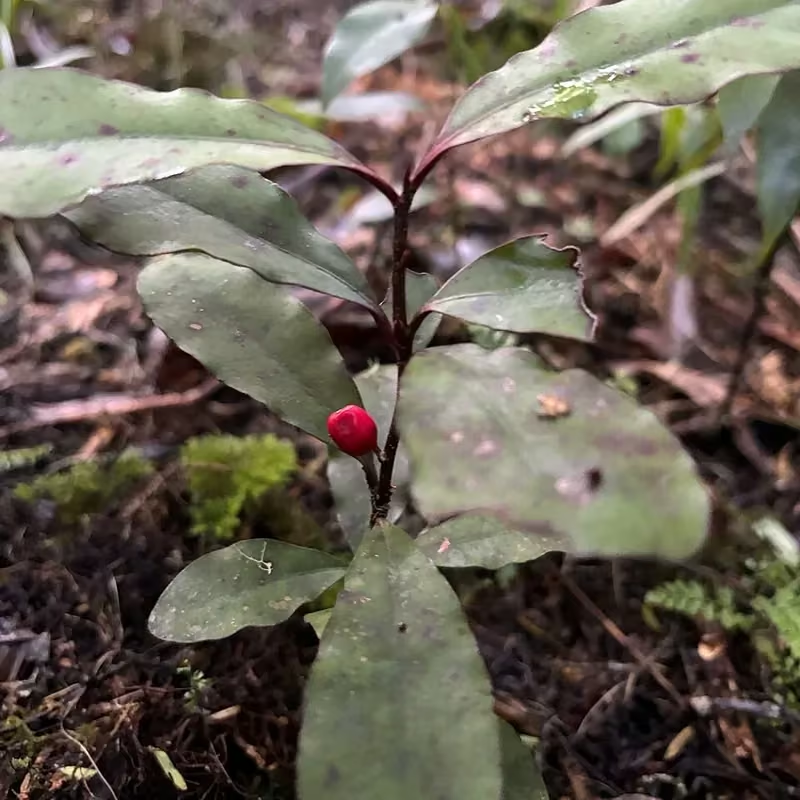
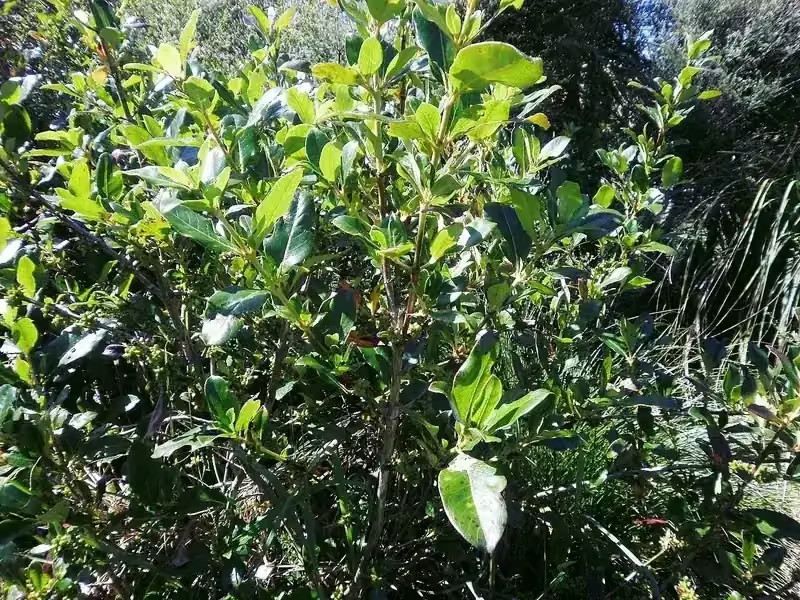
Small Toropapa (Alseuosmia pusilla) is a compact, often sprawling shrub of New Zealand's montane forests, typically about 50 cm high with slender red-brown branchlets. Its small, leathery, glossy leaves range from dark green to bronze and frequently carry red margins or flecking that mimics the toxic horopito (Pseudowintera colorata), a likely defence against browsing. From spring into early summer it bears solitary or clustered tubular flowers, creamy-white to greenish-yellow and often sweetly fragrant. A mountain specialist of both main islands, it grows in cool, deeply shaded forest interiors between roughly 600 and 950 metres and is highly frost tolerant. Explore more native plants such as Bush Daphne.
Plant Description
Identification and Physical Characteristics
Alseuosmia pusilla is a compact and often sprawling shrub, typically reaching a height of about 50 cm, though it can grow taller in exceptionally favorable forest sites. Its branchlets are slender and frequently display a distinctive red-brown hue. The leaves are small, leathery, and often glossy, varying from dark green to bronze-green, and frequently feature attractive red margins or flecking that mimics the toxic Pseudowintera colorata. Flowering occurs from spring into early summer, with solitary or small clusters of tubular flowers that range in colour from creamy-white to greenish-yellow. These flowers are often delightfully sweet-smelling. Following pollination, they develop into conspicuous, fleshy red berries that are a hallmark of the species in the autumn forest understory.
Quick Facts
| Scientific Name | Alseuosmia pusilla |
|---|---|
| Height | 2-8 m (varies with site) |
| Spread | 40-120 cm across |
| Water Needs | Low to moderate; free-draining soils |
| Light | Dappled light to morning sun; shelter from hot afternoon sun |
| Frost Tolerance | High - tolerant of severe freezes |
| Salt Tolerance | Low to moderate |
| Growth Rate | Slow to moderate |
| Lifespan | Long-lived perennial |
Climate Best Suited to
Alseuosmia pusilla is well adapted to various New Zealand regions.
Regional Suitability
| City | Climate Suitability |
|---|---|
| Auckland | High |
| Wellington | High |
| Christchurch | Medium |
Plant Habitat
Natural Occurrence and Ecology
Small Toropapa is a mountain specialist, flourishing in the montane forest zones of the North and South Islands. It is found from the central North Island ranges south to the northwest corner of the South Island, typically inhabiting elevations between 600 and 950 meters. It thrives in the cool, moist, and deeply shaded environments of the forest interior, particularly in areas with high rainfall and consistent humidity. The species prefers well-drained, humus-rich acidic soils, often growing among the leaf litter at the base of larger forest trees. It is highly resilient to severe alpine freezes but is intolerant of drying out or exposure to intense lowland heat and humidity.
Growing Requirements
Soil Requirements
Prefers well-draining soil rich in organic matter.
- Well-drained
- Loamy
Light Requirements
Grows best in partial to full sun.
- Full Sun
- Partial Shade
Water Requirements
Requires regular watering during dry periods.
- Regular
- Drought tolerant once established
Planting and Establishing
Establishment Guidance
Establishing Small Toropapa in a garden requires creating a consistently moist and sheltered environment that mimics its native mountain forest home. It must be planted in a position with partial to full shade, with complete protection from the harsh afternoon sun and drying winds. The soil should be well-drained but rich in organic matter to retain steady moisture levels. Dig a hole slightly larger than the root ball and enrich with leaf mould or well-rotted compost. Provide regular watering during its first few seasons to help it establish its fine root system, after which it becomes hardier. It is an ideal specimen for a shaded native border or a protected rockery in cooler, high-altitude garden designs.
Ecological Role
Biodiversity and Ecosystem Impact
In its native mountain ecosystems, Alseuosmia pusilla plays a vital role as a specialized member of the understory community. Its most fascinating ecological feature is its visual mimicry of the toxic plant Pseudowintera colorata, an adaptation that likely evolved to deter browsing by extinct moa and continues to protect the plant from contemporary herbivores like deer and goats. The fragrant flowers provide a nectar source for specialized native moths and insects, while the fleshy red berries are a significant food resource for native fruit-eating birds. By contributing to the structural complexity and food availability of the forest floor, Small Toropapa supports the overall health and diversity of New Zealand's subalpine forest remnants.
Uses & Significance
Garden Uses
Small Toropapa is a highly desirable plant for native ferneries and shaded garden borders where its unique mimicry and attractive form can be appreciated. Its compact size and fine-textured, often colourful foliage provide a beautiful visual interest that represents the incredible biological complexity of New Zealand's mountain forests. It is an excellent choice for a 'specialist native garden' or as a refined understory plant beneath larger mountain trees like beech. Because it is slow-growing and maintains a manageable size, it is a perfect specimen for small, protected garden corners where its intricate details and sweet scent can be enjoyed up close.
- Specialist native collection
- Shaded ground cover
Ecological Value
Ecologically, it is a valuable species for restoring the understory of montane and subalpine forests. It supports local biodiversity by providing high-energy resources for native pollinators and fruit-eating birds, contributing to the creation of a healthy and biologically rich native mountain ecosystem.
- Nectar source for moths
- Frugivory support
Landscaping Uses
In professional landscape design, Small Toropapa is used to add textural depth and a profound evolutionary element to shaded native themes. Its small, glossy leaves and compact habit provide a sophisticated palette that works exceptionally well in contemporary native gardens focusing on mountain flora. It is ideal for mass planting in sheltered spots under the canopy of larger mountain trees or along the margins of naturalistic stone features. The play of light through its leathery foliage adds a sophisticated visual element. Its rarity and its fascinating mimicry make it a highly effective and memorable choice for high-quality native landscaping projects focusing on New Zealand's unique biological identity.
Seasonal Care Calendar
Spring
The start of the active growth period. Apply a very light dressing of organic leaf mould around the base to maintain the cool, moist root zone. Check for any winter debris caught in the slender branches and gently remove it.
- Fertilize
- Mulch
Summer
Ensure consistent moisture during hot summer spells, as Small Toropapa is highly sensitive to drying out. Misting the foliage during early morning or evening can help maintain the required humidity levels and prevent the leaves from scorching.
- Water
- Check for pests
Autumn
The vibrant red berries mature and provide a resource for local birds. Tidy the area around the base and ensure no heavy fallen leaves from larger shrubs are smothering the plant. This is a good time to take semi-hardwood cuttings for propagation.
- Prune lightly
- Plant new specimens
Winter
Naturally very frost-hardy and adapted to severe mountain winters. Requires minimal care during the winter months; simply avoid any root disturbance or changes to the soil level during the wet winter rains to protect the sensitive root system.
- Frost protection
When to Prune and How Much
Small Toropapa requires very little conventional pruning to maintain its graceful form. Maintenance is generally limited to the occasional removal of any dead or crossing stems using sharp, sterilized snips to improve airflow and maintain the health of the shrub. If the plant becomes too leggy, it can be lightly tip-pruned in early spring to encourage a denser growth habit. Avoid cutting back into old, woody growth as it may be slow to recover. Always use clean tools to prevent the introduction of rot or pathogens to the sensitive stems, ensuring quick recovery after maintenance.
- Remove dead branches
Always use clean, sharp tools.
How to Grow Small Toropapa
Cultivating Small Toropapa ( Alseuosmia pusilla ) is a rewarding process for the patient native gardener. This graceful species can be propagated through several methods, including semi-hardwood cuttings and seed. Success depends on providing the cool, highly humid, and shaded conditions it thrives in throughout its native mountain forest range. Patience is required, as the plant can be slow to establish.
From Seed
Propagation from seed is possible but can be very challenging as the seeds are often difficult to germinate. Fresh berries should be collected in late summer and the seeds cleaned of pulp before sowing onto the surface of a sterilized, moist peat-based mix. They require a stable, humid environment and bright, filtered light. Germination can be slow and sporadic, making this a method primarily for the dedicated native plant enthusiast.
Sow fresh seeds in a seed-raising mix.
- Collect seeds
- Sow in trays
Keep moist until germination.
From Cuttings
The more reliable method for home gardeners is taking semi-hardwood cuttings in late summer. Use a high-quality rooting hormone and place the cuttings in a well-drained, gritty mix. They must be kept in a high-humidity environment, such as a propagation frame or under a clear cover, until new growth is evident. This method ensures that the new plants retain the exceptional foliage characteristics of the parent plant.
Take semi-hardwood cuttings in late summer.
- Take cuttings
- Use rooting hormone
Additional Methods
Depending on the growth habit of Alseuosmia pusilla , other methods such as division or layering might also be viable options. Division is particularly suitable for plants that form dense clumps or have spreading root systems, while layering can be used for species with trailing or flexible stems.
Young Toropapa plants are exceptionally sensitive to root damage and should be planted into their permanent positions with minimal disturbance. They require a site free from aggressive competition and protected from strong winds and intense afternoon sun. A top-dressing of fine organic mulch or leaf mould around the base will help regulate soil moisture and provide the humid forest-floor conditions the impressive flowers require to thrive.
- Divide clumps
- Replant immediately
Pests & Diseases
Small Toropapa is generally healthy in its natural environment but can be sensitive to some common garden issues. The primary health risk is root and crown rot caused by poor drainage or overwatering in heavy soils. Occasionally, scale insects or mealybugs may target the stems in stagnant conditions. It is also palatable to introduced browsers like goats and possums, so protection from these animals is essential. Maintaining a well-ventilated, shaded position with perfect mineral drainage is the best way to ensure the long-term health of your Karapapa.
Cultural Significance
The Small Toropapa represents the unique and intriguing beauty of New Zealand's mountain forest understory. Its incredible adaptation of mimicry has long been studied by botanists as a testament to the complex ecological relationships within our native flora. For Māori, it is a significant part of the high-country forest heritage, representing the hidden wisdom of the ngahere. Today, it stands as a symbol of the fragile and exquisite biodiversity of our subalpine forests, valued by conservationists and gardeners alike for its unique vertical and horizontal detail.
- Traditional medicine
- Crafts
Bonus Tip
To truly appreciate the evolutionary marvel of Small Toropapa, plant it near a specimen of Horopito (Pseudowintera colorata). The visual similarity between the two plants will become a fascinating talking point in your garden and highlight the remarkable defensive strategies developed by our native shrubs.
Related Plants
Explore other native plants that share similar characteristics or habitats with Alseuosmia Pusilla ( Alseuosmia pusilla ), offering further insights into New Zealand's diverse flora. These related species provide context and opportunities for complementary planting in your garden.




Plant Conservation
Conservation Status
Currently classified as 'Not Threatened' nationally, the Small Toropapa remains a stable component of New Zealand's mountain flora. However, its long-term survival is inextricably linked to the preservation of high-altitude forest understories and the effective control of introduced browsers like goats and possums. Protecting intact forest remnants and maintaining the integrity of these shaded micro-habitats are key strategies for ensuring this evolutionarily significant shrub continues to thrive across its natural range.
Frequently Asked Questions
How tall does Alseuosmia pusilla grow?
It is usually compact at about 50 cm high, though it can grow taller on favourable forest sites.
Where does Small Toropapa grow?
It is a montane-forest specialist of both islands, typically at elevations between 600 and 950 metres.
Why do its leaves resemble horopito?
Its red-margined leaves mimic the toxic Pseudowintera colorata, likely to deter browsing animals.
Is Alseuosmia pusilla frost hardy?
Yes, it has high frost tolerance and withstands severe freezes in its cool mountain habitat.
Sources and Further Reading
The botanical, growing, and conservation details for Small Toropapa (Alseuosmia pusilla) on this page draw on authoritative New Zealand plant references and citizen-science observation records. Consult the sources below for full technical records and the latest distribution data.